
Bhringraj oil is one of the classic Ayurvedic hair oils people return to when the scalp feels dry, the hair looks dull, or regular shedding feels more noticeable than usual. Bhringraj is traditionally valued as a hair-supporting herb, and a careful home preparation can turn it into a simple weekly scalp-oiling routine.
This guide shows you how to make a small batch of bhringraj oil at home, how to choose the supporting herbs, and how to apply it safely and consistently without turning a traditional practice into an exaggerated medical claim.
What Makes Bhringraj Special
Bhringraj is commonly identified in Ayurveda with Eclipta alba Hassk., while modern botanical references often treat Eclipta alba as a synonym of the accepted name Eclipta prostrata. In the Ayurvedic Pharmacopoeia of India, Bhringaraja is described as the whole plant and is listed with traditional names including Keśarāja, a name associated with hair.
Classically, Bhringaraja is described with madhura, tikta, and kaṣāya rasa; laghu and sara guna; śīta virya; and madhura vipaka. Its listed actions include rasāyana, medhya, kaphahara, and vātahara. For a hair-oil recipe, its importance is its long use in scalp and hair-care traditions rather than a promise to reverse every type of hair loss.
A bhringraj oil routine is best understood as topical nourishment: it helps maintain scalp comfort, reduces dryness, supports smoother hair texture, and fits well into a consistent Ayurvedic self-care routine. Sudden, patchy, severe, postpartum, hormonal, autoimmune, or medication-related hair loss needs medical evaluation.
Ingredients You’ll Need
The quantities below make a practical 250 ml home batch, enough for several weeks of scalp oiling depending on hair length and how heavily you apply it.
Core Ingredients
Keep the core formula simple and clean. Whole dried plant material is easier to strain than fine powder and is less likely to leave gritty residue in the finished oil.
- 30 grams dried bhringraj (Eclipta alba / Eclipta prostrata), preferably whole or coarsely cut
- 250 ml cold-pressed sesame oil, used as the main traditional base oil
Supporting Herbs
These additions are optional, but they make the oil more rounded for common hair-care goals such as dryness, dullness, roughness, and occasional scalp discomfort.
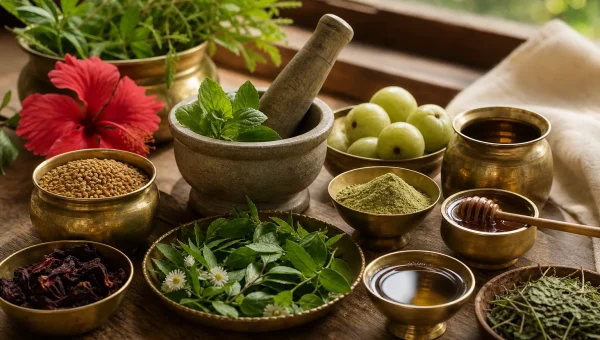
- 15 grams dried amla (Emblica officinalis / Phyllanthus emblica), roughly chopped
- 10 grams brahmi, preferably Bacopa monnieri if your supplier labels it as brahmi
- 5 grams dried neem leaves, used sparingly for flaky or itchy scalp routines
- 1 tablespoon fenugreek seeds, lightly crushed before use
Optional Aromatic Additions
Essential oils are concentrated substances, so they should be treated as optional aromatics rather than the main therapeutic ingredient. Keep the amount low, patch test first, and avoid them on irritated, broken, or very sensitive skin.
- 5 drops rosemary essential oil, added only after cooking while the oil is cooling
- 3 drops tea tree essential oil, added only for dandruff-prone scalps that tolerate it well
- 1/2 teaspoon vitamin E oil, optional, added after cooking
Choosing Your Base Oil
Sesame oil is the best default for a classical-style home preparation. Coconut oil is useful when the hair shaft feels dry, rough, or easily damaged. Mustard oil is strong and warming, so it is not ideal for sensitive, inflamed, acne-prone, or broken scalps.
| Oil | Best For | Practical Notes |
|---|---|---|
| Sesame oil | Dry, rough, frizzy, or thin-feeling hair | Traditional base for many Ayurvedic oil preparations; use cold-pressed oil |
| Coconut oil | Dry lengths, heat-exposed hair, and hair prone to protein loss | Cooling and useful for hair-shaft protection; may feel heavy on oily scalps |
| Mustard oil | Occasional use by people who already tolerate it well | Strong and potentially irritating; patch test and avoid sensitive or inflamed scalps |
Method 1: Cooked Bhringraj Oil
This method follows the Ayurvedic principle of cooking oil with herbal liquid over gentle heat until the water portion has evaporated and the oil remains. It is a home version inspired by sneha kalpana, not a pharmacy-grade preparation.
Step 1: Make the Herbal Decoction
Combine the bhringraj and any supporting herbs you are using in a saucepan with 1 litre of water. Bring to a gentle boil, then simmer uncovered until the liquid reduces to about 250 ml. This usually takes 25 to 40 minutes. Strain through muslin cloth or a fine sieve and press the herbs well to collect the decoction.
Step 2: Cook the Oil and Decoction Together
Pour 250 ml sesame oil into a wide, heavy-bottomed stainless steel pan. Add the 250 ml strained herbal decoction to the oil. Keep the heat low and let the mixture simmer gently. The bubbling comes from water evaporating from the mixture, so do not cover the pan.
Stir occasionally and keep the heat steady. Avoid high heat, smoking, or aggressive sputtering. Depending on your pan, stove, and remaining water content, this stage may take 60 to 120 minutes.
Step 3: Check for Completion
The oil is close to ready when bubbling becomes quiet, the oil looks clearer, and the watery sputtering has stopped. Place a tiny drop on a dry spoon or dish; if it crackles or spits, continue heating gently. When the oil is calm and no watery bubbling remains, remove it from the heat.
Traditional oil-making texts describe completion signs based on the disappearance of moisture from the herbal material. For home preparation, avoid flame tests and rely on low heat, patience, and the absence of sputtering.
Step 4: Strain and Store
Let the oil cool until warm but not hot. Add rosemary, tea tree, or vitamin E now if you are using them. Strain through clean muslin into a clean, completely dry, dark glass bottle. Label the bottle with the preparation date.
Store the oil away from direct sunlight, heat, and moisture. For a home batch, use it within about 3 months. Discard it if it develops an unpleasant rancid smell, visible water droplets, fizzing, mold, or any unusual change in texture.
Method 2: Cold Infusion
This is a simpler home method for people who do not want to cook oil and water together. It is slower and milder than the cooked method, and it should be made only with fully dried herbs and a completely dry jar.
Steps
Cold infusion depends on dryness and cleanliness. Do not add water, fresh herbs, aloe gel, fresh juice, or wet plant material to the jar.
- Coarsely crush the dried bhringraj and any dried supporting herbs.
- Place the herbs in a clean, dry, wide-mouth glass jar.
- Pour 250 ml sesame oil over the herbs, keeping the plant material fully covered.
- Seal the jar tightly and shake well.
- Keep the jar in a warm place away from harsh direct sun.
- Shake the jar once daily.
- After 3 to 4 weeks, strain through muslin into a clean, dry, dark glass bottle.
The cold-infused oil is usually lighter in color and milder in aroma than the cooked version. If you notice moisture, mold, fermentation, or an off smell at any point, discard the batch.
How to Apply Bhringraj Oil
Correct application matters as much as preparation. Use enough oil to coat the scalp lightly; more oil does not automatically mean better results.
The Technique
Apply the oil with clean hands and gentle pressure. The goal is steady scalp contact and relaxation, not harsh rubbing.
- Warm the oil gently. Place 1 to 2 teaspoons of oil in a small bowl, then place that bowl in hot water for a few minutes. Use up to 1 tablespoon for long or thick hair. The oil should feel warm, never hot.
- Section your hair. Part your hair into 4 to 6 sections so the oil reaches the scalp instead of only coating the outer hair.
- Apply to the scalp first. Use your fingertips, not nails, and apply along the partings.
- Massage gently. Massage in small circular movements for about 5 minutes, moving from the front hairline to the crown and then toward the nape.
- Coat the lengths lightly. Smooth a small amount through the mid-lengths and ends if they feel dry or rough.
- Leave it on. Keep the oil on for 30 minutes to 2 hours. Overnight oiling is optional and should be avoided if it causes acne, itching, heaviness, or scalp irritation.
Washing Out
Use a mild shampoo and lukewarm water. If your hair is very oily, apply shampoo to the oily scalp before adding much water, massage gently, rinse, and repeat once if needed. Avoid very hot water and avoid scratching the scalp with your nails.
Application Schedule
Choose a schedule based on your scalp type and tolerance. Consistency matters, but the scalp should feel comfortable after oiling, not itchy, clogged, or irritated.
| Goal | Frequency | Suggested Duration |
|---|---|---|
| General hair softness and shine | 1 time per week | Ongoing as tolerated |
| Dry, rough, or frizzy hair | 1 to 2 times per week | 6 to 8 weeks, then adjust |
| Seasonal or stress-related shedding support | 2 to 3 times per week | 8 to 12 weeks while also checking sleep, diet, and health factors |
| Premature greying support | 1 to 2 times per week | Long-term care; do not expect guaranteed color reversal |
| Flaky or sensitive scalp | 1 time per week | Stop if itching, redness, burning, or scaling worsens |
Sourcing Quality Ingredients
The quality of the finished oil depends on the dryness, freshness, and correct identification of your raw materials. Choose reputable Ayurvedic suppliers and avoid herbs that smell musty or look moldy.
- Bhringraj: Look for properly dried whole or coarsely cut herb. Very dark, damp, moldy, or foul-smelling material should not be used.
- Amla: Dried pieces are easier to strain than fine powder and are traditionally valued as a rasayana herb.
- Sesame oil: Choose cold-pressed oil and keep the bottle tightly closed when not in use.
- Brahmi: In many markets, “brahmi” may refer to different plants. For this recipe, choose Bacopa monnieri when possible.
- Neem: Use a small amount only, especially if your scalp is sensitive. Patch test before applying it widely.
What to Expect
Bhringraj oil works best as a steady hair-care practice rather than a quick fix. It may improve scalp comfort and hair texture, but it should not be used as the only response to unexplained or severe hair loss.
- After the first few uses: Hair may feel softer, smoother, and less dry if the oil suits your scalp.
- After 3 to 6 weeks: Reduced breakage and gentler washing may make daily shedding appear more manageable.
- After 8 to 12 weeks: Compare photos under the same lighting to judge whether the routine is helping your hair density, texture, and scalp comfort.
- Any time: Stop if you notice burning, itching, redness, pimples, worsening flakes, or increased irritation.
Disclaimer: Bhringraj oil is a traditional topical hair-care preparation, not a medical treatment for alopecia, hormonal hair loss, autoimmune hair loss, scalp infection, nutritional deficiency, thyroid imbalance, or other diagnosed conditions. If you have sudden, patchy, severe, or rapidly worsening hair loss, consult a dermatologist, trichologist, qualified Ayurvedic practitioner, or healthcare provider.
Making your own bhringraj oil gives you control over the base oil, herbs, scent, and freshness. A small batch made with clean dried herbs, gentle heat, and careful storage can become a simple weekly ritual for scalp nourishment and healthier-feeling hair.
Nothing in this article diagnoses, treats, or cures a medical condition. Use it as educational information and consult a qualified Ayurvedic practitioner or physician before starting herbs, supplements, detoxes, or therapeutic protocols, especially if pregnant, breastfeeding, managing a condition, applying it to children, or taking medication.
References
- Ayurvedic Pharmacopoeia of India
- Powo (powo.science.kew.org)
- Ijam (ijam.co.in)
- Ayurvedic Pharmacopoeia of India
- Jaims (jaims.in)
- Effect of mineral oil, sunflower oil, and coconut oil on prevention of hair damage (2003), PubMed
- Hair growth promoting activity of Eclipta alba in male albino rats (2008), PubMed
- Eclipta alba extract with potential for hair growth promoting activity (2009), PubMed
- Eclipta prostrata promotes the induction of anagen, sustains the anagen phase through regulation of FGF-7 and FGF-5 (2019), PubMed Central
- Treatment of dandruff with 5% tea tree oil shampoo (2002), PubMed
- Rosemary oil vs minoxidil 2% for the treatment of androgenetic alopecia: a randomized comparative trial (2015), PubMed
- Art of Prevention: Essential Oils – Natural Products Not Necessarily Safe (2021), PubMed Central
- Extension (extension.umaine.edu)
- Ohioline (ohioline.osu.edu)
- Pityriasis rosea-like eruptions due to mustard oil application (2005), PubMed
- An Insight into the Dermatological Applications of Neem: A Review on Traditional and Modern Aspect (2021), PubMed
- Hopkinsmedicine (hopkinsmedicine.org)
The 26-year-old thinning ponytail is my exact experience and the dark green bottle from the aunt is exactly how I found bhringraj too. Three months at 24 and the difference was real. Seven years later I still use it twice a week.
my partner was skeptical but tried it after reading this. Now they’re a convert.
The step-by-step preparation guide is the piece most bhringraj articles skip. The fresh leaf preparation versus dried herb preparation produces different results and knowing the process matters for getting consistent outcomes.
The way you connect traditional wisdom with modern understanding is brilliant.
Is bhringraj oil appropriate for a dry scalp with flaking? I’ve been avoiding oils because I thought they’d make the flaking worse but the surfactant stripping cycle described in the scalp article makes me reconsider.
Just ordered the herbs mentioned here. Excited to start this protocol
skeptical at first not gonna lie. but two weeks later and yeah im surprised
The minoxidil itch experience is common and it’s what pushed me to look for alternatives. Bhringraj oil doesn’t itch and the results over six months were comparable to what I experienced the first few months on minoxidil before the itch became unbearable.
my grandmother used to talk about this but i never understood the science until now
Three months to see shedding reduction and six months for visible regrowth is a realistic timeline that matches my experience. Most people give up at four weeks. The timeline guidance is one of the most useful things in this article.
I would like more detail on How to Make Bhringraj Hair Oil at. The safety notes could be expanded a little.
Thank you for the kind words! It’s readers like you who motivate us to keep producing well-researched content.
I’ve been making a version of this for about four months now but I was just heating whatever oil I had and adding dried bhringraj powder directly. Had no idea the cold infusion method preserves more of the active compounds. Going to try the proper process this weekend and see if it makes a noticeable difference in texture.
I’ve been looking for exactly this information for weeks. Thank you for being so thorough.
The silver hair to the waist at 63 detail is the kind of testimonial that converts skeptics. When the result is that visible over that time period in someone you can observe directly it’s more convincing than any published study.
Appreciate you keeping us honest. We’ve noted your feedback about dosage specificity and will address it in a revised version of this article.
I appreciate your thoughtful question. I’ll address this in more detail in an upcoming post, but in the meantime, the key is to listen to your body and adjust accordingly.
I teach wellness workshops and this is now on my recommended reading list
Can bhringraj oil be used on a beard for growth and density? I’ve seen references to it in hair loss contexts but not specifically for facial hair.
The three-time-weekly application frequency is less demanding than I expected. I’d been doing daily oiling thinking more was better. Reducing to three times weekly produced the same results with less greasiness.
I tried the homemade version and the commercial version from two different brands. The homemade from fresh bhringraj I grew in a pot at home was noticeably more potent than both commercial options. Fresh matters.
Interesting that sesame oil penetrates deeper than coconut for hair.
The comparison to minoxidil and biotin supplements is honest. Bhringraj is slower to show results than minoxidil and the effect size is probably smaller. But the safety profile and the lack of side effects make it a reasonable first choice before pharmaceutical intervention.
Does the cold infusion method really need 21 days of direct sunlight, or can indirect light work?
The vitamin E addition might not extend shelf life as much as claimed.
Warming the oil in a water bath before application makes it easier to massage into the scalp.
After trying the heat infusion, I noticed less itching after the first week.
The How to Make Bhringraj Hair Oil at angle is useful here. I appreciate that it does not oversell the result.
The How to Make Bhringraj Hair Oil at angle is useful here. The timing advice is the part I would start with.
how long does the homemade bhringraj oil last before going rancid? I want to make a larger batch
yes that specific thing you mentioned is what made the difference for me too
I’ve been wondering the same thing. let me know if you find out
can sesame oil be substituted for coconut as the base? my scalp reacts to coconut
off topic but can these herbs be taken with thyroid medication? my doctor doesnt know
sorry off-topic but has anyone here used Ayurveda for hair loss? nothing seems to work
sorry to go off topic but any tips for Ayurvedic approach to knee pain?
unrelated question but does anyone know a good vaidya in Pune?