
Chronic sinusitis, or chronic rhinosinusitis, is a long-standing inflammatory condition of the nasal passages and paranasal sinuses. In modern clinical language it is generally considered when symptoms such as nasal blockage, nasal discharge or post-nasal drip, facial pressure, and reduced smell persist for 12 weeks or longer, with objective evidence of sinus inflammation. In Ayurveda, many chronic congestion-and-discharge patterns are approached through the framework of Pratishyaya and its neglected, persistent, or complicated form, Dushta Pratishyaya.
The Ayurvedic goal is not only to open the nose for a few hours. The deeper aim is to reduce Kapha obstruction, digest Ama, restore the movement of Vata in the channels of the head, protect irritated mucosa, and prevent repeated relapse. The following six-week protocol keeps that classical logic while separating home-supportive measures from therapies that require trained clinical supervision.
Dushta Pratishyaya: Classical Understanding
Pratishyaya is a nasal disorder described in the classical Ayurvedic literature. Dushta Pratishyaya refers to a more difficult, chronic, or vitiated presentation of the same disease process. Sushruta describes the troublesome nature of this state through features such as alternating sliminess and dryness in the nose, changing constriction and dilation of the nostrils, foul smell, and loss of smell. These descriptions fit the Ayurvedic picture of chronic, stubborn nasal disease rather than a simple fresh cold.
- Kapha-dominant pattern: heaviness in the head, thick mucus, dullness, sluggish digestion, and repeated morning congestion.
- Pitta-associated pattern: heat, burning, yellowish discharge, tenderness, irritability, and inflamed nasal passages.
- Vata-associated pattern: dryness, variable blockage, cracking sensation, disturbed sleep, and recurrent obstruction with little discharge.
- Mixed pattern: long-standing cases often show more than one dosha, especially Kapha obstruction with Vata irregularity.
For practical treatment, Ayurveda first asks whether the sinus channels are loaded with cold, heavy, sticky Kapha-Ama or whether the mucosa is already dry, irritated, and depleted. This distinction decides whether heating, drying, and clearing measures should be used strongly, gently, or avoided.
The 6-Week Protocol Overview
This plan is arranged as a clinical Ayurvedic sequence: first prepare the channels, then use appropriate nasal therapy, then consolidate with internal medicines and finally shift to recurrence prevention. The exact medicines, dose, and duration should be individualized by a qualified Ayurvedic physician, especially when the condition is chronic, recurrent, one-sided, purulent, or associated with asthma, allergy, polyps, pregnancy, hypertension, or regular medication use.
| Week | Phase Name | Primary Interventions | Goal |
|---|---|---|---|
| Week 1 to 2 | Ama-Kapha Pachana | Warm diet, Trikatu-type support when suitable, gentle steam, light facial massage | Reduce heaviness, digest Ama, liquefy stubborn Kapha |
| Week 2 to 4 | Nasya and Channel Clearing | Clinician-administered Nasya when indicated, supportive decoctions, gargling | Clear head channels and reduce chronic Kapha obstruction |
| Week 4 to 5 | Shamana Aushadhi | Trayodashanga Kwatha, Chitraka Haritaki Avaleha, or physician-selected alternatives | Stabilize breathing, digestion, and mucus regulation |
| Week 5 to 6 | Rasayana and Prevention | Gentle Pratimarsha Nasya when appropriate, Chyawanprash, Tulsi, seasonal discipline | Prevent relapse and strengthen respiratory resilience |
Week 1 to 2: Ama-Kapha Pachana Phase
In many chronic sinus cases, the first therapeutic mistake is to start strong nasal therapy before the channels are ready. Ayurveda begins by reducing cold, sticky, heavy Kapha and improving Agni. When digestion is sluggish, the tongue is coated, mucus is thick, and the head feels heavy, the early phase should be warming, lightening, and channel-opening.
Protocol
- Warm Kapha-reducing diet: take freshly cooked, warm, light meals. Use ginger, black pepper, turmeric, cumin, and small amounts of garlic where suitable. Avoid chilled foods, iced drinks, heavy sweets, deep-fried foods, and repeated snacking.
- Trikatu-type support: Trikatu is the classical combination of dry ginger, black pepper, and long pepper. It is heating and Kapha-reducing, so it is best used in small physician-guided doses, especially in people with acidity, burning, pregnancy, bleeding tendency, or strong Pitta symptoms.
- Steam inhalation: plain steam or mild ajwain steam may be used for 5 to 10 minutes to loosen thick mucus. Avoid forceful, excessively hot steam, especially when there is burning, nosebleed, high fever, or severe facial pain.
- Gentle face and neck massage: light massage around the cheeks, jaw, temples, and neck may support comfort before steam. Use minimal oil if the nose is very blocked and Kapha is heavy; use gentler lubrication if dryness dominates.
- Warm water routine: sip warm water through the day. Avoid sleeping immediately after meals, because heaviness after food often aggravates Kapha in the upper channels.
Week 2 to 4: Nasya and Channel-Clearing Phase
Nasya Karma is the Ayurvedic administration of medicines through the nasal route. The classical principle behind Nasya is summarized by the statement that the nose is the gateway to the head. For chronic sinus conditions, Nasya is not one single home remedy; it includes different methods with different strengths. Oily, nourishing Nasya, cleansing powder Nasya, and gentle daily Pratimarsha Nasya are not interchangeable.
In Kapha-heavy chronic presentations, classical physicians may choose a cleansing form such as Pradhamana Nasya. This involves insufflation of a fine medicinal powder and must be done only in a clinical setting. It is inappropriate as a home experiment because wrong dose, wrong timing, wrong indication, or poor technique may irritate the nasal passages and worsen symptoms.
Pradhamana Nasya Procedure: Clinical Setting Only
- Assessment of dosha pattern, strength, age, season, digestion, and contraindications.
- Light local massage around the face, forehead, and neck.
- Gentle fomentation or steam to prepare the channels.
- Patient lies in the correct head position as directed by the clinician.
- Physician administers the selected medicinal powder, such as a Trikatu-Triphala-based preparation where indicated.
- Dislodged mucus and medicine are expelled; the patient should not swallow the discharge.
- Warm gargling is used after the procedure to clear the throat and oral cavity.
A published AYU clinical trial on Dushta Pratishyaya compared Trayodashanga Kwatha with honey, Pradhamana Nasya with Trikatu and Triphala powder, and a combined protocol. Thirty-one of thirty-seven registered patients completed the course. The trial reported marked improvement or marked relief across treated groups, with the combined plan giving better percentage-wise results in many symptoms. This supports the classical sequence of cleansing plus internal support rather than relying on only one intervention.
Home Nasya: Pratimarsha as Support, Not a Substitute
Pratimarsha Nasya uses a very small amount of oil or ghee and is traditionally described as a gentle daily regimen. In a chronic sinus protocol, it is best used after the heavy Kapha phase begins to clear, or when dryness and irritation need support. It should not be used as the only treatment for active purulent sinusitis, severe blockage, fever, fungal disease, nasal polyps, or undiagnosed one-sided discharge.
- Use only a practitioner-approved oil such as Anu Taila or plain sesame oil when appropriate.
- A common gentle amount is 1 to 2 drops in each nostril.
- Apply after washing the face, when the stomach is not full, and when there is no acute fever or severe infection.
- Stop and seek guidance if burning, cough, wheezing, headache, nausea, or worsening congestion occurs.
Complete guide to Nasya therapy
Week 4 to 5: Shamana Aushadhi Phase
After active clearing, the treatment shifts toward Shamana, meaning pacification and stabilization. The aim is to prevent the old Kapha-Ama pattern from rebuilding while protecting the nasal passages from excessive drying or irritation.
Key Formulas
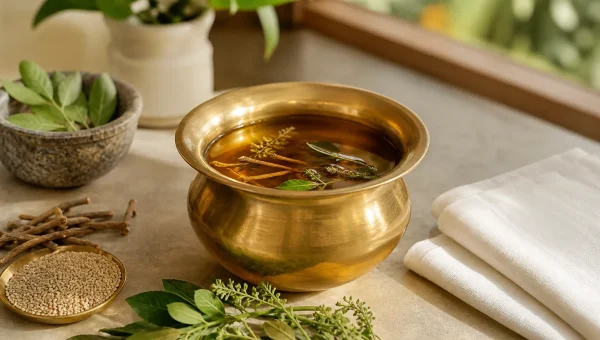
- Trayodashanga Kwatha with honey: This classical decoction was used in the AYU clinical trial for Dushta Pratishyaya. It is selected for Kapha-Vata obstruction, heaviness, and chronic mucus patterns when digestion can tolerate it.
- Chitraka Haritaki Avaleha: This avaleha is an Ayurvedic Formulary of India preparation containing multiple ingredients, with Chitraka and Haritaki as important components. It is traditionally used in respiratory and digestive weakness patterns, especially where Kapha and low Agni coexist. It should be avoided or used cautiously in strong Pitta, acidity, pregnancy, and burning conditions unless prescribed.
- Physician-selected Rasaushadhi: Mineral-herbal preparations such as Lakshmivilas-type or Mahalaxmivilas-type formulations are not home remedies. They require qualified Ayurvedic supervision, proper sourcing, correct indication, and attention to dose, duration, and safety.
Week 5 to 6: Rasayana and Prevention Phase
When the head is lighter, mucus is thinner, breathing is clearer, and sleep is better, the focus turns to relapse prevention. Ayurveda gives importance to Rasayana, daily rhythm, and seasonal discipline because chronic sinusitis often returns when diet, sleep, allergens, dust exposure, or digestion again move toward Kapha-Ama accumulation.
- Chyawanprash: This classical Rasayana is centered on Amalaki and is traditionally used for strength, recovery, and respiratory resilience. It is usually better suited after the heavy congestion phase has reduced. People with diabetes, high blood sugar, or strong Kapha heaviness should use it only with guidance. Chyawanprash complete guide
- Tulsi (Ocimum sanctum/Ocimum tenuiflorum): Tulsi is traditionally valued for cough, cold, respiratory support, and Kapha regulation. It may be taken as fresh leaves or a warm infusion when suitable. Tulsi benefits and uses
- Pratimarsha Nasya: Continue only when it clearly suits the person: dryness, recurrent irritation, dust sensitivity, or Vata-Kapha tendency. Avoid during acute infection, fever, heavy purulent discharge, or immediately after meals.
- Seasonal discipline: protect the head and neck from cold wind, avoid sleeping under direct cold air, keep dinner light, and treat early colds promptly rather than waiting for them to become chronic.
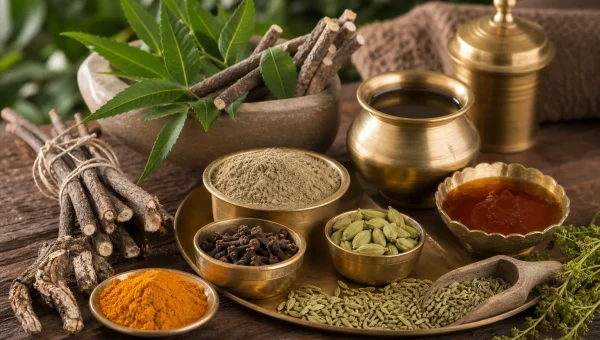
Six Key Herbs in the Dushta Pratishyaya Protocol
These herbs appear either as single drugs or within classical combinations used for chronic respiratory and nasal patterns. Their use should be matched to constitution, dosha, age, digestion, and comorbidities.
- Haritaki (Terminalia chebula): A major Triphala fruit used in classical formulas such as Triphala Churna, Agastya Haritaki Rasayana, and Chitraka Haritaki. It supports bowel regulation, Agni, and Kapha-Vata balancing in chronic respiratory patterns.
- Vibhitaka (Terminalia bellirica): Another Triphala fruit, traditionally valued in Kapha-associated conditions, especially where mucus, throat, and respiratory congestion are involved.
- Amalaki (Emblica officinalis/Phyllanthus emblica): The central fruit of Chyawanprash and a major Rasayana. It is cooling and nourishing compared with the sharper Kapha-clearing herbs, so it is useful in the rebuilding phase rather than during the heaviest mucus phase.
- Pippali (Piper longum): A key component of Trikatu and many respiratory formulas. It is heating and penetrating, so it should not be used casually for long periods or in high doses without supervision.
- Vacha (Acorus calamus): A sharp, channel-opening herb used in selected classical contexts. Because it is potent and not suitable for all patients, it should be used only in practitioner-selected formulations and not as a casual home powder.
- Yashtimadhu (Glycyrrhiza glabra): A sweet, soothing herb traditionally used when irritation, dryness, or burning accompanies upper respiratory symptoms. It is not suitable for everyone; people with hypertension, kidney disease, heart disease, fluid retention, low potassium, or diuretic use should avoid unsupervised licorice.
Dietary Protocol Throughout the 6 Weeks
Diet decides whether the protocol holds. Chronic sinusitis often relapses when Kapha-building foods are continued alongside medicines. The stricter version is most useful during the first two to four weeks, then the diet can be individualized.
Avoid or Minimize
- Cold water, iced drinks, chilled smoothies, and refrigerated leftovers
- Heavy dairy, especially cold milk, curd at night, cheese, and ice cream
- Sugar, sweets, bakery foods, and fruit juices
- Deep-fried snacks and very heavy dinners
- Excess banana, cold desserts, and incompatible food combinations
Include Generously
- Warm soups with ginger, cumin, black pepper, and turmeric
- Light grains such as rice, millet, and well-cooked barley where suitable
- Cooked vegetables, especially bitter and pungent varieties in moderation
- Warm tulsi-ginger or cumin-coriander-fennel infusions according to dosha
- Early, light dinner and a regular sleep schedule
Published Clinical Literature Behind the Protocol
The best-documented Ayurvedic clinical work on this topic includes Pradhamana Nasya with Trikatu-Triphala powder, Trayodashanga Kwatha with honey, Anu Taila Nasya, Dasamula steam, and internal Ayurvedic medicines in chronic sinusitis or Dushta Pratishyaya-type presentations. These publications are useful as clinical references, but they do not replace individualized diagnosis, ENT evaluation, or practitioner supervision.
- Pradhamana Nasya with Trikatu and Triphala Churna, Trayodashanga Kwatha with honey, and a combined protocol were evaluated in Dushta Pratishyaya with special reference to chronic sinusitis.
- Tribhuvan Kirti Rasa with ginger juice, Dasamula steam inhalation, and Anu Taila Nasya was evaluated in uncomplicated chronic sinusitis in a small clinical study.
- A 2023 systematic review identified randomized and non-randomized Ayurvedic trials for chronic rhinosinusitis and emphasized the need for stronger study designs.
- Chitraka Haritaki Avaleha and Shadbindu Taila have been studied in Pinasa, a chronic nasal condition correlated with chronic rhinosinusitis.
Safety and Contraindications
Safety note: Chronic sinusitis should be evaluated by a qualified healthcare provider or ENT specialist, especially when symptoms last more than 12 weeks, recur frequently, are one-sided, include blood, include severe smell loss, or do not respond to usual care. Seek urgent medical care for high fever, swelling around the eye or face, vision changes, severe headache, stiff neck, confusion, worsening facial redness, or severe one-sided pain. Ayurvedic treatment should not replace antibiotics or emergency care when bacterial complications or orbital/intracranial signs are suspected.
Pradhamana Nasya, Marsha Nasya, strong herbal powders, and Rasaushadhi preparations must be used only under trained supervision. Pregnant women, children, older adults, people with asthma, people on blood thinners, people with hypertension, and people with kidney, heart, liver, or autoimmune disease should not self-prescribe heating herbs, licorice, mineral-herbal preparations, or strong Nasya procedures. Even gentle oil Nasya should be stopped if it causes coughing, wheezing, burning, nausea, or worsening congestion.
Actionable tip: Begin with the safest preparatory step: take a light warm dinner, avoid chilled foods at night, and do 5 minutes of gentle plain steam inhalation before bed. Keep the steam comfortably warm, not scalding. Do not add strong essential oils, do not steam during high fever or nosebleed, and do not forcefully blow the nose afterward. This begins the first phase of the protocol without jumping into strong medicines or clinical Nasya before assessment.
References
- Entnet (entnet.org)
- Entnet (entnet.org)
- Wisdomlib — classical text
- LWW Journals
- Jaims (jaims.in)
- Efficacy of ayurvedic medicine in the treatment of uncomplicated chronic sinusitis (2006), PubMed
- Ayurvedic medicine for the treatment of chronic rhinosinusitis: a systematic review of randomized and non-randomized trials (2023), PubMed
- An Ayurvedic formulation ‘Trikatu’ and its constituents (1992), PubMed
- Internationaljournal (internationaljournal.org.in)
- A compendious review of Chitraka Haritaki Avaleha – A polyherbal Ayurveda formulation for bronchial asthma (2020), PubMed Central
- LWW Journals
- Chyawanprash: A Traditional Indian Bioactive Health Supplement (2019), PubMed Central
- Tulsi – Ocimum sanctum: A herb for all reasons (2014), PubMed Central
- Miracledrinksclinic (miracledrinksclinic.com)
- A clinical trial of Pippali (Piper longum Linn.) with special reference to Abheshaja (2010), PubMed Central
- Role of Vacha (Acorus calamus Linn.) in Neurological and Metabolic Disorders: Evidence from Ethnopharmacology, Phytochemistry, Pharmacology and Clinical Study (2020), PubMed Central
- NCCIH
- Researchgate (researchgate.net)
- NCBI
What’s the correct dosage of classical for an adult with moderate symptoms? The article describes the approach but not the specific quantities.
My grandmother used to swear by this and now I understand why. The part about classical specifically matches what I observed in her health over the years.
The safest part of the Chronic Sinusitis (Dushta Pratishyaya) advice is keeping it simple. This is the kind of detail readers can test slowly.
I tried the Anu Taila Nasya at home using a product from an Ayurvedic pharmacy. The technique took practice to get right and the first week was uncomfortable. By week 3 I was breathing through both nostrils in the morning for the first time in 3 years.
The explanation of why chronic sinusitis becomes Kapha-dominant over time is the most useful part of this article. My ENT treats every episode as acute. This framework suggests the chronic pattern requires a different approach than just treating each infection as it occurs.
I am an ENT and I have observed that patients who add Ayurvedic protocols to their chronic sinusitis management often show better long-term outcomes than those who rely on antibiotics alone. I have no formal evidence for this but the clinical pattern is consistent enough to take seriously.
The specific instruction to do Nasya only after the head and neck have been warm through steam is something my practitioner mentioned but I kept skipping. Doing it cold made the oil sting. The sequence matters.
Four years of chronic sinusitis here and this is the first time I have seen a protocol that addresses the mucosal health problem rather than just the infection. The three-phase approach makes clinical sense even to a layperson.
I tried the protocol and developed a mild nosebleed on day 4. Is this a normal response to Nasya during an active inflammatory period or should I have waited until the inflammation reduced?
The six-week plan looks doable, especially the steam inhalation with ajwain and eucalyptus oil in the first two weeks.
I live in a very cold and dry climate in Canada and my sinuses suffer every winter. The Vata-aggravating effect of cold dry air on the nasal mucosa makes sense and explains why I get congestion even without infection. Will try the warming oil protocol before the next winter.
Reading about the Pradhamana Nasya step makes me wonder how often the powder insufflation is done in a clinic versus at home.
A friend tried the Trikatu churna with honey before meals and said the warming sensation helped clear morning congestion.
It seems the dietary cut out of dairy and cold drinks for two weeks could be the toughest part for many people.
One detail that stood out was the use of Chitraka Haritaki avaleha for mucosal healing after the nasya phase.
Maybe the preventive tulsi leaves and chyawanprash at the end are what keep the sinuses clear long after the protocol ends.
This protocol’s emphasis on clearing ama before any strong nasya treatment matches what I’ve read about preparing the body for detox.
finding the herbs in my city is nearly impossible, the ones available are often low quality
is the Pratimarsha Nasya safe for children with chronic sinusitis? what age group does this apply to?
Bookmarked!
I notice the article doesn’t address interactions with thyroid medication. Is there a concern there? 💯
Could you clarify whether the herbal preparation needs to be freshly made each day or if a week’s batch is acceptable?
finally something that explains the dosage properly instead of just saying ‘take as needed’
the Shadbindu taila Nasya in the morning has reduced my headaches significantly. was having 3 to 4 per week before
what’s the recommended dose for someone with a Pitta constitution? the article mentions general ranges but i want to confirm
which oil for nasya, anu taila or plain sesame?
had fungal sinusitis, Ayurveda alone absolutely did not help. please get a proper CT scan before starting any protocol if symptoms are severe
The article would benefit from more rigorous sourcing. The studies referenced are mostly observational, not randomized controlled.
The advice around Chronic Sinusitis (Dushta Pratishyaya) is specific enough to be useful. This is the kind of detail readers can test slowly.
can kids take this? what age is safe
The advice around Chronic Sinusitis (Dushta Pratishyaya) is specific enough to be useful. The article avoids making it sound like a quick fix.
The advice around Chronic Sinusitis (Dushta Pratishyaya) is specific enough to be useful. The timing advice is the part I would start with.
good artcle, bookmarked. will share w/ my doctor next visit
some of the herb names in english vs sanskrit are confusing, i ended up buying the wrong thing
the dose ranges seem very broad, like 1 to 3 grams is quite a big difference. would be more helpful with narrower guidance
what brand of ashwagandha do you recommend? KSM-66 or Sensoril or just regular churna?
how long u take this before seeing results? asking for my dad
The scientific citations are helpful. Are there any RCTs specifically for the combination therapy mentioned?
The advice around Chronic Sinusitis (Dushta Pratishyaya) is specific enough to be useful. Good starting point for a cautious reader.
The advice around Chronic Sinusitis (Dushta Pratishyaya) is specific enough to be useful. This feels more usable than a long list of herbs.
shared this with my mom, she has been struggling with this for years and finally has a proper plan
same issue here, doc said try ayurveda. will try this n update
I started this protocol last month. Would it be acceptable to continue Triphala alongside it or would that be too much?
where do u buy quality herbs in India? the market stuff seems adulterated
the digestive angle makes sense to me but i’m curious about the topical applications mentioned briefly at the end 💯
I have a question about the duration. Is the 30-day protocol meant to be repeated or is one cycle sufficient for chronic cases?
tried this last month, honestly surprised how well it worked for me
followed the 6 week protocol and my chronic mucus congestion that I had for 3 years cleared almost completely by week 5
The mechanism explanation is interesting. I would like to understand whether the effect diminishes with long-term use.
Been following this for 3 weeks and my energy levels are noticeably steadier throughout the day.
honestly i’ve been doing this for 2 months and the results are underwhelming. might just be my body type ❤️
My Ayurvedic practitioner recommended the same protocol. Good to see it written out clearly with timings.
Will try this.
I’m skeptical of the causal claims here. Symptom improvement after starting a protocol can easily be a placebo response or regression to the mean. ❤️
does anyone know if this works the same way for Kapha types? feels like the article is more Vata focused
2 weeks in n no change yet. maybe giving up soon
Good reminder on Chronic Sinusitis (Dushta Pratishyaya). Small daily changes are easier to follow than a perfect plan.
The timeline expectations seem unrealistic for a chronic condition. Most patients I’ve spoken to report much longer recovery arcs.
Just found this searching for alternatives to long-term medication. How does one find a qualified Ayurvedic practitioner to supervise this?
3 weeks in, breathing so much better!! nose finally clear in morning
The combination of dietary Kapha reduction and Nasya has been the most effective approach I’ve found after years of trying different protocols.
wen to take, before or after food? confused by diff sources
Very helpful. ❤️
this is the kind of detail u cant find anywhere else, other sites just give vague advice