
When anxiety, low mood, bloating, constipation, erratic hunger, coffee dependence, and late-night work appear together, they should not be treated as separate islands. Modern physiology describes a bidirectional gut-brain system linking the intestinal microbiome, enteric nervous system, vagus nerve, immune signaling, stress hormones, and microbial metabolites. Ayurveda approaches the same terrain through Agni, the capacity to digest, transform, assimilate, and eliminate.
This article keeps the practical point simple: digestion is not the only cause of mood disturbance, but it is one of the body systems that can influence mood, sleep, energy, attention, and resilience. In Ayurveda, stabilizing Agni is one of the first places to begin.
What the Gut-Brain Axis Actually Is
The gut-brain axis is a two-way communication network between the gastrointestinal tract and the central nervous system. The vagus nerve is one major route, and it carries a large proportion of sensory information from the body toward the brain. The intestinal microbiome also participates through immune signaling, tryptophan metabolism, short-chain fatty acids, gut hormones, and the enteric nervous system.
About 90% of the body’s serotonin is synthesized in the gastrointestinal tract, mostly by enterochromaffin cells. This does not mean that gut serotonin simply becomes brain serotonin, because peripheral serotonin does not freely cross the blood-brain barrier. It does mean that the gut is deeply involved in motility, immune tone, inflammatory signaling, and pathways that can influence nervous-system function.
A 2013 fMRI trial found that four weeks of consuming a fermented milk product with probiotics affected brain regions involved in emotion and sensation processing in healthy women. A large 2019 review in Physiological Reviews describes the microbiota-gut-brain axis as a network involving the immune system, tryptophan metabolism, the vagus nerve, the enteric nervous system, and microbial metabolites such as short-chain fatty acids.
The practical takeaway is not that digestion “causes” every mental-health condition. The better conclusion is that digestion, microbiome balance, bowel regularity, inflammation, sleep, and stress physiology can all influence one another. Ayurveda places that same interdependence under the working lens of Agni.
Ayurveda Calls the Digestive Center Agni
Agni literally means fire, but in Ayurveda it refers to the transforming principle behind digestion, metabolism, tissue nourishment, vitality, and clarity. In Charaka Samhita, Grahani Chikitsa places Agni at the center of health and disease, describing normal Agni as essential for long life, strength, complexion, enthusiasm, nourishment, luster, and Ojas.
“When Agni functions normally, the individual can lead a healthy and long life.”
Charaka Samhita, Chikitsa Sthana 15.4
Classical Ayurveda does not reduce digestion to stomach acid or bowel movements alone. It treats digestion as the first step in the formation of nourishment, waste, tissue stability, vitality, and mental steadiness. When Agni is disturbed, food may be poorly digested, elimination may become irregular, and the doshas may move out of balance.
The Four States of Agni
Ayurveda classifies digestive fire into four practical patterns. These are not psychiatric diagnoses; they are clinical patterns used to understand appetite, digestion, bowel tendency, energy, and doshic influence.
| Agni State | Digestive Pattern | Common Lived Pattern | Dosha Link |
|---|---|---|---|
| Sama Agni | Balanced digestion, regular appetite, comfortable elimination | Steady energy, clearer focus, better resilience | Balanced doshas |
| Vishama Agni | Irregular digestion, variable appetite, gas, bloating, constipation tendency | Restlessness, scattered attention, light sleep when Vata is aggravated | Vata dominance |
| Tikshna Agni | Sharp digestion, strong hunger, burning, acidity, loose-stool tendency | Heat, impatience, irritability when Pitta is aggravated | Pitta dominance |
| Manda Agni | Slow digestion, heaviness after meals, sluggish elimination, mucus tendency | Low drive, dullness, lethargy when Kapha is aggravated | Kapha dominance |
For the anxiety-bloating-constipation pattern, Vishama Agni is often the most relevant Ayurvedic lens. It is associated with Vata: irregularity, mobility, dryness, coldness, and instability. The first treatment is rarely a complicated supplement stack. It is usually rhythm: warm cooked food, regular mealtimes, stable sleep, gentle movement, and fewer cold, dry, overstimulating habits.
Herbs and Formulations With the Strongest Support
Ayurvedic herbs should be used according to constitution, digestive pattern, season, medications, and medical history. The following herbs and formulations have either meaningful clinical data, strong classical use, or both. They are not substitutes for medical care.
Ashwagandha (Withania somnifera)
Ashwagandha is a classical Rasayana herb and is widely used for stress resilience, sleep support, strength, and Vata-related depletion. A randomized, double-blind, placebo-controlled trial using 300 mg of high-concentration ashwagandha root extract twice daily for 60 days reported reductions in perceived stress, anxiety scores, and serum cortisol compared with placebo.
Use frame: Ashwagandha is best considered for depleted, stressed, Vata-type patterns rather than for every anxious person. It may cause drowsiness, stomach upset, diarrhea, or vomiting in some people. It should be avoided during pregnancy and breastfeeding, and it requires medical guidance in people with liver disease, thyroid disease, autoimmune conditions, sedative use, or complex medication regimens.
Triphala
Triphala is the classical three-fruit formulation of Amalaki (Emblica officinalis), Bibhitaki (Terminalia bellirica), and Haritaki (Terminalia chebula). It is traditionally used to support digestion, elimination, and Rasayana care. Modern reviews describe antioxidant, anti-inflammatory, antimicrobial, metabolic, and gastrointestinal applications, with much of the evidence still preclinical or early-stage.
Use frame: Triphala is most useful when the goal is gentle bowel regularity and digestive support. It can loosen stools, so low doses are usually better for sensitive people. People with diarrhea, pregnancy, anticoagulant use, diabetes medication use, or chronic illness should use it only with professional guidance.
Brahmi (Bacopa monnieri)
Bacopa monnieri, often called Brahmi, is used in Ayurveda as a Medhya Rasayana, meaning a rejuvenative support for intellect, memory, and mental function. A meta-analysis of randomized controlled trials concluded that Bacopa monnieri extract has potential to improve cognition, especially speed of attention. Clinical effects are usually assessed after consistent use over several weeks rather than as an immediate calming herb.
Use frame: Bacopa is better suited to cognitive support, learning, mental fatigue, and Vata-Pitta mental overactivity than to acute anxiety relief. Gastrointestinal discomfort, nausea, cramping, dry mouth, fatigue, or changes in bowel movement can occur. It should be used carefully with thyroid medication, cholinergic or anticholinergic drugs, sedatives, pregnancy, breastfeeding, or neurological medication.
Shankhpushpi (Convolvulus pluricaulis)
Shankhpushpi is one of the classical Medhya Rasayana herbs associated with mental clarity, memory, and nervous-system steadiness. It is less extensively studied in humans than ashwagandha or Bacopa, but its classical status in Medhya formulations makes it relevant when the goal is gentle support for mental fatigue, sleep quality, and cognitive calm.
Use frame: Shankhpushpi is often used in compound formulations rather than alone. Because the market uses the name “Shankhpushpi” for more than one related botanical in some regions, product identity and practitioner guidance matter.
Trikatu
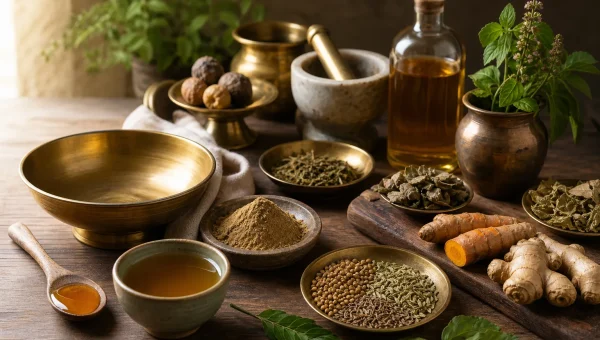
Trikatu is the three-pungent formula of dry ginger, black pepper, and long pepper. In Ayurvedic practice it is a Deepana-Pachana support, meaning it helps kindle digestive fire and process heaviness or Ama-type sluggishness. Black pepper contains piperine, a compound known to alter the bioavailability of some substances by affecting intestinal absorption and drug-metabolizing pathways.
Use frame: Trikatu is warming and sharp. It is not appropriate for everyone with anxiety, especially if there is acidity, reflux, burning, ulcers, loose stools, pregnancy, strong Pitta aggravation, or medication sensitivity. Because piperine can affect drug handling, anyone taking prescription medication should consult a clinician before using Trikatu regularly.
A Simple Daily Protocol for Agni and the Nervous System
The safest foundation is not a large stack of herbs. It is a stable rhythm that makes digestion predictable and reduces physiological noise. The following framework is a practical starting point, not a prescription.
Morning
The morning routine should wake digestion without shocking the system. Warmth, light movement, and calm eating are more useful than intensity.
- On waking: Sip warm water. Keep it plain, or add lemon only if it suits your digestion and does not worsen acidity.
- Movement: Take a gentle walk, do mild yoga, or practice a few rounds of slow breathing. Avoid intense fasted exercise if it leaves you anxious, depleted, or ravenous.
- Breakfast: Eat a warm, cooked meal if you are hungry. Oatmeal, kitchari, lightly spiced porridge, stewed fruit, or other simple cooked foods are easier for unstable Agni than cold, dry, rushed meals.
- Attention: Sit down to eat without scrolling, standing, or taking work calls. The nervous system digests better when the meal is not treated as an interruption.
Midday
Midday is traditionally treated as the strongest digestive window, and modern chrononutrition also gives importance to meal timing and alignment with circadian rhythms.
- Lunch: Make lunch the most complete meal when appetite is strongest. Include warm cooked food, enough protein, healthy fat, and fiber from vegetables, legumes, or grains that suit your digestion.
- Before lunch: If digestion is slow and there is no acidity, a small amount of ginger, cumin, coriander, or a practitioner-approved digestive formula may be used.
- After lunch: Take a gentle 5- to 15-minute walk. Post-meal walking has been associated with improved postprandial glucose handling, especially when done soon after eating.
Evening
The evening routine should reduce digestive burden and lower sensory stimulation before sleep. Heavy late dinners often work against both Agni and sleep quality.
- Dinner: Keep dinner lighter than lunch and ideally finish it several hours before sleep. Soups, kitchari, cooked vegetables, or simple warm meals are usually easier than cold salads, heavy fried foods, or late-night snacking.
- Night herbs: Triphala, Brahmi, Shankhpushpi, or ashwagandha should be chosen according to the person, not stacked automatically. Use one clear intervention at a time and assess tolerance.
- Sleep preparation: Dim lights, reduce screens, and keep the bedtime window consistent. The gut, liver, hormones, and microbiome all respond to timing cues.
Three Questions Skeptics Ask
The gut-brain conversation does not require blind belief. It becomes useful only when the claims are kept precise and the limits are respected.
Is this placebo?
The gut-brain axis has identifiable pathways: vagal afferent signaling, immune activity, microbial metabolites, gut hormones, and tryptophan metabolism. Inflammation can shift tryptophan away from serotonin-related pathways toward kynurenine-pathway activity, a mechanism discussed in depression literature. Ayurveda describes the practical side of this relationship through Agni, Ama, dosha movement, bowel pattern, and daily routine.
How long does it take to notice a difference?
Digestive regularity may begin changing within a few weeks when meal timing, sleep timing, food temperature, bowel habits, and stress patterns become consistent. Cognitive herbs such as Bacopa are usually evaluated over longer windows, commonly 8 to 12 weeks in clinical trials. Severe anxiety, depression, insomnia, panic, suicidal thoughts, bleeding, unexplained weight loss, persistent vomiting, or major bowel changes require medical care rather than self-treatment.
What if I have diagnosed anxiety or depression?
Continue working with your prescribing physician, therapist, or healthcare provider. Ayurvedic diet, routine, herbs, breathwork, and digestion support can be complementary, but they should not replace prescribed medication or therapy without medical supervision. Medication changes should never be made based on a blog post.
The Part That Changes the Most
The highest-leverage practice is often the least dramatic one: eat at consistent times, sleep at consistent times, and make the food warm, cooked, and digestible enough for your current Agni. The gut has circadian rhythms, and meal timing can influence metabolic and microbial patterns. Ayurveda’s Dinacharya uses the same principle in everyday language: rhythm protects function.
Try this for seven days: record what you eat, when you eat it, your bowel pattern, your bloating level, your sleep timing, and your mood or energy around mid-afternoon. Do not start by counting calories. Start by finding the rhythm. The pattern will often tell you whether the main issue looks more like Vishama, Tikshna, or Manda Agni.
Warm food, steady timing, a calmer meal environment, a short post-meal walk, and a consistent bedtime are not glamorous interventions. They are the ground on which stronger interventions become safe and useful.
Disclaimer: This article is for educational purposes only and does not constitute medical advice. Ayurvedic herbs and practices may interact with medications, supplements, pregnancy, breastfeeding, liver disease, thyroid disorders, autoimmune conditions, psychiatric treatment, and other health conditions. Consult a qualified Ayurvedic practitioner and a licensed healthcare provider before beginning any supplement protocol, especially if you are managing anxiety, depression, insomnia, digestive disease, or any chronic condition.
References
- The Microbiota-Gut-Brain Axis (2019), PubMed
- The Vagus Nerve at the Interface of the Microbiota-Gut-Brain Axis (2018), PubMed Central
- Exploring the serotonin-probiotics-gut health axis: A review of current evidence and potential mechanisms (2024), PubMed Central
- Does Serotonin in the intestines make you happy? (2020), PubMed Central
- Consumption of fermented milk product with probiotic modulates brain activity (2013), PubMed
- Cora (cora.ucc.ie)
- Short chain fatty acids: Microbial metabolites for gut-brain axis signalling (2022), PubMed
- Charaka Samhita — Grahani Chikitsa
- Charaka Samhita — Agni
- Charaka Samhita — Dosha
- Ayurvedic Pharmacopoeia of India
- A prospective, randomized double-blind, placebo-controlled study of safety and efficacy of a high-concentration full-spectrum extract of ashwagandha root in reducing stress and anxiety in adults (2012), PubMed
- NCCIH
- Therapeutic Uses of Triphala in Ayurvedic Medicine (2017), PubMed
- Therapeutic Uses of Triphala in Ayurvedic Medicine (2017), PubMed Central
- Frontiersin (frontiersin.org)
- NCBI
- Meta-analysis of randomized controlled trials on cognitive effects of Bacopa monnieri extract (2014), PubMed
- Effects of 12-Week Bacopa monnieri Consumption on Attention, Cognitive Processing, Working Memory, and Functions of Both Cholinergic and Monoaminergic Systems in Healthy Elderly Volunteers (2012), PubMed
- Nootropic herbs (Medhya Rasayana) in Ayurveda: An update (2012), PubMed Central
- Protective Mechanisms of Nootropic Herb Shankhpushpi (Convolvulus pluricaulis) against Dementia: Network Pharmacology and Computational Approach (2022), PubMed
- Jaims (jaims.in)
- Molecular and pharmacological aspects of piperine as a potential molecule for disease prevention and management: evidence from clinical trials (2022), PubMed Central
- Influence of piperine on the pharmacokinetics of curcumin in animals and human volunteers (1998), PubMed
- After Dinner Rest a While, After Supper Walk a Mile? A Systematic Review with Meta-analysis on the Acute Postprandial Glycemic Response to Exercise Before and After Meal Ingestion in Healthy Subjects and Patients with Impaired Glucose Tolerance (2023), PubMed Central
- Link (link.springer.com)
- Timing Matters: The Interplay between Early Mealtime, Circadian Rhythms, Gene Expression, Circadian Hormones, and Metabolism-A Narrative Review (2023), PubMed Central
- Circadian Rhythm and the Gut Microbiome (2016), PubMed
- Charaka Samhita — Dinacharya
- NCCIH
- NCCIH

The eating antidepressants like mints at director level while being chronically constipated is my story from 3 years ago. When my functional medicine doctor finally asked about digestion in relation to mood, it was the first time I understood they were not separate problems.
Where are the controlled trials? Personal anecdotes are useful context but they’re not evidence. I need to see RCT data before recommending this to patients.
The Sunday evening digestion-mood connection described here is exactly what I experience. When my stomach is off, my emotional state is more reactive. I had always thought the stress was causing the digestion problem. The possibility that it runs both ways changed my whole treatment approach.
Good reminder on Approach to Gut-Brain Axis. The timing advice is the part I would start with.
My doctor in Bangalore suggested something similar but used different herbs. Is there regional variation in how Ayurvedic practitioners approach this condition?
The connection between gut serotonin production and mood makes a lot of sense after reading about the vagus nerve highway.
Two months on the gut-brain protocol from this article. My anxiety is measurably different. Not the sudden drop I had hoped for but a gradual raising of the floor. The reactive episodes are less frequent and less intense. I cannot attribute this to any single change.
I tried taking Ashwagandha with warm milk before bed and noticed my stress levels felt a bit lower after a couple weeks.
The brahmi recommendation appears on this blog in multiple contexts. Is there a point at which concurrent Brahmi use across protocols, gut-brain axis, anxiety, cognitive support, starts to have diminishing returns or dose-stacking concerns?
I was treated for depression for 3 years without anyone asking about my gut. When I finally addressed the chronic constipation and irregular digestion through dietary changes and triphala, my mood stabilized in a way that the antidepressants had never fully achieved. The order of treatment mattered enormously.
Question about Triphala: does the powder need to be boiled or just mixed with warm water?
The research cited here is from the 2015-2020 period. Is there more recent work that confirms or updates these findings?
Reading the section on Vishama Agni described my own erratic appetite and bloating perfectly.
The research cited is old and small. n=96 for a genomic study in 2015 would not pass peer review today. I’d want to see updated work before drawing strong conclusions.
The connection between the daily bloating and the anxiety is what I needed spelled out. I spent years treating them as two separate problems and throwing separate solutions at each. The gut-brain axis framing from Ayurveda — everything running through Agni and the quality of Prana reaching the mind — makes more coherent sense of my history than anything I got from conventional medicine. Have you written about specific dietary changes for someone whose gut-brain axis is clearly dysregulated but who can’t tolerate fermented foods?
It seems the advice to eat the biggest meal at midday aligns with what I’ve heard about circadian rhythms, though I wonder if shift workers can adapt.
Based on the article, adding a pinch of black pepper to meals could help with absorption beyond just spice.
Honestly, the idea that gut health can influence anxiety feels less mystical when you see the cortisol study numbers.
not sure about some of the claims here. would like to see proper citations for the traditional references
Saved this
tried 3 of the suggestions here. 2 worked well, 1 made no difference. good enough ratio for me
नमस्ते, this is exactly what I was looking for 🙏
the translation of Sanskrit terms throughout helps a lot for those of us learning this system
🌿 started this protocol 2 weeks ago. nothing notable yet but will report back in a month
does the approach differ for someone with multiple doshas elevated at once?
🙏 the quality of herbs varies so much between brands. really hard to replicate these results
agni concept finally clicked for me reading this. it explains why I digest the same food differently depending on stress levels
A quick note: the recommendation to avoid ice in drinks resonates because cold beverages always leave me feeling sluggish.
would prefer more citations in the text itself
IBS protocol section should address SIBO separately. the treatments overlap but they’re not the same condition
will try and report back. fingers crossed
reading this in 2027, has anything changed about the dosage recommendations since this was published?
not sure if its the herbs or the diet changes that made the difference
I tried something similar on my own without guidance and had side effects. really recommend consulting a vaidya first
@Priya same here
the seasonal rotation idea is something I had never considered before
does anyone know if these herbs are safe while on blood thinners? would really appreciate a response
useful
kitchari fast for 3 days reset something in my gut. hard to describe but lighter and clearer
same question as above, any substitute for herbs not available outside India?
late to this but wanted to ask if anyone has combined these approaches with conventional treatment
I liked the practical side of Approach to Gut-Brain Axis. The practical details matter more than people think.
the mandagni vs vishmagni distinction is what I was missing. I thought all slow digestion was the same
Will try
The safest part of the Approach to Gut-Brain Axis advice is keeping it simple. The practical details matter more than people think.
sharing with my mom
been following this blog for 6 months and this is one of the more grounded posts
good information but the references section would make this much more credible 🌿
the basic concepts here match what I learned in my yoga teacher training
✨ my vaidya says the same thing about agni being central to everything
following this from UK, hard to find some of these herbs here
tried the fennel seed protocol after meals for 3 weeks. bloating reduced significantly but my appetite increased a lot too
धन्यवाद for the detailed protocol 💯
Doing this
tried this for 30 days, mixed results. maybe my constitution assessment is wrong
this is the most detailed breakdown of the topic I’ve found. saving for reference
Very helpful, thank you धन्यवाद
been doing this for 6 months, amazing difference in energy levels
I wish more doctors knew about this approach
which of these approaches works best for Kapha constitution? the article mixes all three doshas