Ayurvedic Thyroid Support: Evidence for Kanchanara and Guggulu
Thyroid Disorders Through an Ayurvedic Lens Modern thyroid disorders are defined by clinical findings and laboratory testing rather than by...

February 5, 2026
PhD in Pharmacognosy with a focus on Ayurvedic botanicals. Has published peer-reviewed research on herbal medicine efficacy. Bridges traditional Ayurveda and modern biomedical research with rigorous evidence-based analysis.
Thyroid Disorders Through an Ayurvedic Lens Modern thyroid disorders are defined by clinical findings and laboratory testing rather than by...
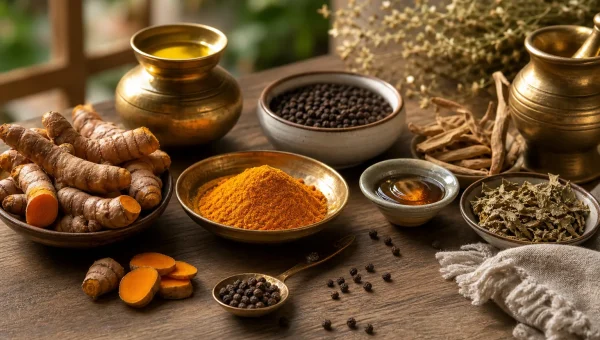
The 1998 paper by Shoba and colleagues remains a frequently cited pharmacokinetic study of curcumin and piperine. In a small...
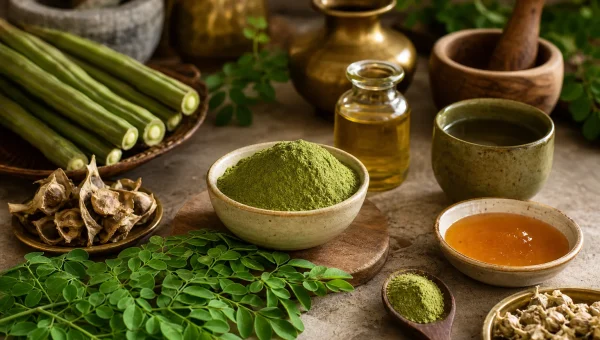
Moringa oleifera: A Botanical and Ayurvedic Profile Moringa oleifera Lam., commonly called the drumstick tree or horseradish tree, is an...
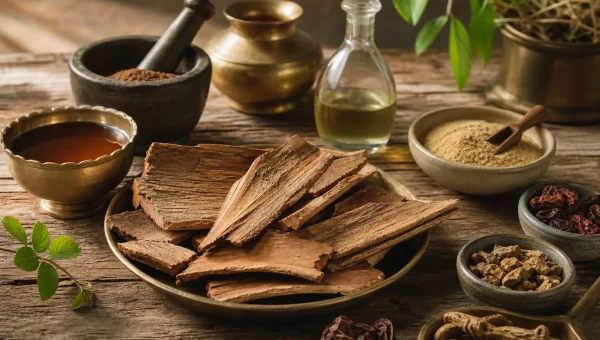
Arjuna Bark for Heart Health: What the Evidence Supports Terminalia arjuna is a large deciduous tree of the Combretaceae family,...
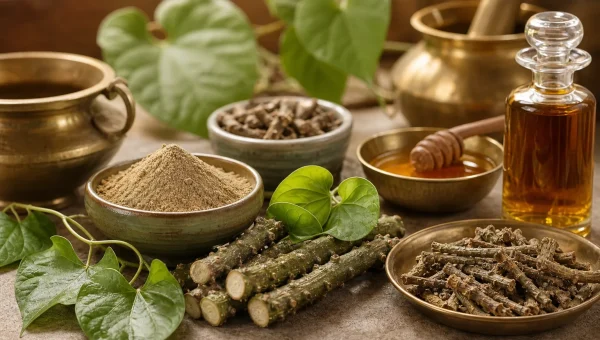
Tinospora cordifolia, the pharmacopoeial source of Guduchi or Giloy, contains starch and several structurally distinct polysaccharides. These constituents are relevant...
Tulsi in Modern Research: Moving Beyond Traditional Claims Ocimum tenuiflorum (syn. Ocimum sanctum ), commonly known as Tulsi or Holy...
Turmeric is often called “nature’s ibuprofen,” but that slogan blurs important distinctions. Turmeric rhizome is a complex botanical drug, curcumin...
Neem, known as Nimba in Ayurveda, is the medicinal tree Azadirachta indica A. Juss. of the Meliaceae family. Its leaves,...
Piperine Can Markedly Increase Curcumin Exposure—But “2,000%” Needs Context The widely quoted 2,000% figure comes from a 1998 pharmacokinetic experiment...
A Verified Safety Lesson: Turmeric and Warfarin Herbal medicines can alter the safety or effectiveness of prescription drugs. A documented...