
Inflammation is a coordinated biological response involving lipid mediators, cytokines, transcription factors, vascular changes, and immune-cell activity. Cyclooxygenase enzymes participate in one part of this response by converting arachidonic acid first to PGG2 and then PGH2; downstream enzymes use PGH2 to form prostaglandins and thromboxanes. Prostaglandin E2 contributes to fever and pain sensitization, but neither inflammation nor the actions of medicinal plants can be reduced to one enzyme. Turmeric, Boswellia, and ginger have each been studied in relation to cyclooxygenase or lipoxygenase pathways, although effects observed in laboratory systems do not establish that an orally administered herb acts like a prescription NSAID.
The COX Pathway and Its Pharmacological Significance
COX-1 and COX-2 are closely related enzymes with overlapping physiological and inflammatory functions. COX-1 is commonly expressed in many tissues and contributes to gastric mucosal protection, platelet thromboxane production, and renal physiology. COX-2 is strongly induced by inflammatory signals in many cells, yet it is also constitutively present in certain tissues and performs physiological functions. Describing COX-1 as entirely protective and COX-2 as entirely inflammatory is therefore an oversimplification.
Non-selective NSAIDs inhibit both isoforms to varying degrees. Celecoxib preferentially inhibits COX-2 at therapeutic concentrations and is used for pain and inflammatory disorders, but it remains an NSAID. Its United States prescribing information carries boxed warnings for serious cardiovascular thrombotic events and gastrointestinal bleeding, ulceration, or perforation. Botanical extracts are chemically variable mixtures and are not standardized as celecoxib-equivalent inhibitors. Enzyme and cell-culture findings cannot establish equivalent potency, tissue exposure, dosage, therapeutic effect, or clinical risk.
Curcuma longa: Haridra, Curcumin, COX-2, and NF-κB
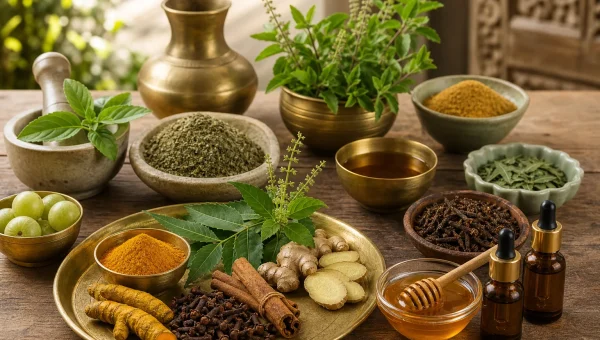
The Ayurvedic Pharmacopoeia of India identifies Haridra as the dried and cured rhizome of Curcuma longa L. of the Zingiberaceae family. Its pharmacopoeial profile is katu and tikta in rasa, ruksha in guna, ushna in virya, and katu in vipaka; its listed karma includes kaphapittanut. These Ayurvedic attributes describe Haridra within dravyaguna and should not be translated directly as molecular COX-2 selectivity.
Modern experiments support more than one possible interaction between curcumin and the prostaglandin pathway. In gastrointestinal cell models, curcumin reduced induced COX-2 transcription, COX-2 protein, and PGE2 formation, and direct inhibition of COX-2 activity was also observed under specified experimental conditions. Separate intestinal epithelial-cell work found that curcumin blocked cytokine-triggered NF-κB activation at a signal leading to IKK activity, with reduced IκB phosphorylation and degradation. These are preclinical effects and do not demonstrate that culinary turmeric or an oral supplement produces equivalent concentrations in human tissues.
Human evidence is most developed for symptomatic joint conditions, although extracts, formulations, and doses vary. A multicentre randomized trial assigned 367 people with knee osteoarthritis to Curcuma domestica extract at 1,500 mg per day or ibuprofen at 1,200 mg per day for four weeks. WOMAC outcomes improved in both groups, while gastrointestinal adverse events were reported less frequently in the turmeric-extract group. A 2016 systematic review included eight randomized trials of turmeric extracts or curcumin for arthritis symptoms and assessed them as having low-to-moderate risk of bias. The clinical findings indicate possible symptomatic benefit but do not establish turmeric as a universal NSAID replacement or prove that COX-2 inhibition alone produced the benefit.
Boswellia serrata: Kunduru, AKBA, and 5-LOX
The Ayurvedic Pharmacopoeia of India identifies Kunduru as the exudate of Boswellia serrata Roxb. of the Burseraceae family and gives Shallaki as a Sanskrit synonym. Its pharmacopoeial profile is madhura, katu, and tikta in rasa; guru, snigdha, and tikshna in guna; ushna in virya; and madhura in vipaka. The listed karma includes kaphahara, vatahara, and kaphapittahara. Kunduru is an oleo-gum-resin, whereas standardized Boswellia extracts used in clinical trials may differ substantially in extraction method and boswellic-acid composition.
Purified acetyl-11-keto-beta-boswellic acid, or AKBA, and related 11-keto boswellic acids have inhibited 5-lipoxygenase product formation in cell-free or isolated-cell experiments. Subsequent investigations found that the apparent activity was influenced by assay conditions and protein binding. Boswellic acids did not suppress leukotriene formation in human whole blood under the tested conditions, while pharmacokinetic studies found low circulating concentrations of AKBA and KBA after oral administration. Accordingly, 5-LOX inhibition remains a laboratory mechanism hypothesis rather than an established explanation for the effects of every oral Boswellia preparation.
A randomized double-blind placebo-controlled crossover trial enrolled 30 patients with knee osteoarthritis and used eight-week treatment periods. Boswellia extract reduced knee pain and swelling frequency and improved knee flexion and walking distance compared with placebo. Radiographic findings did not change, and minor gastrointestinal adverse reactions occurred. A later systematic review and meta-analysis of randomized trials concluded that Boswellia and Boswellia extracts may improve osteoarthritis pain, stiffness, and physical function, while noting limitations in the size and methodological quality of the available trials.
Zingiber officinale: Shunthi, Gingerols, and Shogaols
The Ayurvedic Pharmacopoeia of India defines Shunthi as the dried rhizome of Zingiber officinale Roscoe and records gingerol and shogaol among its pungent constituents. Its pharmacopoeial profile is katu in rasa, laghu and snigdha in guna, ushna in virya, and madhura in vipaka; listed karma includes dipana, pachana, anulomana, and vatakaphapaha. Ardraka is the pharmacopoeial name for the fresh rhizome. Fresh and dried ginger are therefore related materials with distinct identities in Ayurvedic materia medica.
Ginger cannot accurately be classified as a uniformly non-selective COX inhibitor. In one enzyme-screening study, several constituents interacted with COX-2, and 10-gingerol, 8-shogaol, and 10-shogaol inhibited COX-2 but not COX-1 under the reported conditions. Other gingerols and related compounds have demonstrated COX-1 inhibition or antiplatelet activity in separate laboratory assays. The observed action depends on the constituent, concentration, preparation, and test system; it does not mean that oral ginger has the potency, selectivity, or gastrointestinal-risk profile of a pharmaceutical NSAID.
A meta-analysis of five randomized placebo-controlled trials involving 593 adults with osteoarthritis found modest reductions in pain and disability with oral ginger. Participants receiving ginger were also more likely to discontinue because of adverse events, and the evidence was graded as moderate quality. Ginger’s anti-nausea activity belongs to a separate pharmacological line of investigation: gingerols and 6-shogaol have modulated the 5-HT3 receptor ion-channel complex in experimental systems, so this use should not be attributed solely to cyclooxygenase inhibition.
Comparison of Pharmacological and Clinical Evidence
A useful comparison separates traditional drug identity, laboratory pathway effects, and human clinical outcomes instead of combining them under the broad label of “natural COX-2 inhibition.”
| Drug or constituent | Pharmacological finding | Important qualification | Human evidence summarized here |
|---|---|---|---|
| Haridra or curcumin (C. longa) | Reduced induced COX-2 expression, PGE2 formation, and NF-κB signalling in preclinical models | Cell experiments do not determine oral tissue exposure or clinical dose equivalence | Knee-osteoarthritis comparator trial and arthritis review of eight randomized trials |
| Kunduru or boswellic acids (B. serrata) | AKBA and related compounds inhibited 5-LOX in selected purified or isolated-cell systems | Whole-blood and pharmacokinetic findings limit a simple in-vivo 5-LOX explanation | Small crossover knee-osteoarthritis trial and later meta-analysis |
| Shunthi or ginger constituents (Z. officinale) | Selected gingerols and shogaols affected COX-2; other constituents affected COX-1 or platelet activity in laboratory assays | The whole herb is not uniformly COX-2 selective or equivalent to an NSAID | Meta-analysis of five placebo-controlled osteoarthritis trials |
| Celecoxib | Preferential direct inhibition of COX-2 at therapeutic concentrations | Prescription NSAID carrying cardiovascular and gastrointestinal boxed warnings | Regulated, indication-specific prescribing information and dosing |
Ayurvedic Formulation Logic and Safe Use
Ayurvedic prescribing is not organized around isolated COX-2 inhibition. A qualified practitioner considers the identity and preparation of the dravya, its rasa, guna, virya, vipaka, and karma, together with agni, dosha, disease stage, tissue involvement, strength, season, diet, and accompanying medicines. Trikatu is a recognized combination of Shunthi, Maricha, and Pippali, but it should not be described as a clinically proven “COX synergist,” nor should piperine be assumed to improve the safety or effectiveness of every accompanying medicine.
Food-level use, traditional powders, oleo-gum-resins, standardized extracts, phospholipid complexes, and enhanced-bioavailability products are not interchangeable. Concentrated preparations may cause adverse effects or interact with medicines, and altered-bioavailability formulations may change both exposure and risk. Turmeric, Boswellia, and ginger should not be used to delay diagnosis or replace prescribed anti-inflammatory treatment in an acute or serious condition. Consult a qualified Ayurvedic practitioner and a healthcare provider before therapeutic use, especially when taking medicines, during pregnancy, before surgery, or while managing a chronic disease.
These herbs are not natural equivalents of celecoxib. Haridra, Kunduru, and Shunthi have authentic Ayurvedic identities and distinct pharmacopoeial profiles. Their constituents interact with several inflammatory pathways in experimental systems, and clinical trials indicate possible symptomatic benefit in osteoarthritis. Pathway modulation is not the same as selective pharmaceutical inhibition, and an Ayurvedic treatment plan cannot be reduced to a single biochemical target.
References
- Cyclooxygenases: structural and functional insights (2009), PubMed Central
- Different Chemical Structures and Physiological/Pathological Roles of Cyclooxygenases (2021), PubMed Central
- FDA
- Ayurvedic Pharmacopoeia of India
- Curcumin inhibits cyclooxygenase-2 transcription in bile acid- and phorbol ester-treated human gastrointestinal epithelial cells (1999), PubMed
- Curcumin blocks cytokine-mediated NF-kappa B activation and proinflammatory gene expression by inhibiting inhibitory factor I-kappa B kinase activity (1999), PubMed
- Specific inhibition of cyclooxygenase-2 (COX-2) expression by dietary curcumin in HT-29 human colon cancer cells (2001), PubMed
- Efficacy and safety of Curcuma domestica extracts compared with ibuprofen in patients with knee osteoarthritis: a multicenter study (2014), PubMed
- Efficacy of Turmeric Extracts and Curcumin for Alleviating the Symptoms of Joint Arthritis: A Systematic Review and Meta-Analysis of Randomized Clinical Trials (2016), PubMed
- Product-evaluation registry of Meriva®, a curcumin-phosphatidylcholine complex, for the complementary management of osteoarthritis (2010), PubMed
- Efficacy and safety of Meriva®, a curcumin-phosphatidylcholine complex, during extended administration in osteoarthritis patients (2010), PubMed
- Ayurvedic Pharmacopoeia of India
- Acetyl-11-keto-beta-boswellic acid (AKBA): structure requirements for binding and 5-lipoxygenase inhibitory activity (1996), PubMed
- On the interference of boswellic acids with 5-lipoxygenase: mechanistic studies in vitro and pharmacological relevance (2009), PubMed
- Boswellia serrata: an overall assessment of in vitro, preclinical, pharmacokinetic and clinical data (2011), PubMed
- Efficacy and tolerability of Boswellia serrata extract in treatment of osteoarthritis of knee–a randomized double blind placebo controlled trial (2003), PubMed
- Effectiveness of Boswellia and Boswellia extract for osteoarthritis patients: a systematic review and meta-analysis (2020), PubMed
- Dravyaguna notes
- Cyclooxygenase-2 inhibitors in ginger (Zingiber officinale) (2011), PubMed
- Effective anti-platelet and COX-1 enzyme inhibitors from pungent constituents of ginger (2003), PubMed
- Efficacy and safety of ginger in osteoarthritis patients: a meta-analysis of randomized placebo-controlled trials (2015), PubMed
- Zingiberaceae extracts for pain: a systematic review and meta-analysis (2015), PubMed
- Mode of action of gingerols and shogaols on 5-HT3 receptors: binding studies, cation uptake by the receptor channel and contraction of isolated guinea-pig ileum (2006), PubMed
- Dravyaguna notes
- Ginger–an herbal medicinal product with broad anti-inflammatory actions (2005), PubMed
- NCCIH
- NCCIH
- NCCIH
The COX-2 enzyme as a central node explanation is the clearest I’ve found for understanding why anti-inflammatory herbs work at a mechanistic level rather than just ‘reducing inflammation.’ Knowing where in the cascade each herb intervenes changes how you think about combining them.
The 5-LOX pathway coverage from Boswellia alongside COX-2 coverage from curcumin is the combination logic that explains why the two together work better for some presentations than either alone. Is there evidence on optimal dosing of each when used in combination?
I would like more detail on COX-2 Inhibition Explained. The examples make the advice less abstract.
The curcumin bioavailability section is the critical qualifier for any practical advice. In vitro COX-2 inhibition data is extensive. Human bioavailability data tells a different story for plain curcumin. What delivery method do you recommend to approach the in vitro inhibition levels clinically?
I would like more detail on COX-2 Inhibition Explained. Good starting point for a cautious reader.
Useful post on COX-2 Inhibition Explained. A few more examples would still help.
The Shogaol versus Gingerol comparison is something I hadn’t seen before. Dried ginger producing different active compounds than fresh ginger is not common knowledge and it changes the prescription significantly. For inflammatory conditions, the dried preparation seems pharmacologically superior.
The breakdown of COX-1 versus COX-2 functions helped me see why turmeric isn’t a straight swap for celecoxib.
How does curcumin compare mechanistically to quercetin which also has COX-2 inhibitory activity? I take quercetin for allergy support and wonder whether the mechanisms overlap enough that adding curcumin is redundant.
The NF-kB pathway downstream effects described for curcumin make it pharmacologically broader than selective COX-2 inhibitors. That breadth explains why it seems to help across such diverse conditions but also means the dose-response prediction is less precise.
I wonder how the curcumin dose used in the knee osteoarthritis trial compares to typical supplement servings.
The comparison to celecoxib in terms of mechanism but not in terms of clinical potency needs to be stated more clearly. These herbs reduce inflammatory markers. They don’t achieve the magnitude of effect of pharmaceutical COX-2 inhibitors at the doses people typically take.
Useful post on COX-2 Inhibition Explained. This is the kind of detail readers can test slowly.
Reading about Boswellia’s AKBA made me check the label on my boswellic acid extract for standardization.
The article mentions ginger’s mixed COX-1/COX-2 effects; does that explain why some people get stomach upset?
It seems the authors are careful to note that lab findings don’t equal clinical NSAID replacement.
Has anyone tried combining turmeric with black pepper and noticed a difference in joint comfort?
The section on NF-κB signaling clarified why curcumin might affect more than just prostaglandin pathways.
I’m still unsure whether the boswellia crossover trial’s pain reduction is clinically meaningful.
The dosage of 1,500 mg turmeric extract daily sounds high compared to the powder I use in cooking.
My nutritionist sent me this link 🌿 ❤️
Thanks!
I would like more detail on COX-2 Inhibition Explained. The timing advice is the part I would start with.
not sure about some of the claims here. would like to see proper citations for the traditional references
Seeing the warning about cardiovascular risks for celecoxib makes me think twice about expecting herbs to mimic that profile.
been doing this for 6 months, amazing difference in energy levels
sharing with my mom
useful info but hard to find a practitioner who does this type of treatment outside major cities
the seasonal rotation idea is something I had never considered before
Doing this
would prefer more citations in the text itself
started this protocol 2 weeks ago. nothing notable yet but will report back in a month
been following this blog for 6 months and this is one of the more grounded posts 🌿
my vaidya says the same thing about agni being central to everything
Very helpful, thank you
Reading this later and the COX-2 Inhibition Explained advice still feels relevant. This would be easier to follow with a one-week sample plan.
the basic concepts here match what I learned in my yoga teacher training
following this from UK, hard to find some of these herbs here
tried 3 of the suggestions here. 2 worked well, 1 made no difference. good enough ratio for me
Saved this 🙌
wanting to try boswellia for IBD. the article mentions it briefly but doesn’t give IBD-specific dosing
I liked the practical side of COX-2 Inhibition Explained. The examples make the advice less abstract.
The safest part of the COX-2 Inhibition Explained advice is keeping it simple. The article avoids making it sound like a quick fix.
🙏 the ginger for inflammation bit is understated. fresh ginger in morning tea reduced my wrist stiffness better than dry powder
same here
would love a follow-up article on the same topic but for elderly patients
not sure if its the herbs or the diet changes that made the difference
does anyone know if these herbs are safe while on blood thinners? would really appreciate a response
💯 tried this for 30 days, mixed results. maybe my constitution assessment is wrong
does the approach differ for someone with multiple doshas elevated at once?
The COX-2 Inhibition Explained section feels grounded enough to try carefully. Good starting point for a cautious reader.
I tried something similar on my own without guidance and had side effects. really recommend consulting a vaidya first