
There is a copper vessel on my grandmother’s kitchen shelf in Lucknow that holds a particular status in family memory. It is not decorative. It is the pot in which she has simmered Kashaya for children with coughs, adults with digestive heaviness, winter mornings with body stiffness, and the first roughness of a sore throat. Kashaya, also called Kwatha, Kwath, or Kashayam, is the Ayurvedic decoction: herbs are boiled in water so that their water-soluble constituents move into the liquid. In traditional Indian homes, this simple preparation remains one of the most practical ways to use herbs respectfully, freshly, and in small amounts.
In Ayurvedic pharmaceutics, Kwatha is part of the larger group called Panchavidha Kashaya Kalpana, the five basic liquid or semi-liquid preparations that include expressed juice, paste, decoction, cold infusion, and hot infusion. The general Kwatha method uses coarse herbs, water, mild heat, and reduction by evaporation, followed by straining while warm. Classical and later pharmacy texts describe different water proportions according to the nature of the herb: softer plant parts may need less water, while roots, bark, and harder materials need more time and water for extraction. A common practical rule is to use coarse dry herb with 8-16 parts water and reduce the liquid to one-fourth or one-eighth, depending on the formulation and instruction.
At home, Kashaya should be treated as a fresh preparation rather than a bottled tonic. Use clean, correctly identified herbs; prefer coarse-cut material over very fine powder when possible; prepare only what you will drink soon; and use a stainless steel, iron, or earthen vessel rather than reactive cookware. Honey, when used, should be added only after the drink cools to comfortably warm temperature. These recipes are food-like household preparations, not substitutes for diagnosis or medical care. Consult a qualified Ayurvedic practitioner or healthcare provider if you are pregnant, giving herbs to children, taking medication, or managing a diagnosed condition.
Essential Principles Before You Begin
Good Kashaya begins with good raw material. Roots, barks, seeds, and dried leaves should be clean, aromatic, and free of mold. Coarse herbs are preferred because they strain well and tolerate simmering; fine powders can be used in very small quantities but often make the drink cloudy and strong. Keep the vessel uncovered during reduction so excess water can evaporate, strain while hot, and drink warm. A freshly prepared decoction is traditionally considered best for immediate use; many Ayurvedic pharmacy discussions describe the short useful life of Kwatha as only a few hours.
Six Home Kashaya Recipes
The recipes below keep the household spirit of Kashaya while correcting the formulas so they remain close to authentic Ayurvedic usage. Start with small amounts, observe your digestion, and avoid using strong decoctions continuously unless a practitioner has advised that course.
Recipe 1: Trikatu Kashaya, For Digestive Fire and Kapha Congestion
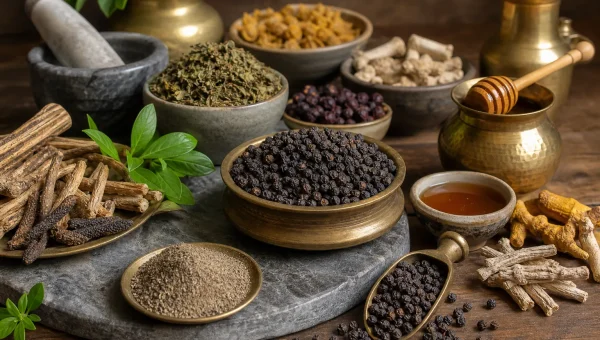
Trikatu means “three pungents”: dry ginger, black pepper, and long pepper. In Ayurveda it is a sharp, heating combination used to kindle Agni and reduce Kapha-type heaviness, mucus, sluggish appetite, and cold dampness. Because it is pungent and heating, it is not suitable for active acidity, burning sensation, mouth ulcers, bleeding tendency, high Pitta states, or use during pregnancy unless supervised.
Ingredients: 1/4 tsp dry ginger powder, 1/8 tsp black pepper powder, 1/8 tsp long pepper powder, 2 cups water, 1 tsp honey after cooling to warm temperature.
Method: Add the herbs to water and simmer gently until the liquid reduces to about 1/2 cup. Strain carefully, allow it to cool from hot to warm, and add honey only at that stage. Sip 30-60 ml before a heavy meal or at the beginning of Kapha-type congestion. Avoid combining frequent Trikatu use with prescription medicines without professional guidance, because pepper constituents can influence drug absorption and metabolism.
Recipe 2: Dashamoola Kashaya, For Vata-Type Stiffness and Body Ache
Dashamoola means “ten roots.” The classical group is not Ashwagandha and Shatavari; it is a ten-root combination traditionally divided into Brihat Panchamoola and Laghu Panchamoola. It is used in Ayurveda for Vata-Kapha conditions involving stiffness, body ache, lower-back discomfort, and post-exertion heaviness. For authenticity, use a prepared Dashamoola coarse kwatha churna from a reputable Ayurvedic pharmacy rather than making a casual substitute.
Ingredients: 1 tbsp Dashamoola coarse kwatha churna, 4 cups water, 2-3 thin slices fresh ginger if digestion is sluggish, 1/4 tsp ghee after straining if Vata dryness is present.
Method: Soak the Dashamoola in water for 30 minutes if possible, then simmer on low heat until reduced to about 1 cup. Strain while warm. Take 1/2 cup in the evening or as advised by a practitioner. Do not use this recipe as a replacement for care in severe pain, swelling, injury, unexplained fever, neurological symptoms, or persistent back pain.
Recipe 3: Yashtimadhu Kadha, For Sore Throat and Pitta Irritation
Yashtimadhu, also known as licorice root or Mulethi, is sweet, demulcent, and soothing in traditional use. It is commonly used for throat irritation and Pitta-type burning discomfort. Licorice is not a casual daily herb for everyone: high intake or prolonged use may raise blood pressure, lower potassium, and interact with medicines, especially diuretics, heart medicines, corticosteroids, and blood-pressure medication.
Ingredients: 1 tsp dried licorice root pieces, 1/2 tsp coriander seeds, 2 crushed cardamom pods, 2 cups water.
Method: Simmer licorice and coriander in water for 12-15 minutes, reducing to about 1 cup. Strain and add crushed cardamom. Sip warm slowly so the liquid coats the throat. Avoid this recipe if you have hypertension, kidney disease, heart disease, low potassium, fluid retention, pregnancy, or if your clinician has told you to avoid licorice.
Kashaya Reference Table
This table gives a practical overview of the six household preparations, their core herbs, and the dosha pattern they are most commonly chosen for. It is a guide for mild, everyday use, not a prescription chart.
| Kashaya | Primary Herbs | Household Use | Dosha Focus |
|---|---|---|---|
| Trikatu Kashaya | Dry ginger, black pepper, long pepper | Sluggish appetite, heaviness, Kapha congestion | Kapha, Vata with coldness |
| Dashamoola Kashaya | Classical ten-root Dashamoola | Stiffness, body ache, Vata-Kapha discomfort | Vata, Kapha |
| Yashtimadhu Kadha | Licorice root, coriander, cardamom | Throat irritation, burning digestive discomfort | Pitta, Vata dryness |
| Tulsi-Ginger Kadha | Holy basil, ginger, black pepper, clove | Seasonal cold, cough, chills, Kapha mucus | Kapha, Vata |
| CCF Kashaya | Cumin, coriander, fennel | Gas, bloating, mild post-meal heaviness | Generally tridoshic |
| Brahmi Kashaya | Brahmi, shankhpushpi, cardamom | Mental overwork, evening restlessness, cognitive fatigue | Vata, Pitta |
Recipe 4: Tulsi-Ginger Kadha, For Seasonal Cold and Kapha Mucus
Tulsi, fresh ginger, black pepper, and clove make a familiar Indian kadha for the early stage of cold weather discomfort, chills, throat roughness, and Kapha-type mucus. Tulsi is aromatic and light; ginger and pepper add warmth; clove adds a strong pungent note. Keep this preparation moderate, especially in children, people with acidity, and those with high Pitta symptoms.
Ingredients: 10-12 fresh Tulsi leaves or 1 tsp dried Tulsi, 1 inch fresh ginger sliced, 4 black peppercorns, 1 clove, 2 cups water, jaggery or honey after cooling if needed.
Method: Combine Tulsi, ginger, pepper, clove, and water. Simmer 12-15 minutes until reduced to about 3/4 cup. Strain, cool to warm, and sweeten lightly if desired. Sip warm once or twice daily for short-term household support. Seek medical care for high fever, breathing difficulty, chest pain, dehydration, persistent symptoms, or symptoms in infants and very young children.
Recipe 5: CCF Kashaya, The Gentle Digestive
CCF means cumin, coriander, and fennel. This combination is widely used in modern Ayurvedic households because it is gentle, aromatic, and generally suitable across constitutions when used in food-like amounts. Cumin is warming and digestive, coriander is cooling and soothing, and fennel is sweet, aromatic, and traditionally used as a carminative after meals.
Ingredients: 1/2 tsp cumin seeds, 1/2 tsp coriander seeds, 1/2 tsp fennel seeds, 2 cups water.
Method: Lightly crush the seeds. Simmer in water for 8-10 minutes, strain, and drink warm after meals or between meals. For daily use, keep the brew mild rather than making it very concentrated. Reduce or avoid if any spice causes burning, rash, or discomfort.
Recipe 6: Brahmi Kashaya, For Cognitive Calm
Brahmi is used in Ayurveda as a Medhya herb, supporting memory, learning, and mental steadiness. In common modern use, Brahmi often refers to Bacopa monnieri; in some regions the name is also used for Mandukaparni, so purchase from a reliable supplier with the botanical name clearly stated. This evening Kashaya is intended for mental overwork and Vata-Pitta restlessness, not for severe anxiety, depression, epilepsy, dementia, or insomnia requiring medical care.
Ingredients: 1 tsp dried Brahmi or 1/2 tsp Brahmi powder, 1/4 tsp shankhpushpi powder if available, 2 crushed cardamom pods, 1.5 cups water.
Method: Simmer gently for 6-8 minutes, strain, and sip warm in the evening. Keep the dose small at first because Brahmi can cause digestive upset in some people. Avoid combining it with sedatives, thyroid medication, epilepsy medication, or psychiatric medication unless your clinician approves.
Safety and Good Sense
Kashaya is powerful because it concentrates herbs in water. That is also why it deserves caution. Do not use strong decoctions as a daily habit simply because they are natural. Avoid self-treating serious infection, prolonged fever, unexplained pain, chest symptoms, severe acidity, pregnancy-related symptoms, or chronic disease with household kadha. Buy herbs from reputable suppliers, avoid products with unclear ingredients, and tell your healthcare provider about any Ayurvedic herbs you use, especially if you take prescription medicines.
Used with care, Kashaya is one of Ayurveda’s most beautiful household practices: simple water, clean herbs, gentle heat, and attention. It does not need exaggeration to be valuable. Its strength lies in freshness, correct selection, correct proportion, and respect for the person drinking it.
References
- Merriam-webster (merriam-webster.com)
- Jaims (jaims.in)
- Preparation of decoction of medicinal plants: a self-help measure? (2011), PubMed Central
- Jaims (jaims.in)
- Ijam (ijam.co.in)
- Studies on the physicochemical characteristics of heated honey, honey mixed with ghee and their food consumption pattern by rats (2010), PubMed Central
- An Ayurvedic formulation ‘Trikatu’ and its constituents (1992), PubMed
- Black pepper and its pungent principle-piperine: a review of diverse physiological effects (2007), PubMed
- Wjpr (wjpr.net)
- A critical review on two types of Laghupanchamula (2012), PubMed Central
- Standardization and quality control parameters of Dashanga Kwatha ghana tablet: An Ayurvedic formulation (2011), PubMed Central
- Antiulcer properties of Glycyrrhiza glabra L. extract on experimental models of gastric ulcer in mice (2015), PubMed
- An Extract of Glycyrrhiza glabra (GutGard) Alleviates Symptoms of Functional Dyspepsia: A Randomized, Double-Blind, Placebo-Controlled Study (2012), PubMed Central
- NCCIH
- Tulsi – Ocimum sanctum: A herb for all reasons (2014), PubMed Central
- The Clinical Efficacy and Safety of Tulsi in Humans: A Systematic Review of the Literature (2017), PubMed Central
- Foeniculum vulgare Mill: a review of its botany, phytochemistry, pharmacology, contemporary application, and toxicology (2014), PubMed
- Foeniculum vulgare Mill: a review of its botany, phytochemistry, pharmacology, contemporary application, and toxicology (2014), PubMed Central
- NCBI
- Effects of 12-Week Bacopa monnieri Consumption on Attention, Cognitive Processing, Working Memory, and Functions of Both Cholinergic and Monoaminergic Systems in Healthy Elderly Volunteers (2012), PubMed Central
- Meta-analysis of randomized controlled trials on cognitive effects of Bacopa monnieri extract (2014), PubMed
- NCCIH
- FDA
The Kashaya Recipes section feels grounded enough to try carefully. Small daily changes are easier to follow than a perfect plan.
reading this while sipping my morning tea. perfect way to start the day honestly
Can these preparations be made with dried herbs from a grocery store or is there a specific quality or freshness standard required for therapeutic effectiveness?
The respiratory Kashaya with ginger, licorice, and pepper has been my winter cold protocol for three seasons now. Frequency of illness has dropped noticeably and when I do catch something the duration is shorter than before I started.
What’s the minimum effective reduction ratio for a basic household Kashaya if you don’t have time for the full preparation? I understand the clinical-grade preparation takes an hour or more but is there a shorter version that still delivers meaningful activity?
The Kashaya Recipes section feels grounded enough to try carefully. The article avoids making it sound like a quick fix.
Is it possible to make Kashaya in a thermosflask style to keep warm through the morning, or does the extended warmth affect the active compounds over a few hours?
The copper vessel story from Lucknow really brings the tradition to life, makes you want to try simmering your own Kashaya.
The joint support Kashaya with Dashamoola base is something my Vaidya prescribes for my Vata joint complaints every winter. Having the recipe here means I can make it between clinic visits rather than running out.
Can children take these preparations? My kids get regular colds in winter and I’m looking for something gentler than OTC cold medicines but I want to know age-appropriate dosing and which formulas are suitable.
I wonder if using a clay pot instead of stainless steel changes the flavor of the Trikatu Kashaya?
The point about the smell telling you when it’s ready is exactly the traditional instruction. The aroma shift at proper reduction isn’t mystical, it’s the volatile oil profile changing as the water activity decreases. Traditional sensory knowledge is empirical knowledge.
I made my first Kashaya following this guide and the result was much more concentrated than I expected. The reduction instructions are clear but I over-reduced on my first attempt. A visual guide or photo reference for the correct endpoint color and consistency would help beginners.
A quick question: how long should the Dashamoola Kashaya sit before adding ghee and rock salt?
The advice to drink Kashaya fresh within three hours makes sense, but I often forget and reheat it later.
the fever Kashaya with dry ginger and tulsi brought my son’s 101 degree fever down over about four hours. along with adequate fluids and rest it worked without ibuprofen. my husband was skeptical and now he makes it.
Seeing the reference table helped me pick Yashtimadhu Kadha for my occasional throat irritation.
It’s interesting that the classical 1:16 herb-to-water ratio can be adjusted to 1:8 for powders when making Kashaya at home.
After reading about the CCF Kashaya, I tried the cumin-coriander-fennel blend after dinner and felt lighter.
Is it safe to give Tulsi-Ginger Kadha to a five-year-old with a mild fever, or should the dose be reduced further?
The mention of Charaka Samhita’s detailed chapters makes me want to look up the original verses on Kashaya preparation.
I appreciate the warning about not storing Kashaya longer than a Yama, it’s a detail many modern guides overlook.
Just a note: using fresh ginger slices in Dashamoola Kashaya seems to give a brighter bite than powdered ginger.
When simmering Brahmi Kashaya, keeping the heat low prevents the delicate herbs from turning bitter.
Although the article says honey should be added after cooling, I sometimes drizzle it in while the drink is still warm and notice a subtle change in taste.
For joint pain, the Dashamoola recipe’s suggestion to take it for four to six weeks continuously feels like a realistic commitment.