
The first time I described Udvartana to a new patient in my Pune clinic, she looked at me with polite skepticism. A dry herbal powder massage performed upward, against the direction of hair growth, sounded too simple to belong in a serious therapeutic plan. Yet Udvartana is a classical Ayurvedic external procedure, described in the daily-regimen context of Ashtanga Hridaya and discussed through related forms such as Udgharshana and Utsadana in the Sushruta tradition. Its value lies not in a single cosmetic promise, but in the way powder selection, direction of rubbing, pressure, heat, and patient selection work together in Kapha-Meda management.
“Udvartanaṁ kapha-haraṁ medasaḥ pravilāpanam, sthirīkaraṇam aṅgānāṁ tvak-prasādakaraṁ param.” — Ashtanga Hridaya, Sutrasthana 2.15
This verse presents Udvartana as a procedure that reduces Kapha, mobilizes Meda, gives firmness or stability to the body, and promotes a clear, pleasing quality of the skin. In practice, these effects depend on correct procedure. The same powder and pressure are not suitable for every person, and Udvartana should be selected according to constitution, strength, skin condition, season, and the therapeutic aim.
What Udvartana Is: Direction, Pressure, and Type
Udvartana is a powder-based rubbing therapy performed with firm, upward, pratiloma strokes, meaning against the natural direction of body hair. This distinguishes it from a soothing oil massage such as Abhyanga. Udvartana is intentionally more frictional, drying, and mobilizing, making it especially relevant when Kapha qualities such as heaviness, oiliness, sluggishness, swelling, and Meda accumulation are prominent.
- Ruksha Udvartana / Udgharshana: A dry powder procedure. It is the stronger drying and Kapha-reducing form and is selected when the body is heavy, oily, sluggish, or Meda-dominant.
- Snigdha Udvartana / Utsadana: A paste-like form prepared by mixing powder with a small quantity of oil, ghee, or another suitable liquid. It is chosen when friction is needed but the person cannot tolerate a fully dry procedure.
- Semi-dry Udvartana: A practical middle form in which the powder is lightly moistened only enough to adhere to the skin. It is useful when the therapist wants friction and powder action without excessive dryness.
Step-by-Step Clinical Procedure
A proper Udvartana session begins before the powder touches the skin. The practitioner first assesses whether the patient is suitable for a drying, frictional procedure. The skin is inspected for cuts, inflammation, infection, eczema, burns, excessive dryness, tenderness, or active eruptions. The room is kept warm and comfortable, and the selected powder is prepared fresh or warmed gently so that the procedure does not aggravate coldness or stiffness.
- Pre-assessment: The practitioner evaluates constitution, strength, age, season, digestive status, skin condition, and the reason for treatment. Udvartana is most appropriate when Kapha or Kapha-Meda features predominate.
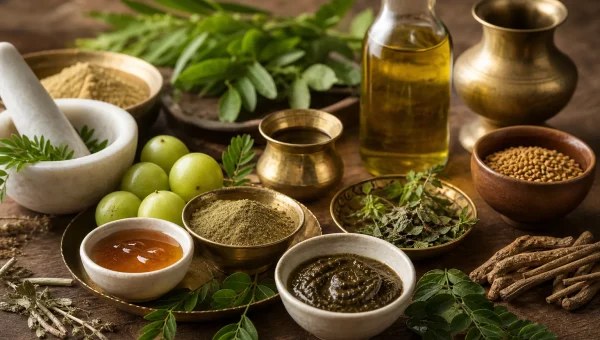
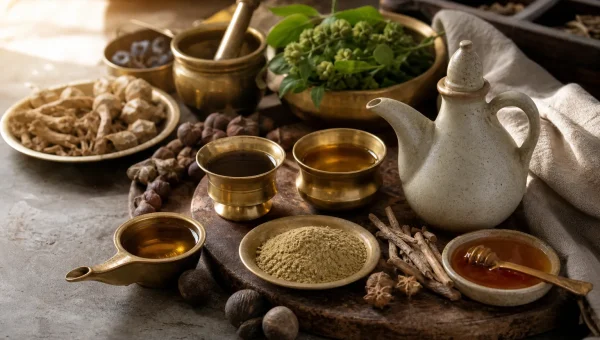
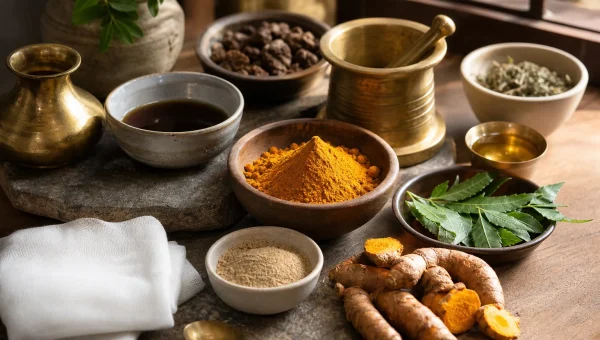
- Powder selection: The churna is selected according to the presentation. Triphala churna, Kolakulattadi-type powders, Kulattha-based powders, Haridra, Nimba, Yava, and Saindhava are commonly used in different combinations under professional guidance.
- Positioning: The patient is positioned comfortably, usually sitting or lying down while one region is treated at a time. Draping is maintained, and sensitive areas are avoided.
- Application: The powder is applied over the selected region and rubbed with both hands using upward strokes. The movement generally proceeds from the distal part of the limb toward the trunk, with care around joints, bony prominences, and tender areas.
- Pressure: The pressure is firm enough to generate friction and warmth but not so forceful that it causes pain, bruising, burning, or skin injury. A strong patient with Kapha-Meda predominance tolerates more pressure than a Vata-sensitive or depleted person.
- Duration: Published clinical protocols have used 20 to 30 minutes of Udvartana depending on the study design and area treated. In practice, duration is adjusted according to the treated region, strength of the patient, and therapeutic objective.
- Completion: Excess powder is wiped away. Mild sweating therapy may be used afterward when appropriate, followed by a warm bath or shower. The patient should rest briefly, avoid cold exposure, and follow the advised diet and activity plan.
Powder Selection: Matching the Churna to the Presentation
The powder is not a decorative part of the therapy; it is central to the procedure. Dry, rough, warming, astringent, bitter, pungent, or scraping materials are selected when Kapha and Meda need to be reduced. When the person is dry, frail, Vata-dominant, or sensitive, the same approach may be softened with a snigdha or semi-dry method.
| Presentation | Usual Therapeutic Direction | Procedure Type | Practical Notes |
|---|---|---|---|
| Kapha-Meda heaviness, central fat accumulation, sluggishness | Rukshana, friction, warmth, Kapha-Meda mobilization | Ruksha Udvartana | Often paired with diet correction, exercise, and agni-supporting measures. |
| Oily, congested skin with intact surface | Drying, cleansing, mild exfoliation | Ruksha or mild semi-dry Udvartana | Avoid active cysts, open lesions, oozing eruptions, and inflamed skin. |
| Kapha features with Vata sensitivity or dryness | Friction with protection from excess dryness | Snigdha or semi-dry Udvartana | Use gentler pressure and a suitable small quantity of oil or paste medium. |
| Postpartum body care | Gentle toning only after recovery | Usually gentle snigdha or semi-dry form | Use only after medical or practitioner clearance and never over wounds, pain, bleeding, or weakness. |
Mechanisms Behind the Procedure
Udvartana works through the combined effect of classical rukshana, mechanical friction, local warmth, pressure, skin-surface cleansing, and the qualities of the selected powder. The direction and pressure of the strokes are therefore not incidental; they are the defining features of the therapy.
Rukshana and Kapha-Meda Movement
In Ayurvedic terms, Udvartana counters heavy, oily, cold, slow, and stagnant Kapha qualities through dry, rough, stimulating friction. The classical expression medasaḥ pravilāpanam indicates mobilization or liquefaction of Meda rather than a simple mechanical “fat melting.” This is why Udvartana is traditionally used as part of a broader Kapha-Meda plan rather than as an isolated body-shaping procedure.
Pressure, Heat, and Fluid Movement
The repeated upward strokes create external pressure, tissue movement, and frictional warmth. Lymphatic fluid is moved through vessels with valves and is assisted by pressure gradients, skeletal muscle activity, respiratory movement, and surrounding tissue motion. Udvartana’s repetitive pressure and movement make the procedure mechanistically compatible with the Ayurvedic aim of reducing heaviness, puffiness, and stagnation in Kapha-dominant presentations.
Skin Surface and Barrier Effects
The powder rubs away superficial dead scale from the outer skin surface and leaves the skin smoother to the touch. The stratum corneum is the main outer barrier of the skin, and massage, hydration, and the medium used with a topical preparation can influence contact with the skin surface. In dry Udvartana, the dominant action is friction and powder-based exfoliation; in snigdha or paste-based forms, the medium changes how the herbs remain in contact with the skin.
Clinical Protocols in Published Work
Published Ayurvedic protocols help clarify how Udvartana is applied in measurable settings. They are most useful when they specify the powder, duration, patient group, and accompanying measures such as diet restriction or abdominal packs.
- Central obesity protocol: An open-label three-arm controlled study on central obesity used local Udvartana with Triphala churna for 20 minutes, Udvartana plus an abdominal pack, and diet restriction as comparison arms over 14 days. The combined Udvartana and abdominal pack group showed better changes in waist circumference, hip circumference, waist-hip ratio, and abdominal skinfold than the other groups in that protocol.
- Medo Dhatu body-composition protocol: Another published protocol used Triphala churna Udvartana for 30 minutes daily for 7 days in overweight adults and assessed body weight, BMI, body-fat percentage, skeletal-muscle percentage, visceral fat, and lipid parameters with follow-up measurements.
These protocols reinforce a practical point: Udvartana should be described by its procedure, not merely by its expected benefits. The exact powder, pressure, duration, body region, patient selection, diet, and follow-up determine whether the therapy is appropriate.
Udvartana in a Kapha Management Program
Udvartana is strongest when it is integrated into a broader Kapha-Meda plan. A typical clinical plan may include warm and light food, reduced excess sweetness and heaviness, daily movement, appropriate sweating therapy, and internal medicines only when prescribed. Classical purification procedures such as Vamana belong under expert supervision and are not self-care measures.
Charaka’s daily-regimen discussion also describes external cleansing and paste application as useful for reducing bad smell, heaviness, drowsiness, itching, dirt, and unpleasant sweating. This supports the broader Ayurvedic view that external therapies can be part of daily and seasonal management when properly matched to the person.
Contraindications and Safety
Udvartana is not suitable for everyone. It should be avoided in active skin infection, open wounds, cuts, burns, oozing eczema, acute inflammatory skin conditions with redness or burning, severe pain, excessive dryness, marked Vata aggravation, emaciation, frailty, pregnancy, infancy, very old age, and immediately after exhausting therapies or illness unless a qualified practitioner specifically advises otherwise.
Excessive pressure, unsuitable powder, or use over inflamed skin can aggravate burning, dryness, irritation, or pain. A person seeking Udvartana for obesity, edema, skin disease, postpartum recovery, or chronic illness should consult a qualified Ayurvedic practitioner or healthcare provider before beginning the procedure.
This article is educational and does not diagnose, treat, or replace medical care. Consult a qualified Ayurvedic practitioner or healthcare provider before starting Udvartana, herbs, supplements, detoxes, or therapeutic protocols, especially if pregnant, postpartum, managing a medical condition, taking medication, or recovering from illness or surgery.
References
- Easyayurveda (easyayurveda.com)
- Easyayurveda (easyayurveda.com)
- Ijam (ijam.co.in)
- Ijrap (ijrap.net)
- NCBI
- Mdpi (mdpi.com)
- Influence of Massage and Skin Hydration on Dermal Penetration Efficacy of Nile Red from Petroleum Jelly-An Unexpected Outcome (2021), PubMed Central
- Effects of Turmeric (Curcuma longa) on Skin Health: A Systematic Review of the Clinical Evidence (2016), PubMed
- The Antimicrobial Potential of the Neem Tree Azadirachta indica (2022), PubMed Central
Twelve years of clinical observation of Udvartana effects is what distinguishes this from a cosmetic marketing description. The specific clinical outcomes you mention, reduced cellulite and improved lymphatic drainage, are measurable and your description has the texture of someone who has actually watched this happen consistently.
What’s the powder formulation for Kapha-predominant presentation specifically? I understand the general Udvartana description but I want the specific herbs for someone with significant Kapha excess and poor lymphatic circulation.
I had Udvartana at an Ayurvedic center last year and the results surprised me. I was mainly there for Kapha reduction and the skin transformation was unexpected. Texture and tone changed noticeably in four sessions. The mechanism you describe explains what I observed.
Can Udvartana be self-administered at home or does the technique specifically require a trained practitioner for effectiveness? The clinic version is cost-prohibitive for regular use and I’m wondering whether a home adaptation is clinically meaningful.
The cellulite reduction claim needs more support. Cellulite is primarily a structural issue with the fibrous septae in subcutaneous fat and any treatment that claims to address it needs to explain the mechanism by which it affects that specific tissue layer.
This makes sense for Udvartana. The safety notes could be expanded a little.
This makes sense for Udvartana. The main idea is clear even if someone is new to Ayurveda.
Is Udvartana appropriate for Vata types as well? The Kapha-reducing action seems like it could be depleting for Vata-dominant individuals, and the dry powder friction on already-dry skin seems potentially aggravating.
the Sushruta Samhita reference grounds this completely. when a therapy is described procedurally in a text that old and clinical practitioners are still observing the same outcomes 2000 years later, the methodology has something going for it that modern clinical trials haven’t had time to replicate
The description of Udvartana in the Ashtanga Hridayam verse really caught my attention.
How does Udvartana compare to manual lymphatic drainage massage? Both aim to improve lymphatic flow. Is there evidence that one produces better outcomes, or does the dry powder element add something that friction alone doesn’t?
I tried a dry powder massage similar to Udvartana after reading about the lymphatic stimulation claim.
The metabolic stimulation piece is what I find most useful as a Kapha type. Winter is when my metabolism is most sluggish and Udvartana during that season, combined with dietary Kapha reduction, produces results that diet alone doesn’t achieve as consistently.
A patient in a Pune clinic expressed polite skepticism when first hearing about the powder massage benefits.
The combination of Triphala and rock salt in the powder formula seems to address both exfoliation and Kapha reduction.
Question: how often should someone with oily skin do the 14 day course?
It sounds like the upward friction technique is what drives the lymphatic flow increase described in the 2012 study.
good information but the references section would make this much more credible
the basic concepts here match what I learned in my yoga teacher training 🙌
Very helpful, thank you
been following this blog for 6 months and this is one of the more grounded posts
would love a follow-up article on the same topic but for elderly patients
does anyone know if these herbs are safe while on blood thinners? would really appreciate a response
Seeing the reference to Sushruta Samhita makes me curious about the exact procedural steps they outlined.
Useful post on Udvartana. The timing advice is the part I would start with.
useful
which of these approaches works best for Kapha constitution? the article mixes all three doshas
I tried something similar on my own without guidance and had side effects. really recommend consulting a vaidya first
does the approach differ for someone with multiple doshas elevated at once?
been doing this for 6 months, amazing difference in energy levels
late to this but wanted to ask if anyone has combined these approaches with conventional treatment
started this protocol 2 weeks ago. nothing notable yet but will report back in a month
The Udvartana explanation is clearer than most short posts. The safety notes could be expanded a little.
✨ the translation of Sanskrit terms throughout helps a lot for those of us learning this system धन्यवाद
same question as above, any substitute for herbs not available outside India?
reading this in 2027, has anything changed about the dosage recommendations since this was published?
Thanks!
would prefer more citations in the text itself
just found this via Google search, is the protocol here still the current recommendation?
not sure about some of the claims here. would like to see proper citations for the traditional references ठीक है
My nutritionist sent me this link 🌿 ❤️
this is the most detailed breakdown of the topic I’ve found. saving for reference
same here
Doing this
udvartana once a week for 6 weeks and the texture change is real. kapha skin needs this kind of stimulation
the layering order you described is exactly where I was going wrong. oil after moisturizer was blocking absorption
✨ useful info but hard to find a practitioner who does this type of treatment outside major cities
the quality of herbs varies so much between brands. really hard to replicate these results
tried this for 30 days, mixed results. maybe my constitution assessment is wrong
The Udvartana section feels grounded enough to try carefully. This would be easier to follow with a one-week sample plan.
my vaidya says the same thing about agni being central to everything
neem and turmeric face pack left my skin tight and slightly red. maybe my pitta constitution makes it too heating?