Fungal Skin Infection Ayurvedic Treatment: Dadru Kushtha and the Kapha-Pitta Framework
Fungal skin infection Ayurvedic treatment begins with correct pattern recognition. In the classical Ayurvedic framework, an itchy, reddish, raised, circular or ring-like lesion is approached through dadru kushtha. Charaka Samhita lists dadru among the eleven kshudra kushtha and describes it with kandu (itching), raga (redness), pidaka (eruptions or papules), and an elevated circular patch. Modern dermatology uses the term tinea or ringworm for dermatophyte fungal infections of the skin, scalp, feet, groin, and nails; many tinea corporis presentations resemble the dadru description, but the medical diagnosis should still be confirmed by a qualified clinician when the lesion is unclear, recurrent, widespread, or located on the scalp or nails.
Charaka places dadru in the pitta-kapha dominant group while also stating that all forms of kushtha involve all three doshas in varying strength. This explains why the Ayurvedic approach is not simply “put something on the rash.” Pitta accounts for redness, heat, irritation, inflammation, and active spread, while kapha contributes itching, thickness, dampness, heaviness, stickiness, and persistence in occluded or sweaty areas. A practical dadru plan therefore combines nidana-parivarjana (removal of causes), drying and hygiene measures, pitta-kapha pacifying food choices, classical krimighna and kushthaghna herbs, and practitioner-guided internal support when lesions are recurrent or chronic.
Identifying Your Fungal Presentation
Different fungal presentations can be read through the dadru lens, but the site of the lesion changes the level of caution. Body and groin ringworm are often managed with topical antifungal medication and careful hygiene, while scalp ringworm and nail fungus usually require medical evaluation and may need prescription oral antifungal treatment. The Ayurvedic classification below is a working clinical lens, not a substitute for diagnosis.
| Modern Presentation | Ayurvedic Working Lens | Dominant Pattern | Care Focus |
|---|---|---|---|
| Ringworm of the body (tinea corporis) | Dadru-like annular kushtha pattern | Pitta-Kapha | Clean, dry skin; neem-haridra lepa when tolerated; medical antifungal care when indicated |
| Jock itch (tinea cruris) | Dadru in a fold-prone, sweat-prone region | Kapha with pitta irritation | Reduce moisture and friction; avoid occlusive clothing; use gentle external applications only on intact skin |
| Athlete’s foot (tinea pedis) | Dadru-like or fissured foot presentation depending on moisture and cracking | Kapha-kleda when wet; vata-pitta when cracked or burning | Dry thoroughly between toes; change socks; avoid sharp or heating lepas on fissures |
| Scalp ringworm (tinea capitis) | Scalp-site fungal infection assessed separately from simple body dadru | Pitta-Kapha, often contagious in children | Prompt medical care; topical herbs are not a complete treatment for scalp ringworm |
| Nail fungus (onychomycosis / tinea unguium) | Chronic nail involvement, not a simple superficial dadru patch | Kapha-Vata chronicity with local thickness and discoloration | Confirm diagnosis before treatment; expect long duration; medical treatment is often needed |
Core Herbs for Dadru-Pattern Care
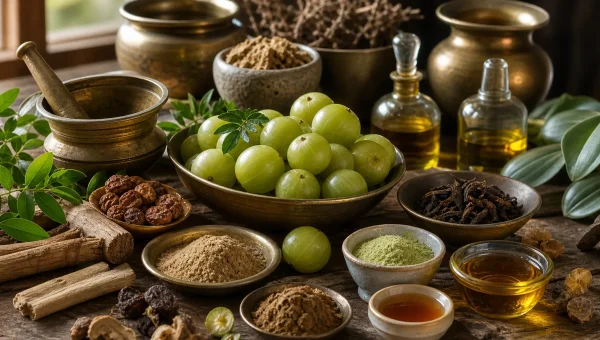
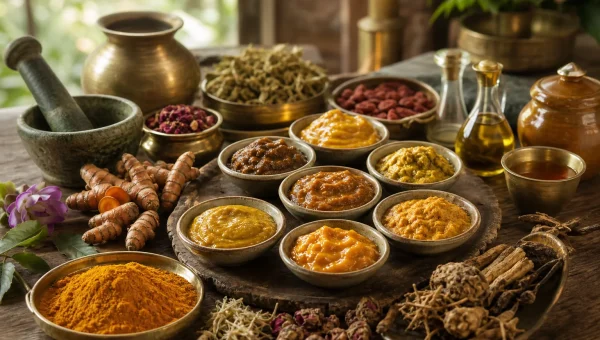
The classical herbal emphasis in dadru is on herbs that are tikta (bitter), ruksha (drying), krimighna (anti-krimi), kushthaghna (used in kushtha), and pitta-kapha balancing. The Ayurvedic Pharmacopoeia of India gives the official monograph basis for the herbs below, while Charaka gives the dadru-specific placement of vidanga-containing external application and the broader pitta-kapha kushtha framework.
Nimba / Neem (Azadirachta indica leaf): Nimba leaf is listed in the Ayurvedic Pharmacopoeia with tikta rasa, ruksha and laghu guna, shita virya, and katu vipaka. Its listed therapeutic uses include kushtha, vrana, and krimiroga. In dadru-pattern care, neem is especially appropriate when itching, redness, dampness, and pitta-kapha irritation occur together. It may be used externally as a cooled leaf decoction wash or as part of a mild lepa when the skin is intact and not overly sensitive.
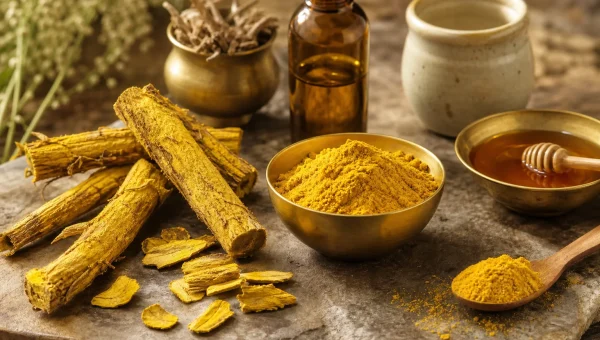
Vidanga (Embelia ribes fruit): Vidanga is classically identified with names such as Jantughna, Krimighna, and Krimihara. The Ayurvedic Pharmacopoeia lists it as katu-tikta in taste, ruksha, laghu, and tikshna in quality, ushna in potency, and kriminashana in action. Charaka includes a krimighna herb identified as vidanga in an external application for dadru. Because vidanga is sharp and heating, internal use and use on sensitive skin should be guided by a qualified Ayurvedic practitioner.
Haridra / Turmeric (Curcuma longa rhizome): Haridra is listed with tikta and katu rasa, ruksha guna, ushna virya, and katu vipaka. Its actions include kaphapittanut, kushthaghna, and krimighna, and its therapeutic uses include kushtha, vrana, and tvagroga. In a topical dadru lepa, turmeric is usually used in modest proportion because it can stain clothing and may irritate highly inflamed or delicate skin.
Karanja (Pongamia pinnata seed): Karanja seed is described as katu-tikta, tikshna, ushna, and katu vipaka, with actions including krimijit, kushthaghna, kaphavataghna, and vranashodhana. It is a strong, heating, sharp herb, so it is not the first choice for tender, red, burning, cracked, genital, or child skin. When used externally, it is best reserved for practitioner-selected applications and avoided on broken or irritated skin.
Khadira (Acacia catechu heartwood): Khadira is listed as tikta-kashaya, laghu, ruksha, shita, and katu vipaka, with actions including kaphapittahara, raktashodhaka, kushthaghna, and krimighna. Khadira is especially valuable in recurrent pitta-kapha skin patterns where rakta and skin cleansing support is needed internally, but decoctions and formulas containing khadira should be individualized rather than self-prescribed in high doses.
Internal Rakta-Shodhana and Recurrence Prevention
Recurrent dadru-pattern eruptions are not treated in Ayurveda only by chasing the visible border of the rash. The classical question is whether pitta-kapha aggravation, kleda, diet, sweating, friction, and hygiene factors are continuing to recreate the same skin environment. Charaka’s pitta-kapha kushtha management includes triphala for internal use, bathing, udvartana, and lepa, and also names khadira, nimba, lodhra, kutaja, dhava, and related herbs for bathing, external use, and internal use in this category.
- Nidana-parivarjana: Remove the repeating causes: damp clothing, tight synthetic fabrics, shared towels, incomplete drying after bathing, repeated scratching, and foods or habits that aggravate kapha, pitta, and poor digestion.
- Practitioner-selected internal support: Khadira-based, triphala-based, nimba-based, or vidanga-containing formulas may be appropriate in recurrent pitta-kapha skin patterns, but the formula, dose, duration, and suitability depend on constitution, age, pregnancy status, digestive strength, medications, and the exact diagnosis.
- Post-clearance care: Continue moisture control, towel hygiene, diet correction, and prescribed antifungal treatment for the full directed duration. Visible improvement should not be used as a reason to stop a medical antifungal early.
- Avoid over-treatment: Strong tikshna or ushna herbs, repeated scrubbing, concentrated oils, and multiple internal herbs can aggravate sensitive skin or digestion when used without assessment.
Topical Application Protocol
The topical Ayurvedic goal is to reduce dampness, calm pitta-kapha irritation, apply appropriate lepa only on suitable skin, and prevent spread through towels, clothing, and scratching. This protocol is conservative and should be adapted by a qualified practitioner, especially for children, sensitive areas, widespread lesions, recurrent lesions, or lesions that are not clearly ringworm.
- Confirm and protect the skin: Do not apply strong herbal pastes to open wounds, weeping lesions, mucous membranes, the eyes, deep cracks, or highly sensitive genital skin. Patch test any topical herb first and stop immediately if burning, swelling, blistering, or worsening redness occurs.
- Cleanse gently: A cooled neem leaf decoction may be used as a wash on intact skin. After washing, dry the area fully. In toe webs, groin folds, and underarm folds, drying is as important as the herbal application.
- Apply a mild lepa when appropriate: A simple lepa can be made from neem leaf powder with a smaller amount of haridra, mixed with clean water into a thin paste. Apply lightly to the affected patch and a small surrounding margin, then rinse off if the skin becomes hot, painful, or irritated. Vidanga-containing lepas belong under practitioner guidance because of the herb’s sharp and heating nature.
- Reduce kleda after bathing and sweating: Wear loose, breathable clothing; change sweaty garments promptly; dry between the toes; use clean socks; and avoid sharing towels, combs, shoes, razors, or clothing.
- Avoid steroid creams unless a clinician specifically directs them: Corticosteroid creams can change the appearance of ringworm and allow it to spread, making diagnosis and treatment more difficult.
For scalp ringworm, topical pastes, oils, or washes should not be treated as sufficient care. For nail fungus, topical herbs may be used only as adjunctive hygiene support after diagnosis, because nail disease can be caused by several conditions and often requires long-duration medical management.
Dietary Triggers for Dadru
The Ayurvedic dietary approach to dadru reduces pitta-kapha aggravation, supports digestion, and limits the heavy, damp, sticky qualities that maintain kleda. Charaka’s kushtha etiology includes incompatible food and drink, excessively liquid, oily, and heavy foods, indigestion, overeating before the prior meal is digested, day sleep, suppression of natural urges, and regular use of foods such as curd, fish, excessive salt and sour items, freshly harvested grains, black gram, radish, flour preparations, sesame, milk, and jaggery in unsuitable contexts.
- Reduce kapha-forming heaviness: During active dadru, keep meals lighter and easier to digest; avoid repeatedly combining heavy dairy, sweets, fried foods, and sedentary day sleep.
- Reduce pitta irritation: Limit excess sour, salty, fermented, alcohol-containing, and very spicy foods when lesions are red, hot, burning, or rapidly spreading.
- Support agni: Avoid overeating, late heavy meals, and eating again before the previous meal has digested. A broader foundation for this is covered in the agni digestive fire foundation guide.
- Individualize restrictions: Classical food lists are not a permanent universal ban. They are used according to constitution, season, digestive strength, severity, and the practitioner’s assessment.
When to Seek Medical Care
Ayurvedic care for dadru-pattern skin should work alongside timely medical diagnosis when the condition is uncertain, contagious, severe, or located in a higher-risk site. Ringworm is contagious, can spread through direct contact and shared objects, and may recur even after treatment, so practical hygiene and medical treatment both matter.
- Seek medical care promptly for suspected scalp ringworm, nail fungus, ringworm in children, lesions on the face or genitals, widespread rash, rapidly worsening rash, pus, fever, pain, swelling, hair loss, or secondary infection.
- People with diabetes, weakened immunity, poor circulation, pregnancy, breastfeeding, or chronic skin disease should use herbs and antifungal treatment only with qualified guidance.
- Neem oil should not be swallowed, and internal neem use is not appropriate in pregnancy or lactation unless a qualified clinician specifically directs it. Vidanga should also be avoided in pregnancy unless prescribed by a qualified practitioner.
- If a rash does not improve with appropriate care, returns repeatedly, or looks different from a typical annular tinea patch, get it examined rather than increasing herbal strength.
Medical Disclaimer: This content is for educational purposes only and does not diagnose, treat, cure, or prevent disease. Fungal skin infections should be confirmed by a qualified healthcare provider when uncertain, recurrent, widespread, or involving the scalp, nails, children, pregnancy, diabetes, immune compromise, or sensitive body areas. Consult a qualified Ayurvedic practitioner and healthcare provider before starting herbs, supplements, detoxes, or therapeutic protocols, especially if pregnant, breastfeeding, managing a medical condition, or taking medication.