Kumkumadi Saffron Skin Brightening: The Chemistry Behind the Glow
Kumkumadi saffron skin brightening is best understood as a saffron-led Ayurvedic complexion oil rather than a vague beauty secret. In the Ayurvedic Formulary of India, the formula appears as Kunkumadi Taila, referenced to Yogaratnakara, Kshudrarogadhikara, with Kunkuma (saffron, Crocus sativus) at the head of the formula, sesame oil as the oil base, cow’s milk as the liquid medium, and a broad supporting group of complexion, aromatic, cooling, astringent, and skin-supportive ingredients. Its classical use is external, including nasya and abhyanga, and its listed indications include varna-vikara, nilika, yauvana-pitika, vyanga, tilaka, masaka, nyaccha, padminikantaka, and jatumani, which explains its long association with radiance, uneven tone, facial spots, blemish marks, and complexion care.
The chemistry gives that classical role a clearer modern language. Saffron stigmas contain crocins and crocetin derivatives, picrocrocin, and safranal: pigments, bitter-aroma precursors, and volatile aroma compounds that define genuine saffron quality. Saffron extract has been profiled in skin-relevant laboratory assays for tyrosinase and collagenase inhibition, antioxidant activity, and human dermal fibroblast markers such as collagen and hyaluronic acid synthesis. A small topical human test using a 3% Crocus sativus extract cream over eight weeks recorded lower mexameter readings for melanin and erythema compared with base cream. Kumkumadi is therefore most sensible as a consistent cosmetic support for a brighter, softer, more even-looking complexion, while daily sun protection remains essential.
The Classical Formula: Saffron in a Medicated Sesame Oil
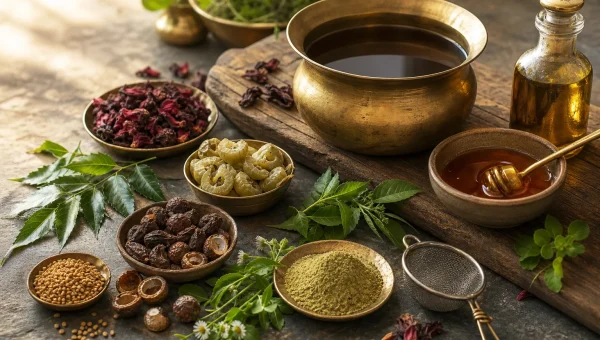
Classical Kumkumadi is much more than saffron steeped in oil. The Ayurvedic Formulary of India formula lists 27 classical ingredients, followed by cow’s milk and sesame oil for processing. Alongside Kunkuma, the formula includes white sandalwood, Lodhra, Patanga, red sandalwood, Agaru or Kaliyaka, Ushira, Manjistha, Yashti, Tejapatra, Padmaka, lotus, Kustha, Gorocana, Haridra, Laksha, Daruharidra, Gairika, Nagakesara, Palasha flower, Priyangu, banyan leaf bud, Malati or Jati flower, beeswax, mustard seed, Rasna, and Vacha. This multi-ingredient structure is what separates a classical Kumkumadi Taila from a simple saffron facial oil.
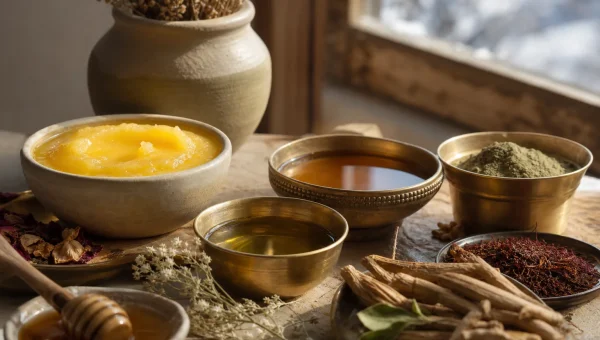
The sesame oil base matters because Kumkumadi is a taila, an oil preparation intended for external use. The cow’s milk medium also matters because the classical formula is not a cold perfume oil; it is a processed medicated oil in which herbs, aromatics, mineral substances, milk, and oil are brought together through traditional sneha preparation logic. Modern products may vary, but a product that contains only a carrier oil, artificial saffron fragrance, and orange color is not meaningfully equivalent to the classical formula.
The Saffron Chemistry Breakdown
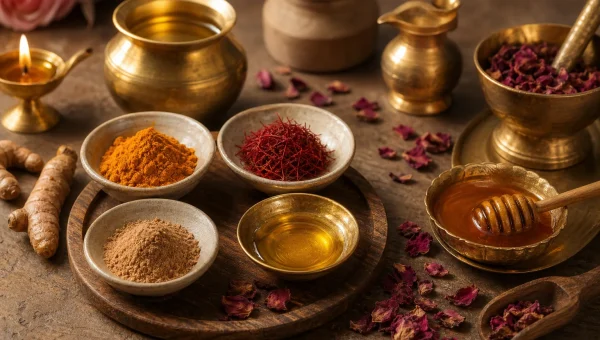
Crocus sativus stigmas are valued in Kumkumadi because their color, aroma, and bitter note arise from a compact group of marker compounds that also explain saffron’s cosmetic relevance. Crocins and crocetin derivatives give saffron its intense golden-red color; picrocrocin contributes bitterness and acts as a precursor in saffron aroma chemistry; safranal is the volatile compound strongly associated with saffron’s characteristic fragrance.
Crocins and crocetin derivatives: Crocins are water-soluble carotenoid pigments and are among the most recognizable chemical markers of saffron. In skin care, the practical point is not that crocin alone should be treated like a drug, but that a genuine saffron-rich preparation carries a pigment-antioxidant profile relevant to dullness, oxidative stress, and uneven tone. Saffron extract has also been measured for tyrosinase inhibition, which is relevant because tyrosinase is a key enzyme in melanogenesis.
Safranal: Safranal gives saffron much of its distinctive aroma and belongs to the volatile fraction of the spice. In Kumkumadi, it contributes to the sensory identity of a genuine saffron preparation, while the overall cosmetic effect depends on the complete formula rather than fragrance alone. A natural saffron aroma is usually delicate, warm, and slightly hay-like; an aggressively perfumed “saffron” smell may indicate added fragrance rather than meaningful saffron content.
Picrocrocin: Picrocrocin is the bitter saffron constituent and a precursor in safranal formation. For skin care evaluation, it is best understood as part of saffron’s authenticity profile. Products that claim saffron benefits but do not disclose Crocus sativus, saffron extract, or saffron stigma in the ingredient list should be approached cautiously.
| Component | Cosmetic Relevance | Mechanistic Link | Practical Takeaway |
|---|---|---|---|
| Crocins and crocetin derivatives | Radiance, saffron color, antioxidant support | Water-soluble carotenoid pigment chemistry; saffron extract tyrosinase activity | Look for real Crocus sativus, not only color or perfume |
| Safranal | Aroma, sensory identity, antioxidant profile | Volatile saffron aroma compound | A soft natural saffron note is preferable to heavy artificial fragrance |
| Picrocrocin | Saffron bitterness and authenticity marker | Precursor in saffron aroma chemistry | Part of the genuine saffron profile, not a stand-alone brightening ingredient |
| Sesame oil base | Softening, massage, external application | Classical taila base in the AFI formula | Comforting oil medium, not a replacement for sunscreen |
The Supporting Cast: Other Active Ingredients in Kumkumadi
Kumkumadi’s complexion value comes from the whole formula, not saffron alone. The classical preparation pairs saffron with roots, barks, flowers, aromatics, cooling woods, mineral substances, beeswax, milk, and sesame oil. This gives the oil a broader cosmetic character: softness from the oil base, aromatic cooling from sandalwood-type ingredients, astringency from bark ingredients, pigment-balancing relevance from Manjistha and Yashti, and traditional complexion support from the formula as a whole.
Manjistha (Rubia cordifolia): Manjistha is one of the most important complexion-supporting herbs in Ayurveda. The Ayurvedic Pharmacopoeia of India identifies Mañjiṣṭhā as Rubia cordifolia and lists actions including varnya, shothaghna, kusthaghna, and kaphapitta-shamaka, with vyanga among its therapeutic uses. Modern work on Rubia cordifolia root fractions and purpurin also connects the plant to tyrosinase inhibition, making it a fitting support in a formula aimed at uneven tone and facial marks.
Yashtimadhu (Glycyrrhiza glabra): Yashti or licorice is included in the AFI Kumkumadi formula. Its best-known skin-relevant constituent is glabridin, a licorice flavonoid associated with inhibition of melanogenesis and tyrosinase activity in experimental models. In practical cosmetic language, licorice supports the brightening direction of Kumkumadi while also fitting the soothing profile expected of a facial oil.
Lodhra, sandalwood, Patanga, Haridra, and Daruharidra: These ingredients broaden the formula beyond saffron chemistry. Lodhra contributes the classical bark-based, astringent complexion-care dimension; sandalwood and red sandalwood contribute cooling aromatic character; Haridra and Daruharidra add the bitter-yellow plant profile traditionally used in skin applications. Their presence is one reason classical Kumkumadi feels more complete than a one-herb saffron oil.
Padmaka, lotus, Nagakesara, Priyangu, Palasha flower, and Malati or Jati flower: The floral and fragrant ingredients in the AFI formula reinforce Kumkumadi’s identity as a complexion oil rather than a simple treatment serum. They help explain the traditional emphasis on softness, clarity, fragrance, and facial radiance. A high-quality product should make this multi-ingredient character visible in its ingredient disclosure.
How to Use Kumkumadi for Actual Cosmetic Results
Kumkumadi is an oil, so the best results come from thin, consistent application rather than heavy layering. Classical use is external, and modern facial cosmetic use adapts that external oil logic into a small-dose night routine. Evening use is usually the most comfortable because the oil can sit on cleansed skin without competing with sunscreen, makeup, heat, sweat, or daytime pollution.
Use a small amount: Two to four drops are usually enough for the face. Warm the oil between the fingertips or palms, press it gently over clean skin, and massage lightly for thirty to sixty seconds. Over-application can leave a greasy film, especially on oily or acne-prone skin, and does not make the formula more effective.
Apply to slightly damp skin: A light misting of water or application after cleansing can make the oil spread more evenly. The goal is a thin, comfortable sheen, not a thick coating. Dry or Vata-leaning skin may tolerate nightly use well, while oily or breakout-prone skin may prefer alternate-night use or short-contact application followed by gentle cleansing.
Protect the work with sunscreen: Any brightening routine is weakened by fresh ultraviolet and visible-light exposure. Kumkumadi may support a more even-looking complexion, but it is not a sunscreen. For melasma-prone or post-inflammatory hyperpigmentation-prone skin, daily broad-spectrum sun protection is a core part of keeping pigment from darkening again.
Evaluating Commercial Kumkumadi Products
The quality range in commercial Kumkumadi products is wide. A stronger product should look like a saffron-led Ayurvedic taila: sesame oil as a meaningful base, Crocus sativus or saffron clearly disclosed, and multiple classical ingredients visible in the ingredient list. “Kumkumadi-inspired” products that rely on artificial saffron fragrance, saffron color, or a token botanical extract do not carry the same classical or chemical identity.
Helpful quality signs include transparent full ingredient disclosure, saffron or Crocus sativus listed by name, sesame oil rather than mineral oil as the primary oil, and a recognizable group of classical ingredients such as Manjistha, Yashti, Lodhra, sandalwood, Padmaka, Haridra, Daruharidra, Nagakesara, and related formula herbs. Batch testing is also useful when available; HPLC or LC-MS marker testing for saffron constituents such as crocins, picrocrocin, safranal, and crocetin is a meaningful way to support saffron authenticity.
A homemade saffron-sesame infusion can be a pleasant simple facial oil, but it should not be confused with classical Kumkumadi Taila. Steeping saffron threads in sesame oil may transfer some color and aroma, yet it does not reproduce the AFI/Yogaratnakara formula, the milk processing, or the multi-ingredient structure of the classical preparation. If the goal is authentic Kumkumadi, choose a properly prepared taila from a manufacturer that discloses its formula clearly.
Expected Results Timeline and Safety
Complexion oils work gradually. The small topical saffron cream test followed use over eight weeks, and visible pigment changes generally require patience because the epidermis renews over weeks rather than days. Softness and glow may appear earlier, while uneven tone, post-blemish marks, and dullness should be judged over roughly eight to twelve weeks of consistent use together with daily sun protection.
Medical Disclaimer: This content is for educational and cosmetic guidance only. Patch test Kumkumadi before full-face use, avoid the eyes and broken or inflamed skin, and stop use if burning, rash, itching, or worsening breakouts occur. Consult a qualified Ayurvedic practitioner, dermatologist, or healthcare provider before using medicated oils if pregnant, nursing, managing a skin condition, using prescription actives, or taking medication. Kumkumadi is not a substitute for SPF sunscreen or medical care for melasma, acne, eczema, rosacea, or unexplained pigmentation.
References
- Archive (archive.org)
- Detection of Saffron’s Main Bioactive Compounds and Their Relationship with Commercial Quality (2022), PubMed Central
- Crocins: A comprehensive review of structural characteristics, pharmacokinetics and therapeutic effects (2021), PubMed
- Mdpi (mdpi.com)
- Safranal: from an aromatic natural product to a rewarding pharmacological agent (2013), PubMed Central
- Experts (experts.illinois.edu)
- Pdfs (pdfs.semanticscholar.org)
- Does saffron have antisolar and moisturizing effects? (2010), PubMed Central
- Ayurvedic Pharmacopoeia of India
- Sciencedirect (sciencedirect.com)
- The inhibitory effect of glabridin from licorice extracts on melanogenesis and inflammation (1998), PubMed
- An overview of analytical methods employed for quality assessment of Crocus sativus (saffron) (2023), PubMed Central
- Aad (aad.org)
- The Role of Sunscreen in Melasma and Postinflammatory Hyperpigmentation (2020), PubMed Central
- Making an epidermis (2009), PubMed Central
- Aad (aad.org)
- Ayush (ayush.delhi.gov.in)