Ketogenic Diet and Ayurveda: Where Fat-Burning Metabolism Meets Dosha Science
The ketogenic diet is a high-fat, very-low-carbohydrate, moderate-protein dietary pattern designed to induce nutritional ketosis, a state in which ketone bodies become an important fuel during carbohydrate restriction. Its modern clinical use began in the 1920s as a dietary treatment for epilepsy, and it is now also used in weight-management and metabolic-health settings for selected people under appropriate supervision.
Ayurveda does not evaluate a diet only by carbohydrate grams or fat percentage. It asks whether the diet is light or heavy, dry or unctuous, hot or cooling, and whether it suits the person’s agni, season, prakriti, vikriti and digestive capacity. In this frame, a ketogenic-style diet can resemble a modern expression of langhana when it reduces excess sweet, heavy, starch-dense and kapha-building foods; it can also become overly brimhana or snehana if fat is used without regard for agni, meda dhatu, season and dosha.
The useful Ayurvedic question is therefore not whether ketosis can be produced, but who can sustain a low-carbohydrate, fat-forward pattern without creating secondary imbalance. Kapha-dominant people are usually the best fit when the diet is warm, cooked, spiced and not excessively greasy. Pitta-dominant people often need cooling fats, moderate protein and seasonal breaks. Vata-dominant people need the greatest protection: warmth, oiliness, stable meal timing and often a cyclical or keto-adjacent plan rather than strict continuous ketosis.
Dosha Assessment for Ketogenic Diet Suitability
This table applies classical guna logic to a modern ketogenic pattern. Kapha is heavy, cold, unctuous and stable, so a lighter low-carbohydrate plan may be useful when it reduces kapha-building excess. Vata is dry, light, cold and mobile, so strict restriction, fasting and dry foods can disturb it quickly. Pitta is hot and sharp, so the same diet must be managed to avoid excess heat, acidity and irritability.
| Dosha Type | Keto Suitability | Primary Risk Without Modification | Required Protocol Modification |
|---|---|---|---|
| Kapha dominant | Strongest natural fit | Sluggish digestion, heaviness, constipation if fats are excessive | Warm cooked meals, digestive spices, measured fats, regular movement and adequate hydration |
| Pitta dominant | Good with cooling and moderate execution | Heat, acidity, irritability, loose stools or reflux | Use ghee moderately, favor fresh foods, limit salty, sour, spicy, fried and aged foods, and use cooling spices |
| Vata dominant | Challenging; often better as keto-adjacent | Dryness, constipation, anxiety, insomnia and fatigue | Warm soups and stews, ghee or sesame oil, regular meals, moderate protein and seasonal cycling |
| Vata-pitta | Moderate with careful monitoring | Dryness and heat together | Unctuous cooked food, gentle spices, no extreme fasting, and breaks during hot weather |
| Kapha-pitta | Good when not animal-heavy or over-heating | Kapha heaviness or pitta heat depending on food choices | Plant-forward low-carb meals, measured fats, cooling spices and seasonal breaks |
The Kapha Keto Protocol: Lightening Without Sluggishness
Kapha carries heavy, cold, soft, unctuous, stable and cohesive qualities. When kapha and meda are excessive, Ayurveda favors lightening measures that reduce heaviness and stagnation. A ketogenic-style plan can serve this aim when it removes refined grains, sugars, frequent snacking and heavy sweet foods while keeping meals warm, spiced and easy to digest.
The kapha-specific framework should not treat fat as unlimited. The plate is built around cooked non-starchy vegetables, moderate protein and measured fats. Useful vegetables include leafy greens, gourds, cabbage family vegetables, mushrooms, beans and other low-starch vegetables cooked with warming spices. Protein may come from eggs, fish, poultry, tofu, paneer or carefully portioned legumes depending on constitution and carbohydrate target. Fats are best used as carriers for digestion and satiety, not as the largest visible portion of the meal.
For kapha, spices are central. Ginger, black pepper and long pepper are traditionally grouped as trikatu and are best suited to kapha-type sluggishness when used appropriately. Cumin, mustard seed, turmeric and fenugreek can also support a warm, digestible cooking style. Very high spice doses are unnecessary for daily food and should be practitioner-directed, especially when there is acidity, pregnancy, medication use or a pitta component.
A practical kapha breakfast may be eggs, tofu or paneer cooked with greens and a small amount of ghee or sesame oil, taken only when genuine hunger is present. Lunch should usually be the main meal: a protein portion with a large serving of cooked vegetables and a measured amount of fat. If dhal is included, the portion should be small enough to keep the overall plan low-carbohydrate; larger legume portions move the pattern away from strict ketosis and toward an Ayurvedic low-carb plan. Dinner should be earlier and lighter, such as a warm vegetable soup or a small protein-and-vegetable plate.
The Pitta Keto Protocol: Cooling the Burn
Pitta carries hot, sharp, liquid and mobile qualities. A ketogenic diet that relies on fried foods, excess salt, sour condiments, strong chili, heavy aged cheese and frequent animal protein can intensify those same qualities. The pitta version of keto therefore keeps the carbohydrate reduction but changes the heat profile of the diet.
The primary rule for pitta is freshness and moderation. Ghee may be used in modest amounts because it is classically valued for pitta and vata support, but the overall meal should not become oily, fried or excessively rich. Olive oil, avocado and coconut-based fats may be used if well tolerated, especially in a more plant-forward version of the diet. If animal protein is used, it should be fresh, simple and moderate rather than aged, cured, smoked, deep-fried or heavily spiced.
Pitta keto cooking favors coriander, cumin, fennel and cardamom, with turmeric used in ordinary culinary amounts. Heavy use of black pepper, mustard seed, chili, vinegar, sour ferments and salty condiments should be reduced when there is burning, reflux, loose stool, rashes, irritability or excessive thirst. A generous amount of cooked green vegetables and cooling herbs such as fresh coriander leaf can keep the meal lighter and less heating.
Season matters for pitta. In hot weather or during pitta aggravation, strict continuous ketosis is often less suitable than a moderated low-carbohydrate pattern with more vegetables, lighter fats and periodic inclusion of easily digested carbohydrates as advised by a practitioner. The goal is not to abandon fat-burning metabolism, but to prevent the protocol from becoming a heat-producing diet that the person cannot sustain.
The Vata Keto Protocol: Preventing the Depletion Trap
Vata carries dry, cold, light, subtle and mobile qualities. Strict ketogenic dieting can easily imitate these qualities when it is paired with long fasting windows, raw salads, cold drinks, stimulant drinks, low calories or insufficient unctuousness. The common vata response is dryness, constipation, disturbed sleep, anxiety, restlessness and fatigue.
For vata, the safer pattern is warm, moist, cooked and regular. Meals should be based on soups, stews, well-cooked vegetables and moderate protein, with ghee or sesame oil used to provide unctuousness. Raw salads, cold smoothies, dry roasted snacks and very long gaps between meals are usually poor choices. The meal rhythm matters as much as the macronutrient ratio.
Many vata-dominant people do better with a cyclic or keto-adjacent approach rather than strict continuous ketosis. Small portions of cooked root vegetables, rice or other easily digested carbohydrates may be used strategically, especially in the evening, when sleep, bowel regularity or nervous system stability begins to decline. This may reduce or interrupt ketosis, but it preserves the Ayurvedic priority of protecting tissue stability and vata balance.
Rasayana and nervine herbs should not be treated as automatic additions to a low-carbohydrate diet. Ashwagandha, shatavari and similar herbs may be appropriate for some people and unsuitable for others, depending on pregnancy status, liver health, thyroid status, digestion, medications and constitution. They should be selected by a qualified Ayurvedic practitioner rather than added as a universal keto supplement.
Seasonal Timing for Ayurvedic Keto
The seasonal intermittent fasting framework applies directly to ketogenic cycling. Ayurveda gives strong importance to ritu, because season changes agni, strength and dosha movement. A diet that is useful in cold weather may be too heavy or heating in summer, while a plan that reduces kapha in spring may need less fat than a winter plan.
Hemanta, the early winter season in the classical seasonal calendar, is the strongest fit for richer and more unctuous food because agni is described as strong in healthy people during this period. For a person with kapha accumulation and good digestion, a well-cooked low-carbohydrate plan with adequate fat may fit this season well. Shishira, the later cold season, often follows a similar logic, though local climate and individual digestive capacity should still guide the diet.
Vasanta, the spring season, is classically associated with the liquefaction of accumulated kapha and a weakening of agni. This supports kapha-reducing measures, exercise and lighter food, but it does not automatically justify a greasy high-fat version of keto. Spring keto, when used, should be lighter, warmer and more kapha-reducing: fewer dairy-heavy meals, fewer oily preparations, more cooked vegetables, more movement and careful attention to digestion.
Grishma, the hot summer season, calls for a pitta-protective approach. Classical guidance favors sweet, cooling, liquid and unctuous nourishment and avoids hot, salty, sour and pungent excess. For many people, especially pitta and vata-pitta types, summer is a better time for a softened low-carbohydrate plan or a break from strict ketosis rather than a heavily spiced, protein-dense, heating ketogenic diet.
The Ayurvedic Spice Stack for a Low-Carbohydrate Diet
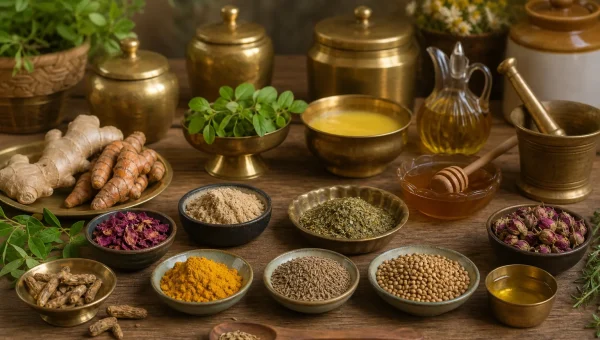
In an Ayurvedic ketogenic framework, spices are not used simply for flavor. They help shape the guna of the meal and support agni so that fat-forward food does not become heavy, stagnant or difficult to digest. The correct spice stack depends on dosha rather than on ketosis alone.
Kapha types generally tolerate the warmest spice profile: ginger, black pepper, long pepper, cumin, mustard seed and turmeric in ordinary culinary amounts. Trikatu is most appropriate for kapha-type heaviness and should be used cautiously when pitta symptoms are present. Pitta types should favor coriander, cumin, fennel and cardamom, keeping chili, mustard and excess black pepper low. Vata types need spices in an unctuous, warm medium such as ghee or sesame oil, with emphasis on digestibility rather than intensity.
Fenugreek, cinnamon, turmeric and cumin can be included as culinary spices in a glucose-conscious kitchen, but they should not be used as substitutes for medical care, medication adjustment or glucose monitoring. This is especially important for people taking diabetes medicines, blood-pressure medicines or anticoagulants, or for anyone with kidney, liver, gallbladder, pancreatic or thyroid disease.
The comprehensive framework for how agni governs metabolic fire and fat metabolism provides deeper context for understanding why the same macronutrient plan can help one person and disturb another. In Ayurveda, successful metabolism depends not only on what is eaten, but on whether the body can transform it cleanly.
A Practical Ayurvedic Keto Framework
A safe Ayurvedic ketogenic plan begins with the person, not the diet label. The following principles preserve the fat-burning intention of keto while keeping the protocol aligned with classical dietetics and dosha management.
- Keep meals warm and cooked: A keto plan built on cold salads, dry snacks and raw foods is harder on vata and often less supportive of agni.
- Use fat intelligently: Fat should provide satiety, unctuousness and meal stability, but excessive fat can burden kapha and digestion.
- Make lunch the main meal: The strongest meal is best placed when hunger and digestive capacity are strongest; dinner should usually be lighter and earlier.
- Modify by dosha: Kapha needs lightening and stimulation, pitta needs cooling and moderation, and vata needs warmth, oiliness and rhythm.
- Watch the body’s signals: Constipation, reflux, insomnia, anxiety, excessive thirst, heat, weakness or menstrual changes are signs that the protocol needs adjustment.
- Use clinical monitoring when needed: People with diabetes, hypertension, lipid disorders or medication use should monitor relevant markers with a healthcare provider.
Medical Disclaimer: This article is for educational and nutritional guidance only. Ketogenic diets are not appropriate for everyone and should not be initiated without medical clearance, especially for individuals with diabetes, kidney disease, liver disease, pancreatic disease, gallbladder disease, thyroid disease, eating disorders, pregnancy, breastfeeding, or medications affecting blood sugar, blood pressure, lipids or metabolism. Herbal additions and dosha-specific protocols should be reviewed by a qualified Ayurvedic practitioner and a licensed healthcare provider before use.
References
- NCBI
- History of the ketogenic diet (2008), PubMed
- Hopkinsmedicine (hopkinsmedicine.org)
- Nutritionsource (nutritionsource.hsph.harvard.edu)
- Uchicagomedicine (uchicagomedicine.org)
- Nutrition (nutrition.ucdavis.edu)
- Schn (schn.health.nsw.gov.au)
- Charaka Samhita — Langhanabrimhaniya Adhyaya
- Charaka Samhita — Guna
- Charaka Samhita — Santarpaniya Adhyaya
- Charaka Samhita — Brimhana
- Charaka Samhita — Tasyashiteeya Adhyaya
- An Ayurvedic formulation ‘Trikatu’ and its constituents (1992), PubMed
- NCCIH