Adrenal Fatigue Herb Protocol: The HPA Axis Through an Ayurvedic Lens
“Adrenal fatigue” is best used as a lay shorthand, not as a formal endocrine diagnosis. The adrenal glands do not simply become tired in the way the phrase suggests. When persistent fatigue follows years of high-output work, poor sleep, stimulants, emotional strain, and inadequate recovery, the more useful modern frame is chronic stress-response strain involving the hypothalamic-pituitary-adrenal axis, while the more useful Ayurvedic frame is depletion of strength, steadiness, and ojas after prolonged overuse.
In Ayurvedic terms, this pattern is often read as a Vata-dominant depletion state that may follow a long Pitta-driven phase. The early phase looks hot, driven, sharp, competitive, and irritable. The later phase looks dry, unstable, depleted, foggy, and unable to recover from effort. The protocol therefore does not try to “stimulate the adrenals”; it rebuilds sleep, digestion, tissue nourishment, nervous-system steadiness, and sustainable work capacity.
Recognizing the Two Phases
The practical value of the two-phase model is that it prevents using the wrong intensity at the wrong time. A person in the Pitta-driven phase may need cooling, boundaries, and downshifting. A person in the Vata-depleted phase needs nourishment, steadiness, warmth, earlier sleep, gentler training, and rasayana support.
| Parameter | Phase 1: Pitta-Driven Overdrive | Phase 2: Vata-Dominant Depletion |
|---|---|---|
| Energy | High output, urgency, difficulty stopping | Low reserve, post-effort crashes, inconsistent stamina |
| Sleep | Late nights, light sleep, active mind | Unrefreshing sleep, early waking, needing long recovery |
| Mood | Irritable, impatient, competitive | Flat, anxious, unmotivated, easily overwhelmed |
| Digestion | Acidity, heat, sharp hunger, loose tendency | Irregular appetite, gas, dryness, variable bowels |
| Protocol emphasis | Cooling routine, work boundaries, Pitta pacification | Warm nourishment, rasayana, Vata stabilization, sleep repair |
Persistent fatigue should be medically evaluated before it is managed as a stress-recovery pattern. Adrenal insufficiency, thyroid disease, anemia, diabetes, depression, sleep apnea, chronic infection, medication effects, and other conditions can resemble this presentation. When adrenal insufficiency is suspected, clinicians use validated medical testing such as morning blood cortisol, ACTH measurement, and ACTH stimulation testing; home salivary “adrenal fatigue” panels should not be used to diagnose adrenal disease.
The Core Adaptogen and Rasayana Stack
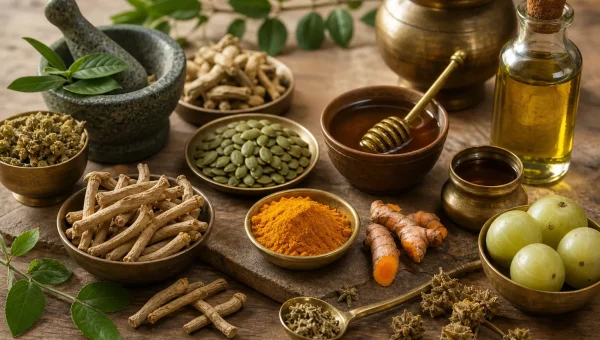
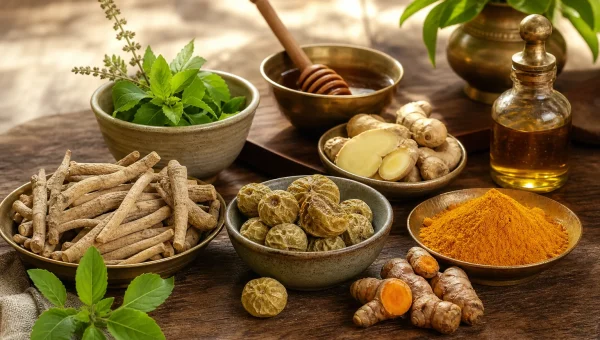
The herb plan is built around rasayana and balya principles rather than stimulation. The goal is to restore steadiness, sleep depth, digestion, and tissue reserve. Dose, form, constitution, heat signs, medications, and medical history matter, so these herbs are best selected with a qualified Ayurvedic practitioner.
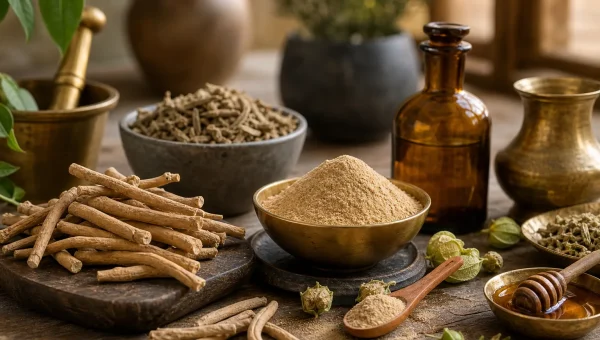
Ashwagandha (Withania somnifera): Ashwagandha root is listed in the Ayurvedic Pharmacopoeia of India as rasayana, balya, vajikarana, and Vata-Kapha pacifying. It is the main herb when the depleted phase includes weakness, poor resilience, disturbed sleep, nervous exhaustion, and loss of physical confidence. Classical powder dosing is generally 3-6 grams daily, while standardized root extracts are commonly used in smaller milligram doses such as 300-600 mg daily. Because ashwagandha is heating, reduce or avoid it when acidity, heat, inflammatory flare, hyperthyroid tendency, liver disease, pregnancy, sedative use, immunosuppressive therapy, or complex medication use is present unless supervised.
Shatavari (Asparagus racemosus): Shatavari is the cooling, nourishing counterpart in this protocol. The Ayurvedic Pharmacopoeia of India describes it as madhura-tikta in rasa, guru-snigdha in guna, sheeta in virya, madhura in vipaka, and balya, rasayana, pittahara, medhya, vrishya, and vatahara in karma. It is especially suitable when the depleted person also shows Pitta heat: irritability, dryness, acidity, burning sensation, poor recovery after overwork, or a need for gentler tissue replenishment. The adult powder dose listed in the pharmacopoeia is 3-6 grams daily, commonly taken with warm water or milk when digestion tolerates it.
Brahmi (Bacopa monnieri): Brahmi is the medhya rasayana in the stack, used when the depleted pattern includes brain fog, poor recall, scattered attention, and reduced mental steadiness. The Ayurvedic Pharmacopoeia of India identifies Brahmi as Bacopa monnieri whole plant and lists it as medhya, rasayana, matiprada, and vatahara. Classical powder dosing is generally 1-3 grams daily; standardized extracts are often used around 300 mg daily. It should be introduced gradually, especially in people with weak digestion, sedation tendency, or medication use.
Lifestyle Architecture for HPA Recovery
Herbs cannot rebuild resilience if the same inputs that created depletion continue unchanged. The Ayurvedic recovery architecture is simple: stable sleep, stable meals, reduced overstimulation, moderate movement, and predictable recovery windows. This is the daily structure that allows rasayana herbs to work as nourishment rather than as another performance tool.
Sleep rhythm: Protect an earlier, consistent bedtime and allow enough time in bed for real recovery. In Ayurvedic routine, the evening Kapha window supports heaviness and settling; pushing work late into the night tends to aggravate Pitta and Vata qualities. During the first recovery phase, prioritize regular sleep timing over productivity gains from late work.
Exercise dose reduction: High-intensity intervals, heavy strength work, competitive sport, and under-recovered endurance training are useful only when the system has reserve. In the depleted phase, treat hard training as another stressor. Replace it temporarily with 30-45 minutes of walking, gentle mobility, restorative yoga, and light strength work that leaves the body calmer rather than drained. Training intensity can return gradually when sleep, appetite, morning energy, and post-exercise recovery are stable.
Breath and sensory downshifting: Gentle pranayama, longer exhalation breathing, quiet evening light, reduced late-night screens, and a fixed wind-down routine are low-load ways to settle Vata without demanding more effort from an exhausted body. The pranayama stress breathing protocol can be used as the breathing companion to this recovery plan.
Dietary Recovery Protocol
The dietary goal is to rebuild ojas without overloading agni. Favor warm, freshly prepared, digestible meals; consistent meal timing; adequate protein; cooked grains; root vegetables; mung dal or well-cooked legumes if tolerated; ghee in modest amounts; and calming spices such as cumin, coriander, fennel, cardamom, and ginger in appropriate amounts.
Reduce the substances commonly used to force energy: excess caffeine, late caffeine, frequent alcohol, refined sugar, skipped meals, and very dry or cold dieting. These may provide short-term push but often worsen the Vata pattern of unstable energy, light sleep, cravings, and poor recovery. Salt intake, hydration, and electrolyte support should be individualized, especially in hypertension, kidney disease, adrenal disease, or medication use.
A simple evening rasayana drink may be used when appropriate: 1/2 to 1 teaspoon ashwagandha powder in warm milk or water with cardamom. Shatavari may be chosen instead when heat, acidity, or Pitta aggravation is prominent. If honey is used, add it only after the drink has cooled to comfortably warm; do not boil honey into the preparation.
Recovery Timeline
The timeline is a practical monitoring framework, not a diagnostic promise. Recovery speed depends on the depth of depletion, sleep debt, workload, medical conditions, digestion, medication use, and consistency of routine. Track morning energy, caffeine reliance, mood stability, appetite, sleep quality, libido, and post-exercise recovery rather than chasing stimulation.
Weeks 1-4: Stabilization. Reduce late work, regulate meals, begin the appropriate herb gently, lower training intensity, and protect sleep. The main sign of progress is fewer crashes, not dramatic energy. Weeks 5-12: Rebuilding. Sleep becomes deeper, morning steadiness improves, digestion settles, and motivation returns gradually. Months 3-6: Consolidation. Work capacity and training can increase in measured steps while the routine remains protective. If fatigue worsens, remains unexplained, or includes weight loss, fainting, severe weakness, persistent low mood, darkening skin, salt craving, palpitations, breathlessness, or abnormal labs, seek medical care promptly. For long-term prevention, the Dinacharya daily routine guide provides the structural practices that help maintain resilience through seasonal and workload changes.
Medical Disclaimer: The clinical pattern popularly called “adrenal fatigue” must be differentiated from adrenal insufficiency, Addison’s disease, hypothyroidism, anemia, diabetes, depression, sleep apnea, chronic infection, and other medical conditions. Do not self-treat persistent fatigue without proper medical evaluation.
Nothing in this article diagnoses or treats a medical condition. Use it as educational information and consult a qualified Ayurvedic practitioner or physician before starting herbs, supplements, detoxes, or therapeutic protocols, especially if pregnant, managing a condition, or taking medication.
References
- Mayoclinic (mayoclinic.org)
- Endocrine (endocrine.org)
- Adrenal fatigue does not exist: a systematic review (2016), PubMed Central
- Health (health.harvard.edu)
- My (my.clevelandclinic.org)
- NIDDK
- Mayoclinic (mayoclinic.org)
- NCBI
- Ayurvedic Pharmacopoeia of India
- A prospective, randomized double-blind, placebo-controlled study of safety and efficacy of a high-concentration full-spectrum extract of ashwagandha root in reducing stress and anxiety in adults (2012), PubMed
- NIH Office of Dietary Supplements
- Ayurvedic Pharmacopoeia of India
- Ayurvedic Pharmacopoeia of India
- Meta-analysis of randomized controlled trials on cognitive effects of Bacopa monnieri extract (2014), PubMed
- NCBI
- Overtraining syndrome: a practical guide (2012), PubMed Central
- Endocrine responses of the stress system to different types of exercise (2023), PubMed Central
- My (my.clevelandclinic.org)
- Studies on the physicochemical characteristics of heated honey, honey mixed with ghee and their food consumption pattern by rats (2010), PubMed Central