Ayurveda Standing All Day Leg Care: The Occupational Vata-Kapha Pattern
Ayurveda standing all day leg care is practical recovery maintenance for retail workers, nurses, chefs, teachers, factory staff and others who spend long shifts upright. Prolonged static standing can place continuous load on the feet, calves, knees, hips and lower back, while also encouraging end-of-shift foot fatigue, dependent ankle puffiness, heel or arch pain, calf tightness and venous heaviness.
In Ayurvedic language, this pattern can be read as Vata strain in the pada, jangha, kati, mamsa and snayu, with Kapha-type heaviness and Shotha when fluid and fatigue accumulate in the lower limbs. Vyana Vata is classically connected with circulation and movement through the body; after a long standing shift, the aim is to restore movement, warmth, unctuousness and upward return without forcing painful tissue.
Post-Shift Assessment: Reading the Signs
End-of-shift symptoms should be read by pattern and by risk. Mild bilateral tiredness that improves overnight is different from one-sided swelling, heat, redness, skin breakdown or swelling that persists despite rest.
| Post-Shift Symptom | Ayurvedic Interpretation | Severity | Priority Intervention |
|---|---|---|---|
| Foot fatigue, heaviness, dull aching | Vata strain in mamsa and snayu with Kapha-type gaurava | Early; common after long shifts | Calf-pump movement, elevation, warm oil massage |
| Bilateral ankle puffiness that improves by morning | Shotha tendency with Kapha heaviness | Moderate; monitor pattern | Elevation, suitable compression, practitioner-guided herbs |
| Pitting edema, swelling that persists, or swelling with breathlessness | Not routine occupational fatigue; requires medical assessment | Significant | Healthcare evaluation before herbs, massage or compression |
| Visible varicose veins, aching veins, evening calf heaviness | Sira and Rakta-vaha involvement with Shotha tendency | Moderate to severe depending on symptoms | Compression fitting, calf-pump activity, vascular review if symptomatic |
| Heel pain or first-step morning pain | Pada snayu and kandara Vata with plantar tissue overload | Significant if recurrent | Supportive footwear, calf stretching, gentle padabhyanga |
| Night cramps or calf tightness | Mamsa Vata from overuse; check hydration and nutrition if recurrent | Moderate | Calf mobility, fluids with meals, medical review if persistent |
The Post-Shift Padabhyanga Protocol
Padabhyanga, oiling and massage of the feet, belongs to the Ayurvedic daily routine and is especially useful as a post-shift Vata-calming practice for workers who stand on hard floors. It should be gentle, warm and regular, not deep or painful.
The 20-minute post-shift routine:
Step 1 – Downshift and elevate for 5 minutes: Lie down with the calves supported and the feet raised above heart level if comfortable. Add slow ankle pumps and toe flexion-extension to restart the calf muscle pump before applying oil.
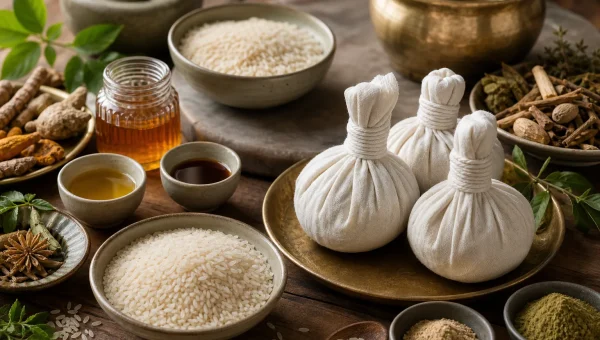
Step 2 – Warm foot wash or short soak for 5-10 minutes: Use warm, comfortable water, never hot water. A small amount of rock salt may be used if the skin is intact. For a traditional astringent wash, place Triphala powder in a muslin bag and steep it in the water, then discard the bag. Avoid soaking if you have diabetes-related foot problems, numbness, poor circulation, open cracks, fungal infection, ulcers or reduced ability to sense temperature.
Step 3 – Oil application and gentle marma awareness for 8-10 minutes: Pat the feet fully dry. Apply warm sesame oil or a practitioner-recommended medicated taila to the soles, heels, toes, ankles and calves. Use slow, steady pressure and avoid pressing directly over painful varicose veins, inflamed swelling, broken skin or tender lumps.
- Talahridaya (center of the sole): use slow circular massage for 60-90 seconds on each foot.
- Kurchashira region (below the ankle on both sides): use gentle pressure and small circles, especially where the ankle and heel feel stiff.
- Gulpha (ankle joint region): circle around the ankle slowly to reduce stiffness and improve comfort.
- Upward strokes: stroke lightly from the toes and sole toward the ankle and knee for 3-4 minutes, keeping the direction upward and the pressure comfortable.
After massage, wear clean cotton socks if needed and elevate the legs for another 10 minutes. This completes the recovery cycle of warmth, oiling, movement and rest.
Varicose Vein Prevention and Management
The Ayurvedic approach to varicose vein prevention and leg swelling management should be combined with standard vein care. The core plan is frequent calf-pump movement, leg elevation, properly fitted compression when suitable, supportive footwear and careful use of herbs selected by a qualified practitioner.
Punarnava (Boerhavia diffusa) is the main herb to consider when the dominant picture is Shotha with heaviness and puffiness. The Ayurvedic Pharmacopoeia of India lists Punarnava as Shothahara and Mutrala, with classical use in Shotha and Pandu. The pharmacopoeial decoction dose is 20-30 g of crude drug prepared as kvatha, but tablets, extracts and combinations vary; use it only under practitioner guidance, especially if you have kidney disease, heart disease, pregnancy, low blood pressure, or use diuretics or blood-pressure medicines.
Horse chestnut seed extract is not a classical Ayurvedic herb. It belongs to Western herbal practice and is used only as a properly processed, standardized extract for chronic venous insufficiency symptoms. Raw or unprocessed horse chestnut is unsafe. Anyone considering it should discuss it with a healthcare provider, especially when using anticoagulants, diabetes medicines, liver-sensitive medicines or before surgery.
Amalaki and diet support belong better here than strong claims about any single fruit curing veins. Amalaki is a classical Rasayana and the Ayurvedic Pharmacopoeia lists ascorbic acid among its constituents. Vitamin C is needed for collagen formation in skin, ligaments and blood vessels, so a standing worker’s diet should include vitamin-C-rich foods such as amla, guava, citrus, green vegetables and adequate protein, along with regular meals and hydration.
Footwear and Biomechanics: The Foundation of Prevention
No herbal protocol compensates for eight hours in collapsed, tight or unsupportive footwear. Pada raksha in a modern standing job means choosing shoes, socks, floor support and compression that reduce repeated strain on the plantar fascia, calves and lower back.
- Cushioned midsole with arch support: reduces strain from hard floors and supports the plantar fascia during long standing.
- Wide toe box: reduces toe compression, rubbing and forefoot fatigue during long shifts.
- Firm heel counter and stable sole: prevents excessive slipping, twisting and unsupported foot motion.
- Shoe rotation and timely replacement: worn-out footwear loses support; rotating suitable shoes can reduce repeated pressure on the same tissues.
- Graduated compression stockings: light occupational compression such as 15-20 mmHg may help swelling and heaviness for suitable users, while higher grades should be selected medically. Stockings should not roll down, because a rolled band can worsen pressure at one spot.
- Anti-fatigue mats: where the workplace allows, cushioned standing surfaces can reduce discomfort from prolonged standing on hard floors.
Internal Support for Chronic Leg Fatigue
Internal herbs are secondary to footwear, movement, elevation and medical assessment. Daily heavy legs, recurrent cramps, persistent fatigue or swelling that does not resolve with rest should not be treated as Vata alone; anemia, iron deficiency, thyroid disease, kidney or heart disease, venous insufficiency and medication effects may need evaluation.
- Ashwagandha (Withania somnifera): The Ayurvedic Pharmacopoeia lists Ashwagandha root as Rasayana, Balya, Vatakaphapaha and useful in Daurbalya and Vataroga, with a powder dose of 3-6 g. It is best reserved for workers with clear depletion, poor recovery and Vata-type exhaustion, and should be avoided in pregnancy, breastfeeding, thyroid disorders, autoimmune disorders, before surgery, and when interacting medicines are present unless a healthcare provider approves it.
- Triphala: Use only when constipation, irregular digestion, coating, heaviness or sluggish elimination accompany the leg-fatigue pattern. It is not a direct vein treatment; it is a digestive and eliminative support that should be adjusted to bowel tolerance.
- Punarnava combinations: When puffiness and Shotha dominate, Punarnava-based formulas may be considered by an Ayurvedic practitioner after checking constitution, blood pressure, kidney status, medications and pregnancy status.
- Iron and nutrient assessment: Persistent fatigue, poor recovery, restless legs or cramps deserve medical review. Ferritin below about 30 ng/mL is commonly used as a marker of iron deficiency, though inflammation can alter ferritin interpretation; do not self-prescribe iron without testing and guidance.
The Srotas framework is directly applicable to the standing worker’s pattern because long static standing challenges the movement of rasa and rakta through the lower extremities while loading mamsa, snayu and sandhi. Foot oiling, calf-pump activation, elevation, footwear support and suitable herbs work together to keep movement, warmth and nourishment in the lower limbs.
Mid-Shift Practices for Those Unable to Elevate
Even when a full evening protocol is not possible, small practices during the shift can reduce cumulative strain. These should be simple enough to repeat without disrupting work.
- Calf raises: Perform 15-20 slow raises whenever possible during a short standing break. The calf muscle pump is a major driver of venous return from the lower limbs.
- Micro-walks: Take a brief walk or change position when work permits, rather than holding the same stance for long uninterrupted periods.
- Seated ankle circles: During breaks, circle the ankles, flex and point the feet, and gently stretch the calves.
- Weight shifting: Alternate weight between both feet, use a low footrest if available, and avoid locking the knees.
- Compression check: Make sure stockings remain smooth, correctly positioned and not rolled at the top.
- Hydration with judgment: Sip water regularly during the shift and take fluids with meals, adjusting for climate, sweating, medical restrictions and workplace access.
Medical Disclaimer: This article provides general occupational wellness information and is not a diagnosis or substitute for medical care. Significant swelling, one-sided leg swelling, calf pain with warmth or redness, sudden shortness of breath, chest pain, varicose veins with bleeding, skin ulcers, numb feet, diabetic foot wounds or suspected infection require urgent medical evaluation. Consult a qualified Ayurvedic practitioner and healthcare provider before using internal herbs, strong compression, massage over swollen veins, or foot soaking if you are pregnant, taking medicines, or have heart, kidney, vascular, neurological or diabetes-related foot problems.
References
- Evidence of health risks associated with prolonged standing at work and intervention effectiveness (2015), PubMed Central
- Sciencedirect (sciencedirect.com)
- Prolonged standing at work and hospitalisation due to varicose veins: a 12 year prospective study of the Danish population (2005), PubMed Central
- NCBI
- My (my.clevelandclinic.org)
- Calf pump activity influencing venous hemodynamics in the lower extremity (2013), PubMed Central
- NCBI
- Risk factors for plantar fasciitis among assembly plant workers (2010), PubMed
- Mayoclinic (mayoclinic.org)
- Comparison of 15-20 mmHg versus 20-30 mmHg Compression Stockings in Reducing Occupational Oedema in Standing and Seated Healthy Individuals (2018), PubMed Central
- Cochrane (cochrane.org)
- Effects of anti-fatigue mats on perceived discomfort and weight-shifting during prolonged standing (2013), PubMed
- Charaka Samhita — Matrashiteeya Adhyaya
- Charaka Samhita — Vatavyadhi Chikitsa
- Charaka Samhita — Shvayathu Chikitsa
- Easyayurveda (easyayurveda.com)
- Easyayurveda (easyayurveda.com)
- Easyayurveda (easyayurveda.com)
- Ayurvedic Pharmacopoeia of India
- NCCIH
- MedlinePlus
- Merckmanuals (merckmanuals.com)
- Merckmanuals (merckmanuals.com)
- NCCIH
- CDC
- NHS