Kidney Stone Expulsion Ayurvedic Herbs: The Ashmari Bhedana Protocol
Kidney stone expulsion support in Ayurveda belongs to the classical field of Ashmari management, where herbs are selected for actions such as Bhedana (breaking or splitting action), Ashmari-ghna (stone-related action), Mutrala and Mutravirecaniya (urine-promoting actions), Vasti-shodhana (cleansing support for the urinary bladder channel), Shothahara (swelling-reducing action), and Daha-prashamana (relief of burning). In practical care, this approach is most appropriate as supervised support for selected uncomplicated small ureteral stones, alongside modern assessment of stone size, stone location, urine findings, pain level, kidney function, and infection risk.
Modern urological care often allows observation for selected small ureteral stones when the patient is stable, informed, and closely followed. Stones under 5 mm are generally more likely to pass spontaneously than larger stones, and distal ureteral stones pass more readily than upper ureteral stones. Ayurvedic herbs should therefore be used as active supportive care during the observation window, not as a replacement for imaging, pain control, urine testing, stone analysis, or urgent urological treatment when warning signs appear.
Classically, Sushruta describes four kinds of Ashmari as Kapha-based conditions arising with dominance of Kapha, Vata, Pitta, or Shukra. These categories are clinical and do not directly equal modern laboratory stone types such as calcium oxalate, uric acid, calcium phosphate, cystine, or struvite. The modern stone type should be confirmed by stone analysis whenever possible, while Ayurvedic herb selection may be guided by the patient’s symptoms, dosha features, burning, pain pattern, urinary flow, swelling, constitution, digestion, strength, and coexisting conditions.
The Ashmari Bhedana Herb Hierarchy
The following hierarchy keeps the protocol grounded in classical Ayurvedic pharmacology and the Ayurvedic Pharmacopoeia of India. The dose ranges shown are pharmacopoeial crude-drug ranges where available, not a self-prescription; a qualified practitioner should adjust form, dose, duration, combination, and suitability for the individual patient.
| Herb | API Identity | Classical Action | API Dose Range | Use Pattern in Ashmari Support |
|---|---|---|---|---|
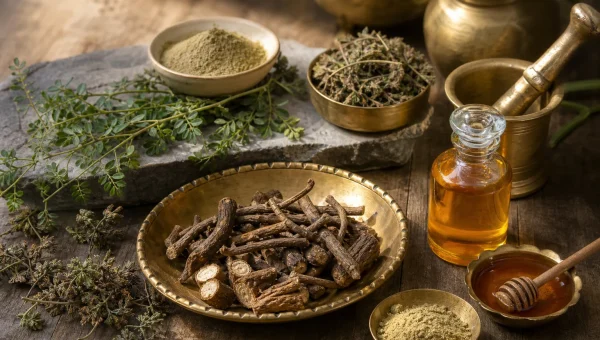
| Pashanabheda | Bergenia ciliata / Bergenia ligulata rhizome | Bhedana, Vasti-shodhana, Ashmari-ghna, Mutravirecaniya | 3–6 g powder; 20–30 g for decoction | Central stone-support herb for Ashmari and Mutrakricchra |
| Varuna | Crataeva nurvala stem bark | Bhedi, Dipana, Vata-shleshmahara | 20–30 g for decoction | Varuna-centered urinary support; API lists Varunadi Kvatha Churna as an important formulation |
| Gokshura | Tribulus terrestris root or fruit | Root: Mutrala; fruit: Ashmari-hara, Vasti-shodhana | Fruit: 3–6 g powder or 20–30 g decoction; root: 20–30 g decoction | Urinary channel support in Mutrakricchra and Ashmari |
| Punarnava | Boerhaavia diffusa whole plant | Shothahara, Mutrala, Vatashleshmahara | 20–30 g for decoction | Useful when swelling, heaviness, sluggish fluid movement, or Kapha-Vata features accompany urinary difficulty |
| Kulattha | Vigna unguiculata, syn. Dolichos biflorus, seeds | Kaphavatahara, Laghu, Sara, Ushna | 12 g powder for decoction | Classical dietary-decoction support for Ashmari, especially where Kapha-Vata obstruction is prominent |
| Chandana | Santalum album heartwood | Pittahara, Daha-prashamana, Trishnahara | 3–6 g powder | Cooling urinary support when burning, heat, thirst, or Pitta-pattern urinary discomfort is present |
Varunadi Kwath: The Varuna-Centered Stone Passage Formula
Varunadi Kvatha Churna is listed in the Ayurvedic Pharmacopoeia of India under Varuna, and Varuna itself is indicated for Ashmari and Mutrakricchra. In clinical use, a Varuna-centered decoction is commonly selected when the main goal is to support urinary passage, reduce Kapha-Vata obstruction, and keep the urinary channel moving during a medically supervised observation period.
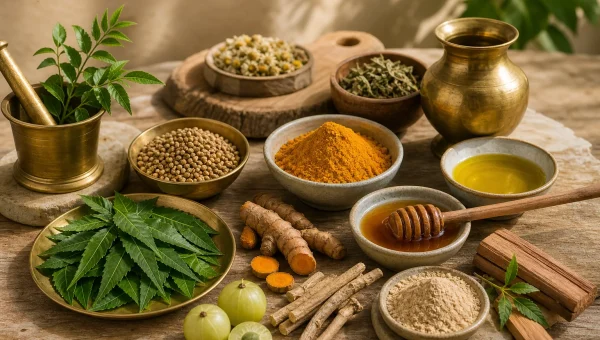
A practitioner may combine Varuna with herbs such as Pashanabheda, Gokshura, Punarnava, Kulattha, or Chandana depending on the patient’s presentation. Pashanabheda strengthens the Bhedana and Ashmari-ghna aspect, Gokshura supports the urinary channel, Punarnava is selected where swelling or fluid retention features are prominent, Kulattha is a food-medicine choice for Kapha-Vata obstruction, and Chandana is reserved for burning or Pitta-type urinary heat. The preparation should be made from correctly identified crude drugs or a reliable classical product, with dose and duration individualized by a qualified Ayurvedic practitioner.
Pashanabheda: The Core Ashmari Herb
Pashanabheda is the central herb in this protocol because its very classical identity is tied to stone-related urinary conditions. The Ayurvedic Pharmacopoeia of India identifies Pashanabheda as the rhizome of Bergenia ciliata or Bergenia ligulata and lists the actions Bhedana, Vasti-shodhana, Ashmari-ghna, and Mutravirecaniya. It is also associated with the synonyms Ashmabhedaka and Shilabheda, both expressing the traditional stone-breaking meaning.
In a supervised Ashmari protocol, Pashanabheda is most often paired with steady hydration, urine monitoring, dietary correction, and appropriate follow-up imaging. Its role is not to replace urological treatment for a large, infected, obstructing, or non-passing stone; its role is to anchor the Ayurvedic Bhedana and urinary-flow approach when the patient is medically suitable for conservative support.
The Renal Colic Management Protocol
Renal colic is severe flank-to-groin pain caused by stone movement or obstruction in the urinary tract. During acute colic, modern pain control and medical assessment take priority. Nonsteroidal anti-inflammatory drugs are standard first-choice medicines for suitable patients, and persistent uncontrolled pain may require urgent drainage or stone removal. Ayurvedic herbs are best used as adjunctive support only after urgent red flags have been excluded.
During active passage, the safest practical protocol is steady fluid intake as tolerated, rest, avoidance of dehydration, medical pain control when needed, and continued observation only if there is no fever, no anuria, no persistent vomiting, no uncontrolled pain, no worsening kidney function, and no sign of infected obstruction. Forced rapid water loading during severe colic should be avoided; hydration should be steady and appropriate to the patient’s kidney function, heart condition, and medical restrictions.
For selected distal ureteral stones larger than 5 mm, modern medical expulsive therapy may include an alpha-blocker under medical supervision. Ayurvedic care can run alongside this plan when the treating physician and Ayurvedic practitioner agree it is safe, but herbs should not delay decompression, antibiotics, lithotripsy, ureteroscopy, or other urological care when these are indicated.
Post-Passage Recovery and Prevention
After a stone passes, the priority shifts immediately from expulsion to recurrence prevention. The stone should be saved and sent for mineral analysis whenever possible, because prevention differs for calcium oxalate, calcium phosphate, uric acid, cystine, and infection-related stones. Follow-up imaging may be needed to confirm clearance, especially if pain persists or more than one stone was present.
- Strain the urine during passage and save the stone for laboratory analysis.
- Discuss follow-up imaging with a urologist to confirm that obstruction has resolved.
- Consider 24-hour urine testing when stones are recurrent, multiple, high-risk, or medically complex.
- Review urine volume, calcium, oxalate, citrate, uric acid, sodium, pH, and other risk factors when metabolic testing is advised.
- Maintain a urine-volume goal under medical guidance; many stone-prevention plans aim for about 2 to 2.5 liters or more of urine output daily unless fluids are restricted.
- Let stone composition guide diet: uric acid stones may require monitored urinary alkalinization, while calcium-based and infection-related stones require different prevention strategies.
- Use Ayurvedic maintenance herbs such as Pashanabheda, Gokshura, Varuna, Punarnava, Kulattha, or Chandana only in an individualized plan based on dosha, digestion, strength, urine findings, stone type, and concurrent medicines.
The most valuable window for prevention is immediately after a painful stone episode, when the patient is motivated to change hydration, diet, salt intake, oxalate load, protein pattern, urinary pH, and recurrence risks. Ayurveda adds value here by individualizing the urinary-channel protocol rather than giving the same generic advice to every stone former.
Medical Disclaimer: Kidney stones can cause ureteral obstruction, kidney infection, sepsis, and acute kidney injury. Fever, chills, inability to pass urine, persistent vomiting, uncontrolled pain, known kidney disease, pregnancy, a single functioning kidney, or worsening weakness during renal colic requires urgent medical care. Never delay emergency care, antibiotics, decompression, lithotripsy, ureteroscopy, or other urological treatment because of herbs. Ayurvedic interventions for kidney stones should be undertaken under the guidance of a qualified Ayurvedic practitioner and an appropriate healthcare provider or urologist.
Nothing in this article diagnoses or treats a medical condition. Use it as educational information and consult a qualified Ayurvedic practitioner or physician before starting herbs, supplements, detoxes, or therapeutic protocols, especially if pregnant, managing a condition, taking medication, or having kidney, heart, liver, or urinary tract disease.