PTSD Sleep Ayurvedic Vata: Understanding the Trauma-Vata Connection
PTSD sleep ayurvedic vata is best understood as an Ayurvedic support lens, not as a replacement diagnosis. PTSD can include insomnia, trauma-related nightmares, nocturnal fear, intrusive memories, startle, and hyperarousal. When these symptoms gather around bedtime, Ayurveda reads the pattern as sleep disturbed by aggravated vata in the mind and nervous system, with kapha’s natural heaviness and steadiness unable to carry the person into sustained rest.
In this lens, vata’s mobility and irregularity appear as scanning, racing thought, shifting sleep, abrupt waking, and restless anticipation of danger. The treatment emphasis is therefore not sedation alone. It is a stabilizing, warming, predictable, and grounding approach that reduces sensory load, supports regular sleep rhythm, nourishes depleted tissues, and gives the mind safe non-forceful practices at the edge of sleep.
This is adjunctive care for people already receiving appropriate trauma-focused psychotherapy and medical care. Classical Ayurvedic treatment is commonly organized through yuktivyapashraya, meaning rational support through diet, herbs, routines, and therapies; sattvavajaya, meaning mental discipline and protection from destabilizing inputs; and daiva-vyapashraya, meaning spiritual, devotional, or ritual supports where culturally appropriate. PTSD is a medical condition; Ayurvedic care should support, not replace, qualified mental health treatment.
The Sleep Pattern Ayurveda Is Targeting
The sleep problem in PTSD is often broader than difficulty falling asleep. It may include repeated waking, nightmares, light unrefreshing sleep, and the feeling of remaining on guard even in bed. Ayurveda translates this into a practical goal: calm vata-pitta agitation, protect the senses from overload, and rebuild kapha-supported rest without forcing the mind into a state it does not yet experience as safe.
A useful plan begins several hours before bed. The evening should become warm, simple, and repetitive: a cooked meal that is easy to digest, no caffeine in the afternoon or evening, reduced screens and stimulating content, a quiet and cool bedroom, and a repeated sequence that the nervous system can recognize each night. For trauma survivors, the routine must remain gentle, optional, and easy to stop if it increases fear, dissociation, or flashbacks.
Talam Therapy: Cranial Grounding in Kerala Ayurvedic Practice
Talam is a Kerala Ayurvedic practice in which a medicated paste is applied to the crown or forehead, with the preparation selected according to the condition and the person. For PTSD-related sleep support, its role is not to “pull trauma out of the head,” but to give the senses a quiet, cooling, anchored signal before sleep while reducing the restless head-centered quality of aggravated vata.
A supervised talam session may involve a practitioner placing a selected herbal paste or oil-based paste on the crown or forehead while the person rests in a calm room. The application time, paste, liquid medium, temperature, and after-care should be individualized. Talam should be avoided on open scalp lesions, active scalp infection, fever, heavy sinus congestion, or strong cold sensitivity unless a qualified clinician approves it.
The Internal Herb Protocol
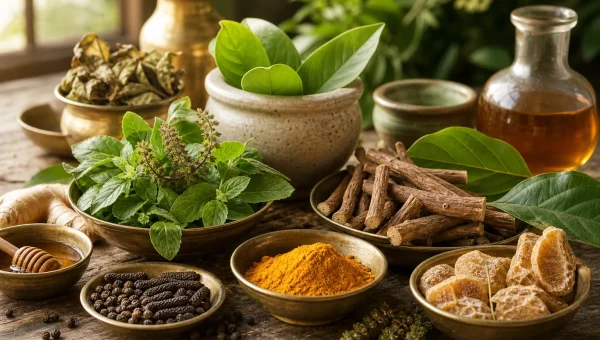
The herb protocol should be individualized rather than treated as a fixed PTSD formula. In Ayurveda, the same sleep complaint may need different herbs according to prakriti, vikriti, digestion, heat, dryness, medications, pregnancy status, and whether the person is depleted, overstimulated, depressed, inflamed, or heavy with kapha. A one- or two-herb plan is often safer than stacking many herbs simply because insomnia is present.
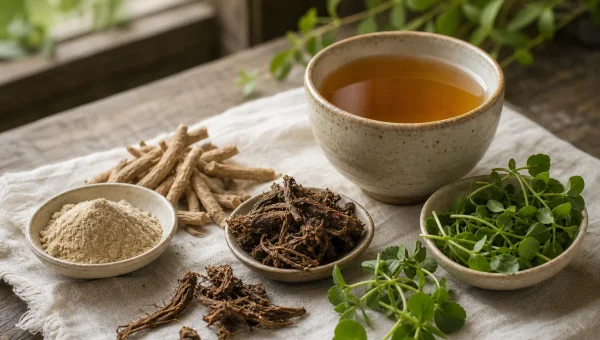
Ashwagandha (Withania somnifera): The Ayurvedic Pharmacopoeia of India lists Ashwagandha root as tikta-kashaya in rasa, laghu in guna, ushna in virya, madhura in vipaka, and rasayana, balya, vajikarana, and vata-kapha alleviating in action. In a PTSD-sleep support plan, it is most suitable when vata disturbance is joined with fatigue, weakness, tension, and depletion. Because it is warming, it is not the first choice for every pitta-dominant presentation. Standardized extracts are not the same as classical root powder, so dose and timing should be set by a qualified clinician.
Brahmi (Bacopa monnieri): The Ayurvedic Pharmacopoeia of India lists Brahmi as a medhya rasayana with use in manasavikara. Its role here is not to act like a sedative, but to support clarity, steadiness, and mental composure when rumination, mental fatigue, irritability, and overactive memory keep the mind moving at bedtime. Brahmi can loosen stools or irritate digestion in some people, so it should be introduced carefully.
Jatamansi (Nardostachys jatamansi): The Ayurvedic Pharmacopoeia of India lists Jatamansi as medhya, nidrajanana, and useful in anidra and manasaroga. Among the herbs discussed here, it is the most directly sleep-oriented classical option. It should be used under supervision, especially when the person already uses sleep medicines, alcohol, psychiatric medication, or other sedating substances.
Shatavari (Asparagus racemosus): The Ayurvedic Pharmacopoeia of India lists Shatavari root as madhura-tikta in rasa, guru-snigdha in guna, shita in virya, madhura in vipaka, and rasayana, balya, medhya, pittahara, vrishya, and stanyakara in action. Its role in this protocol is not to treat PTSD itself, but to nourish dry, depleted, overheated vata-pitta states where sleep is light and the person feels worn down by stress. It should be omitted when its heavy, cooling, moist quality is not appropriate.
| Time | Support | How to Use | Ayurvedic Intention |
|---|---|---|---|
| 6:30-7:30 PM | Warm, light cooked meal | Avoid caffeine in the afternoon or evening; avoid heavy late meals | Support agni and reduce vata irregularity |
| 8:00 PM | Practitioner-selected herb and vehicle | Use only the herb, dose, and timing prescribed for the person | Nourish depletion and steady the mind |
| 8:30 PM | Talam or other external calming therapy | Use under Ayurvedic supervision; keep the room calm and warm | Cranial and sensory settling |
| 9:00 PM | Yoga nidra or body-scan relaxation | 10-30 minutes, trauma-sensitive, with freedom to stop | Safe transition from vigilance into rest |
| 10:00 PM | Lights out | Quiet, cool bedroom; no screens in the final 30-60 minutes | Rhythm, kapha support, and reduced sensory load |
Yoga Nidra: A Trauma-Sensitive Bridge Into Rest
Yoga nidra is a lying-down guided practice that rotates awareness through the body, breath, sensation, and intention while the person remains aware. In PTSD care, it should be trauma-sensitive: the person remains in choice, may keep the eyes open, may change position, may skip body regions, and may stop the practice at any time. The aim is not catharsis or reliving trauma. The aim is to pair present-time body awareness with cues of safety.
A short practice done consistently is better than a long practice that overwhelms the system. Begin with 10 minutes and increase only if it leaves the person calmer the next morning. If yoga nidra increases dissociation, panic, flashbacks, nightmares, or emotional flooding, pause the practice and discuss it with the therapist or clinician guiding PTSD care.
Grounding Practices and Lifestyle
The Ayurvedic behavioral prescription for aggravated vata is rhythm, warmth, sensory simplicity, and present-time orientation. A stable wake time, morning daylight, a predictable evening routine, reduced news and social media before bed, and a dark, quiet, cool bedroom all reinforce the same message: the night is not a threat-monitoring period; it is a protected restoration period.
Daily 10-20 minutes of slow walking on stable ground, gentle stretching, and simple orientation practices can be used to bring awareness back into the body. Barefoot walking on grass or soil may be used only when the surface is clean, safe, and comfortable; the therapeutic point is sensory steadiness, not a special electrical claim. Gentle pranayama such as bhramari or nadi shodhana may be useful when practiced without strain or breath retention, but forceful breathing, long retentions, intense late-night meditation, and dark-room practices are often unsuitable for trauma survivors.
Review the plan after two to four weeks. Continue only what improves sleep, steadiness, digestion, and daytime functioning without side effects. If nightmares become more intense, suicidal thoughts appear, panic worsens, or the person feels unsafe, the priority is immediate professional mental health care rather than continuing home protocols.
Medical Disclaimer: This content is for educational purposes only and does not constitute medical advice. PTSD is a serious medical condition requiring diagnosis and management by a qualified mental health professional. Ayurvedic protocols described here are adjunctive and supportive only; they do not replace trauma-focused psychotherapy or prescribed psychiatric medications. Never discontinue PTSD medication without psychiatric supervision. Consult a licensed Ayurvedic practitioner and your healthcare provider before using herbs, especially if you are pregnant, breastfeeding, have liver disease, thyroid disease, autoimmune disease, hormone-sensitive conditions, or take psychiatric medicines, sedatives, antiepileptic medicines, blood pressure medicines, diabetes medicines, or thyroid medicines. If you are experiencing suicidal thoughts, severe PTSD symptoms, or immediate danger, seek urgent mental health or emergency care.
References
- Ptsd (ptsd.va.gov)
- Ptsd (ptsd.va.gov)
- Ptsd (ptsd.va.gov)
- Sleep in posttraumatic stress disorder: A systematic review and meta-analysis of polysomnographic findings (2019), PubMed
- Ayurvedic doshas as predictors of sleep quality (2015), PubMed Central
- Ayurvedic concepts related to psychotherapy (2013), PubMed Central
- NCCIH
- Keralatourism (keralatourism.org)
- Divyamrutayurcare (divyamrutayurcare.com)
- Ayurvedic Pharmacopoeia of India
- NIH Office of Dietary Supplements
- Ayurvedic Pharmacopoeia of India
- NCBI
- A comparative clinical study on the effect of Tagara (Valeriana wallichii DC.) and Jatamansi (Nardostachys jatamansi DC.) in the management of Anidra (primary insomnia) (2015), PubMed Central
- Ayurvedic Pharmacopoeia of India
- CDC
- Heart Rate Variability Changes During and after the Practice of Bhramari Pranayama (2017), PubMed Central
- Influence of alternate nostril breathing on heart rate variability in non-practitioners of yogic breathing (2012), PubMed Central
- Transforming trauma: a qualitative feasibility study of integrative restoration (iRest) yoga Nidra on combat-related post-traumatic stress disorder (2011), PubMed
- Trauma Sensitive Yoga as a complementary treatment for posttraumatic stress disorder: A Qualitative Descriptive analysis (2017), PubMed Central