Exam Anxiety, Ayurveda and Vata in Students: A Grounding Protocol for Study Season
Exam anxiety often appears as a predictable cluster: racing thoughts, difficulty concentrating, “going blank,” disturbed sleep, digestive upset, dry mouth, sweating, muscle tension, rapid heartbeat and a sense of mental overload. In modern language, this pattern belongs to the body’s stress response, involving fast sympathetic activation and slower hypothalamic-pituitary-adrenal axis activity. In Ayurvedic language, the same lived pattern is usefully understood as aggravated vata affecting steadiness of mind, sleep, digestion and sensory regulation.
Vata is described with the qualities of dryness, lightness, coldness, roughness, subtlety and mobility. Exam season commonly multiplies those same qualities through skipped meals, irregular sleep, excess screen time, long sitting, mental overactivity, cold dry snacks and late caffeine. The Ayurvedic correction is therefore not complicated: apply the opposite qualities consistently. Warmth, oiliness, regular timing, adequate nourishment, slow breathing, steady study rhythms and carefully chosen medhya rasayana support all help bring a restless exam-season mind back toward stability.
The Study-Season Timeline: When Vata Gets Provoked
Classical ritucharya does not place vata aggravation simply in every late-autumn or winter examination period. Vata has its own seasonal cycle, and exam timetables vary by country and institution. For students, the more reliable Ayurvedic marker is not the calendar alone but the routine: late nights, anxiety, hurried meals, dry foods, excessive talking, overthinking and overstimulation are all vata-provoking, regardless of month.
The most useful protocol begins before anxiety peaks. Brahmi-style cognitive support and ashwagandha-style stress resilience are not best treated as last-minute exam-day stimulants. Adult supplementation trials using Bacopa monnieri and Withania somnifera generally evaluate consistent use over several weeks, with Bacopa cognitive trials often extending to around twelve weeks and ashwagandha stress trials commonly using about sixty days. For students, this supports a practical 4-8 week preparation window: stabilize food, sleep and study rhythm first, then add herbs only when appropriate.
Medhya and Rasayana Supports for Exam Preparation
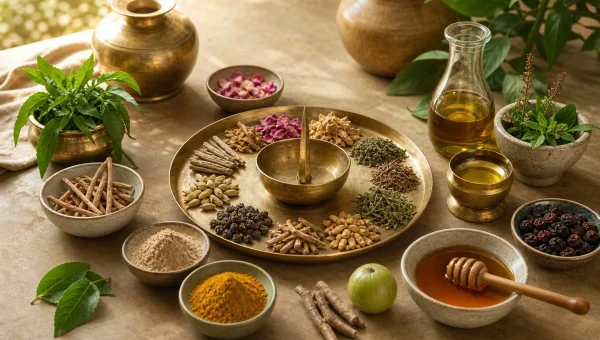
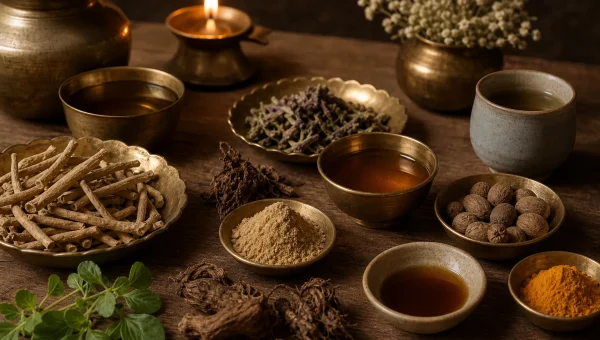
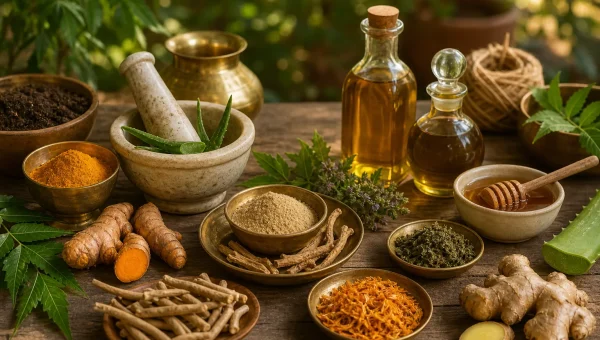
Medhya rasayana refers to Ayurvedic support for intellect, memory, clarity and mental steadiness. Classical and pharmacopoeial sources identify several herbs used in this area, but they should not all be treated as interchangeable. Brahmi, Shankhpushpi, Ashwagandha and Jyotishmati have different strengths, energetics and safety profiles. A student protocol should favor gentle, sustainable supports first and reserve stronger herbs for qualified supervision.
Brahmi (Bacopa monnieri): Brahmi is listed in the Ayurvedic Pharmacopoeia of India as Bacopa monnieri and is described as medhya and rasayana. Traditional powder dosing differs from modern extract dosing; the pharmacopoeial powder dose is 1-3 g, while adult Bacopa extract trials commonly used 300 mg daily of a standardized extract over many weeks. Brahmi is best understood as a slow cognitive support for learning, memory consolidation and mental steadiness, not as an instant stimulant to take for the first time on exam morning.
Shankhpushpi (Convolvulus pluricaulis): Shankhpushpi is listed as a medhya and rasayana herb, with the Ayurvedic Pharmacopoeia giving a powder dose of 3-8 g. The same source notes that in some regions different botanicals, including Clitoria ternatea and Evolvulus alsinoides, are used under the name Shankhpushpi. For students, this means identity and sourcing matter. Traditionally, Shankhpushpi is often placed in a calming, mind-supporting role and is commonly paired with warm milk, ghee or other nourishing vehicles when suitable.
Ashwagandha (Withania somnifera): Ashwagandha root is described in the Ayurvedic Pharmacopoeia as rasayana, balya and vata-kapha pacifying, with a root powder dose of 3-6 g. Adult stress trials have used standardized root extracts over several weeks, commonly around eight weeks or sixty days. In an exam-anxiety protocol, ashwagandha is most appropriate when the student has chronic stress, depletion, poor sleep and nervous exhaustion, rather than a hot, agitated or pitta-dominant presentation.
Jyotishmati (Celastrus paniculatus): Jyotishmati is a classical medhya herb, but it is not a casual daily supplement for students. The Ayurvedic Pharmacopoeia lists the seed dose as 1-2 g and the oil dose as 5-15 drops, and also describes strong actions including ushna, tikshna, vamaka and virechaka qualities. Because of this sharper profile, Jyotishmati should be used only under a qualified Ayurvedic practitioner, especially in young students, sensitive constitutions, gastritis, heat symptoms or medication use.
Brahmi ghrita: Brahmi ghrita is a traditional ghee-based preparation connected with mental and neurological indications in Ayurvedic literature. Its ghee base makes it more nourishing and vata-pacifying than dry capsules for many students, but the dose and suitability depend on digestion, constitution, age, appetite and the exact formulation. It is best selected by a practitioner rather than used as a one-size-fits-all exam-day shortcut.
| Support | Verified Dose Reference | Best Timing Pattern | Role in Exam Season |
|---|---|---|---|
| Brahmi | 1-3 g powder; 300 mg/day standardized extract used in adult trials | With food, consistently for weeks | Learning, memory and mental steadiness |
| Shankhpushpi | 3-8 g powder | Often used with warm nourishing vehicles when suitable | Calming medhya support |
| Ashwagandha | 3-6 g root powder; extract dose varies by product | Usually evening or with meals, according to tolerance | Stress resilience, strength and recovery |
| Jyotishmati | 1-2 g seed or 5-15 drops oil | Practitioner-supervised only | Stronger medhya support for selected cases |
| Brahmi ghrita | Individualized | With warm milk or food when digestion allows | Nourishing ghee-based medhya support |
The Grounding Diet: Food as Vata Medicine
Students under examination pressure often worsen anxiety through the exact habits that aggravate vata: skipping breakfast, replacing meals with packaged snacks, drinking too much caffeine, eating cold dry foods and studying late into the night. A vata-calming exam diet should be warm, regular, moderately oily, easy to digest and satisfying enough to prevent nervous depletion.
A practical student pattern is simple: warm breakfast, substantial warm lunch and lighter warm dinner. Oatmeal, rice porridge, semolina porridge, khichdi, dal-rice, vegetable soups, ghee, warm milk when tolerated, soaked almonds and dates all fit the exam-season need for nourishment and steadiness. Meals should be eaten sitting down rather than while scrolling, reading or rushing between study sessions. The point is not heaviness for its own sake, but predictable nourishment that keeps the body from interpreting exam preparation as emergency scarcity.
Caffeine does not need to be forbidden for every student. One morning tea or coffee may be tolerated well. The difficulty begins when caffeine is used repeatedly through the afternoon and evening to compensate for poor sleep. High caffeine intake can increase anxiousness, jitters, palpitations, stomach upset and sleep disruption. A better afternoon ritual is warm herbal support without stimulant escalation: Brahmi or Shankhpushpi prepared gently as advised, or simply warm water with a short breathing break before returning to study.
Sleep Optimization: The Non-Negotiable Cognitive Variable
Sacrificing sleep for more study time is usually a poor exchange. Sleep supports memory consolidation, and repeated sleep restriction produces cumulative deficits in alertness, attention and cognitive performance. In exam terms, the student who sleeps less may gain extra hours at the desk but lose clarity, recall, emotional steadiness and decision-making quality the next day.
The Ayurvedic sleep protocol is built around rhythm and sensory quieting. Choose a bedtime early enough to protect a full night of sleep, stop intense study before bed, reduce screens in the final part of the evening, keep the room dark and quiet, and use warm, grounding rituals. A few minutes of warm sesame oil massage to the feet can be used as a simple vata-pacifying practice before sleep. If herbs such as Shankhpushpi, Brahmi ghrita or Ashwagandha are used in the evening, they should match the student’s constitution, digestion and medical context.
Morning routines should also reduce mental scattering. A steady wake time, warm water, light movement, a simple breakfast and a short first study block are more vata-calming than checking messages immediately after waking. Traditional pratimarsha nasya with Anu Taila is sometimes used as a daily head-and-sense-organ care practice, commonly in very small quantities such as two drops, but it should be learned properly and avoided when unsuitable, such as during acute nasal irritation, congestion or after meals.
Pranayama as the Immediate Exam-Day Anxiety Tool
When anxiety rises immediately before an examination, herbs and diet are background supports; the quickest available tool is breath regulation. Nadi shodhana, or alternate nostril breathing, gives the mind a single steady object and slows the breath without needing equipment, privacy beyond a quiet corner or any visible intervention.
A safe student version is to sit upright, relax the shoulders and breathe gently. Close the right nostril and inhale through the left for a count of four. Close the left nostril and exhale through the right for a count of six to eight. Inhale through the right for four, close the right nostril and exhale through the left for six to eight. Continue for five to ten rounds. Breath retention is not necessary for anxious students; the priority is smoothness, comfort and a longer exhalation. Stop if there is dizziness, chest discomfort or panic escalation.
This practice works best when rehearsed before the exam day. Use it before study blocks, after mock tests and during the final minutes before entering the examination room. The purpose is not to force the mind to become blank, but to move it from scattered speed toward steady attention.
Medical disclaimer: Examination anxiety that significantly impairs academic performance, causes panic attacks, produces severe physical symptoms, includes depression, or interferes with school, work or relationships requires evaluation by a qualified mental health professional. Students should not reduce or discontinue prescribed psychiatric medication without physician guidance.
Nothing in this article diagnoses, treats or cures a medical condition. Use this as educational information and consult a qualified Ayurvedic practitioner or healthcare provider before starting herbs, supplements, nasya, medicated ghee or therapeutic protocols, especially if pregnant, breastfeeding, under 18, managing thyroid, liver, autoimmune, psychiatric or digestive conditions, or taking medication.
References
- Concordia (concordia.ca)
- NCBI
- Ayurveda-online (ayurveda-online.net)
- Easyayurveda (easyayurveda.com)
- Nootropic herbs (Medhya Rasayana) in Ayurveda: An update (2012), PubMed Central
- Ayurvedic Pharmacopoeia of India
- The chronic effects of an extract of Bacopa monniera (Brahmi) on cognitive function in healthy human subjects (2001), PubMed
- Ayurvedic Pharmacopoeia of India
- A prospective, randomized double-blind, placebo-controlled study of safety and efficacy of a high-concentration full-spectrum extract of ashwagandha root in reducing stress and anxiety in adults (2012), PubMed
- Preliminary physico-chemical profile of Brahmi Ghrita (2013), PubMed Central
- FDA
- The effect of caffeine on subsequent sleep: A systematic review and meta-analysis (2023), PubMed
- About sleep’s role in memory (2013), PubMed
- The cumulative cost of additional wakefulness: dose-response effects on neurobehavioral functions and sleep physiology from chronic sleep restriction and total sleep deprivation (2003), PubMed
- CDC
- Yogainternational (yogainternational.com)
- Identification and estimation of bioactive constituents Negundoside, Berberine chloride, and Marmelosin by HPLC and HPTLC for development of quality control protocols for Ayurvedic medicated oil formulation (2021), PubMed Central
- Easyayurveda (easyayurveda.com)
- Effect of fast and slow pranayama on perceived stress and cardiovascular parameters in young health-care students (2013), PubMed Central
- Effect of Alternate Nostril Breathing Exercise on Experimentally Induced Anxiety in Healthy Volunteers Using the Simulated Public Speaking Model: A Randomized Controlled Pilot Study (2017), PubMed Central
- Nimh (nimh.nih.gov)
- NCCIH