
Skin After Menopause: More Than Surface Deep
Menopause skin care in Ayurveda begins with the tissue story beneath the surface. After menopause, lower estrogen is associated with reduced skin thickness, lower collagen content, dryness, increased fragility, slower repair, and changes in oil and moisture balance. Ayurveda reads this visible change as more than a cosmetic issue: the skin is showing the condition of nourishment, unctuousness, circulation, tissue strength, and dosha balance inside the body.
Rasa dhatu is the first nutritive tissue formed from properly digested food essence. It is watery, nourishing, mobile, and unctuous, and it supports the progressive nourishment of the later dhatus. Its classical upadhatus are stanya and artava. Twak, or skin, is described in Ayurveda in relation to mamsa dhatu, while also depending on the nourishment that begins with rasa. For menopausal skin, this means the best protocol is not only topical oil; it is a combined plan that protects rasa quality, supports mamsa-twak structure, calms dryness, and uses gentle external sneha.
Rasa, Mamsa and Twak in Menopausal Skin
The Ayurvedic view is not that estrogen is identical to one single dhatu or substance. The practical interpretation is that menopause brings a change in artava, a rise in dryness and lightness, and a greater need for rasa and mamsa support. Rasa gives hydration, softness, and nourishment. Mamsa gives body and firmness to tissues. Twak reflects both: it needs fluidity and unctuousness from rasa, and structure from mamsa.
When rasa is insufficient, disturbed, or poorly circulated, the skin may look dry, dull, undernourished, and prematurely aged. When mamsa-twak support is weak, the skin may feel thin, crepey, and slow to recover. When pitta is disturbed, the skin may show heat, flushing, sensitivity, pigmentation, or inflammatory eruptions. When kapha is obstructed or heavy, the skin may show congestion, oiliness, or clogged pores. Menopausal care therefore works best when it is individualized rather than reduced to a single “anti-aging” oil or herb.
| Skin Change | Modern Pattern | Ayurvedic Reading | Support Strategy |
|---|---|---|---|
| Dryness, flaking, tightness | Reduced moisture retention and barrier comfort | Vata-like dryness in twak with reduced sneha | Gentle oiling with kumkumadi taila or sesame oil, warm moist foods, non-stripping cleansing |
| Thinning and crepey texture | Lower dermal collagen and skin thickness | Mamsa-twak undernourishment with rasa support needed | Adequate protein, vitamin C foods, amalaki, and practitioner-guided rasayana support |
| Loss of glow or dull complexion | Dryness, slower renewal, pigmentation tendency, and reduced surface vitality | Rasa depletion with bhrajaka pitta and rakta needing balance | Kumkumadi taila, saffron in suitable culinary use, manjistha in practitioner-selected formulas |
| Easy bruising or slow repair | Tissue fragility and altered wound-repair capacity | Rakta-mamsa-twak fragility | Medical evaluation when frequent, plus protein, vitamin C, zinc, and gentle skin protection |
| Oiliness, eruptions, or increased facial hair | Relative androgen influence may become more noticeable after estrogen declines | Pitta-kapha expression on a menopausal vata background | Avoid heavy self-treatment; use lodhra or manjistha topically only when suited, and seek evaluation for sudden or marked changes |
The Kumkumadi Taila Protocol for Menopausal Skin
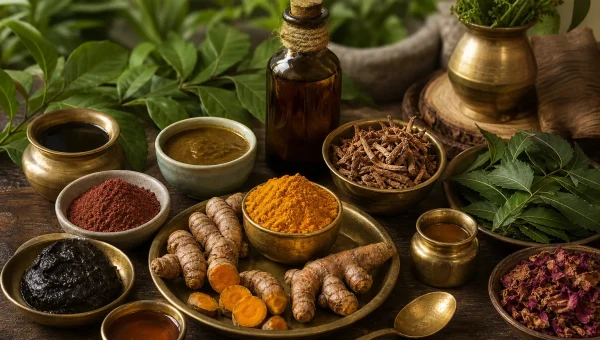
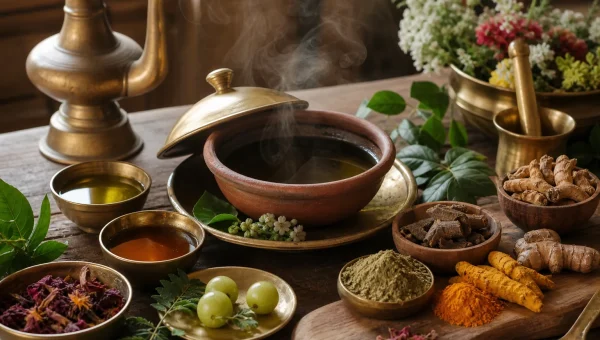
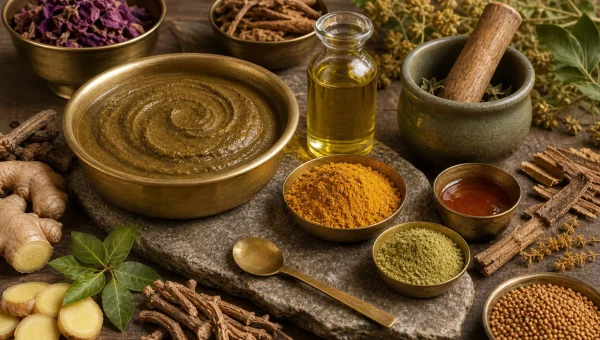
Kumkumadi taila is a classical Ayurvedic facial oil centered on kumkuma, or saffron, in a sesame oil base, with the complete ingredient list varying by textual lineage, pharmacy tradition, and manufacturer. It is used in Ayurvedic beauty care for varnya, the improvement of complexion, clarity, and radiance. For menopausal skin, its value lies in gentle, repeated oiling rather than heavy application.
The sesame oil base is especially appropriate for dryness because sesame oil is rich in oleic and linoleic fatty acids and is a traditional sneha for vata-type roughness. Saffron is valued in complexion-supporting formulas, and manjistha is traditionally used in skin and complexion formulas where rakta and pitta need balance. A genuine kumkumadi taila should be chosen from a reputable manufacturer, especially because some traditional and commercial formulas differ in ingredients.
Morning or evening routine: Cleanse the face with lukewarm water or a mild, non-stripping cleanser. While the skin is slightly damp, apply 2-4 drops of kumkumadi taila. Massage gently with circular and upward strokes over the cheeks, jawline, forehead, and temples, avoiding the eyes. Leave it for 20-30 minutes, then wipe away excess oil with a warm damp cloth. Very dry skin may tolerate this at night; sensitive, acne-prone, or heat-prone skin may do better with alternate-night use.
When to simplify: If kumkumadi causes warmth, stinging, itching, rash, acne flares, or redness, stop and return to a simpler oil such as plain sesame oil used sparingly, or consult a practitioner. Menopausal skin is often reactive, so the right dose of oil is usually a thin film, not a thick coating. Daily use of drying cleansers, harsh exfoliants, strong acids, or multani mitti can worsen dryness in already thin or fragile skin.
Internal Support for Rasa Dhatu Nourishment
Topical oil can soften the surface, but lasting menopausal skin support also needs food, hydration, digestion, sleep, and appropriate rasayana. In Ayurveda, rasa is formed from the essence of digested food, so the quality of meals and the strength of digestion matter as much as the herb chosen. Warm, moist, freshly prepared meals with adequate protein, healthy fats, and mineral-rich foods are more supportive for menopausal dryness than cold, dry, irregular eating.
Shatavari: Shatavari is a classical female rasayana and is commonly used when dryness, heat, depletion, and reproductive-stage transition are part of the pattern. It contains phytoestrogenic compounds, but it should not be used as a direct substitute for hormone therapy. Women with a history of hormone-sensitive conditions, unexplained bleeding, complex medication use, or active medical treatment should use it only with professional guidance.
Amalaki: Amalaki is a rasayana fruit and a strong choice for skin nutrition because it provides vitamin C and polyphenolic compounds. Vitamin C is required for collagen formation and wound repair, making amalaki especially relevant when the goal is to support mamsa-twak strength from the diet. It may be used as food, fresh juice, powder, or in classical preparations when appropriate for the person’s digestion and constitution.
Saffron: Saffron may be used in small culinary quantities in warm milk or food for suitable people, and it also belongs to the traditional logic of kumkumadi taila. For a fuller profile of kesar in Ayurveda, see saffron in Ayurveda therapeutic uses. High-dose saffron extracts or medicinal use should be reserved for practitioner guidance, especially during pregnancy, with psychiatric medication, or in sensitive individuals.
Sesame: Sesame supports the same menopausal theme from two directions: sesame oil provides external unctuousness, while sesame seeds provide nourishment, minerals, and lignans in the diet. Sesame paste, tahini, roasted sesame, or sesame chutney can be useful when digestion is good and there is no allergy. A small, regular amount is usually more appropriate than large daily quantities.
Manjistha and Lodhra: Manjistha is used in Ayurvedic skin formulas where complexion, rakta, pitta, and inflammatory tendencies are central. Lodhra is more astringent and is often suited to oily, congested, or acne-prone patterns rather than very dry skin. These herbs should be selected according to the skin pattern; they are not universal menopause herbs and should not be used to self-treat sudden facial hair growth or unexplained hormonal symptoms.
Dietary Collagen Support: Vegetarian Building Blocks
Collagen itself is an animal protein, but vegetarian and plant-forward diets can support the body’s own collagen formation by supplying amino acids, vitamin C, zinc, and enough total nourishment. In Ayurvedic language, this means feeding rasa well so that mamsa and twak can receive proper support through the dhatu sequence.
- Vitamin C foods: amalaki, guava, citrus, bell peppers, and fresh greens. Vitamin C is required for stable collagen formation and wound repair.
- Protein foods: mung dal, lentils, chickpeas, tofu, paneer, curd, nuts, and seeds, chosen according to digestion and tolerance. Skin structure cannot be rebuilt on a chronically low-protein diet.
- Glycine-supporting foods: legumes, sesame seeds, pumpkin seeds, and other protein-rich foods. Glycine is one of the major amino acids in collagen structure.
- Zinc foods: pumpkin seeds, sesame seeds, chickpeas, cashews, and lentils. Zinc participates in normal wound repair and tissue remodeling.
- Healthy fats and sneha: sesame oil, ghee where suitable, coconut, nuts, and seeds can reduce the dry, rough quality of vata when digestion can handle them. For more on classical sneha, see ghee healing power in Ayurveda.
- Hydrating cooked meals: soups, stews, khichadi, warm milk preparations where tolerated, and cooked vegetables are more rasa-supportive than dry snacks, raw-only meals, or irregular fasting in a depleted person.
A Simple Menopausal Skin Routine
A practical routine should be steady, gentle, and easy to maintain. In the morning, rinse or cleanse mildly, apply a light moisturizer or a very thin layer of oil if dryness is prominent, and protect the skin from harsh sun and wind. In the evening, use kumkumadi taila or plain sesame oil in a small amount, massage gently, and remove excess. Internally, prioritize warm meals, adequate protein, amalaki or vitamin C foods, regular hydration, and sleep. Add herbs only when they match the person’s constitution, symptoms, medications, and medical history.
Frequent bruising, non-healing wounds, sudden facial hair growth, rapidly changing pigmentation, bleeding after menopause, unexplained weight change, or severe hot flashes should be assessed medically. Ayurvedic skin care can be a strong supportive approach, but menopausal symptoms may require gynecological care, dermatological care, hormone therapy, or other conventional treatment depending on the individual.
Medical disclaimer: This content is for educational purposes only and does not diagnose or treat a medical condition. Consult a qualified Ayurvedic practitioner, dermatologist, gynecologist, or healthcare provider before starting herbs, supplements, oils, detoxes, or therapeutic protocols, especially if you are taking medication, have a hormone-sensitive condition, have unexplained bleeding, are pregnant or perimenopausal, or have significant osteoporosis or cardiovascular risk.
References
- Estrogen-deficient skin: The role of topical therapy (2019), PubMed Central
- Estrogens and aging skin (2013), PubMed Central
- Charaka Samhita — Dhatu
- Charaka Samhita — Rasa dhatu
- Charaka Samhita — Sharira Sankhya Sharira
- Ijapr (ijapr.in)
- Associations of the Seed Fatty Acid Composition of Sesame (Sesamum indicum L.) Germplasm with Agronomic Traits and FAD2 Variations (2024), PubMed Central
- Lignans of Sesame (Sesamum indicum L.): A Comprehensive Review (2021), PubMed Central
- Estrogenic activities of sesame lignans and their metabolites on human breast cancer cells (2011), PubMed
- Postmenopausal Hyperandrogenism: Evaluation and Treatment Strategies (2021), PubMed Central
- Chemical analysis reveals the botanical origin of shatavari products and confirms the absence of alkaloid asparagamine A in Asparagus racemosus (2013), PubMed
- Shatavari Supplementation in Postmenopausal Women Improves Handgrip Strength and Increases Vastus lateralis Myosin Regulatory Light Chain Phosphorylation but Does Not Alter Markers of Bone Turnover (2021), PubMed Central
- Functional and Nutraceutical Significance of Amla (Phyllanthus emblica L.): A Review (2022), PubMed Central
- NIH Office of Dietary Supplements
- Pubs (pubs.rsc.org)
- Safety and Efficacy of Saffron (Crocus sativus L.) for Treating Mild to Moderate Depression: A Systematic Review and Meta-analysis (2020), PubMed
- ROS-scavenging and Anti-tyrosinase Properties of Crocetin on B16F10 Murine Melanoma Cells (2018), PubMed
- A comprehensive review of Rubia cordifolia L.: Traditional uses, phytochemistry, pharmacological activities, and clinical applications (2022), PubMed Central
- Critical review of Ayurvedic Varṇya herbs and their tyrosinase inhibition effect (2015), PubMed Central
- A comprehensive analysis on Symplocos racemosa Roxb.: Traditional uses, botany, phytochemistry and pharmacological activities (2016), PubMed
- Roles of dietary glycine, proline, and hydroxyproline in collagen synthesis and animal growth (2018), PubMed
- NCBI
- Zinc in Wound Healing Modulation (2017), PubMed Central
- Mayoclinic (mayoclinic.org)
does the portocol differ for surgical menopause versus natural menopause?
perimenopause at 48 and the skin changes were distressing. The Rasa Dhatu approach focusing on nourishment over symptom suppression has been genuinely helpful. धन्यवाद
skin changes in menopause are primarily estrogen-deficiency driven. Herbs may help marginally but HRT is the gold standard.
Bookmarked