What Prathama Stanya Means and Why It Matters
In Ayurveda, stanya means breast milk, and Kaumarabhritya places it at the center of newborn nourishment. The first secretion after birth—the early, thick milk known in modern medicine as colostrum—is described here as prathama stanya, “first stanya,” for clarity. Ayurveda values breast milk as life-supporting, nourishing, strength-promoting, and supportive of ojas, the subtle principle associated with vitality and resilience.
Colostrum is a small-volume, highly concentrated early milk produced during the first days after birth. It is naturally suited to the newborn’s small stomach and immature digestive system. Compared with mature milk, it is richer in protective proteins, secretory immunoglobulin A, lactoferrin, leukocytes, human milk oligosaccharides, and growth factors, while its fat and lactose profile changes as lactation progresses.
Immunological Mechanisms: Why Colostrum Is Irreplaceable
Colostrum protects mainly at the mucosal surfaces of the newborn’s mouth, throat, and intestine. In humans, the main transfer of systemic passive immunity occurs before birth through maternal IgG crossing the placenta. After birth, the antibodies in breast milk—especially secretory IgA—primarily coat and protect the gut lining, help shape early microbial colonization, and support immune tolerance during a vulnerable period of adaptation.
This makes early breastfeeding deeply important even without the claim that human newborns absorb large quantities of intact milk antibodies into the bloodstream. The first feed helps deliver mucosal protection, stimulates digestion, supports bonding, and encourages the hormonal rhythm of lactation. Current neonatal guidance recommends early, uninterrupted skin-to-skin contact and initiation of breastfeeding within the first hour after birth whenever mother and baby are clinically stable.
| Component | Colostrum Pattern | Mature Milk Pattern | Primary Function |
|---|---|---|---|
| Secretory IgA | Highest in early milk; highly variable among mothers | Lower than colostrum after lactation matures | Mucosal protection and immune exclusion of pathogens |
| Lactoferrin | Abundant in colostrum | Lower as milk matures | Iron binding, antimicrobial activity, and immune modulation |
| Human Milk Oligosaccharides | Concentrated in early milk | Remain present but generally lower | Support beneficial gut microbes and block pathogen attachment |
| Epidermal Growth Factor | Markedly higher in colostrum | Lower in mature milk | Supports intestinal epithelial maturation and repair |
| Total Protein | Higher in early milk | Lower after milk matures | Provides amino acids, immune proteins, and bioactive peptides |
| Fat and Lactose | Generally lower than later milk | Increase as transitional and mature milk develop | Energy supply adapts as feeding volume rises |
Why Colostrum Should Not Be Discarded
Discarding colostrum because it appears thick, yellow, or scanty is contrary to both sound newborn care and the Ayurvedic respect for stanya. The first milk is not “dirty” or inferior; its color and density reflect its concentrated protective composition. Ayurveda’s emphasis on nourishing the newborn with mother’s milk is consistent with the practical priority of giving colostrum early.
Pre-lacteal feeds such as honey, sugar water, plain water, animal milk, or formula should not be used before breastfeeding unless there is a clear medical indication. Such feeds can interfere with early suckling, delay breastfeeding establishment, and increase the chance of avoidable exposure to contaminants. The safest general principle is immediate skin-to-skin contact and early breastfeeding support from trained birth attendants, pediatricians, and lactation consultants.
Classical Navajata Paricharya and First Feeding Rituals
Classical newborn-care passages include ritual elements around jatakarma, including auspicious touch, mantra, and in some traditions small oral offerings involving honey, ghee, or gold preparations before breastfeeding. These passages belong to a historical ritual context and should not be applied casually in modern newborn care.
For present-day practice, the verified and safe priority is to place the clinically stable newborn skin-to-skin and begin breastfeeding within the first hour. Ritual intention may be preserved through blessing, mantra, prayer, or gentle touch without giving unsafe oral substances. Honey should not be given to infants under 12 months because of the risk of infant botulism.
Ayurvedic texts also describe the mother’s sight, touch, holding, and affectionate attention toward the baby as supportive of milk flow. This harmonizes well with the practical value of uninterrupted mother-baby contact, calm surroundings, and skilled help with latch during the first hours after birth.
Maternal Nutrition for Healthy Stanya
Ayurveda places strong emphasis on garbhini paricharya, the diet and lifestyle care of pregnancy. The pregnant woman’s properly digested food is understood to nourish the mother, support the fetus, and help prepare the formation of breast milk. Classical guidance favors foods that are wholesome, palatable, nourishing, moist, and easy to digest, with milk and ghee appearing prominently in many traditional pregnancy diet descriptions.
Modern nutritional understanding also treats human milk as dynamic. Its composition changes with stage of lactation, infant needs, maternal diet, and maternal nutrient status. Nutrients such as fatty acids and several vitamins can be influenced by the mother’s intake, so pregnancy and lactation nutrition should be planned with qualified medical guidance, especially when there is anemia, vitamin D deficiency, thyroid disease, diabetes, digestive illness, or use of medication.
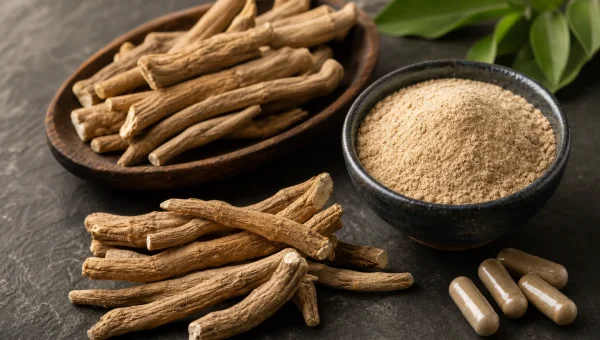
Shatavari (Asparagus racemosus) is a classical Ayurvedic herb associated with lactation support. The Ayurvedic Pharmacopoeia of India describes Shatavari root as madhura and tikta in rasa, guru and snigdha in guna, shita in virya, madhura in vipaka, and includes stanyakara action with use in stanya kshaya. The crude-drug dose listed in the pharmacopoeia is 3–6 grams, but pregnancy and lactation use should be supervised by a qualified Ayurvedic practitioner or healthcare provider.
Bovine Colostrum as a Supplement: A Separate Topic
Bovine colostrum is the first milk produced by a cow after calving. It contains immunoglobulins, lactoferrin, antimicrobial peptides, growth factors, proteins, fats, carbohydrates, vitamins, and minerals. Adult supplement use of bovine colostrum is a separate subject from human newborn feeding and should never be confused with the baby’s need for the mother’s own colostrum.
Some Ayurvedic dietetic discussions refer to cow colostrum as piyusha and describe it as heavy, nourishing, and strength-supporting. This belongs to food and dietetics, not to the management of a human newborn’s first feed. A newborn should receive mother’s colostrum whenever breastfeeding is possible; when breastfeeding is medically difficult, care should be guided by pediatric and lactation professionals.
Bovine colostrum supplements may not be suitable for people with dairy allergy, milk-protein intolerance, certain immune conditions, or those using complex medication regimens. They should be used only with professional guidance, particularly for children, pregnant women, lactating mothers, older adults, and anyone with chronic illness.
Medical disclaimer: This content is for educational purposes only. Breastfeeding decisions, neonatal care, lactation problems, delayed milk production, infant jaundice, prematurity, low birth weight, or feeding difficulty should be managed with a pediatrician and certified lactation consultant. Consult a qualified Ayurvedic practitioner or healthcare provider before using herbs, supplements, or traditional protocols during pregnancy or lactation. Do not give honey to infants under 12 months.
References
- Charaka Samhita — Stanya
- Charaka Samhita — Stanya
- E-cep (e-cep.org)
- Mdpi (mdpi.com)
- World Health Organization
- World Health Organization
- Mdpi (mdpi.com)
- Prelacteal feeding practice and its associated factors among mothers of children age less than 24 months old in Southern Ethiopia (2019), PubMed Central
- Canada (canada.ca)
- Books (books.kdpublications.in)
- Books (books.kdpublications.in)
- Charaka Samhita — Prenatal care (garbhini paricharya
- Frontiersin (frontiersin.org)
- Ayurvedic Pharmacopoeia of India
- Bovine Colostrum: Its Constituents and Uses (2021), PubMed Central
- Jaims (jaims.in)