
Amlapitta Kitchen Remedies: Anti-Acid Recipes for the Pitta Gut
For many people, the modern reflux pattern is built from a familiar routine: deadlines, coffee, irregular meals, spicy takeout, late dinners, and sleep that begins before digestion has settled. The question is not only what to avoid, but what to eat when the gut feels sour, hot, bloated, and easily provoked.
Ayurveda describes this pattern through the lens of amlapitta: amla meaning sour and pitta referring to the hot, sharp digestive principle. In its upward-moving presentation, it is associated with sour or bitter belching, burning in the chest or throat, nausea, indigestion, heaviness, and loss of appetite. It is not identical to a modern GERD diagnosis, but the two often overlap in practical diet planning, especially where sourness, burning, late meals, coffee, high-fat foods, and individual food triggers are involved.
The kitchen approach is simple: remove the most pitta-provoking and reflux-provoking inputs first, then build meals around light, warm, soft, low-fat, non-sour, and pitta-soothing preparations. The goal is not “alkaline eating” as a slogan; it is steady reduction of sour, hot, oily, fermented, and erratic habits while adding foods that are easy to digest and less likely to push reflux upward.
The Pitta-Gut Trigger List: What to Cut First
Begin with a two-to-four-week trigger reset. Keep meals regular, reduce the foods below, and reintroduce only one item at a time once burning and sour belching have settled. Individual tolerance varies, but these are the first practical eliminations for a pitta-dominant reflux pattern.
1. Coffee, strong black tea, chocolate, and mint: Coffee and other caffeine sources are commonly linked with GERD symptoms, while mint and chocolate are frequent reflux triggers for sensitive people. Replace the morning coffee ritual with CCF tea during the reset period.
2. Sour, fermented, pickled, and vinegar-heavy foods: Pickles, vinegar, excess tamarind, sour curd, wine, and strongly fermented foods increase the same sour and sharp qualities that Ayurveda tries to calm in amlapitta. Keep flavors mild and use fresh herbs instead of sour condiments.
3. Tomatoes and citrus: Citrus fruits and tomatoes are common acidic triggers for GERD symptoms. During an acute phase, avoid lemon water, orange juice, tomato gravies, ketchup, and tomato-based sauces.
4. Large, oily, and late meals: Heavy dinners, fried foods, and eating close to bedtime are especially problematic when reflux wakes a person at night. Keep dinner lighter than lunch and finish the last meal at least three hours before lying down.
Recipe 1: CCF Tea — The Morning Anti-Acid Staple
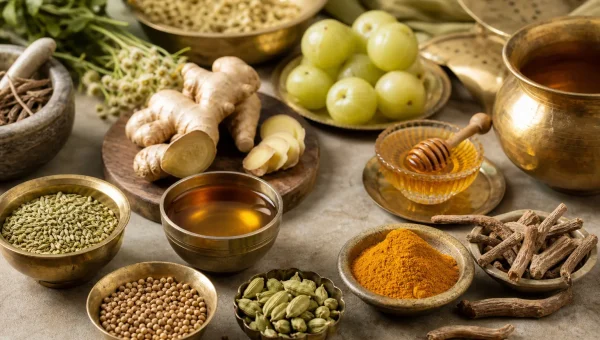
Cumin-coriander-fennel tea is a gentle kitchen drink for the bloated, sour, pitta-leaning gut. Cumin supports digestion and gas reduction, coriander is traditionally used for cooling digestive discomfort, and fennel is widely used as a carminative seed for bloating and abdominal spasm. The preparation should taste mild, not sharp.
CCF Tea:
– 1/4 teaspoon cumin seeds
– 1/2 teaspoon coriander seeds
– 1/2 teaspoon fennel seeds
– 400 ml water
– Optional: 2-3 crushed cardamom seeds
Bring the water to a boil, add the seeds, reduce to a low simmer for 4-5 minutes, cover for another 2 minutes, then strain. Sip warm through the morning or between meals. If cumin feels too heating, reduce it further and keep coriander and fennel dominant.
Recipe 2: Soft Rice-Mung Pitta Kitchari
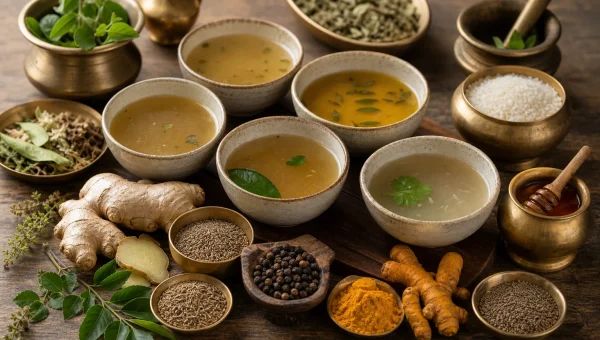
Classical amlapitta diet guidance gives importance to light, digestible staples such as old rice and green gram preparations. For reflux days, the best kitchari is not rich, oily, or overloaded with spices. It should be soft, soupy, mildly seasoned, and easy to finish without heaviness.
Soft Rice-Mung Pitta Kitchari (serves 2):
– 100 g white basmati rice, preferably aged
– 80 g split yellow mung dal
– 700 ml water, plus more if needed
– 1/2 teaspoon coriander powder
– 1/4 teaspoon fennel seeds or fennel powder
– 1/4 teaspoon cumin seeds
– 1/4 teaspoon turmeric
– 1/4 teaspoon cardamom powder
– 1 teaspoon ghee or coconut oil, optional
– 1/2 teaspoon rock salt, or to taste
– Optional: 1-2 tablespoons thin coconut milk at the end, only if tolerated
Soak the rice and dal for 30 minutes, then rinse well. Warm the ghee or oil on low heat, add cumin and fennel, and stir briefly without browning. Add rice, dal, turmeric, coriander, cardamom, and water. Cook covered on low heat for 25-30 minutes until the grains are soft and soupy. Add salt near the end. Serve warm at lunch or as an early light dinner.
Keep the portion moderate. Avoid making this into a rich coconut-milk dish during active reflux, because high-fat meals can aggravate symptoms in many people. If a practitioner has advised yashtimadhu for you, a very small pinch may be added after cooking, but licorice is not suitable for everyone and should be avoided in hypertension, heart disease, kidney disease, low potassium states, pregnancy, or when taking interacting medicines unless supervised.
Recipe 3: Aloe-Rose Cooling Drink
Aloe vera inner gel, known in Ayurveda as kumari, is cooling and soothing when used carefully. For internal use, the important distinction is inner gel versus aloe latex or whole-leaf preparations. Latex-containing aloe can irritate the bowel and may cause cramps or diarrhea, so the drink should use only food-grade inner leaf gel or a purified, decolorized oral aloe product.
Aloe-Rose Cooling Drink:
– 5-10 ml food-grade aloe vera inner leaf gel
– 1/2 teaspoon food-grade dried rose petal powder or 1 teaspoon plain gulkand
– 1/4 teaspoon coriander seed powder
– 200 ml room-temperature water
– Optional: a small amount of mishri, if sweetness is needed
Stir everything together until smooth and take 20-30 minutes before lunch. Start with 5 ml aloe to assess tolerance. Use this only as a short-course cooling preparation unless supervised. Avoid internal aloe during pregnancy or breastfeeding, in children, with laxatives, digoxin, diuretics, blood thinners, diabetes medicines, kidney disease, liver disease, or if it causes loose stools or cramping.
Recipe 4: Shatavari Pre-Dinner Milk Protocol
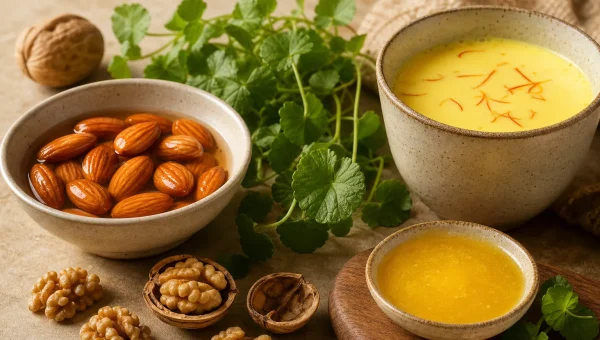
Shatavari (Asparagus racemosus) is traditionally used in Ayurveda for dyspepsia and amlapitta, and its root has been evaluated for gastroprotective and anti-ulcer activity. In a reflux-sensitive person, the preparation should be small and taken before an early dinner, not as a heavy bedtime drink.
Shatavari Pre-Dinner Milk:
– 150-200 ml low-fat cow’s milk, diluted milk, or water if milk worsens reflux
– 1/2 teaspoon shatavari powder
– 1/4 teaspoon fennel powder
– 1/4 teaspoon cardamom powder
– 2-3 saffron strands, optional
– 1 teaspoon mishri, optional
Warm the milk or water gently on low heat. Add shatavari, fennel, cardamom, and saffron, and stir for 3-4 minutes. Remove from heat, allow it to become comfortably warm, then add mishri if needed. Take 45-60 minutes before an early dinner. Do not take it after dinner or close to sleep.
| Preparation | Ayurvedic Aim | Reflux-Friendly Use | Timing | Course |
|---|---|---|---|---|
| CCF Tea | Support digestion without strong heat | Coffee replacement and gas-reducing tea | Morning or between meals | 2-4 weeks, then as needed |
| Soft Rice-Mung Kitchari | Light, digestible pathya meal | Low-fat, soupy lunch or early dinner | Lunch or early evening | During acute days or a few meals weekly |
| Aloe-Rose Drink | Cooling, soothing support for pitta burning | Only inner gel or purified oral aloe | 20-30 minutes before lunch | Short course, up to 4 weeks unless supervised |
| Shatavari Pre-Dinner Milk | Pitta-soothing, stomach-supportive rasayana | Small serving, not a bedtime drink | 45-60 minutes before early dinner | 4-6 weeks with practitioner guidance |
These recipes work best when the whole day supports the same direction: regular meals, moderate portions, no lying down after food, no late-night snacking, and a clear record of personal triggers. The broader agni framework explains why impaired digestion and pitta aggravation often appear together, while the triphala GI research post gives related context for Ayurvedic digestive herbs.
Medical Disclaimer: These recipes are educational and may complement, but do not replace, appropriate care for acid reflux, GERD, gastritis, or esophagitis. Do not stop proton pump inhibitors, H2 blockers, antacids, or prescribed medication without your physician’s guidance. Seek medical care promptly for difficulty swallowing, vomiting blood, black stools, unexplained weight loss, anemia, persistent chest pain, recurrent vomiting, severe abdominal pain, or symptoms that continue despite treatment. Consult a qualified Ayurvedic practitioner and a healthcare provider before using herbs or supplements, especially if pregnant, breastfeeding, managing a medical condition, or taking medication.
References
- Jaims (jaims.in)
- Jaims (jaims.in)
- NIDDK
- ACG Clinical Guideline for the Diagnosis and Management of Gastroesophageal Reflux Disease (2022), PubMed Central
- Cumin extract for symptom control in patients with irritable bowel syndrome: a case series (2013), PubMed Central
- Cuminum cyminum and Carum carvi: An update (2011), PubMed Central
- Coriandrum sativum L.: A Review on Ethnopharmacology, Phytochemistry, and Cardiovascular Benefits (2021), PubMed Central
- Foeniculum vulgare Mill: a review of its botany, phytochemistry, pharmacology, contemporary application, and toxicology (2014), PubMed Central
- Fennel Tea Has a Region-Specific Effect on the Motility of the Stomach (2025), PubMed Central
- Efficacy and safety of Aloe vera syrup for the treatment of gastroesophageal reflux disease: a pilot randomized positive-controlled trial (2015), PubMed
- NCCIH
- Rosa damascena as holy ancient herb with novel applications (2016), PubMed Central
- Mapi (mapi.com)
- An Extract of Glycyrrhiza glabra (GutGard) Alleviates Symptoms of Functional Dyspepsia: A Randomized, Double-Blind, Placebo-Controlled Study (2012), PubMed
- An Extract of Glycyrrhiza glabra (GutGard) Alleviates Symptoms of Functional Dyspepsia: A Randomized, Double-Blind, Placebo-Controlled Study (2012), PubMed Central
- NCCIH
- Effect of Asparagus racemosus (Shatavari) on gastric emptying time in normal healthy volunteers (1990), PubMed
- Gastroduodenal ulcer protective activity of Asparagus racemosus: an experimental, biochemical and histological study (2003), PubMed
- Antisecretory and antiulcer activity of Asparagus racemosus Willd. against indomethacin plus phyloric ligation-induced gastric ulcer in rats (2006), PubMed
- Plant profile, phytochemistry and pharmacology of Asparagus racemosus (Shatavari): A review (2013), PubMed Central

the Agnimandya to functional dyspepsia mapping is excellent. my gastroenterologist calls it functional dyspepsia and my Ayurvedic doctor says Agnimandya and now I see they’re describing the same thing.
the article doesn’t address H. pylori as a cause of functional dyspepsia. before attributing symptoms to Agnimandya, H. pylori should be ruled out.
the Amlapitta recipe section feels disconnected from the clinical protocol. would benefit from clearer integration.
That’s fair criticism — I had the same feeling reading it. The recipes are clearly well-researched but they sit in a separate section with no explicit link back to which clinical stage they correspond to. Even a simple note like ‘recommended during acute phase’ or ‘suitable for maintenance’ would close the gap.
That’s a really important point given how common post-viral gut issues are now. And it’s worth noting the PPI overlap too — a lot of people with post-COVID dyspepsia are already on acid suppressants, so the herb timing and potential interactions matter quite a bit before starting any Amlapitta protocol.
disappointed there’s no drug-herb interaction section. many dyspepsia patients are already on PPUs or H2 blockers.
the distinction between Sama Agni and Vishama Agni dyspepsia isn’t fully clear to me. how does this affect the treatment choice?