
The Inflammation That Comes for the Spine
Ankylosing spondylitis (AS) is an inflammatory arthritis that mainly affects the spine and sacroiliac joints, producing chronic back pain, hip pain, and morning stiffness; in severe long-standing disease, new bone formation can reduce spinal flexibility and contribute to vertebral fusion. An ankylosing spondylitis diet Ayurveda approach should never replace rheumatology care, physiotherapy, exercise, NSAIDs, biologic therapy, or any prescribed medical protocol, but it can be used as a practical daily framework to reduce avoidable inflammatory burden, support digestion, and keep the body lighter and less stiff.
From an Ayurvedic perspective, AS should not be forced into a single classical label. The useful clinical reading is a combined pattern involving impaired agni, accumulation of ama, aggravated vata in the asthi and sandhi regions, and inflammatory rakta-pitta features when heat, burning, redness, or systemic inflammatory signs are prominent. The dietary goal is therefore clear: strengthen digestion without overheating the patient, reduce ama-forming foods, keep meals warm and easy to digest, nourish the bones and joints, and avoid heavy, cold, stale, sugary, and ultra-processed foods that make stiffness and inflammation harder to manage.
The Gut-Spine Axis in Ankylosing Spondylitis
Gut involvement is an important part of spondyloarthritis. A proportion of people with AS also develop inflammatory bowel disease, and silent intestinal inflammation can occur even when digestive symptoms are not obvious. This makes the gut a sensible therapeutic focus: when digestion is disturbed, the immune system, joints, and spine may all be affected through inflammatory pathways.
Ayurveda describes this practical sequence through agni and ama. When digestion is weak or irregular, improperly processed food and metabolic residue can disturb rasa, rakta, mamsa, asthi, and the joint channels. Classical Ayurvedic descriptions of ama and amavata place the digestive tract at the beginning of the disease process and describe later involvement of joints and deeper tissues. For an AS diet plan, this means the first prescription is not exotic food; it is regular, warm, digestible, anti-inflammatory eating.
The Core Ayurvedic Spice and Herb Support
Spices and herbs are supportive tools, not replacements for prescribed AS treatment. Kitchen spices can be used daily in small culinary amounts, while concentrated extracts such as boswellia, curcumin capsules, or high-dose ginger should be individualized by a qualified Ayurvedic practitioner or healthcare provider, especially if the patient uses anticoagulants, diabetes medicines, blood pressure medicines, NSAIDs, biologics, or has gastritis, ulcers, gallbladder disease, pregnancy, or planned surgery.
Shallaki or Kunduru (Boswellia serrata) is recorded in the Ayurvedic Pharmacopoeia of India as the exudate of Boswellia serrata Roxb., with vatahara and kaphahara actions. In an AS protocol, it is best understood as a practitioner-guided joint-support resin rather than a casual kitchen spice. It is especially relevant when stiffness, heaviness, and inflammatory joint discomfort dominate the presentation.
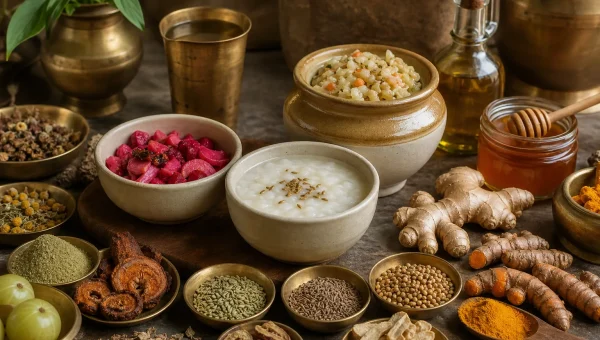
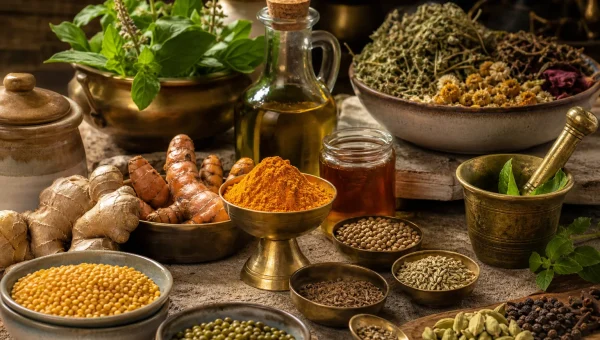
Haridra (Curcuma longa, turmeric) is described in the Ayurvedic Pharmacopoeia of India with katu and tikta rasa, ruksha guna, ushna virya, and katu vipaka. In food, it suits warm cooked preparations such as dal, soups, khichdi, vegetable stews, and spiced milk alternatives. Turmeric is more appropriate as a steady daily culinary support than as a harsh fasting dose for patients who already have acidity, burning, or loose stools.
Shunthi (Zingiber officinale, dry ginger) is classically dipana, pachana, kaphavatahara, and warming. It is useful when AS stiffness is worse with cold, damp weather, heaviness, sluggish digestion, bloating, or mucus. Because it is hot and penetrating, it should be reduced or avoided when there is strong acidity, burning sensation, bleeding tendency, mouth ulcers, or marked pitta aggravation.
Foods to Prioritize in the AS Dietary Protocol
The Ayurvedic AS diet is built around warm cooked meals, moderate portions, adequate protein, steady fiber, anti-inflammatory fats, and colorful plant foods. The plan should feel lighter after eating, not restrictive to the point of weakness. It should also be adjusted according to bowel habits, appetite, body weight, medication use, and whether the patient has coexisting inflammatory bowel disease.
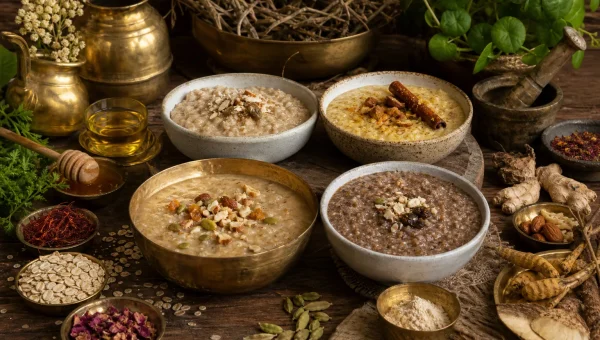
1. Warm, cooked grains in controlled portions: Old rice, barley, cooked oats, quinoa, and small portions of red or brown rice can be used according to tolerance. Cooked-and-cooled grains contain resistant starch, but large starch loads may not suit every AS patient. The Ayurvedic rule is to keep the portion digestible and to observe whether stiffness, gas, heaviness, or pain increases after a particular grain.
2. Gentle legumes and adequate protein: Split moong dal is usually the easiest legume for a vata-sensitive joint patient. Well-cooked lentils, mung soup, thin dal, or khichdi can provide protein without the heaviness of fried or processed foods. Non-vegetarians may use fish, eggs, or lean meat if suitable for their constitution, digestion, and medical plan.
3. Fiber and prebiotic vegetables: Cooked onions, leeks, asparagus, carrots, gourds, squash, leafy greens, and small amounts of Jerusalem artichoke or plantain can support bowel regularity and gut microbial balance. These should be introduced gradually because too much fermentable fiber too quickly can increase gas and vata aggravation.
4. Omega-3 supporting foods: Ground flaxseed, chia seed, walnuts, hemp seed, and, for non-vegetarians, oily fish such as sardines or salmon can be included. These foods support a healthier fat profile than diets dominated by refined seed oils, deep-fried foods, bakery foods, and packaged snacks.
5. Cooked vegetables and crucifers: Broccoli, cauliflower, cabbage, Brussels sprouts, leafy greens, and seasonal vegetables are best taken cooked, steamed, sautéed, or added to soups. In a vata-predominant spine condition, large raw salads are often less comfortable than warm cooked vegetables with ghee, olive oil, cumin, coriander, turmeric, and ginger.
6. Polyphenol-rich fruits: Pomegranate, berries, cherries, dark grapes, and amla can be used as whole fruits in moderate portions. They are preferable to sweetened juices, syrups, desserts, or fruit concentrates, which may increase sugar load and heaviness.
7. Appropriate fats and broths: Small amounts of ghee can be useful in vata-predominant stiffness when digestion is strong enough to handle it. Olive oil, sesame oil in suitable constitutions, vegetable stocks, thin soups, and, where culturally and medically suitable, meat broth can be used to keep meals nourishing without making them heavy.
| Category | Foods to Include | Frequency | Purpose in AS Diet |
|---|---|---|---|
| Grains | Old rice, barley, cooked oats, quinoa, red rice | Daily in small portions | Steady energy, fiber, and lighter digestion when portioned correctly |
| Legumes and Protein | Split moong dal, thin lentil soup, eggs, fish, lean meat if suitable | Once or twice daily | Tissue support without relying on processed foods |
| Fats | Ghee, olive oil, walnuts, ground flaxseed, chia seed | Moderate daily use | Vata support, satiety, and healthier fat balance |
| Vegetables | Cooked leafy greens, gourds, squash, carrots, cruciferous vegetables | 2-4 cups cooked daily | Fiber, minerals, and phytonutrient support |
| Fruits | Pomegranate, berries, cherries, dark grapes, amla | Small daily portion | Polyphenol and antioxidant support without excess sugar |
| Spices | Turmeric, dry ginger, cumin, coriander, black pepper, cinnamon | Small culinary amounts in cooked meals | Supports agni, reduces heaviness, and helps vata-kapha stiffness |
Foods to Limit or Avoid During Active AS Flares
The AS dietary avoid-list should be strict enough to reduce inflammatory load but not so extreme that the patient becomes weak, undernourished, or fearful of food. A 6-8 week elimination phase can be useful when symptoms are active, but reintroduction should be systematic and ideally supervised by a practitioner, physician, or dietitian.
Refined sugar and refined flour: Sweets, sugary drinks, packaged desserts, white bread, biscuits, pastries, and sweetened cereals should be minimized. They add calories without meaningful nourishment and often worsen heaviness, sluggish digestion, and inflammatory eating patterns.
Ultra-processed and deep-fried foods: Chips, fried snacks, fast food, processed meats, packaged sauces, and foods rich in additives or repeatedly heated oils are poor choices for a chronic inflammatory spine condition. Ayurveda would classify many of these as heavy, stale, difficult to digest, and ama-promoting.
Large starch-heavy meals: Some AS patients feel worse with very large portions of bread, noodles, rice, potatoes, or refined grain products. Rather than removing all carbohydrates blindly, reduce the heavy starch load first and rebuild the plate around cooked vegetables, protein, healthy fats, and smaller portions of tolerated grains.
Gluten-containing foods when individually aggravating: Wheat should be avoided in patients with celiac disease, wheat allergy, or clear symptom aggravation after wheat intake. Others may try a supervised gluten-free trial if there are prominent gastrointestinal symptoms, but long-term avoidance should still preserve fiber, minerals, and overall nutrition.
Cold curd and late-night fermented dairy: Classical Ayurveda does not recommend curd at night and also advises against heating curd. If dairy is tolerated, daytime buttermilk or a thin spiced lassi may be more appropriate than cold curd taken at night, especially in patients with heaviness, mucus, sluggish digestion, or morning stiffness.
For parallel Ayurvedic reading, Vatarakta stage-wise treatment explains the inflammatory rakta-vata lens, while rheumatoid arthritis as Amavata explains the ama-joint mechanism. These conditions are not the same as ankylosing spondylitis, but they help clarify why digestion, inflammatory heat, and vata in the joints must all be assessed.
Morning Anti-Inflammatory Tonic for AS
A simple morning drink can be used when digestion is sluggish and there is no acidity or burning: add 1/4 teaspoon turmeric, 1/4 teaspoon dry ginger, a small pinch of black pepper, and a small pinch of cinnamon to 250 ml warm water. Let it cool to a comfortable lukewarm temperature before adding honey, or omit honey completely. Ayurveda does not advise heating honey or adding honey to very hot liquid.
This tonic is not suitable for everyone. Patients with acid reflux, gastritis, ulcers, loose stools, bleeding tendency, strong pitta symptoms, pregnancy, or medication interactions may need a milder version or should skip it. A safer food-based option is to use turmeric, cumin, coriander, and a very small amount of ginger in cooked breakfast or lunch rather than taking strong spices on an empty stomach.
Putting the AS Diet Together
A practical day can begin with warm oats, rice gruel, or thin moong soup with mild spices; lunch can be khichdi, dal, cooked vegetables, greens, and a small amount of ghee or olive oil; dinner can be a lighter soup, stew, cooked vegetables, and a suitable protein. The heaviest meal should generally be at midday, while late-night eating, cold curd, fried snacks, and sugar-heavy foods should be avoided during active stiffness.
Track morning stiffness, back pain, bowel regularity, bloating, fatigue, sleep, and medication changes for at least six weeks. The best AS diet is not the most restrictive one; it is the one that improves stiffness and digestion while still giving enough strength, protein, minerals, and satisfaction to follow consistently.
Disclaimer: This article is for educational purposes only and does not replace professional medical advice. Consult a qualified Ayurvedic practitioner, rheumatologist, or healthcare provider before starting herbs, supplements, elimination diets, or changing prescribed medication. Seek prompt medical care for eye pain or redness, sudden vision changes, neurological weakness, chest pain, unexplained fever or weight loss, severe abdominal pain, blood in stool, or rapidly worsening spinal pain.
References
- Niams (niams.nih.gov)
- Mayoclinic (mayoclinic.org)
- Ard (ard.bmj.com)
- Treatment strategies in axial spondyloarthritis: what, when and how? (2020), PubMed Central
- Charaka Samhita — Agni
- Charaka Samhita — Trividhakukshiya Vimana
- Charaka Samhita — Ama
- Charaka Samhita — Dosha
- Charaka Samhita — Amavata
- Role of Subclinical Gut Inflammation in the Pathogenesis of Spondyloarthritis (2018), PubMed Central
- Inflammatory bowel diseases and spondyloarthropathies: From pathogenesis to treatment (2019), PubMed Central
- Gut inflammation is associated with structural spinal damage in axial spondyloarthritis – results from the observational SPARTAKUS cohort (2025), PubMed Central
- Gut Microbiome and Its Interaction with Immune System in Spondyloarthritis (2020), PubMed Central
- Spondylitis (spondylitis.org)
- Nass (nass.co.uk)
- Dietary Fiber Intake Influences Changes in Ankylosing Spondylitis Disease Status (2023), PubMed Central
- Diet and Disease Activity in Patients with Axial Spondyloarthritis: SpondyloArthritis and NUTrition Study (SANUT) (2022), PubMed Central
- Resistant starch and the gut microbiome: Exploring beneficial interactions and dietary impacts (2024), PubMed Central
- Health Benefits and Side Effects of Short-Chain Fatty Acids (2022), PubMed Central
- The Role of Short Chain Fatty Acids in Inflammation and Body Health (2024), PubMed Central
- Ayurvedic Pharmacopoeia of India
- Boswellia serrata, a potential antiinflammatory agent: an overview (2011), PubMed Central
- Mskcc (mskcc.org)
- Ayurvedic Pharmacopoeia of India
- NCCIH
- Curcumin modulates nuclear factor kappaB (NF-kappaB)-mediated inflammation in human tenocytes in vitro: role of the phosphatidylinositol 3-kinase/Akt pathway (2011), PubMed Central
- Cyclooxygenase-2 inhibitors in ginger (Zingiber officinale) (2011), PubMed Central
- NIH Office of Dietary Supplements
- Nutritionsource (nutritionsource.hsph.harvard.edu)
- KEAP1 and Done? Targeting the NRF2 Pathway with Sulforaphane (2017), PubMed Central
- Dietary fruits and arthritis (2018), PubMed Central
- Biological significance of urolithins, the gut microbial ellagic Acid-derived metabolites: the evidence so far (2013), PubMed Central
- Relationship between diet and ankylosing spondylitis: A systematic review (2018), PubMed Central
- The use of a low starch diet in the treatment of patients suffering from ankylosing spondylitis (1996), PubMed
- Charaka Samhita — Nitya sevaniya – asevaniya dravya
- Charaka Samhita — Viruddha Ahara
- Charaka Samhita — Atreyabhadrakapyiya Adhyaya

The anti-inflammatory spice protocol (turmeric, ginger, boswellia) is exactly what my integrative rheumatologist recommends alongside conventional DMARD therapy
Any guidance on protein intake? High-inflammation conditions often deplete muscle and I want to balance anti-inflammatory eating with adequate protein.
Living with AS for 9 years and finally found dietary guidance that aligns with my Biologic therapy rather than suggesting I replace it.
AS is a systemic inflammatory condition with serious spinal consequences. Dietary intervention alone even a very good one cannot substitute for DMARDs or Biologics in moderate-severe disease. नमस्ते
I tried eliminating starch for 3 months for my AS and my BASDAI score didn’t improve. Back on standard NSAIDs and doing much better.
For AS patients on NSAIDs, are there herb-drug interactions to watch for with the suggested anti-inflammatory herbs?
Helpful.
good question. mine is similar still figuring out the timing.
is the dietary approach different for axial vs peripheral AS presentation?
That’s a really specific question — I’ve wondered the same. My inflammation is mostly peripheral (hips and knees rather than spine) and I wasn’t sure if the low-starch emphasis applies equally or if the herb choices shift. Would love to hear from the author on this.
Is the low-starch Ayurvedic approach similar to the London AS Diet from the Ebringer research? Curious about the overlap.
The focus on butyrate supporting foods like cooked oats and leeks caught my attention because I’ve been looking for gut friendly carbs
yes exactly, that was my experience as well.
The evidence connecting dietary starch to AS flares is primarily from the Ebringer hypothesis which remains controversial in rheumatology.
does this dietary protocol address the gut-joint axis specifically? The evidence for gut dysbiosis in AS is growing.
that’s a good point, the dosage question is something I also asked my vaidya about.
the low-starch Ayurvedic diet combined with my Secukinumab has reduced my morning stiffness from 2 hours to under 30 minutes over 3 months.
That’s a remarkable improvement in three months. Did your rheumatologist know you had added the dietary changes alongside the Secukinumab, or did they attribute the reduction in stiffness entirely to the medication?
A question about the morning tonic: does the honey need to be added after the water cools below 50°C every time
@Prakash had the same experience with this.
@Suresh makes sense given what the article says about the Pitta component.
One thing I wonder is whether the boswellia supplement really needs to be standardized to 30% AKBA for noticeable effect
@Jaya that’s a good point, the dosage question is something I also asked my vaidya about.