
The Buttermilk Rinse My Grandmother Used That Modern Skin Care Can Explain
The old household rinse was humble: the thin, faintly sour liquid left after churning curd and separating butter was diluted and used briefly after an oil bath. The skin afterward felt clean and soft, not stripped like a harsh soap and not coated like an oil. In Ayurvedic language, this liquid is takra; in modern skin-care language, it is a mild fermented rinse whose acidity and light texture explain why the practice survived in kitchens and bathrooms alike.
This home practice should be understood as a short-contact rinse, not as a medical treatment and not as full takradhara. Classical Ayurveda discusses takra mainly as an internal dietetic preparation, while takra dhara belongs to supervised clinical procedures in which medicated or plain buttermilk is streamed in a controlled way. For home skin care, the safe version is simple: prepare it fresh, dilute it well, apply briefly, rinse, and adjust according to skin tolerance.
What Takra Is in Ayurveda
Traditional takra is made from curd that has been diluted and churned so the butterfat separates. This makes it lighter and thinner than whole curd. Commercial cultured buttermilk can be useful as food, but it is not identical to freshly churned household takra, because modern buttermilk is usually produced by adding lactic-acid bacteria to milk rather than by churning fermented curd and removing butter.
Ayurvedic texts value takra especially in digestive and metabolic contexts, where its light, sharp, and absorbing qualities are emphasized. The same qualities explain why a thin, well-diluted rinse can feel cleansing on the skin after an oil bath. The aim is not to “peel” the skin aggressively, but to use a mild acidic wash that clears residual oil and leaves the surface comfortable.
Why a Short Takra Rinse Can Feel Smoothing
Fermented curd and buttermilk owe their sourness to lactic-acid fermentation. Lactic acid belongs to the alpha hydroxy acid family used in skin care, where the effect depends on concentration, pH, contact time, and the condition of the skin barrier. A fresh household rinse is not a standardized cosmetic acid product, so it should be treated as a gentle wash rather than a measured peel.
The outer skin surface is naturally mildly acidic, and many people with dry or reactive skin tolerate brief, mild acidic rinses better than repeated alkaline or strongly foaming cleansers. Still, even mild acidic preparations can sting if used on scratched, fissured, freshly shaved, sunburned, or inflamed skin. This is why dilution, patch testing, and short contact time matter.
Making Fresh Takra for Skin Rinsing
Use plain fresh curd made from milk and a small curd starter. Avoid flavored yogurt, sweetened yogurt, thickened dessert yogurt, old sour curd, and any preparation with preservatives or strong fragrance. Use clean utensils and prepare only what you need for the day.
Basic preparation: Place 1 cup plain fresh curd in a clean glass, clay, or stainless-steel vessel. Add 3 to 4 cups clean room-temperature water. Churn briskly until small butterfat particles rise and separate. Skim or strain through clean muslin. The thin liquid below is fresh takra. For the face, dilute this again with an equal quantity of water the first few times. For a body rinse after an oil bath, use 1 part takra with 2 to 4 parts water.
After oil massage, bathe first with warm water and a gentle cleanser only where needed. Then apply the diluted takra as a final short rinse. Keep it on for a few minutes, rinse with cool or lukewarm water if sticky, pat dry, and follow with a light moisturizer or suitable oil on dry areas.
Three Gentle Herbal Variations
Herbs should be used lightly in a skin rinse because the preparation is meant to be soothing, not forceful. Strain every preparation thoroughly, keep it away from the eyes, and patch test on the inner forearm before using it on the face or large areas of the body.
Recipe 1: Rose-Cardamom Takra for Heat-Prone or Reactive Skin
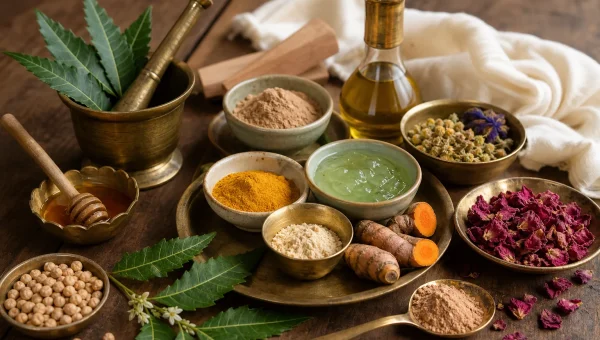
Add 1 teaspoon dried rose petals or 1 tablespoon fresh clean rose petals and 1 lightly crushed green cardamom pod to 1 cup already-diluted takra. Steep for 30 to 60 minutes in the refrigerator, then strain through fine cloth. Apply with the fingers or soft cotton, leave for 3 to 5 minutes, and rinse. Rose is traditionally cooling and complexion-supporting, while cardamom adds a gentle aromatic quality; because cardamom is warming, keep the amount small for sensitive skin.
Recipe 2: Multani Mitti and Aloe Takra for Oily or Rough Skin
Whisk 1/2 teaspoon Multani mitti into 1 cup diluted takra, then add 1 teaspoon plain fresh aloe vera gel. Massage very gently for 30 to 60 seconds and rinse before the clay dries, usually within 2 to 3 minutes. Fuller’s earth is absorbent and can remove surface oil and dirt, while aloe adds a soothing, moistening quality. Use once or twice weekly, not daily, and avoid this version on cracked, irritated, or actively inflamed skin.
Recipe 3: Very Dilute Neem-Turmeric Takra for Intact Itchy or Oily Patches
Mix 1 part fresh takra with 2 to 3 parts water. Add either a tiny pinch of turmeric or 1/8 teaspoon finely sifted neem leaf powder, steep for 10 minutes, and strain twice through clean cloth. Apply only to intact skin for 1 to 2 minutes and rinse thoroughly. Ayurveda lists haridra and nimba among important skin-supporting herbs, but both can stain or irritate when overused, so keep this recipe occasional and very mild.
| Skin Type | Takra Strength | Optional Addition | Frequency | Contact Time |
|---|---|---|---|---|
| Sensitive or heat-prone | 1:1 with water | Rose, very little cardamom | 2-3 times weekly | 3-5 minutes |
| Oily or rough | 1:1 with water, or stronger if tolerated | Multani mitti, aloe | 1-2 times weekly | 1-3 minutes |
| Eczema-prone, intact skin only | 1:2 or 1:3 with water | Plain takra, or practitioner-guided tiny turmeric/neem | Once weekly or less | 1-2 minutes |
| Dry or mature | 1:2 with water | No clay; moisturize after rinsing | 1-2 times weekly | 2-3 minutes |
| Normal skin after oil bath | 1:1 or 1:2 with water | None needed | Weekly | 3-5 minutes |
Body Application After an Oil Bath
A home body rinse is a simplified wash, not a therapeutic dhara. Mix 1 cup fresh takra with 2 to 4 cups water in a clean vessel. After an oil massage and warm bath, pour the dilution from the neck down, avoiding the eyes, mucous membranes, freshly shaved areas, wounds, and broken skin. Leave for 2 to 5 minutes, rinse lightly if needed, pat dry, and apply a fragrance-free moisturizer or a suitable Ayurvedic oil to dry areas.
For eczema-prone skin, use the rinse only when the skin is calm and intact. Do not apply it over active cracks, oozing patches, bleeding, infection, or severe itching. Acidic preparations can sting compromised skin, and an irritated barrier needs simplicity: gentle cleansing, careful drying, and consistent moisturization.
How to Layer Takra With Other Skin Care
Use takra on simple skin-care days. Do not combine it in the same routine with strong exfoliating acids, retinoids, abrasive scrubs, fresh waxing, facial bleaching, or harsh acne actives. If using an oil-based Ayurvedic night routine, keep the takra rinse earlier in the day or on alternate days, then moisturize according to skin type.
Because lactic acid belongs to the AHA family, daytime users should be careful with sun exposure. A gentle rinse is much milder than a cosmetic peel, but cautious sun protection is still sensible, especially for skin prone to tanning, pigmentation, or irritation.
When to Skip It
Do not use a takra rinse if you have a dairy allergy, active skin infection, open eczema, fresh sunburn, a recent chemical peel, severe rosacea flare, or unexplained rash. Avoid spoiled, overly sour, yeasty, or contaminated preparations. Patch test first, and stop immediately if burning, rash, swelling, or itching persists after rinsing.
Disclaimer: This article is for educational purposes only and does not replace professional medical advice. Consult a qualified Ayurvedic practitioner, dermatologist, or healthcare provider before using takra for eczema, psoriasis, acne, infection-prone skin, children, pregnancy-related skin changes, or any chronic or recurrent skin condition.
References
- Safefoodfactory (safefoodfactory.com)
- Valorisation of Whey and Buttermilk for Production of Functional Beverages – An Overview of Current Possibilities (2019), PubMed Central
- Omvedicheritage (omvedicheritage.com.sg)
- Charaka Samhita — Grahani Chikitsa
- Charaka Samhita — Shirodhara
- FDA
- Ijdvl (ijdvl.com)
- Dermnetnz (dermnetnz.org)
- Aad (aad.org)
- Ayurvedic Pharmacopoeia of India
- Miracledrinksclinic (miracledrinksclinic.com)
- Ayurvedic Pharmacopoeia of India
- Dermnetnz (dermnetnz.org)
- Chemm (chemm.hhs.gov)

Takra rinse for my rosacea-prone skin has been a revelation. The mild lactic acid from the buttermilk does what expensive toners at 5x the price couldn’t.
the Triphala decoction addition variant does the astringency cause tightness for dry skin types?
My daughter has extremely reactive skin and the Lodhra + Takra combination you describe for sensitive types is the gentlest thing we’ve found.
How do you prevent the Takra from souring on the skin in hot weather before rinsing it off?
buttermilk on face sounds nice but the variable lactic acid content and bacterial load of homemade Takra makes it a hygiene concern for people with open skin lesions.
Can store-bought low-fat buttermilk work or does it need full-fat traditional Takra? The lactic acid content would differ.
I tried the Takra rinse for 2 weeks and it broke me out. Possibly the fat content, possibly bacterial, unclear.
That breakout experience is worth investigating — did you use store-bought cultured buttermilk or fresh homemade? I ask because the article specifically mentions that commercial buttermilk sometimes has additives and higher bacterial counts that could trigger reactions in sensitive skin, whereas the traditional preparation from fresh churned butter is much lower in live cultures.
Is this appropriate for skin with active eczema or only for general sensitization/redness?
I tried the Takra rinse for 2 weeks adn it broke me out. Possibly the fat content, possibly bacterial, unclear.
The pH variability in homemade fermented products makes consistent skin benefit unpredictable. A commercial lactic acid serum would be more reliable.
for oily skin (Kapha type) is the Takra dilution ratio different? The article suggests full strength but im concerned about pore congestion. धन्यवाद
Good to know.
makes sense given what the article says about the Pitta component.
that’s a good point, the dosage question is something I also asked my vaidya about.
the article’s distinction between fresh Takra (lacto-fermented at home) vs store buttermilk is important I noticed a real difference in my skin response between them.
The part about takra being used after the morning oil bath really stood out to me. That sounds much gentler than soap for skin that gets irritated easily.
Thanks!
How do you prevent the Takra from souring on the skin in hot weather before rinsing it off? ❤️
Good practical question — I’ve read that keeping the contact time under 5 minutes in hot weather helps, and some people refrigerate the diluted Takra before applying so it’s cool when it goes on. Not sure if chilling affects the lactic acid activity though. ❤️
Yes, dry skin types might want to dilute the Triphala decoction further than the article suggests, or skip it entirely and stick with plain Takra. The astringency is the whole point for oily or Pitta skin but for Vata-dry it could easily leave you feeling tight and irritated afterward. ✨