
Rosewater Is Just the Beginning
Rosewater deserves its reputation, but it is not the only Ayurvedic toner. In the Ayurvedic Pharmacopoeia of India, rose flower is described as aromatic, cooling in potency, and varnya, a traditional term used for supporting complexion and luster. That makes rosewater a beautiful default for many people, especially when the skin feels warm, delicate, or tired.
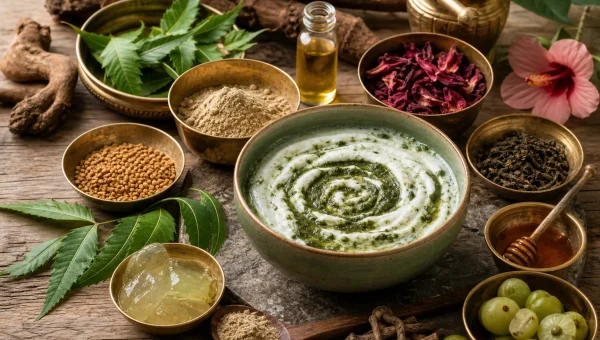
Still, the same toner does not suit every face in every season. Dry, thin vata-type skin needs softness and moisture support. Hot, reactive pitta-type skin needs cooling and calming. Oily, thick, congestion-prone kapha-type skin needs a lighter, clearer, more astringent approach. These seven recipes keep rosewater in its rightful place while expanding the Ayurvedic toner cabinet with neem, tulsi, sandalwood, vetiver, licorice, lodhra, triphala, aloe, cucumber, and saffron.
Use these toners as fresh herbal waters after cleansing and before a moisturizer, face oil, or serum. They are not substitutes for medical treatment, sunscreen, or prescribed dermatological care.
Understanding Skin Types in Ayurveda
Ayurvedic skincare looks at the visible qualities of the skin: dry or oily, hot or cool, thin or thick, sensitive or resilient, dull or radiant. A toner is chosen by matching the formula to the dominant pattern rather than using the same mist for every concern.
| Skin Type | Common Appearance | Toner Direction | Useful Ingredients |
|---|---|---|---|
| Vata | Dry, thin, rough, flaky, tight after washing, early fine lines | Hydrating, softening, gentle, non-astringent | Rose, yashtimadhu, aloe, small amounts of saffron |
| Pitta | Warm, sensitive, redness-prone, sun-sensitive, easily irritated | Cooling, calming, fragrance-light, non-acidic | Sandalwood, vetiver, rose, aloe, cucumber |
| Kapha | Oily, thick, dull, large-looking pores, blackhead-prone, congested | Light, clarifying, mildly astringent | Neem, tulsi, lodhra, triphala |
| Vata-Pitta | Dry and sensitive together; flaking with redness or stinging | Very gentle cooling with softness; no strong acids or harsh astringents | Rose, aloe, yashtimadhu, very small saffron infusion |
| Pitta-Kapha | Oily T-zone with heat, redness, and inflamed-looking congestion | Cooling and clarifying without over-drying | Sandalwood, vetiver, neem, triphala, aloe |
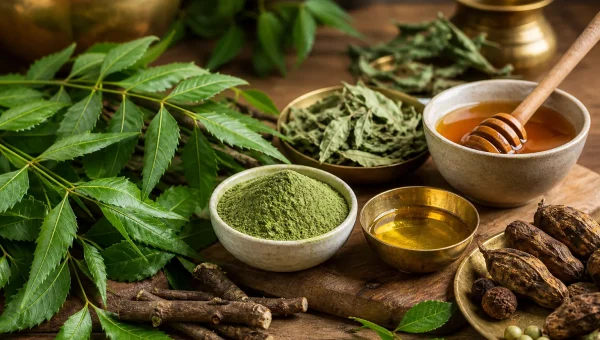
Recipe 1: Neem-Tulsi Purifying Toner for Kapha Skin
This toner suits oily, heavy, dull, or congestion-prone skin, especially in humid weather. Neem gives the formula its bitter, cooling, clarifying quality, while a small amount of tulsi adds aromatic lightness for kapha-type sluggishness.
Ingredients:
- Fresh neem leaves: 10-15 leaves
- Fresh tulsi leaves: 5-7 leaves
- Filtered water: 2 cups
- Pure aloe vera gel: 1 teaspoon, optional for combination skin
Method: Rinse the leaves well. Add neem and tulsi to the water and simmer gently for 5-7 minutes. Turn off the heat, cover, and steep for 15 minutes. Cool completely, strain through fine muslin, and add aloe gel if using. Transfer to a clean spray bottle and refrigerate. Use within 2-3 days.
How it works: Neem is classically bitter, light, dry, and cooling, making it suitable for kapha-pitta patterns where the skin feels oily, heavy, or heated. Tulsi is pungent, bitter, astringent, light, dry, sharp, and kapha-reducing; because it is heating in potency, this recipe uses only a small amount.
Usage: Apply after cleansing with a cotton pad or spray lightly over the face. Use once daily or 3-4 times per week. Avoid using it on broken, freshly picked, or severely irritated skin.
Recipe 2: Sandalwood-Vetiver Cooling Toner for Pitta Skin
This is the most classically cooling toner in the set. It is best for skin that looks hot, flushed, delicate, or easily reactive, especially in summer or after outdoor heat exposure.
Ingredients:
- Genuine white sandalwood powder: 1/2 teaspoon
- Vetiver roots: 1 tablespoon, lightly crushed
- Filtered water: 2 cups
- Pure aloe vera gel: 1 tablespoon
Method: Soak sandalwood powder and vetiver roots in filtered water overnight. In the morning, strain twice through fine muslin or a coffee filter so no particles remain. Add aloe vera gel and shake well. Store refrigerated and use within 2-3 days.
How it works: White sandalwood is listed as cooling, pitta-reducing, complexion-supporting, and traditionally used for burning sensations. Vetiver is also cooling and aromatic, making it a natural partner for sandalwood in a pitta-focused toner. Aloe gives the toner a light gel feel without making it heavy.
Usage: Mist over clean skin or press in gently with the palms. Follow with a light moisturizer. This mist can feel especially comfortable in hot weather, but it is not a substitute for sunscreen.
Recipe 3: Saffron-Rose Hydrating Toner for Vata Skin
This toner is for dry, thin, dull, or tight-feeling skin. It uses rose and yashtimadhu as the softening base, with only a few saffron strands for traditional luster support.
Ingredients:
- Pure rosewater: 1 cup
- Saffron strands: 2-3 strands
- Yashtimadhu powder: 1/4 teaspoon
- Pure aloe vera gel: 1 tablespoon
Method: Warm the rosewater slightly without boiling. Add saffron and yashtimadhu, cover, and steep for 30 minutes. Strain very thoroughly through fine muslin or a coffee filter. Add aloe vera gel and shake well. Store refrigerated and use within 2-3 days.
How it works: Rose is cooling and complexion-supporting. Yashtimadhu is sweet, unctuous, cooling, vata-pitta balancing, and traditionally valued for the skin. Saffron is described as unctuous, varnya, rasayana, and vata-reducing, but it is also warming, so a small amount is enough for a facial toner.
Usage: Apply after cleansing while the skin is still slightly damp. Seal with a moisturizer, cream, or face oil within a minute. If your skin is very sensitive or inflamed, reduce the saffron to one strand or omit it.
Recipe 4: Lodhra-Yashtimadhu Toning Water for Dull Combination Skin
This recipe replaces harsh astringents with a gentler Ayurvedic pair. Lodhra gives a clean, toned feel, while yashtimadhu keeps the formula from becoming too drying.
Ingredients:
- Lodhra powder: 1/4 teaspoon
- Yashtimadhu powder: 1/4 teaspoon
- Filtered water: 1.5 cups
- Rosewater: 2 tablespoons, optional
Method: Add lodhra and yashtimadhu to hot water, cover, and steep for 20 minutes. Let it cool fully. Strain twice so no powdery sediment remains. Add rosewater if using. Store refrigerated and use within 2-3 days.
How it works: Lodhra is astringent in taste, light, cooling, and kapha-pitta balancing. This gives the toner a refined, tightening feel suited to combination or dull kapha-pitta skin. Yashtimadhu adds a sweet, cooling, softening quality that makes the formula more comfortable.
Usage: Use 3-5 times per week after cleansing. If the skin begins to feel tight, reduce frequency and follow with a richer moisturizer.
Recipe 5: Cucumber-Vetiver Instant Calm Toner for Summer
This is a fresh, short-life summer mist for skin that feels hot, sweaty, or heavy. It is deliberately simple and should be made in small amounts.
Ingredients:
- Fresh cucumber: 1/2, peeled and chopped
- Vetiver water: 1/4 cup, made by soaking 1 teaspoon vetiver roots in water for 4 hours
- Pure aloe vera gel: 1 tablespoon
Method: Blend cucumber with the prepared vetiver water until smooth. Strain through fine muslin, pressing gently to extract the liquid. Mix in aloe vera gel. Transfer to a clean spray bottle and refrigerate. Use within 24-48 hours.
How it works: Cucumber gives the toner a light, watery base. Vetiver adds a cooling Ayurvedic direction, and aloe gives a soft gel texture. This is useful when the face feels warm and sticky but does not need a strong clarifying formula.
Usage: Mist lightly during the day or use after cleansing. Do not keep this preparation for several days, because fresh cucumber juice spoils quickly.
Recipe 6: Triphala Clarifying Toner for Kapha-Pitta Skin
Triphala toner is best for skin that is oily, dull, and prone to clogged-looking texture. It should be strained carefully and used as a liquid toner, not as a scrub.
Ingredients:
- Triphala powder: 1/2 teaspoon
- Filtered water: 1.5 cups
- Rosewater: 2 tablespoons, optional
Method: Soak triphala powder in filtered water overnight. In the morning, strain through muslin, then strain again through a coffee filter to remove fine particles. Add rosewater if using. Store refrigerated and use within 2-3 days.
How it works: Triphala is the classical combination of amalaki, haritaki, and bibhitaka. Haritaki and bibhitaka are tannin-containing and astringent, while amalaki is cooling and rasayana. In a toner, this gives a light clarifying effect without needing alcohol, lemon juice, or harsh exfoliating acids.
Usage: Apply with a cotton pad 2-4 times per week. Do not use it on open blemishes, irritated patches, or very dry vata skin.
Recipe 7: Kumkuma-Yashtimadhu Luster Mist for Vata-Pitta Mature Skin
This is a gentle luster mist for mature, dry, or tired-looking skin. It keeps saffron in a very small amount and surrounds it with cooling rose, softening yashtimadhu, and aloe.
Ingredients:
- Pure rosewater: 1 cup
- Saffron strands: 1-2 strands
- Yashtimadhu powder: 1/4 teaspoon
- Pure aloe vera gel: 1 tablespoon
Method: Warm the rosewater slightly. Add saffron and yashtimadhu, cover, and steep for 30 minutes. Strain until completely clear. Add aloe vera gel and shake well. Refrigerate and use within 2-3 days.
How it works: This mist is built around varnya herbs rather than aggressive exfoliation. Rose and yashtimadhu bring cooling and softness; saffron brings traditional luster support in a small, balanced quantity. It is especially useful before applying a vata-pacifying face oil at night.
Usage: Apply after evening cleansing, then seal with a few drops of face oil or a nourishing cream. Use less often if your skin is highly heat-sensitive.
General Toner Usage Guidelines
Fresh herbal toners work best when they are treated like perishable preparations. Keep them clean, cold, and simple, and adjust frequency according to how the skin feels after use.
| Guideline | Details |
|---|---|
| Application method | Spray from 6-8 inches away or apply with a cotton pad using gentle upward strokes. Do not scrub the skin with powdered residue. |
| Timing | Apply after cleansing and before moisturizer, cream, serum, or facial oil. Vata skin should seal the toner quickly with something nourishing. |
| Frequency | Use rose, sandalwood, vetiver, aloe, and yashtimadhu toners more freely. Use neem, lodhra, and triphala toners less often if the skin feels tight. |
| Storage | Refrigerate all preparations. Use cucumber toner within 24-48 hours and other herbal waters within 2-3 days. Discard immediately if smell, color, texture, or comfort changes. |
| Patch testing | Test a new toner on a small area such as the inner arm or elbow crease before using it on the face. Watch for redness, itching, swelling, burning, or rash. |
| Seasonal rotation | Use sandalwood, vetiver, cucumber, and rose more in summer; neem, lodhra, and triphala more in humid monsoon weather; rose, yashtimadhu, aloe, and saffron-in-small-amounts more in winter. |
For a complete nighttime sequence after toner application, including dosha-matched face oils, Ayurvedic Night Serum Recipes can be used as the next step.
Nothing in this article diagnoses, treats, or cures any medical condition. Use these recipes as gentle cosmetic preparations and seek professional care for persistent or severe skin concerns.
What’s the optimal pH for these toners? Commercial toners are usually around 5.5-6.
The rose and Lodhra toner recipe is something ive been making for 6 months and my Pitta-sensitive skin has never been calmer in summer.
your note about Vata-type skin needing hydrating toners vs astringent ones is practical. Most DIY toner recipes I find are generically ‘detoxing’ without this distinction.
Making skincare at home without preservatives and proper pH testing is a recipe for contamination. The article should include a stronger safety warning.
had the same experience with this.
Completely agree with you on that. Vata skin in winter needs moisture retention, not more astringency — using a witch hazel based toner actually made my skin worse before I understood this distinction. The article’s breakdown by dosha is the first time I have seen it explained practically rather than just theoretically.
Will try this.
Useful info.
is there a version suitable for skin with active rosacea? Some of the herbs mentioned can trigger flushing.
most herbal actives in toners are in too low concentration for real skin benefit… this might be a pleasant ritual but the efficacy claims are likely placebo…
I made the Chandan (sandalwood) toner and it caused breakouts. Possibly the base oil I used but the recipe wasn’t clear enough on formulation. ❤️
Most herbal actives in toners are in too low concentration for real skin benefit. This might be a pleasant ritual but the efficacy claims are likely placebo.
what’s the shelf life of homemade herbal toners without preservatives? Should they be refrigerated and used within a week?
The rose and Lodhra toner recipe is something I’ve been making for 6 months and my Pitta-sensitive skin has never been calmer in summer. 🌿
that’s a good point, the dosage question is something I also asked my vaidya about.
@Priya i think it depends on your Prakriti honestly.
Can rose hydrosol be substituted for rose water in these recipes or are they chemically different?
For Kapha-oily skin the Neem and Tulsi option sounds good but won’t it dry out the skin too much in winter?
tried that too and found similar results.
can rose hydrosol be substituted for rose water in these recipes or are they chemically different? ठीक है
Replaced my commercial toner (alcohol-based) with the sandalwood hydrosol version and the redness around my nose reduced noticeably within 2 weeks.
good question. mine is similar still figuring out the timing.
Ha, same boat here — I am mixed Vata-Pitta and the toner recommendations for each overlap only partially. Are you doing a seasonal rotation or sticking with one formula year round?
can rose hydrosol be substituted for rose water in these recipes or are they chemically different? ✨
How long does the neem-tulsi toner stay good if I keep it in the fridge?
Same here 🙏
I made the Chandan (sandalwood) toner and it caused breakouts. Possibly the base oil I used but thr recipe wasn’t clear enough on formulation.