
When the Scale Keeps Climbing Despite Your Best Efforts
Many people with hypothyroidism recognize the same pattern: sluggish mornings, fatigue, coldness, constipation tendency, dry skin, mental fog, and weight that moves upward even when food intake has not dramatically increased. In medical terms, hypothyroidism means the thyroid gland is not producing enough thyroid hormone for the body’s needs, and thyroid hormone replacement such as levothyroxine is often central to care. Food, spices, and meal timing should be treated as support, not as a substitute for diagnosis, blood tests, or prescribed medicine.
Ayurveda approaches this kitchen problem through qualities. When a person feels heavy, cold, dull, swollen, slow, and foggy, the meal plan should reduce kapha-like heaviness and support agni with warm, cooked, digestible food. The aim is not severe restriction. The aim is to choose lighter grains, well-cooked vegetables, pulses that digest cleanly, and pungent culinary spices while reducing frequent cold, sweet, oily, and dense meals.
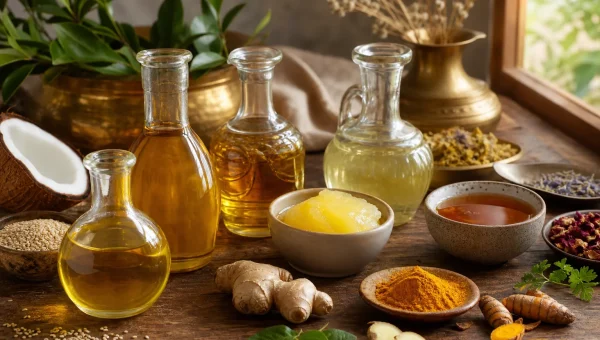
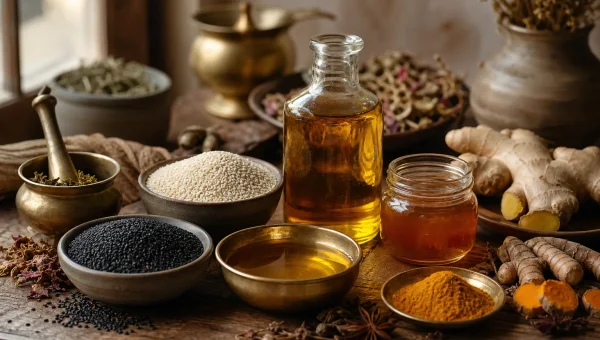
The Ayurvedic Hypothyroid Kitchen: Essential Spices and Ingredients
These staples keep the protocol practical. Use them as food-level supports, not as replacements for thyroid medication or individualized care. If you have acidity, ulcers, pregnancy, bleeding disorders, autoimmune disease, kidney disease, or take regular medicines, ask a qualified practitioner before using concentrated spice blends or herbal products.
| Ingredient | Ayurvedic Profile | How It Fits This Protocol | Kitchen Amount |
|---|---|---|---|
| Fresh ginger (Ardraka) | Deepana, rochana, kaphahara, vatahara; ushna virya | Best used in morning drinks, dals, soups, and vegetable dishes to keep meals warm and digestible. | 1/2-1 inch fresh ginger daily in cooking or tea, adjusted to tolerance |
| Black pepper (Maricha) | Katu-tikta rasa, laghu-ruksha-tikshna guna, ushna virya; deepana, medohara, shleshmahara | Adds sharpness and lightness to heavier dishes; useful as a finishing spice rather than in large amounts. | 1-2 pinches freshly ground, or up to 1/4 tsp across the day |
| Turmeric (Haridra) | Katu-tikta rasa, ruksha guna, ushna virya, katu vipaka; kaphapittanut | Works well in dals, khichdi, soups, and vegetables, especially with a small amount of fat and pungent spice. | 1/4-1/2 tsp in cooking |
| Mustard seeds (Sarshapa) | Katu-tikta rasa, tikshna guna, ushna virya; deepana, kaphahara, vatahara | Excellent for tempering soups, dals, and cooked greens when the meal needs more warmth and movement. | 1/2-1 tsp for tempering |
| Barley (Yava) | Madhura-kashaya rasa, ruksha guna, katu vipaka; kaphahara, lekhana, medahara | A useful grain base when the goal is to reduce heaviness while still eating a satisfying cooked meal. | 1/2 cup cooked per meal |
| Drumstick or moringa vegetable (Shigru) | Shigru is identified as Moringa oleifera; its leaves and fruits are used as vegetables | Adds a cooked vegetable element to khichdi, soup, and sambar-style meals without making the meal dense. | 1/2-1 cup cooked vegetable portion |
| Honey (Madhu) | Traditionally used in small amounts and not cooked or boiled | Use only as an optional finishing sweetener after a drink has cooled to warm, never while boiling or hot. | 1 tsp, optional, not heated |
Breakfast Recipes: Starting the Day with Agni
Breakfast should be warm, simple, and easy to digest. For this protocol, avoid beginning the day with cold smoothies, chilled fruit bowls, bakery items, or heavy fried foods. A cooked grain or warm drink with ginger is usually a better start for a kapha-mandagni pattern.
1. Roasted Millet Porridge with Ginger and Turmeric
This breakfast is light but steady. Roasting the millet before cooking improves the texture and keeps the porridge from becoming sticky or heavy.
Ingredients:
- Foxtail millet, barnyard millet, or little millet: 1/2 cup
- Water: 2 cups
- Fresh ginger, grated: 1 inch
- Turmeric powder: 1/4 teaspoon
- Black pepper, freshly ground: 1-2 pinches
- Cinnamon stick: 1 small piece
- Ghee: 1 teaspoon
- Rock salt: to taste
- Fresh coriander leaves: for garnish
Method:
- Dry-roast the millet in a pan for 3-4 minutes, until lightly fragrant.
- Heat ghee in a pot. Add the cinnamon stick and grated ginger, and stir for 30 seconds.
- Add the roasted millet, water, turmeric, and rock salt. Bring to a boil.
- Lower the heat, cover, and cook for 15-18 minutes, until soft and porridge-like.
- Remove the cinnamon stick. Finish with black pepper and coriander.
Serve warm. If you need more protein at breakfast, add a small bowl of cooked moong dal on the side rather than increasing the grain portion too much.
2. Ginger-Lemon Morning Drink with Optional Tulsi
This is a simple pre-breakfast drink for people who tolerate ginger well. It should be warm and pleasant, not aggressively spicy.
Ingredients:
- Fresh ginger, thinly sliced: 1/2-1 inch
- Fresh tulsi leaves: 5-7, optional
- Water: 1.5 cups
- Lemon juice: 1 teaspoon
- Honey: 1 teaspoon, optional and added only after cooling to warm
Method:
- Boil the water with ginger for 5 minutes. Add tulsi in the last minute if using.
- Strain and let the drink cool until it is warm and comfortable to sip.
- Add lemon juice. Add honey only after the drink is no longer hot.
Skip honey if blood sugar management is a concern, or if your practitioner has advised you to avoid sweeteners. Skip lemon if it worsens acidity.
Lunch Recipes: The Main Metabolic Meal
Lunch is the best place for the most complete meal of the day: grain, pulse, vegetables, fat in moderation, and a clear digestive spice profile. For hypothyroid weight management, lunch should satisfy you enough that dinner can remain light.
3. Barley-Moong Khichdi with Drumstick and Mustard Greens
Barley is the key grain here. In Ayurvedic terms, yava is especially useful when the meal plan needs a drier, lighter, kapha-reducing grain base.
Ingredients:
- Barley: 3/4 cup, soaked for 2-4 hours
- Split yellow moong dal: 1/4 cup
- Drumstick pieces: 1 drumstick, cut into 3-inch pieces
- Mustard greens or any seasonal leafy greens: 1 cup, chopped
- Ghee: 1 tablespoon
- Mustard seeds: 1 teaspoon
- Cumin seeds: 1/2 teaspoon
- Hing: a pinch
- Turmeric: 1/2 teaspoon
- Fresh ginger, grated: 1 inch
- Black pepper: 1/4 teaspoon
- Water: 4 cups
- Rock salt: to taste
Method:
- Drain the soaked barley and rinse the moong dal.
- Heat ghee in a pressure cooker. Add mustard seeds and let them crackle.
- Add cumin, hing, and ginger. Stir briefly.
- Add barley, moong dal, drumstick pieces, turmeric, and water.
- Pressure cook for 4-5 whistles, or until the barley is soft. If cooking in a pot, simmer until fully tender.
- Open the cooker after pressure releases naturally. Stir in the chopped greens and cook for 3-5 minutes.
- Season with rock salt and black pepper.
Eat this as a complete lunch. If digestion is weak, make it softer and soupier by adding more water. If appetite is strong, add extra greens rather than extra grain.
4. Spiced Lentil Soup with Mustard-Seed Tadka
This soup is lighter than a heavy dal fry but still satisfying. The tempering gives warmth without needing a large amount of oil.
Ingredients:
- Masoor dal or split yellow moong dal: 1 cup
- Water: 3-4 cups
- Turmeric: 1/2 teaspoon
- Tomato, chopped: 1 medium, optional
- Fresh ginger, chopped: 1/2 inch
- For tadka: 1 tablespoon ghee or mustard oil, 1 teaspoon mustard seeds, 1/2 teaspoon cumin seeds, 1 pinch hing, 4-5 curry leaves, 1 small garlic clove sliced, optional
- Lemon juice: 1 tablespoon
- Fresh coriander: for garnish
- Rock salt: to taste
Method:
- Cook the dal with water, turmeric, tomato, and ginger until soft.
- Whisk or mash lightly to make the soup smooth but not too thick.
- Warm ghee or mustard oil in a small pan. Add mustard seeds, cumin, hing, curry leaves, and garlic if using.
- Pour the tadka over the dal and simmer for 2 minutes.
- Finish with lemon juice and coriander.
For a lighter lunch, eat this with cooked vegetables. For a fuller lunch, add 1/2 cup cooked barley or roasted millet.
Dinner Recipes: Light, Warm, and Early Enough
In this framework, dinner is kept lighter than lunch so the body is not working through a heavy meal at night. Choose soup, cooked vegetables, or a small portion of dal rather than cold salads, bread-heavy meals, sweets, or large grain portions.
5. Warming Vegetable Yusha-Style Soup
Yusha is a thin soup-style Ayurvedic food preparation. This version is vegetable-forward, warm, and suitable for evenings when you want nourishment without heaviness.
Ingredients:
- Bottle gourd: 1 cup, diced
- Carrot: 1 medium, diced
- Green beans: 1/2 cup, chopped
- Spinach or seasonal greens: 1 cup, chopped
- Cooked moong dal: 1/4 cup, optional
- Water: 4 cups
- Fresh ginger: 1/2 inch, grated
- Cumin powder: 1/2 teaspoon
- Turmeric: 1/4 teaspoon
- Black pepper: 1 pinch
- Ghee: 1 teaspoon
- Rock salt and lemon juice: to taste
Method:
- Simmer bottle gourd, carrot, beans, ginger, turmeric, and cumin in water for 15-20 minutes.
- Add greens and cooked moong dal if using. Simmer for another 3-5 minutes.
- Add ghee, rock salt, and black pepper.
- Finish with lemon juice after turning off the heat.
Eat this as dinner on lighter days. If hunger is strong, add a small serving of cooked millet or barley rather than bread or fried snacks.
The Kaphahara Agni Spice Blend: Keep This in Your Kitchen
This is a culinary spice blend for soups, dals, khichdi, cooked vegetables, and spiced buttermilk. Use it in small amounts. It is intentionally pungent, so reduce the dose if you feel burning, reflux, loose stools, or excess heat.
Kaphahara Agni Churna:
- Dry ginger powder: 4 tablespoons
- Black pepper powder: 2 tablespoons
- Long pepper powder: 1 tablespoon, optional
- Cumin powder: 3 tablespoons
- Turmeric powder: 2 tablespoons
- Cinnamon powder: 1 tablespoon
- Ajwain powder: 1 tablespoon
- Rock salt: 1 tablespoon
Method and use: Mix thoroughly and store in an airtight jar. Add 1/4-1/2 teaspoon to soups, dals, vegetable dishes, or thin buttermilk. Do not take this blend like medicine by the spoonful. Avoid the long pepper or use the whole blend only with professional guidance during pregnancy, active gastritis, ulcers, or when taking prescription medicines.
Foods to Reduce or Emphasize Less Often
The goal is not to create fear around food. The goal is to notice which foods increase heaviness, sleepiness, bloating, coldness, cravings, and sluggish digestion. Reduce those patterns first, then adjust portions according to appetite, strength, medication schedule, and practitioner guidance.
| Category | Reduce or Avoid Often | Why It Can Be Unhelpful | Better Direction |
|---|---|---|---|
| Grains | Large portions of white rice, maida, excess bread, bakery foods | These can make the meal dense and easy to overeat when kapha-like heaviness is already present. | Barley, roasted millets, small portions of well-cooked rice when needed |
| Dairy | Cold milk, ice cream, heavy paneer dishes, sweet lassi | Cold and dense dairy preparations often worsen heaviness and sluggish digestion. | Thin spiced buttermilk, warm spiced milk if tolerated, smaller dairy portions |
| Sweeteners | White sugar, sweets, sweet drinks, excess jaggery | Frequent sweet intake supports the same heaviness this plan is trying to reduce. | Reduce sweetness overall; use a small amount of unheated honey only when appropriate |
| Oils and fats | Large amounts of butter, cream, fried snacks, repeated oily meals | Too much fat can make even healthy food feel heavy and slow to digest. | Measured ghee, mustard seed tempering, sesame or mustard oil in modest amounts |
| Vegetables | Frequent potato-heavy meals, cold raw salads at night, deep-fried vegetables | Raw, cold, or fried preparations are harder to fit into a light evening routine. | Cooked greens, bottle gourd, radish, bitter gourd, beans, drumstick, carrots in moderation |
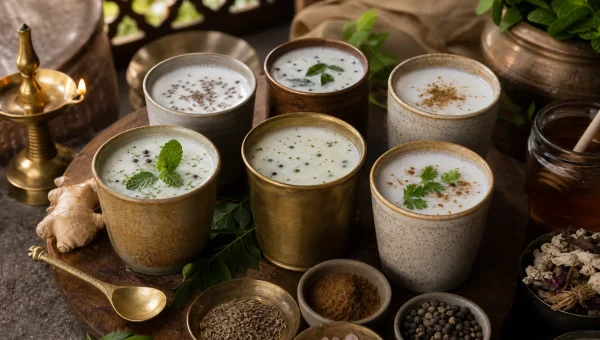
| Beverages | Cold water, chilled smoothies, sweet fruit juices, iced drinks | Cold sweet drinks work against the warm, cooked, agni-supportive direction of the plan. | Warm water, ginger tea, cumin-coriander-fennel tea, thin spiced buttermilk |
Weekly Meal Framework
This framework keeps the day predictable without forcing under-eating. Follow your thyroid medicine instructions first, then place meals around that schedule as advised by your clinician.
- Morning: Take prescribed thyroid medicine exactly as directed. Later, if suitable, have warm ginger water or the ginger-lemon drink.
- Breakfast: Roasted millet porridge, warm moong soup, or lightly spiced vegetable upma made without heaviness.
- Mid-morning: Warm water or herbal tea. Use honey only in small amounts and only in warm, not hot, liquid.
- Lunch: The largest meal of the day: barley khichdi, spiced lentil soup, cooked vegetables, and a measured amount of ghee or oil.
- Afternoon: Ginger tea or cumin-coriander-fennel tea. Avoid sweet snacks if the previous meal was adequate.
- Dinner: Vegetable yusha-style soup, cooked greens with moong dal, or steamed vegetables with a small pulse portion. Keep grains small at dinner when weight reduction is the main goal.
- Weekly preparation: Soak and cook barley in advance, keep roasted millet ready, prepare the spice blend, and wash greens so the light option is easier than the heavy option.
For best results, keep the plan warm, cooked, and consistent for several weeks rather than jumping between extreme diets. If weight continues to rise despite medication, or if fatigue, swelling, constipation, hair loss, menstrual changes, depression, or cold intolerance persist, return to your healthcare provider for evaluation.
can someone with a strong Pitta constitution follow this or are modifications needed
have u tried adjusting the dose
Pitta types likely need modifications, yes. I am Pitta-dominant and my practitioner had me cut out the very warming spices like dry ginger and use cooling cumin-coriander combinations instead. The core Kapha-reducing structure still holds, just dial back the heat.
how long before results become noticeable with this protocol? my patience has limits tbh
Honestly I noticed a difference around the 6-week mark. The first few weeks felt like nothing was happening, then suddenly my energy in the mornings started feeling less like wading through mud. Sticking with it is the hardest part.
the dal recipe for Pitta uses less asafoetida but I react badly to even small amounts. substitute? नमस्ते
Hing is tricky for a lot of people! I skip it entirely and use a small pinch of ajwain (carom seeds) in the tadka instead. It gives a similar digestive effect without the reaction. Works well in moong dal at least.
implemented the morning routine from this article for 3 weeks. energy is much steadier throughout the day. 🙏
very practical protocol. tried a modified version for a week and already feeling a difference. 💯
great to see peer-reviewed studies referenced alongside classical texts. makes it easier to trust.
not disputing Ayurveda has value but articles like this sometimes overstate efficacy. धन्यवाद
Fair point, and I think the post itself is more careful than some on this subject. The framing is dietary support alongside medication, not a replacement. Whether the evidence is strong enough is a reasonable question to raise though.
is there a simplified version for beginners who don’t have access to all these herbs
the mung dal khichdi for all three doshas with the tarka variations is exactly what I was looking for. made the Vata version yesterday.
i find the dosage guidance vague. ‘appropriate amount’ is not helpful for someone measuring at home.
does this protocol change during monsoon season? ive heard Ayurvedic timing is seasonal
Yes from what I understand Varsha Ritu does affect digestion in ways that matter here. Agni tends to be weaker in monsoon so some practitioners recommend lighter meals and avoiding heavy legumes. Worth asking your vaidya if you are working with one.
is this appropriate for elderly patients above 70 or should the dosages be reduced
hypothyroid weight gain meals need protein examples too, otherwise kapha reducing becomes just light food
yeah same
can you add breakfast options that are not poha or upma? many thyroid ppl need more protein
@reply Same experience here actually
Makes sense.
is there a simplified version for beginners who dont have access to all these herbs
can someone with a strong Pitta constitution follow this or r modifications needed
i had the same question
shared this with my Ayurveda practitioner and she confirmed the approach is sound.
Good point, the article doesn’t address that
The millet porridge recipe looks easy to try tomorrow morning.
can someone with a strong Pitta constitution follow this or are modifications needed नमस्ते
@Sunita i think it depends on your constitution tbh
the dal recipe for Pitta uses less asafoetida but I react badly to even small amounts. substitute?
not disputing Ayurveda has value but articles like this sometimes overstate efficacy.
The metabolic angle here was new to me. I always assumed hypothyroid weight gain was just about calories but the piece made a reasonable case for why Kapha-aggravating foods specifically could be compounding the problem. Has anyone actually tried swapping barley for rice as suggested?
My experience with hypothyroidism and these Kapha-reducing meals is that the warming spices made a noticeable difference for bloating even when the scale was not moving. Trikatu in particular. Curious if others have found specific recipes in this post more useful than others.
the preparation method described here is exactly what my grandmother used to make. brings back memories.
same experience here actually
yes but results vary a lot from person to person
respectfully, most of these claims need larger RCTs before we can say they’re validated.
finally an article that explains the classical text basis rather than just listing herbs.
Does anyone know if the ginger-tulsi drink can be made with dried tulsi only?
makes sense
Same here, makes sense once you understand how Kapha affects thyroid function. Did your practitioner give you a specific timeline to expect changes, or was it more of a wait-and-see approach?
tried a similar protocol 6 months back. results were modest at best and I was consistent.
some of these recipes are quite time-consuming for weeknight cooking. a quick-prep version would be helpful. 🙌
very practical protocol. tried a modified version for a week and already feeling a difference.
how do I source quality herbs for this? most local shops sell low-grade material.
I wonder if the claimed 2000% boost from black pepper is realistic for everyday cooking.
@Priya my practitioner said something similar
Using mustard oil for the tadka gives the lentil soup a nice sharp bite.