The Crown of the Head: A Quieting Gateway in Ayurveda
Thalam, also written as Talam, is a traditional Kerala Ayurvedic external therapy in which a medicated powder or paste is applied to a small, selected area on the crown of the head. It is usually centered over the bregma region, the point where the sagittal and coronal sutures meet, and is used as a supportive head therapy for conditions in which the head, senses, sleep, and mind need calming or dosha-specific regulation.
Thalam is best understood as a localized form of medicine application to the head, closely related in principle to Shirolepa, Shiropichu, and other Murdha Taila procedures. Classical Ayurveda gives special importance to the head as the seat of vital functions, sense organs, and higher regulation. Sushruta’s marma doctrine also treats the cranial region with great care, describing Adhipati and Simanta marmas among the vital points of the head. For that reason, Thalam is applied gently and therapeutically; it is not a pressure technique or a forceful stimulation of the crown.
Why the Crown: Classical and Anatomical Rationale
The crown area used in Thalam corresponds in modern anatomical language to the bregma region, where the coronal and sagittal sutures meet. In traditional Kerala practice, this small cranial area is identified as the practical site for the shallow application of medicine. The significance is not that medicine is pushed into the skull, but that the scalp, skin, vessels, nerves, and sensory field of the head are engaged through a mild, sustained, dosha-specific external application.
Ayurveda explains the therapeutic value of external application through concepts such as Bhrajaka Pitta, the skin-associated function that helps process substances applied to the body surface. Modern anatomy also recognizes the scalp as a richly supplied and highly sensitive tissue, receiving blood supply from branches such as the superficial temporal and occipital arteries and having dense sensory innervation. In practice, the combination of selected herbs, proper medium, gentle contact, temperature, rest, and reduction of sensory stimulation creates a calming therapeutic setting.
The crown is also discussed in broader Indic subtle anatomy as a spiritually important region, but the clinical Ayurvedic use of Thalam does not depend on mystical exaggeration. Its practical value lies in proper diagnosis, correct selection of the paste and medium, careful application, and appropriate post-care.
Classical and Traditional Formulations for Thalam
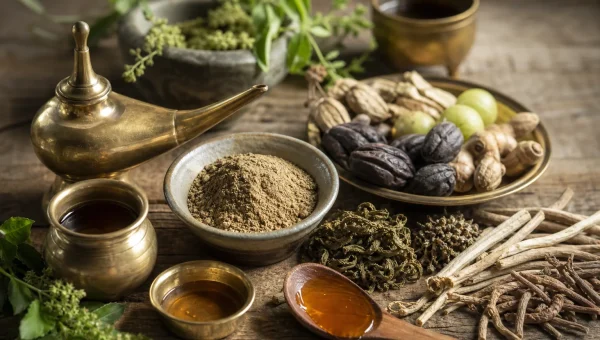
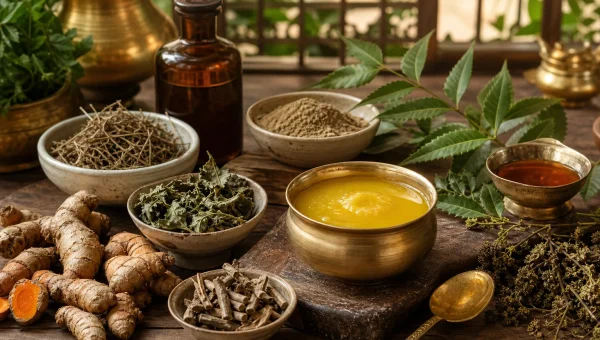
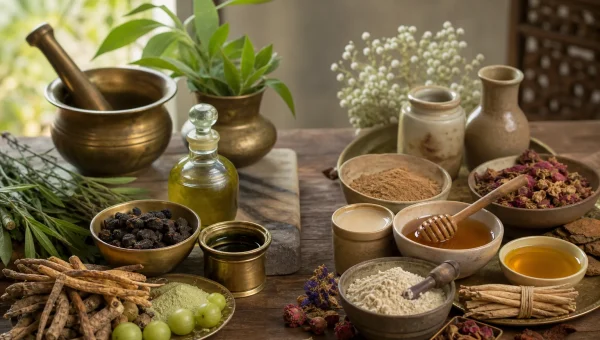
The medicine used for Thalam is selected according to the person’s dosha presentation, the quality of the head symptoms, the season, and the intended therapeutic effect. Kerala practice commonly uses choornas such as Rasnadi Choornam and Kachuradi Choornam, mixed with a suitable medium such as water, milk, sesame oil, castor oil, coconut oil, ghee, or Ksheerabala Taila. The medium is as important as the powder: warming, oily media are generally chosen for dry Vata patterns, while cooler and lighter media are preferred where Pitta heat or Kapha heaviness predominates.
| Formulation | Typical Ingredients or Base | Primary Ayurvedic Use | Typical Duration |
|---|---|---|---|
| Rasnadi Thalam | Rasnadi Choornam with warm water, milk, castor oil, sesame oil, or Ksheerabala Taila | Vata-Kapha head heaviness, cold-associated headache, running nose, sinus-type heaviness, and sleep disturbance linked with a heavy or congested head | 30-60 minutes, adjusted by tolerance and practitioner guidance |
| Kachuradi Thalam | Kachuradi Choornam with ghee, coconut oil, Ksheerabala Taila, or another suitable medium | Pitta-Kapha head discomfort, burning sensation, dizziness, headache, and restlessness affecting sleep | 30-60 minutes, adjusted by tolerance and practitioner guidance |
| Cooling Pitta Thalam | Cooling substances such as Chandana, Ushira, Amalaki-based preparations, ghee, coconut milk, or coconut oil when appropriate | Heat in the head, burning scalp sensation, irritability, and heat-aggravated sleep disturbance | 20-45 minutes, removed earlier if coldness, discomfort, or headache develops |
| Vata-Nourishing Thalam | A small quantity of suitable churna mixed with Ksheerabala Taila or another Vata-pacifying oil | Dryness, tension, light sleep, restlessness, and Vata-type head discomfort when oiliness is not contraindicated | 30-60 minutes, preferably in a quiet setting |
| Simple Post-Bath Rasnadi Application | One to two pinches of Rasnadi Choornam applied over the crown after drying the hair | Traditional maintenance use after head bath to reduce cold, heaviness, and Kapha-Vata aggravation in the head region | As advised by the practitioner or until the next appropriate wash |
Detailed Protocol: Rasnadi Thalam for Vata-Kapha Head Heaviness and Sleep Support
Rasnadi Thalam is most suitable when sleep difficulty is accompanied by heaviness of the head, coldness, sinus-type congestion, post-bath head discomfort, or Vata-Kapha aggravation. It is not the best choice when the scalp is hot, inflamed, very sensitive, or when the person has a strong Pitta presentation with burning and heat, unless the medium and formulation are modified by a practitioner.
Preparation of the Paste
Use clean, finely powdered Rasnadi Choornam from a reliable Ayurvedic pharmacy. For a paste application, mix one to two teaspoons of the powder with enough warm water, milk, castor oil, sesame oil, or Ksheerabala Taila to form a smooth paste that stays in place without dripping. The paste should be comfortably lukewarm or room temperature, never hot. For a lighter traditional post-bath application, only one to two pinches of the powder may be rubbed gently over the crown after the hair has been dried.
Patient Preparation
The person should sit comfortably or recline with the head supported. The crown area is exposed by parting the hair, and the scalp should be clean, dry, and free from wounds, active infection, or irritation. The setting should be quiet, warm, and free from cold wind or strong air conditioning. If the person is anxious or overstimulated, a few minutes of slow breathing before application helps prepare the body for the therapy.
Application Technique
Apply the paste gently over a small circular area at the crown, usually about three to five centimeters across, rather than covering the entire scalp. Traditional descriptions keep the application restricted and not excessively thick; a compact mound or patch is sufficient. The paste may be covered with a clean cotton pad, gauze, or suitable leaf to maintain contact and prevent drying too quickly. The head should not be tightly bound, and no strong pressure should be applied over the crown.
Resting Period
The person should rest quietly while the paste remains in place. Conversation, phone use, reading, work, and bright screens are best avoided because the therapy is intended to reduce sensory load. A practical session often lasts 30-60 minutes, with the duration adjusted according to comfort, constitution, age, season, and the strength of the formulation. If burning, itching, dizziness, sharp headache, nausea, or unusual discomfort occurs, the paste should be removed immediately.
Removal and Post-Care
The paste should be removed gently with a soft cloth or spatula, and the scalp may be wiped with lukewarm water. The head should be kept protected from cold air, wind, and immediate head washing unless irritation requires washing. For sleep support, Thalam is often better scheduled in the late afternoon or early evening, so the person can remain quiet afterward and carry the calming effect into the night.
Key Herbal Actions in Thalam
Rasnadi Choornam: Rasnadi Choornam is a traditional external powder used over the scalp and forehead for headache, cold, running nose, sinus-type heaviness, dizziness, and Kapha-Vata aggravation in the head region. Its ingredients commonly include Rasna, Amukkura, Devadaru, Vacha, Musta, Vyosha, Ushira, Chandana, and other herbs, with the exact composition depending on the classical or pharmacy tradition followed.
Kachuradi Choornam: Kachuradi Choornam is an external-use preparation traditionally applied for headache, burning sensation, dizziness, and sleep disturbance associated with Pitta-Kapha imbalance. Its ingredients include Kachora, identified in this formulation tradition as Curcuma zedoaria, along with Dhatri, Manjishta, Yashti, Devadaru, Kumkuma, camphor, Ushira, and other substances.
Ksheerabala Taila: Ksheerabala Taila is a Vata-pacifying oil prepared with Bala, cow’s milk, sesame oil, and water. In Thalam, it may be used as a nourishing medium when dryness, restlessness, Vata aggravation, or tension is prominent. It should be avoided or modified when heavy oiliness, Kapha congestion, acute inflammation, or scalp intolerance is present.
Cooling herbs and media: Chandana, Ushira, Amalaki-based preparations, ghee, coconut milk, and coconut oil are commonly chosen when heat, burning sensation, irritability, or Pitta aggravation is prominent. Cooling Thalam should still be applied carefully, because excessive coldness on the head can trigger discomfort in some Vata-sensitive individuals.
Vacha safety: Some traditional head powders contain Vacha. Because Acorus calamus contains asarone constituents, strong or repeated use of Vacha-containing preparations should be supervised, especially in pregnancy, children, frail patients, people with seizures, and those with sensitive skin or complex medication use.
Thalam for Insomnia and Anxiety: Ayurvedic Selection
Thalam is most useful when it is matched to the person’s presentation rather than applied as a one-formula-fits-all sleep remedy. In a Vata pattern, the person may be restless, sensitive, tense, or unable to settle; a warm, mildly oily, Vata-pacifying application may be chosen. In a Pitta pattern, the person may feel heat in the head, irritability, sharpness, or burning; a cooler preparation is more appropriate. In a Kapha pattern, heaviness, congestion, dullness, and excess oiliness may require a lighter and less oily approach.
| Presentation | Common Features | Thalam Approach | Avoid |
|---|---|---|---|
| Vata-type sleep disturbance | Restlessness, light sleep, tension, variable symptoms, sensitivity to sound or touch | Warm, gentle, mildly oily application such as a suitable churna with Ksheerabala Taila | Cold paste, excessive dryness, long exposure to wind after treatment |
| Pitta-type sleep disturbance | Heat in the head, burning sensation, irritability, intensity, disturbed sleep after overheating | Cooling media such as ghee, coconut oil, or coconut milk with suitable Pitta-pacifying substances | Very heating powders, excessive camphor, hot application |
| Kapha-type head heaviness | Heaviness, dullness, congestion, cold, sluggishness, thick scalp oiliness | Light application of Rasnadi or other Kapha-Vata balancing powder with a suitable medium | Heavy overnight oiling, thick greasy pastes, cold damp exposure |
| Anxiety with sensory overload | Overstimulation, head tension, difficulty quieting, sleep disruption | Shorter, gentle sessions combined with quiet rest, breath regulation, and practitioner-selected head or foot therapies | Strong smells, forceful massage, prolonged sessions when the person feels uncomfortable |
Integration with Other Ayurvedic Therapies
Thalam is often used alongside other Ayurvedic therapies rather than as a stand-alone treatment. Depending on the person’s constitution and condition, a practitioner may combine it with Shiroabhyanga, Shiropichu, Shirodhara, Pada Abhyanga, Nasya, or internal medicines. The order and selection matter: a person with dry Vata restlessness may need nourishment and grounding, while a person with Pitta heat may first need cooling and simplification.
For sleep support, Thalam works best when paired with a suitable evening routine, light and timely dinner, reduced screen exposure before bed, calm breathing, and regular sleep timing. Internal medicines such as classical tablets, churnas, or sleep-supporting herbs should not be self-prescribed simply because they are traditional. They should be selected according to constitution, digestion, age, medications, and diagnosis. For additional sleep routines, see Beyond Ashwagandha: 5 Sleep Remedies.
Safety Considerations and Contraindications
Thalam should not be performed over active scalp infection, open wounds, fresh head injury, unexplained severe headache, acute fever, or acute neurological symptoms. Avoid contact with the eyes, nose, and mouth. Strongly aromatic or camphor-containing preparations should be used cautiously in children, pregnancy, seizure disorders, respiratory sensitivity, and frailty. A small patch test is sensible for people with sensitive skin or allergy history.
Stop the application if there is burning, itching, rash, dizziness, nausea, sharp headache, unusual sleepiness, agitation, or any worsening of symptoms. People taking psychiatric medicines, sedatives, anti-seizure medicines, anticoagulants, or multiple long-term medications should consult their healthcare provider before adding even external therapies, especially if the therapy contains potent herbs, essential oils, camphor, or Vacha.
Home Practice Adaptation
A simple home adaptation should be mild and conservative. After a head bath, dry the hair well and apply one to two pinches of Rasnadi Choornam lightly over the crown if the person tends toward cold, heaviness, or post-bath head discomfort. For bedtime use, a small crown application may be prepared with a gentle medium selected for the person’s constitution, but strong powders, camphor-heavy mixtures, and Vacha-containing preparations should not be left on overnight without professional guidance.
Home Thalam should be treated as supportive care, not as a substitute for diagnosis. Chronic insomnia, anxiety, panic episodes, depression, severe headaches, neurological symptoms, and long-standing sleep disturbance require proper evaluation. Consult a qualified Ayurvedic practitioner and a qualified healthcare provider before beginning treatment, and do not stop or reduce prescribed psychiatric or sleep medication without the guidance of the prescribing clinician. For fatigue that often accompanies poor sleep, see Ayurvedic Approach to Chronic Fatigue.
References
- Jahm (jahm.co.in)
- Radiopaedia (radiopaedia.org)
- Wisdomlib — classical text
- Charaka Samhita — Marma
- Easyayurveda (easyayurveda.com)
- Ayushdhara (ayushdhara.in)
- NCBI
- NCBI
- Ayurmedinfo (ayurmedinfo.com)
- Ijapr (ijapr.in)
- Ayurmedinfo (ayurmedinfo.com)
- Ayurmedinfo (ayurmedinfo.com)
- The Ayurvedic drug, Ksheerabala, ameliorates quinolinic acid-induced oxidative stress in rat brain (2010), PubMed Central
- Mdpi (mdpi.com)
- Easyayurveda (easyayurveda.com)
Would have appreciated actual study citations for the sleep quality claims. The references section is thin for something presented as clinical fact.
That’s a fair criticism and I had the same thought reading through. The clinical observations are compelling but anchoring them to specific studies from journals like AYU or the Journal of Ethnopharmacology would strengthen the case considerably.
That’s a fair concern. I found anxiety worked better when I also adjusted my diet simultaneously.
tried the thalam recipe from section 3 last week, tasted awful but felt lighter the next morning lol 💯
Can children use sleep quality? The post covers adults but my 11-year-old has similar symptoms.
anyone here tried anxiety for the specific issue in the article? what was your experience
Thalam is actually one of the therapies I had never come across before finding this post. The idea that a paste applied at the crown can affect sleep and anxiety through the nervous system connection to Brahmarandhra is genuinely fascinating to read about.
way too vague about dosage for medicated paste. ‘2 to 3 capsules’ covers a huge range depending on body weight
anyone here tried sleep quality for the specific issue in the article? what was your experience
the decoction method for sleep is a bit confusing, is there a simpler version
good that anxiety and sleep are linked here. crown application sounds old school but the nervous system angle needs explaining
thalam for insomnia sounds calming but i want more detail on which paste is used. not everyone should put random medicated paste on scalp
been taking sleep for like 6 weeks and honestly sleep is better. never expected it to work this fast tbh
dosw for kids same or diff 🙌
Definitely different for children from what I understand. The paste formulation, duration of application, and even the base oils are usually adjusted. Would strongly suggest checking with a trained practitioner rather than scaling down an adult protocol.
these ayurvedic treatments take so long to work. western medicine might be faster for acute issues
The claim about brahmi reducing inflammation in two weeks seems optimistic. My experience was more like four months before any noticeable change.
honestly try thalam for at least 3 months before deciding it doesnt work
Started following the diet guidelines mentioned for thalam about a month ago. The bloating that had bothered me for years is now very manageable.
anyone here tried sleep for the specific issue in the article? what was your experience
the decoction method for anxiety is a bit confusing, is there a simpler version
bought thalam from a random brand and got no results. does quality vary that much between suppliers?
tried the medicated paste recipe from section 3 last week, tasted awful but felt lighter the next morning lol 🌿
Really interesting to read about Thalam as an external therapy for insomnia. The medicated paste approach feels very different from anything I’ve seen in modern sleep medicine.
consistency is hard with sleep routines. thalam may help but late phone use will still ruin it for many people
Same experience with sleep here. Took me about 6 weeks to notice real change.
Six weeks is about what I’ve heard from others too. Did you do it daily or did you take breaks between sessions? I’m wondering whether the cumulative effect builds faster with consistent application.
The formulation type matters a lot for anxiety. Churna vs capsule vs kashayam gave me different results.
i have pitta excess and sleep worked fine for me, but started at lower dose
Good to know the lower starting dose worked out. Did you also pair it with the crown application described in the post or just do the internal approach? Wondering if the combination is where the real effect comes from.
is thalam ok during pregnancy? asking for my wife who is in second trimester ✨
this seems like something to try slowly, maybe weekend first. medicated paste plus hair wash timing is not simple for office days
Where is the evidence for the sleep dosage recommended here? I could not find any peer-reviewed backing in the Indian Journal of Ayurveda for these specific numbers.
Honestly the dosage question is one where I’d look beyond journals to classical texts too. The Ashtanga Hridayam and Charaka Samhita have specific guidance on Shirolepa duration and timing that practitioners still reference, even if peer-reviewed trials haven’t caught up yet.
didnt work for me sleep waste of money tbh
Curious whether Thalam has different paste formulations for Vata versus Pitta types. The post touches on the Brahmarandhra connection but I’d love to know if the choice of herbs in the paste shifts based on constitution.
I asked my vaidya the same question about sleep. He said constitution matters more than standard dose. ✨
anyone here tried medicated paste for the specific issue in the article? what was your experience
i have high pitta, would the sleep protocol here work or make things worse
Does the quality of sleep source matter significantly? Organic vs non-organic makes a big cost difference where I live.
The explanation of Brahmarandhra as a marma point helped me understand why applying paste there feels different from regular head oils.
I am Vata-Pitta constitution. Would the medicated paste protocol here need modification or is it generally dosha-agnostic?
is sleep quality ok during pregnancy? asking for my wife who is in second trimester
anyone here tried brahmi for the specific issue in the article? what was your experience
the dosage chart for sleep quality is really helpful. been overdoing it apparently
Same thing happened to me. I was leaving the paste on much longer than recommended thinking more time meant better results. Once I followed the duration guidelines in the post more closely the experience became much more comfortable too.
i have pitta excess and thalam worked fine for me, but started at lower dose
My grandmother used anxiety for decades. Reading the science behind it here connects the dots for me in a satisfying way.
That generational knowledge is exactly why I find posts like this valuable. Your grandmother probably didn’t know the term Shirolepa but understood the effect intuitively. It’s satisfying when the classical reasoning catches up to lived practice. नमस्ते
@Sneha My practitioner said the same thing about sleep quality. Results vary by individual constitution.
the studies quoted for sleep are like 10 years old, anything more recent?
tried the ashwagandha recipe from section 3 last week, tasted awful but felt lighter the next morning lol
i would still ask a practitioner before thalam, especially for migraine people. heat, cooling, oil, paste, all can change the effect
Completely agree on the migraine point. I’d add that the cooling versus warming paste distinction is something even the post only briefly covers. For people with Pitta-type headaches the wrong formulation could aggravate rather than soothe.
same here, ashwagandha helped me but took longer than the article suggests
does brand matter for anxiety or is generic fine
didnt work for me anxiety waste of money tbh
I had never heard of Thalam before and found this really eye-opening. The idea of targeting the Brahmarandhra specifically for sleep and anxiety feels distinct from anything in conventional therapy.
I asked my vaidya the same question about thalam. He said constitution matters more than standard dose.
I appreciate the detailed protocol for Rasnadi Thalam, especially the timing of 45-60 minutes and the use of a leaf cover.
does brand matter for sleep or is generic fine
Not sure I agree on anxiety being suitable for Vata-Pitta. My experience was different.
I asked my vaidya the same question about medicated paste. He said constitution matters more than standard dose.
The claim about medicated paste reducing inflammation in two weeks seems optimistic. My experience was more like four months before any noticeable change.
is thalam ok during pregnancy? asking for my wife who is in second trimester
My grandmother used ashwagandha for decades. Reading the science behind it here connects the dots for me in a satisfying way.
the decoction method for ashwagandha is a bit confusing, is there a simpler version धन्यवाद
That’s a good question for the author. From what I recall reading elsewhere, some practitioners just use a ready-made medicated oil application as a simplified version when a full paste preparation isn’t practical. Not exactly the same but easier to start with. धन्यवाद
For Vata-Pitta types specifically I’d be curious whether the paste base changes. The post mentions the Brahmarandhra connection but doesn’t go deep on constitution-based modifications for Thalam. Would love a follow-up post on that.
my aunt has been doing sleep for years, finally understand why it actually helps after reading this
way too vague about dosage for sleep. ‘2 to 3 capsules’ covers a huge range depending on body weight
Thalam worked similarly for me in terms of timing. Took almost a month before I noticed I was falling asleep faster. The explanation in this post about the crown’s connection to the nervous system actually made me feel more confident continuing the practice.
For the sleep quality preparation described, does the water temperature affect the active compounds during the decoction process?
Good question. My vaidya mentioned that simmering too vigorously can break down some heat-sensitive compounds, which is why slow reduction at moderate heat is traditional. Whether that maps onto modern phytochemistry for the specific herbs used in Thalam preparations I honestly don’t know.
I’d guess temperature matters quite a bit. Classical preparations usually specify a gentle simmer rather than a rolling boil, partly for this reason. Whether it’s been studied in terms of retained active compounds for the herbs used in Thalam specifically I’m not sure. धन्यवाद
Thalam is quite different from herbal supplements. It’s an external therapy applied at the crown rather than something taken internally. Might be worth trying this approach if internal herbs haven’t moved the needle for you.
my aunt has been doing anxiety for years, finally understand why it actually helps after reading this
The research angle on Thalam as a whole is probably even thinner than most Ayurvedic therapies, but the classical textual basis goes back centuries. Would be interesting to see whether anyone is running current trials specifically on Shirolepa for sleep outcomes.
Has anyone tried the home version with Jatamansi and Brahmi powders before bedtime?
For the anxiety preparation described, does the water temperature affect the active compounds during the decoction process?
The article mentions starting sleep on an empty stomach. Does this apply even when taking it in ghee form?
is brahmi ok during pregnancy? asking for my wife who is in second trimester
short checklist needed: who can use it, how long to keep it, what time, and when to stop
the safety bit matters more than the ritual. insomnia readers will try anything when desperate
dosw for kids same or diff
Is sleep safe to use alongside SSRIs? My psychiatrist has not cleared any supplements and I want to go in informed.
Good point about thalam. The quality of the herb makes a huge difference in my experience.
r side effects of sleep real
The post focuses on the crown application which is external, so it’s a different kind of therapy altogether. For an 11-year-old with sleep or anxiety concerns the Thalam approach might actually be gentler to explore than internal herbs, but still worth asking a practitioner first. नमस्ते
will try thalam now 🌿
let us know how it goes! I was skeptical at first too but after the second session the difference in how I fell asleep was noticeable.
@Anna same here, sleep helped me but took longer than the article suggests
tried the sleep recipe from section 3 last week, tasted awful but felt lighter the next morning lol
haha the taste is part of the experience I think! I had a similar thing, felt oddly calm the morning after even if I wasn’t sure it had worked yet.
thalam is new to me. crown treatment for sleep sounds odd at first but Ayurveda uses head therapies a lot, so explanation helps
The link between scalp vasculature and absorption makes sense; it’s interesting to see the anatomical rationale.
the dosage chart for anxiety is really helpful. been overdoing it apparently
same, I didn’t realize less can actually be more with something like thalam. good that the article spells that out.
gr8 info on sleep thanku
glad it helped! the part about the Brahmarandhra and how it connects to the nervous system was new to me, really well explained.
agree! the section on paste preparation stood out to me too, you can tell the herb source and freshness really change what you get out of thalam.
same with thalam for me, the paste quality varied a lot between batches and that seemed to affect results more than anything else.
bought medicated paste from a random brand and got no results. does quality vary that much between suppliers?
the dosage chart for sleep is really helpful. been overdoing it apparently ठीक है
finally something practical. been reading about sleep quality for months and this is the first clear how-to
Does the quality of thalam source matter significantly? Organic vs non-organic makes a big cost difference where I live.
from what I’ve read, it does matter quite a bit with medicated pastes because the active compounds can degrade. my practitioner specifically asked me to source from a reliable Ayurvedic pharmacy even though it cost more.
can it be done during daytime for anxiety or only near bedtime? that part wasnt clear to me
Yeah the sleep quality timing thing confused me too. I do it before meals now based on another source.
Quick question: is the anxiety dose mentioned here for KSM-66 extract or full-spectrum powder? The potency difference is significant.
I wonder if the mild headache mentioned as a side effect occurs more often in people with sensitive skin.