
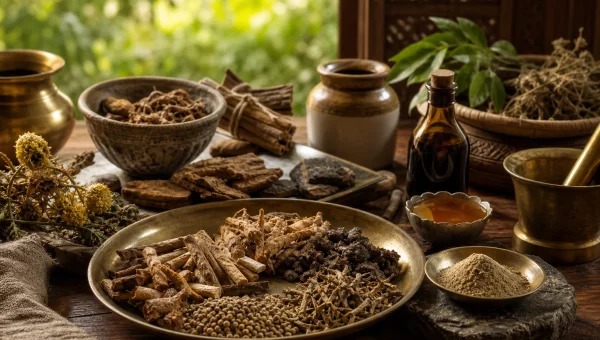
My grandmother had what she called her “monthly medicine cabinet” — a cloth bag whose contents changed with the season. In the cold months it held warm milk preparations and strengthening roots. In spring it became lighter and more bitter. In summer she leaned on Amalaki, Shatavari, rose, and cooling foods. During monsoon she cared first for digestion, boiled water, and small amounts of warming digestive spices. She had never studied Ayurveda formally, but she had absorbed a classical principle: the same person may need different support in different ritus because agni, bala, and dosha change with the environment.
Rasayana — from rasa, the nourishing essence and first dhatu, and ayana, the path or movement — is Ayurveda’s rejuvenative discipline for maintaining dhatu quality, strength, complexion, voice, memory, vitality, and longevity. It is not simply the year-round use of one tonic. A sound Rasayana plan asks whether the season calls for nourishment, lightening, cooling, cleansing, or rekindling digestion before deeper rejuvenation is attempted.
Why Seasonal Rasayana Matters: Agni, Bala, and Dosha
Classical Ritucharya describes seasonal changes in strength, digestive fire, and dosha through the cycle of accumulation, aggravation, and pacification. For Rasayana, this matters because heavy nourishing herbs are useful only when the body can digest and assimilate them. When agni is weak or Kapha and ama are high, lighter dīpana, pācana, and shodhana-oriented support is more appropriate before building formulas.
- Hemanta and Shishira (roughly mid-November to mid-March): Strength is high and appetite is generally stronger, especially in Hemanta. Shishira is colder and drier, and Kapha accumulates toward late winter. This is the best window for warm, unctuous, strengthening Rasayana when digestion is clear.
- Vasanta (roughly mid-March to mid-May): Kapha accumulated in the cold season liquefies with warmth, obstructing channels and weakening agni. This season favors lightening, Kapha-reducing, digestive, and cleansing support rather than heavy sweet tonics.
- Grishma (roughly mid-May to mid-July): Heat and dryness reduce strength, and Vata begins to accumulate. The season calls for cooling, sweet, liquid, unctuous support, with reduced exposure to excessive heat, exertion, pungent foods, sour foods, and salty foods.
- Varsha (roughly mid-July to mid-September): Agni and bala are weak, Vata is aggravated, and Pitta accumulates. Rasayana begins with digestion, boiled and cooled water, suitable old grains, light soups, and small quantities of honey where appropriate.
- Sharad (roughly mid-September to mid-November): Pitta becomes aggravated after the rains. Cooling, sweet, light, mildly bitter, and Pitta-pacifying measures are favored; therapeutic purgation and medicated ghee protocols belong under professional supervision.
Winter Rasayana Stack (Hemanta and Shishira)
Winter is the season for brṃhaṇa — building, strengthening, and nourishing — when appetite is strong and the tongue, bowel, and digestion are clean. Warm meals, suitable milk and ghee preparations, oil massage, warm shelter, and stable routines support the deeper use of Rasayana in this period.
The winter stack:
- Ashwagandha (Withania somnifera): API lists Ashwagandha root as Rasayana, Balya, Vajikarana, Vata-Kapha pacifying, with Ushna virya and Madhura vipaka. A classical adult powder range is 3–6 g. In winter it is best suited for Vata-type depletion, low strength, dry tissue states, and convalescent weakness when digestion can handle it.
- Chyavanaprasha: Chyavanaprasha is a classical Amalaki-based avaleha Rasayana. It is especially suitable in the stronger-agni season when taken in a modest quantity that does not interfere with appetite or digestion. It should be reduced or paused if it feels heavy, causes coating, or worsens Kapha congestion.
- Shatavari (Asparagus racemosus): Shatavari is Madhura-Tikta in rasa, Guru-Snigdha in guna, Shita in virya, Madhura in vipaka, and is listed as Rasayana, Balya, Pittahara, Vrishya, and Stanyakara. The API adult powder range is 3–6 g. In winter it is useful when nourishment is needed but the person also shows dryness, heat, irritability, or Pitta sensitivity.
- Food anupana: Warm milk, ghee, soups, and unctuous cooked foods suit this season when digestion is strong. Cold, dry, very light, and excessive bitter-astringent regimens can deplete Vata during the cold months.
Spring Rasayana Stack (Vasanta)
Spring is the time to shift away from heavy winter tonics. As Kapha liquefies, agni may become dull and the body benefits from lighter food, movement, channel-clearing, and Kapha-reducing herbs. Classical seasonal care also places physician-led cleansing such as Vamana in this season when indicated.
The spring stack:
- Guduchi (Tinospora cordifolia): Guduchi stem is listed as Tikta-Kashaya in rasa, Laghu in guna, Ushna in virya, Madhura in vipaka, and as Rasayana, Dipana, Balya, Tridoshashamaka, Raktashodhaka, and Jvaraghna. The API adult range is 3–6 g powder or decoction prepared from 20–30 g of the crude drug. It is a strong seasonal bridge when heaviness and dull digestion need to be corrected without harsh depletion.
- Triphala Churna: Triphala combines Amalaki, Haritaki, and Bibhitaki. In spring it is used in a clinician-guided dose as a light bowel-supporting and channel-clearing churna rather than a heavy Rasayana. It is especially appropriate where winter heaviness, sluggish elimination, and Kapha accumulation are present.
- Barley-led meals: Yava, light soups, cooked greens, and reduced sweet-heavy dairy help the body move from winter accumulation into spring lightness.
- Avoid in excess: Heavy sweet Rasayana, excessive dairy, daytime sleep, very oily food, and sedentary routines can aggravate the spring Kapha pattern.
Summer Rasayana Stack (Grishma)
Summer requires cooling and preservation rather than forcing intense metabolism. The body’s strength is low, the environment is drying, and Vata begins to accumulate. Rasayana in this season should be light enough for weaker digestion yet cooling, hydrating, and Ojas-supportive.
The summer stack:
- Amalaki (Phyllanthus emblica / Emblica officinalis): Amalaki is listed with Shita virya, Madhura vipaka, Rasayana karma, Tridoshajit action, and use in Chyavanaprasha and Triphala. API gives 3–6 g for dried fruit powder and 5–10 ml for fresh juice. It is a primary summer Rasayana because it nourishes without adding heat.
- Shatavari: Shatavari’s Shita virya, Snigdha guna, and Pittahara action make it one of the most useful summer Rasayana herbs for heat, dryness, and depletion. It should still be matched to appetite and Kapha status.
- Satapatrika / rose (Rosa centifolia): API lists rose flower as Tikta-Kashaya in rasa, Laghu in guna, Shita in virya, and Pittahara, Hridya, Dipana, Netrya, and Varnya in action, with an adult powder range of 3–6 g. Rose preparations are best used as cooling support rather than as a substitute for individualized treatment.
- Reduce heating tonics: Ashwagandha, strong Trikatu use, and other heating formulas should be reduced when burning, acidity, rashes, irritability, or strong Pitta signs are present.
Monsoon Rasayana Stack (Varsha)
Monsoon is not the ideal season for starting heavy building Rasayana. The priority is to protect agni, avoid contaminated water, keep food warm and digestible, and use small digestive supports before deeper tonics. Once digestion is steady, gentle Rasayana herbs can be introduced in modest doses.
The monsoon stack:
- Guduchi: Guduchi remains useful in Varsha because it combines Rasayana with Dipana and Tridoshashamaka actions. It should be taken in a form and dose suited to the person’s appetite, bowels, and heat level.
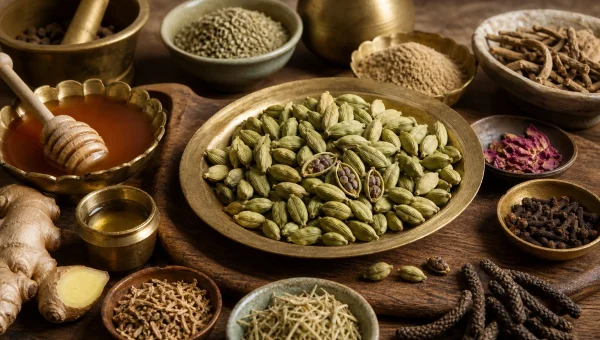
- Trikatu Churna: Trikatu is a pungent dīpana churna based on dry ginger, black pepper, and long pepper. In monsoon it is best treated as a short-term digestive aid in small practitioner-guided amounts, not as a daily high-dose stimulant for everyone.
- Haridra (Curcuma longa): Haridra is Katu-Tikta in rasa, Ruksha in guna, Ushna in virya, Katu in vipaka, and is listed as Kaphapittanut, Krimighna, Kushthaghna, Varnya, Vishaghna, and Pramehanashaka. API gives an adult powder range of 1–3 g. It can support monsoon Kapha-Pitta patterns when used with proper food and digestion.
- Seasonal basics: Use boiled and cooled water, warm cooked meals, old grains where suitable, and light soups. Avoid river water, day sleep, excessive exertion, heavy oils, cold raw foods, and large heavy avaleha doses while agni is low.
Autumn Rasayana Stack (Sharad)
Autumn is the Pitta-aggravation season after the rains. The Rasayana direction shifts toward cooling, light, sweet, and mildly bitter support. Strongly heating tonics are used only when a practitioner sees a clear indication, because this season easily produces burning, acidity, irritability, skin flare, and heat-type discomfort.
The autumn stack:
- Amalaki: Amalaki is the safest anchor of the autumn stack for many people because it is Shita, Rasayana, and Tridoshajit. It fits the Pitta season better than hot, stimulating tonics.
- Shatavari: Shatavari is useful where Pitta heat is combined with dryness, debility, or tissue depletion. Its heaviness means it should be avoided or reduced if Kapha, coating, or sluggish digestion is present.
- Satapatrika / rose: Rose is a gentle cooling support for Pitta-dominant autumn patterns and can be used in food-style preparations when appropriate.
- Manjistha (Rubia cordifolia): API lists Manjistha stem as Madhura-Tikta-Kashaya in rasa, Guru in guna, Ushna in virya, Katu in vipaka, and Kaphapittashamaka, Varnya, Shothaghna, Rasayana, and Shonitasthapana in action, with an adult dose of 2–4 g. Because it is Ushna, it should not be casually treated as a universal cooling herb; it belongs in practitioner-guided autumn use when the presentation matches.
- Professional therapies: Tikta ghrita, Virechana, and other Pitta-clearing protocols are classical autumn measures, but they are therapeutic procedures, not casual self-care routines.
Seasonal Transition Summary
The table below gives a practical seasonal framework. Doses are adult API-style reference ranges where available, not personal prescriptions. Children, pregnancy, lactation, chronic illness, medications, frailty, and acute symptoms require individual assessment.
| Season | Main Seasonal Priority | Rasayana Direction | Commonly Avoid |
|---|---|---|---|
| Hemanta / Shishira (mid-November to mid-March) |
Strong agni, cold, dryness, late-winter Kapha accumulation | Ashwagandha 3–6 g powder; Chyavanaprasha in a small digestion-safe amount; Shatavari 3–6 g where dryness or heat sensitivity exists | Cold foods, excessive fasting when hungry, excessive bitter-astringent depletion, heavy tonics when appetite is poor |
| Vasanta (mid-March to mid-May) |
Kapha liquefaction and dull agni | Guduchi 3–6 g powder or decoction; Triphala in clinician-guided dose; barley-led lighter diet | Heavy sweet Rasayana, excess dairy, daytime sleep, sedentary habits |
| Grishma (mid-May to mid-July) |
Weak bala, dryness, Vata accumulation | Amalaki 3–6 g powder or 5–10 ml fresh juice; Shatavari 3–6 g; rose 3–6 g where appropriate | Heating herbs in excess, strong Trikatu use, salty-sour-pungent excess, heavy exercise |
| Varsha (mid-July to mid-September) |
Weak agni, Vata aggravation, Pitta accumulation | Guduchi in suitable form; small practitioner-guided Trikatu; Haridra 1–3 g; boiled and cooled water | Raw/cold water, day sleep, heavy oils, large avaleha doses, excessive exertion |
| Sharad (mid-September to mid-November) |
Pitta aggravation after rains | Amalaki, Shatavari, rose; Manjistha 2–4 g only when indicated; supervised Pitta-clearing therapies | Excess sun, curd, heavy oils, heating tonics without indication |
Safety and Practitioner Guidance
Rasayana should begin only after appetite, digestion, elimination, and strength are assessed. Do not start a new Rasayana stack during acute illness, severe indigestion, active fever, pregnancy, lactation, medication use, liver or kidney disease, or chronic medical conditions without guidance from a qualified Ayurvedic practitioner and healthcare provider. Mineral, metal, bhasma, and rasaushadhi preparations should be used only when prescribed by a qualified physician and sourced from properly tested pharmacies; they are not general seasonal supplements.
Nothing in this article diagnoses, treats, prevents, or cures a medical condition. Use it as educational information and consult a qualified Ayurvedic practitioner or physician before starting herbs, supplements, detoxes, Panchakarma procedures, or therapeutic Rasayana protocols.

Late to this post, found it via Google. Is this still the recommended approach in 2027?
Same here
The grandmother detail pulled me in immediately. My nani had something very similar — a small steel dabba that would appear and disappear from the kitchen shelf depending on the month. I never thought to ask what was in it. Do the seasonal transitions here follow the classical Ritucharya divisions or a more regional calendar?
नमस्ते, longtime reader first comment. This post finally convinced me to start.
The classical references you include make this more credible than most Ayurveda blogs.
🙏 The Hemanta season stack you describe matches what my Ayurvedic doctor prescribed last winter. Good confirmation.
Just found this. Really helpful for my situation.
Which part was most relevant to you? I’m trying to figure out whether the spring protocol or the monsoon stack applies to my situation and would appreciate hearing what others are actually trying.
Are you starting with one season at a time or trying to build the full annual rotation? I got overwhelmed trying to source everything at once and ended up doing nothing, so curious how others are approaching it practically.
Will try
chyawanprash all year round vs just winter, I’ve been debating this. The seasonal Agni table clarifies it.
The monsoon Trikatu-in-honey recommendation is interesting — I always assumed honey was mainly a summer thing. Does the anupana change the herb’s action significantly, or is it more about palatability and absorption? 💯
My Ayurvedic doctor recommended the same thing last month. Good to find it confirmed here.
The Grishma recommendations seem counterintuitive, cooling herbs during summer but the Pitta logic makes sense.
the transition periods between seasons are when I always get sick. the Ritu Sandhi protocol is what I needed
The winter stack with ashwagandha in warm milk sounds like a cozy bedtime ritual.
Can rasayanas be taken continuously year-round or do they need seasonal gaps?
धन्यवाद for explaining this so clearly
Switching rasayanas every season sounds ideal but expensive. What’s the minimum viable seasonal adaptation?
Found this helpful. The Seasonal Rasayana Stacks section was particularly useful for my situation.
Found this helpful. The Seasonal Rasayana Stacks section was particularly useful for my situation. (asking as someone dealing with this since 2020)
Found this helpful. The Seasonal Rasayana Stacks section was particularly useful for my situation. 💯 (asking as someone dealing with this since 2020)
Found this helpful. The Seasonal Rasayana Stacks section was particularly useful fpr my situation. (asking as someone dealing with this since 2024)
I wonder how the neem leaf decoction tastes when taken first thing in spring.
Found this helpful. The Seasonal Rasayana Stacks section was particularly useful for my situation. 🙌 (asking as someone dealing with this since 2024)
Pickling amalaki in brine for summer seems like a tasty way to stay cool.
❤️ Found this helpful. The Seasonal Rasayana Stacks section was particularly useful for my situation.
🌿 Found this helpful. The Seasonal Rasayana Stacks section was particularly useful for my situation.
Using trikatu with honey during monsoon feels like a smart kindling for sluggish digestion.
Found this helpful. The Seasonal Rasayana Stacks section was particularly useful for my situation. 🙏 (asking as someone dealing with this since 2021)
Manjistha powder twice daily in autumn could help with those occasional skin flare ups.
❤️ Found this helpful. The Seasonal Rasayana Stacks section was particularly useful fpr my situation. (asking as someone dealing with this since 2020)
Found this helpful. The Seasonal Rasayana Stacks section was particularly useful for my situation. 🌿 (asking as someone dealing with this since 2020)
Found this helpful. The Seasonal Rasayana Stacks section was particularly useful for my situation. ✨ (asking as someone dealing with this since 2022)
The idea of a monthly medicine cabinet changing with the seasons reminds me of my own pantry shuffle.
Found tjis helpful. The Seasonal Rasayana Stacks section was particularly useful for my situation.
It’s interesting that charaka emphasizes timing the rasayana rather than using the same blend year round.
💯 Found this helpful. The Seasonal Rasayana Stacks section was particularly useful for my situation.
I’ve heard guduchi called the premier spring immune modulator, but is fresh stem juice really necessary?
Shatavari kalpa with rose petals in cold milk sounds refreshing for hot afternoons.
🙏 Found this helpful. The Seasonal Rasayana Stacks section was particularly useful for my situation.
Before trying any of these stacks, checking with an ayurvedic practitioner seems wise, especially with existing meds.