
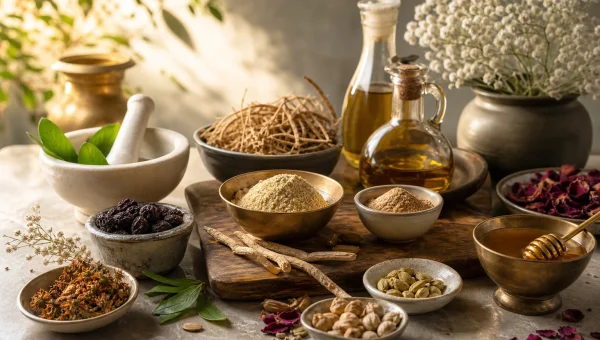
When my sister struggled to produce enough milk for her premature twins, her lactation consultant was excellent and focused on the essentials: positioning, latch, frequency, pumping, and protecting every possible milk-removal opportunity. What was harder to address in those hospital weeks was the state of the mother herself. She was sleeping in fragments, eating whatever was available, anxious about two fragile babies, and physically depleted. Alongside lactation support, I brought Shatavari, methi, dates, warm milk, sesame, simple cooked meals, and a plan inspired by the Ayurvedic idea of Dhatri Kalpa: nourish the woman who nourishes the child.
That experience taught me why the Ayurvedic lactation framework still feels clinically and emotionally valuable. It does not treat milk as an isolated breast problem. It connects Stanya, or breast milk, with digestion, Rasa Dhatu, rest, emotional steadiness, warmth, fluids, and practical care around the mother. Herbs have a place, but they work best inside a wider regimen that protects both milk removal and maternal recovery.
What Is Dhatri Kalpa?
Dhatri means wet nurse or foster mother: the woman who nourishes a child with breast milk when the biological mother cannot nurse, or when additional nursing support is needed. Kalpa means a prepared regimen or method. In practical Ayurvedic lactation care, Dhatri Kalpa can be understood as a disciplined support plan for the nursing woman: suitable food, adequate fluids, rest, cleanliness, affection toward the child, mental steadiness, and carefully chosen herbs when appropriate.
The classical pediatric tradition of Ayurveda gives special importance to the mother, the wet nurse, and the quality of Stanya. Ayurvedic compendia discuss the formation and ejection of breast milk, examination of the Dhatri, qualities of healthy milk, causes of reduced or disturbed milk, and measures for increasing and purifying Stanya. Kashyapa Samhita is especially associated with child care and describes the wellbeing of the baby in close connection with the nourishment, health, and milk of the nursing woman.
Ayurveda describes Stanya as an upadhatu of Rasa Dhatu, the primary nutritive tissue formed from well-digested food. This is the foundation of the whole Dhatri approach: when digestion is steady, food is nourishing, fluids are sufficient, and the mother is not depleted, the raw material for milk is better supported. When the mother is exhausted, underfed, anxious, febrile, or digestively weak, lactation support must begin with restoring the mother rather than simply adding more galactogogue substances.
The Stanya-Supporting Herbs
Ayurvedic lactation herbs should be used as adjuncts, not as replacements for effective milk removal, proper latch, appropriate pumping, treatment of pain or infection, and evaluation for medical causes of low supply. A sound Dhatri Kalpa first protects breastfeeding mechanics and then adds herbs according to the mother’s digestion, constitution, symptoms, and safety needs.
Shatavari (Asparagus racemosus) — The Central Lactation Herb
Shatavari is the most important herb in this lactation-support framework because the Ayurvedic Pharmacopoeia of India lists Shatavari root as Stanyakara, meaning supportive of breast milk. It also lists Stanya Kshaya and Stanya Dosa among its therapeutic uses, making it directly relevant to both insufficient milk and disturbed milk quality in the Ayurvedic sense.
Classically, Shatavari is described with Madhura and Tikta rasa, Guru and Snigdha guna, Shita virya, and Madhura vipaka. These qualities make it cooling, nourishing, unctuous, and tissue-building. In a nursing mother, it is especially suited when depletion, dryness, heat, irritability, poor recovery, or weak nourishment are part of the picture.
Traditional use: The Ayurvedic Pharmacopoeia of India gives an adult powder dose of 3–6 g. In household practice it is often taken with warm milk, ghee, or in a prepared Shatavari Kalpa, but the dose and form should be individualized by a qualified practitioner, especially in mothers with complex medical histories.
Shatapushpa / Satahva (Anethum sowa, Indian Dill)
Shatapushpa, also listed as Satahva, is identified in the Ayurvedic Pharmacopoeia of India as the dried ripe fruit of Anethum sowa. Its role in Dhatri-style postpartum care is best understood as warm digestive support rather than as a substitute for Shatavari. The text lists its actions as Dipana, Kaphahara, Vatahara, and Shulaprashamana, meaning that it supports appetite, helps balance Kapha and Vata, and is traditionally used where abdominal discomfort or gas is present.
This matters because many milk-building foods are sweet, heavy, moist, and unctuous. A small amount of aromatic spice can help the mother digest those foods without creating heaviness. In postpartum kitchens, dill-like seeds may be used in light teas, rice preparations, dal, soups, or spice mixtures when they suit the mother’s appetite and heat tolerance.
Traditional use: The Ayurvedic Pharmacopoeia of India gives a powder dose of 3–6 g for Satahva. For daily food use, smaller culinary quantities are usually sufficient unless a practitioner recommends a specific therapeutic preparation.
Methi (Trigonella foenum-graecum, Fenugreek)
Methi, or fenugreek seed, is one of the most familiar household lactation-support ingredients, but in Ayurveda it should be understood carefully. The Ayurvedic Pharmacopoeia of India lists Methi as Tikta in rasa, Snigdha in guna, Ushna in virya, and Katu in vipaka, with actions including Dipana, Rucya, Vatahara, and Kaphahara. It is therefore warming, appetite-supporting, and useful where coldness, sluggish digestion, heaviness, or Vata-Kapha disturbance accompanies postpartum depletion.
Methi is not identical in action to Shatavari. Shatavari is more cooling and directly listed as Stanyakara; Methi is warmer and more digestive. It may be helpful in food preparations such as methi dal, methi laddoo, or soaked seeds when digestion is dull, but it may not suit every mother, especially those with loose stools, excess heat, marked reflux, legume sensitivity, diabetes, or medication-related safety concerns.
Traditional use: The Ayurvedic Pharmacopoeia of India gives an adult powder dose of 3–6 g. For household use, many mothers use smaller food-level amounts, such as soaked seeds or methi cooked into meals. Higher-dose capsule use should be discussed with a healthcare provider or qualified Ayurvedic practitioner.
The Dhatri Ahara Framework
Dhatri Ahara is the food side of lactation care. Its aim is to build Rasa Dhatu without overwhelming Agni. The best foods are warm, freshly prepared, moist, easy to digest, gently spiced, and taken at regular times. The mother should not be pushed into heavy foods if digestion is weak; the same food that builds milk in one mother can create bloating, nausea, or heaviness in another if Agni is not ready.
Rasa-Building Foods
Rasa-building foods in this context are sweet, moist, nourishing, and digestible. They are used to restore fluids, strength, and tissue after childbirth while keeping the bowel moving and the appetite steady.
- Warm milk, if tolerated: Warm cow’s milk is a traditional vehicle for Shatavari and other nourishing preparations. It should be used only when the mother digests milk well; otherwise, it may be replaced with other warm, nourishing foods and fluids suited to her digestion.
- Kharjura (dates): The Ayurvedic Pharmacopoeia of India lists dried dates as Balya, Tarpana, Brimhana, Vatahara, and Pittahara. This makes them a suitable sweet, nourishing food in small amounts for mothers who tolerate them well.
- Tila (sesame seeds): Sesame is oily, strengthening, and Vata-balancing. The Ayurvedic Pharmacopoeia of India lists Tila with actions including Balya, Snehana, Vataghna, and Rasayana. It may be used as sesame laddoo, sesame chutney, tahini-like paste, or a small garnish in warm foods.
- Well-cooked dal and rice: Soft rice with well-cooked mung, urad, or other tolerated dal can provide steady nourishment when prepared with ghee and digestive spices. The dal should be cooked until soft and adjusted to the mother’s digestion rather than served heavy by default.
- Ghee-based soups and stews: Warm vegetable soups, rice gruels, thin dals, and stewed gourds help combine fluid, warmth, salt, and easy digestion. These are often more useful in early postpartum days than dry snacks or large heavy meals.
Stanya Shodhana and Digestive Balance
Stanya Shodhana should not be used as a casual label for every episode of infant gas, crying, or watery-looking milk. In Ayurveda, milk quality is interpreted through the mother’s diet, digestion, dosha state, and the baby’s response. If the mother has heaviness, coated tongue, poor appetite, gas, or sluggish bowels, the plan may include lightening the food and adding small amounts of digestive spices such as ginger, cumin, dill, or fenugreek. If there is fever, breast redness, severe pain, dehydration, persistent vomiting, blood in milk, or a sick infant, medical evaluation is needed promptly.
Mental and Emotional Dhatri Kalpa
The Dhatri is classically expected to be healthy, affectionate, clean, stable, and well nourished. This is not sentimental decoration; it is part of the lactation environment. A nursing mother who is frightened, unsupported, sleepless, and constantly interrupted may have difficulty with let-down even when milk production is present.
The milk let-down reflex depends on oxytocin, and stress or anxiety can interfere with the ease of milk flow. For this reason, an Ayurvedic lactation plan includes quiet feeding time, warm food at hand, help with household duties, sleep protection, reassurance, and emotional steadiness. The mother’s nervous system is part of the treatment field.
Dosage and Schedule Summary
The following schedule is a conservative educational outline based on classical Ayurvedic actions and pharmacopoeial dose ranges. It should be adjusted for digestion, constitution, medical history, medications, infant sensitivity, and guidance from a qualified practitioner.
| Herb / Food | Typical Use | Timing | Role in the Plan |
|---|---|---|---|
| Shatavari powder | 3–6 g daily as the pharmacopoeial adult powder dose, often taken with warm milk if tolerated | Morning or evening | API-listed Stanyakara; nourishing, cooling, Rasa-supporting |
| Shatapushpa / Satahva | Small culinary amounts, or 3–6 g powder when practitioner-guided | With food or as a light warm infusion | Digestive, Vata-Kapha balancing, helps make heavier foods easier to digest |
| Methi seeds | Small food-level amounts, or 3–6 g powder within the pharmacopoeial adult dose range | With breakfast or lunch | Warming digestive support; useful where appetite is dull or Vata-Kapha heaviness is present |
| Kharjura (dates) | 10–15 g dried fruit as the pharmacopoeial dose range | With warm milk, porridge, or a meal | Strengthening, nourishing, Brimhana and Tarpana |
| Tila (sesame) | 5–10 g daily as the pharmacopoeial dose range | With meals or in laddoo/chutney | Unctuous, strengthening, Vata-balancing |
| Warm cooked meals | Rice, dal, soups, stews, ghee, and cooked vegetables according to digestion | Regular meal times | Builds Rasa while protecting Agni |
For the broader postpartum recovery context, the complete Sutika Paricharya month-by-month protocol explains how lactation support fits within the larger postpartum healing picture. For the quality dimension of breast milk from diet and herb perspectives, see the related article on Ayurvedic breast milk quality and Stanya.
Safety and When to Seek Help
Low milk supply can come from many causes that herbs cannot correct on their own, including poor latch, ineffective milk removal, tongue-tie, breast pain, mastitis, retained placental tissue, thyroid disease, insulin resistance, significant blood loss, prior breast surgery, premature birth, NICU separation, medication effects, or inadequate pumping frequency. Any persistent low supply should be assessed by a lactation consultant and an appropriate healthcare provider.
Safety disclaimer: This article is educational and does not diagnose or treat a medical condition. Breastfeeding mothers should consult a qualified Ayurvedic practitioner, physician, midwife, or lactation consultant before using herbs or supplements, especially after premature birth, caesarean birth, hemorrhage, mastitis, thyroid disease, diabetes, hormone-sensitive cancer, anticoagulant use, allergy history, or when the baby is medically fragile. Fenugreek may cause digestive symptoms or sensitivity in some people and needs extra caution in diabetes, bleeding-risk situations, anticoagulant use, and legume allergy. Seek urgent medical care for fever, breast redness with severe pain, dehydration, infant lethargy, poor weight gain, reduced wet diapers, or any sign that mother or baby is unwell.
References
- Jaims (jaims.in)
- Jaims (jaims.in)
- Ijprajournal (ijprajournal.com)
- Breast milk as an etiological factor in infantile disorders – An observational study (2021), PubMed Central
- Ayurvedic Pharmacopoeia of India
- Ayurvedic Pharmacopoeia of India
- Natural Ingredient Resource Center
- Abm (abm.memberclicks.net)
- Breastfeeding (breastfeeding.asn.au)
- Journals (journals.plos.org)
- NCBI
- Breastfeedingnetwork (breastfeedingnetwork.org.uk)
Fenugreek (Methi) is widely used for lactation but the article doesn’t include it. is there a classical reason for its absence or is it a practical choice?
Good question — I was wondering the same thing. Methi is practically synonymous with milk supply in most home remedies. My guess is maybe it’s considered more of a food-grade galactagogue in classical texts rather than a proper aushadhi, so it falls outside the Dhatri Kalpa framework? Would love a clarification on this.
fenugreek (Methi) is widely used for lactation but the article doesnt include it. is there a classical reason for its absence or is it a practical choice?
galactagogue claims for Ayurvedic herbs have limited controlled trial evidence. the article presents them with more certainty than the data supports.
is the Dhatri Kalpa approach different for mothers who had C-sections vs vaginal delivery? the recovery timeline affects when certain preparations are appropriate.
That’s a really important distinction to raise. I’d also wonder whether the sequence of preparations matters — like, do the tonifying herbs come before or after the clearing phase, and would the post-surgical healing tissue change how certain formulas are absorbed?
the galactagogue herbs mentioned Shatavari, Vidarikanda, Kapikacchu do these work through prolactin stimulation or some other mechanism?
lactation difficulties often have structural causes (tongue tie, poor latch, inverted nipple) that require lactation consultant assessment. the article doesn’t direct readers to this first-line support.
the classical Dhatri Kalpa protocol for lactation support is something I wish I’d known about with my first child. the Shatavari + ghee + milk combination alongside adequate fluid intake transformed my milk supply by week 3.
the wet nurse dietary framework and how it maps to modern breastfeeding support is genuinely novel. the nutritional density requirements for lactating women in classical texts are impressive.
Dhatri Kalpa topic is old but still relevant. wet nurse diet sounds historical until you think about lactation support
galactagogue claims for Ayurvedic heebs have limited controlled trial evidence. the article presents them with more certainty than the data supports.
The story about the sister’s twins really shows how stress and hospital food can affect milk supply.
the gslactagogue herbs mentioned Shatavari, Vidarikanda, Kapikacchu do these work through prolactin stimulation or some other mechanism? ✨
I wonder if adding saffron to warm milk would be easy to try at home.
fenugreek (Methi) is widely used for lactation but the articlr doesnt include it. is there a classical reason for its absence or is it a practical choice?
fenugreek (Methi) is wudely used for lactation but the article doesnt include it. is there a classical reason for its absence or is it a practical choice? tbh
Good one. 🙌
The detail about Shatavari and Vidarikanda in the classical Dhatri Kalpa protocol is what I came here looking for. My sister is breastfeeding and her supply has been inconsistent — did the article mention whether these galactagogue herbs are typically taken as a decoction or in ghee?
Shatavari seems to be highlighted as a key herb for both volume and quality.
@Christopher is the Dhatri Kalpa approach different for mothers who had C-sections vs vaginal delivery? the recovery timeline affects when certain preparations are appropriate. ✨
galactagogue claims for Ayurvedic herbs have limited controlled trial evidence. the article presenta them with more certainty than the data supports.
Doing this.
is the Dhatri Kalpa spproach different for mothers who had C-sections vs vaginal delivery? the recovery timeline affects when certain preparations are appropriate.
Has anyone tried the dill seed decoction called Kasava in their routine?
The emphasis on mental calm and avoiding worry matches what I’ve read about oxytocin.
I’m curious about the dosage of urad dal laddoos for daily intake.
the galactagogue herbs mrntioned Shatavari, Vidarikanda, Kapikacchu do these work through prolactin stimulation or some other mechanism?
Methi’s dual role as a digestive aid and milk booster makes sense for postpartum recovery.
Reading about the sister with premature twins hit close to home — the stress and cortisol piece is exactly what nobody talks about in lactation support. The section on warm foods and reducing Vata aggravation makes so much sense in that context.
Did the author mention whether the twins were exclusively breastfed after week five?
for mothers with insufficient milk due to thyroid dysfunction rathrr than nutritional depletion, does the Dhatri Kalpa protocol still apply?
The link between Rasa Dhatu and breast milk quality is explained clearly in the excerpt.
I think incorporating dates and figs could help with iron levels while breastfeeding.
This article hits close to home. My cousin had a similar situation after her c-section — milk came in but the volume kept dropping. Nobody talked about stress or diet as a factor. Wish she had known about the Dhatri Kalpa approach then.
Thanks!
It’s interesting that black sesame is considered more Rasa Dhatu building than white.