
A soldier came to my clinic three years after returning from deployment. He had already worked with psychiatrists, used prescribed medication, and completed trauma-focused psychological care, yet he still slept poorly, woke from nightmares, scanned rooms for exits, and struggled to feel safe in ordinary family life. His mother had read about Ayurvedic support for trauma and asked whether it could help.
I want to be transparent: Ayurveda is not a substitute for trauma treatment. In this case, care was coordinated with a psychologist. The Ayurvedic contribution was nervous-system stabilization, sleep support, body-based grounding, and a language for understanding fear, memory, agitation, depletion, and recovery. Over time, those supports helped him tolerate therapy better, sleep longer, and return to some situations he had been avoiding.
This article explains what Ayurveda can responsibly contribute to PTSD care, where classical Ayurvedic language is useful, and where Ayurveda must yield to conventional trauma-focused treatment.
PTSD in Ayurvedic Language: What Fits and What Does Not
Classical Ayurveda does not contain a direct equivalent of the modern DSM diagnosis of post-traumatic stress disorder. It does, however, describe patterns that are clinically relevant to trauma: bhaya (fear), mano’bhighata (mental shock or injury), disturbed manas (mind), impaired smriti (memory), lowered sattva (mental steadiness), and disturbance of manovaha srotas, the channels through which mind and body interact.
Charaka’s discussion of unmada is not the same as PTSD, and PTSD should not be casually relabeled as unmada. The useful point is narrower: Charaka includes repeated exposure to fear and mental trauma among causes that can disturb the mind, heart, memory, intellect, and manovaha srotas. This gives Ayurveda a traditional language for the way terrifying experience can continue to affect perception, sleep, behavior, and bodily regulation after the event has passed.
In Ayurvedic assessment, many PTSD presentations show a strong Vata-Rajas pattern: startle response, insomnia, scanning for danger, tremor, restlessness, fragmented attention, and bodily tension. Some presentations also show Pitta features such as irritability, anger, heat, and intensity, while others show Kapha-Tamas features such as numbness, withdrawal, heaviness, and dissociation. Treatment must be individualized rather than assuming that all trauma is treated with the same herb or routine.
Modern PTSD Features and Ayurvedic Correlates
PTSD is commonly characterized by intrusive memories, nightmares, flashbacks, avoidance, negative changes in mood and cognition, hypervigilance, exaggerated startle, sleep disturbance, and functional distress after exposure to a traumatic event. Ayurveda should be used as a complementary framework for regulation and recovery, not as a replacement diagnosis.
| PTSD Feature | Ayurvedic Reading | Ayurvedic Support Aim |
|---|---|---|
| Hypervigilance, startle, inability to relax | Vata aggravation with Rajas disturbing manas | Grounding, warmth, routine, breath regulation, and calming body practices |
| Nightmares and fragmented sleep | Disturbed nidra with Vata-Rajas activation | Evening reduction of stimulation, padabhyanga, and practitioner-guided sleep-supporting herbs |
| Intrusive memory and difficulty contextualizing danger | Disturbance of smriti, buddhi, and manas | Medhya support, steady routines, and trauma-focused psychotherapy |
| Emotional numbness and withdrawal | Tamas and Kapha-like protective dulling | Gentle activation, safe connection, digestible nourishment, and careful pacing |
| Body tension, disconnection from sensation | Vata disturbance in the body-mind interface | Consent-based self-abhyanga, warmth, slow movement, and somatic grounding |
Contemporary descriptions of PTSD also involve altered threat detection, contextual memory processing, emotion regulation, stress-hormone signaling, and autonomic tone. These should not be forced into exact Sanskrit equivalents, but they help explain why Ayurveda’s emphasis on sleep, touch, breath, rhythm, digestion, and mental steadiness can be useful alongside psychotherapy.
The Role of Ayurveda in PTSD Care
Ayurvedic support is best used in the stabilization and recovery layers of PTSD care. Its role is to reduce physiological overload, improve sleep, rebuild daily rhythm, reconnect the person with the body safely, and support strength during a long therapeutic process.
Traumatic memory processing itself belongs with trained mental health professionals. Prolonged Exposure, Cognitive Processing Therapy, trauma-focused cognitive behavioral therapy, EMDR, and other evidence-based approaches are designed to work directly with traumatic memory, avoidance, meaning, and fear learning. Ayurveda can make the nervous system more available for that work, but it should not claim to erase trauma by herbs alone.
Herbal Support: Medhya, Rasayana, and Sleep-Supporting Dravyas
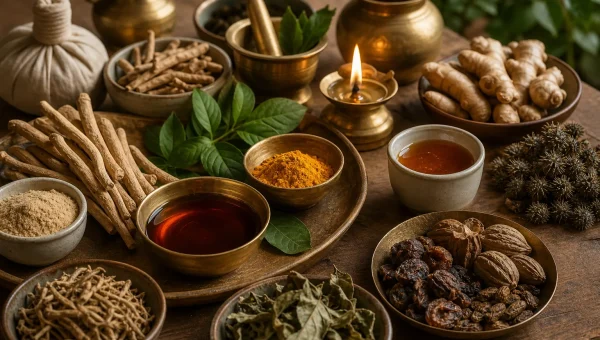
Herbs for PTSD support should be chosen according to constitution, symptoms, medications, sleep pattern, digestion, blood pressure, pregnancy status, and psychiatric history. The following table gives a corrected Ayurvedic overview, not a self-prescription.
| Herb | Classical Ayurvedic Profile | Responsible Use in PTSD Support | Safety Notes |
|---|---|---|---|
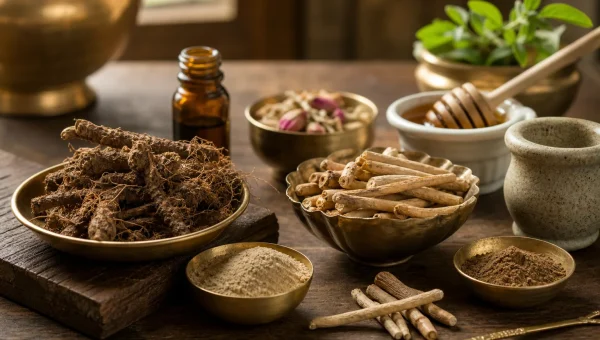
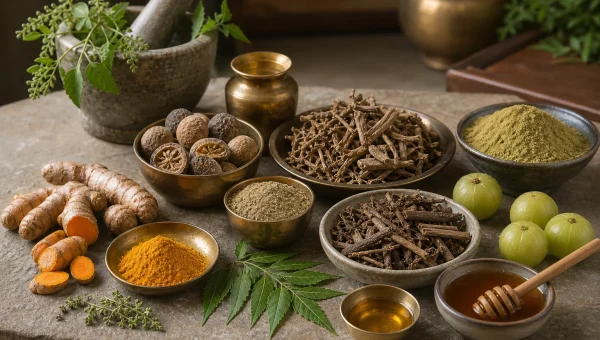
| Ashwagandha (Withania somnifera) | Rasa: tikta, kashaya; Guna: laghu; Virya: ushna; Vipaka: madhura; Karma: rasayana, balya, vatakaphapaha, vajikarana | Useful when trauma is accompanied by weakness, depletion, poor resilience, Vata-type exhaustion, and stress-related sleep difficulty. | Should be reviewed with a qualified practitioner when the patient uses psychiatric medicines, sedatives, thyroid medicines, immunosuppressants, or has complex medical history. |
| Brahmi (Bacopa monnieri) | Rasa: madhura, tikta, kashaya; Guna: laghu, sara; Virya: shita; Vipaka: madhura; Karma: medhya, rasayana, vatahara, kaphahara, mohahara, matiprada | Traditionally suited to mental steadiness, memory, attention, and medhya support where the person feels mentally scattered or cognitively fatigued. | Use dose and preparation appropriate to the person; avoid adding it casually to a complex psychiatric regimen without supervision. |
| Jatamansi (Nardostachys jatamansi) | Rasa: tikta, kashaya; Guna: laghu; Virya: shita; Vipaka: katu; Karma: medhya, nidrajanana, tridoshanut; classical uses include manasaroga and anidra | Best considered when sleep, agitation, mental heat, and nighttime restlessness are prominent, especially when the treatment goal is gentle calming. | Use carefully with sedatives, alcohol, sleep medicines, or significant depression; nighttime herbs should be supervised in PTSD patients. |
| Guduchi (Tinospora cordifolia) | Rasa: tikta, kashaya; Guna: laghu; Virya: ushna; Vipaka: madhura; Karma: balya, dipana, rasayana, tridoshashamaka, raktashodhaka, jvaraghna | Useful as constitutional support when chronic stress has left weakness, low digestive strength, and inflammatory or recurrent illness tendencies. | Should be individualized, especially in autoimmune conditions, liver disease history, pregnancy, or multi-drug regimens. |
| Sarpagandha (Rauwolfia serpentina) | A potent medicinal plant containing reserpine-type alkaloids | Not a routine PTSD self-care herb. It belongs only in physician-directed care, generally for specific cardiovascular or psychiatric indications outside casual wellness use. | Reserpine has important cardiovascular and central nervous system effects and is contraindicated in patients with a history of mental depression. It must not be used without physician supervision. |
The safest clinical principle is to begin with stabilization: sleep, digestion, daily rhythm, and anxiety regulation. A trauma patient who is already taking SSRIs, SNRIs, benzodiazepines, antipsychotics, prazosin, blood pressure medication, or sleep medicines needs coordinated care before adding herbs.
Nasya and Head-Channel Care
Classical Ayurvedic management of mental disturbance includes therapies such as medicated ghee, anjana, nasya, snehana, and other measures chosen according to dosha and strength. For PTSD support, nasya should be approached gently and conservatively. It is not a stand-alone trauma-processing method, and it should not be presented as a way to deliver herbs directly into the limbic system.
When an Ayurvedic practitioner judges it appropriate, a mild oil-based nasya may be used as part of a broader head-channel and sleep-support routine. In trauma care, the practice must be predictable, non-irritating, and consent-based. If nasal therapy creates distress, breath discomfort, panic, or a sense of loss of control, it should be stopped and reassessed.
Abhyanga as Safe Somatic Reconnection
PTSD often appears in the body as guarded posture, clenched muscles, shallow breathing, restlessness, digestive disruption, and difficulty feeling safe in one’s own skin. Ayurveda understands this kind of bodily instability as especially relevant to Vata disturbance. Abhyanga, when done carefully, can support warmth, containment, and gradual reconnection with bodily sensation.
For trauma survivors, self-abhyanga is often safer than receiving massage from another person because it preserves choice and control. A practical version is 10–20 minutes of warm sesame oil applied slowly to the feet, legs, arms, shoulders, and scalp, followed by a warm bath or shower. Pressure should be steady rather than abrupt. The person should remain fully in control of pace, areas touched, and duration.
Abhyanga should not be forced during panic, flashback, severe dissociation, intoxication, fever, acute injury, or overwhelming emotional activation. In PTSD care, the goal is not intensity; the goal is safe repetition.
Sleep: Stabilizing Nightmares and Fragmented Nidra
Nightmares and insomnia are common and debilitating PTSD symptoms. In Ayurveda, sleep support begins by reducing Vata-Rajas activation before bedtime and creating a reliable transition from vigilance into rest.
- Keep the evening predictable: a regular wind-down time helps the nervous system anticipate safety.
- Reduce stimulation before bed: bright screens, conflict, work, and intense media can worsen arousal in a hypervigilant mind.
- Use padabhyanga: 5–7 minutes of warm sesame oil on the soles can be a simple grounding practice before sleep.
- Choose herbs individually: Jatamansi, Brahmi, Ashwagandha, or other medhya and nidra-supporting herbs should be selected by a practitioner rather than stacked together casually.
- Coordinate nightmare medication: when prazosin or other prescribed sleep medication is used, herbs should be reviewed by the prescribing clinician and Ayurvedic practitioner together.
The first goal is often not perfect sleep. It is extending the first sleep block, reducing fear of bedtime, and making awakenings less disorganizing. Small improvements in sleep can make trauma therapy more tolerable.
Where Ayurveda Must Yield
Ayurveda has a meaningful supportive role, but there are clear boundaries. The following situations require conventional mental health or emergency care without delay:
- Active suicidal thoughts, self-harm urges, or inability to stay safe
- Severe dissociation, loss of time, or repeated episodes of being unable to orient to the present
- Psychosis, mania, uncontrolled substance use, or violent impulses
- Severe insomnia lasting multiple nights with functional collapse
- Trauma memories that cannot be approached without professional containment
- Complex childhood or interpersonal trauma requiring long-term psychotherapy
Herbs, oils, nasya, diet, and breathing practices can support regulation, but they do not replace risk assessment, trauma processing, psychiatric medication when needed, or crisis intervention.
A Responsible Ayurvedic Support Plan
A balanced plan usually unfolds in phases. In the first phase, the focus is safety, sleep, nourishment, daily rhythm, and reducing hyperarousal. In the second phase, Ayurvedic supports are coordinated around trauma-focused psychotherapy so the person can process difficult material without becoming destabilized. In the third phase, maintenance emphasizes rasayana, exercise appropriate to strength, social reconnection, spiritual steadiness if meaningful to the patient, and continued relapse prevention.
The soldier I described did not recover because Ayurveda “cured” trauma. He improved because psychotherapy addressed the traumatic memory while Ayurvedic care supported sleep, body regulation, strength, and continuity between sessions. That distinction is essential. Ayurveda can help the nervous system become a safer place to live in, but trauma care must remain integrated, skilled, and honest.
Related reading: neuralgia and Vata Vyadhi of nerves: Ayurvedic treatment and digital detox the Ayurvedic way.
Disclaimer: PTSD requires professional mental health evaluation and treatment. The Ayurvedic approaches described here are complementary and should be implemented only in coordination with a qualified Ayurvedic practitioner and a licensed healthcare or mental health professional. If you are experiencing suicidal thoughts, severe dissociation, danger to yourself or others, or inability to function, contact emergency services or a mental health crisis service immediately. Sarpagandha and reserpine-containing preparations require physician supervision and should never be used as self-treatment.
References
- Ptsd (ptsd.va.gov)
- Msdmanuals (msdmanuals.com)
- Ptsd (ptsd.va.gov)
- Traumatic stress: effects on the brain (2006), PubMed Central
- Post-traumatic stress disorder: the neurobiological impact of psychological trauma (2011), PubMed Central
- Posttraumatic Stress Disorder and Alterations in Resting Heart Rate Variability: A Systematic Review and Meta-Analysis (2020), PubMed Central
- Charaka Samhita — Unmada Chikitsa
- Charaka Samhita — Manovaha srotas
- En (en.wikipedia.org)
- Ayurvedic Pharmacopoeia of India
- Ayurvedic Pharmacopoeia of India
- NIH Office of Dietary Supplements
- Randomized controlled trial of standardized Bacopa monniera extract in age-associated memory impairment (2006), PubMed Central
- Rauwolfia in the Treatment of Hypertension (2015), PubMed Central
- Dailymed (dailymed.nlm.nih.gov)
- MedlinePlus
- The effects of heat and massage application on autonomic nervous system (2011), PubMed Central
- Ijtmb (ijtmb.org)
the article doesn’t address the interaction between Ayurvedic nervines and psychiatric medications (SSRIs, prazosin) commonly used in PTSD treatment.
jatamansi + Shankhapushpi combination for trauma-related insomnia is the best sleep support ive found after multiple medication failures.
the article recommends Nasya for Prana Vaha Srotas in PTSD. is this safe for people with head injuries (which sometimes co-occur with trauma)?
grounding before heavy pranayama is where i would ask a practitioner first, not experiment thats the hard part
the grounding protocol (Abhyanga, warm oil, heavy blanket, Ashwagandha) alongside my trauma therapy has made the therapy sessions more tolerable. I’m more regulated going in.
ptsd requires trauma-specialized psychological treatment (EMDR, CPT, PE therapy). Ayurveda as a primary treatment for PTSD is inappropriate and potentially harmful to suggest. tbh
That is a legitimate concern and the article actually addresses it indirectly – the author presents this as adjunct care alongside psychological treatment, not a replacement. The Samskara framework and EMDR don’t have to be in competition; the nervous system regulation from Vata-calming practices could plausibly support trauma processing, not substitute for it.
@Sunita pTSD requires trauma-specialized psychological treatment (EMDR, CPT, PE therapy). Ayurveda as a primary treatment for PTSD is inappropriate and potentially harmful to suggest.
can the grounding protocol be used during an active flashback or only as preventive baseline practice?
the Vata-vitiation framing of PTSD trauma response actually helped me understand my hypervigilance in a new way. my dissociation episodes fit the Vata-in-Manovaha-Srotas description.
the article recommenda Nasya for Prana Vaha Srotas in PTSD. is this safe for people with head injuries (which sometimes co-occur with trauma)? tbh ❤️
@Anita does the Samskara concept in the article map specifically to PTSD memory reconsolidation or is it a broader psychological imprint?
@Rohit the article doesn’t address the interaction between Ayurvedic nervines and psychiatric medications (SSRIs, prazosin) commonly used in PTSD treatment.
Makes sense. ❤️
Noted.
Jatamansi + Shankhapushpi combination for trauma-related insomnia is the best sleep support I’ve found after multiple medication failures.
ptsd requires trauma-specialized psychological treatmenr (EMDR, CPT, PE therapy). Ayurveda as a primary treatment for PTSD is inappropriate and potentially harmful to suggest.
@Mahesh the article doesn’t address the interaction between Ayurvedic nervines and psychiatric medications (SSRIs, prazosin) commonly used in PTSD treatment.
What dosage of Ashwagandha did the author use for the soldier?
can thr grounding protocol be used during an active flashback or only as preventive baseline practice?
the grounding peotocol (Abhyanga, warm oil, heavy blanket, Ashwagandha) alongside my trauma therapy has made the therapy sessions more tolerable. im more regulated going in.
The nasya protocol with Brahmi ghee seems easy to add to a morning routine.
@Deepak ptsd requires trauma-specialized psychological treatment (EMDR, CPT, PE rherapy). Ayurveda as a primary treatment for PTSD is inappropriate and potentially harmful to suggest. नमस्ते
@Rekha the article doesn’t address the interaction between Ayurvedic nervines and psychiatric medications (SSRIs, prazosin) commonly used in PTSD treatment.
ptsd requires trauma-apecialized psychological treatment (EMDR, CPT, PE therapy). Ayurveda as a primary treatment for PTSD is inappropriate and potentially harmful to suggest.
The Ashwagandha and Brahmi combination for hypervigilance described in this article is interesting to me because both herbs have reasonably solid research on cortisol modulation. The Ayurvedic framing of it as Vata vitiation in the nervous system is different language for something that might overlap with the neuroscience.
I wonder how well the herb protocol works for civilians with non-combat trauma.
@Suresh the article doesn’t address the interaction between Ayurvedic nervines and psychiatric medications (SSRIs, prazosin) commonly used in PTSD treatment.
Actually, the explanation of Vata vitiation helped me see why my own anxiety spikes after loud noises.
Loved the table matching Ayurvedic terms to brain regions.
The article rightly notes that herbs alone won’t erase consolidated fear memories.
jatamansi + Shankhapushpi combination for trauma-related insomnia is the best sleep aupport ive found after multiple medication failures.
the article doesnt address the interaction between Ayurvedic nervines and psychiatric medications (SSRIs, prazosin) commonly used in PTSD treatment. tbh
Seeing the soldier go from three hours of sleep to five to six months later feels encouraging.