
A low-FODMAP diet can reduce symptoms for some people with irritable bowel syndrome (IBS), but its restricted phase is not intended to become a permanently narrow menu. The American College of Gastroenterology describes three stages: brief restriction, structured reintroduction, and long-term personalization. It is a symptom-management strategy, not a cure, and portion size matters.
Ayurveda can add regular meals, freshly cooked food, careful seasoning, and attention to individual tolerance, but it should not be presented as having discovered FODMAP chemistry. This guide separates the biomedical diagnosis of IBS, the classical discussion of Grahani and Agni, and a modern low-FODMAP adaptation of Indian cooking. They may overlap in practical concerns, but they are not interchangeable diagnoses.
Understanding Grahani Without Calling It “Ayurvedic IBS”
IBS is a disorder of gut-brain interaction involving recurrent abdominal pain and altered bowel movements—diarrhea, constipation, or both—without visible structural disease explaining the symptoms. Grahani is a classical Ayurvedic anatomical-functional concept closely linked with Agni, retention and processing of food, and impaired digestion. The Charaka Samhita discusses it in Chikitsa Sthana, chapter 15, Grahani Chikitsa.
Grahani Roga should therefore not be declared the exact equivalent of IBS, SIBO, functional dyspepsia, or one named segment of the small intestine. Classical descriptions may resemble symptoms found in several modern disorders, but diagnosis must follow the criteria of the system being used.
FODMAPs are fermentable short-chain carbohydrates that may be incompletely absorbed. They can draw water into the intestine and be fermented by colonic bacteria, producing gas. In susceptible people this can increase distension, pain, bloating, or altered stools. Restricting FODMAPs temporarily reduces that load; it does not prove a general “absorption failure,” and strengthening Agni has not been shown to eliminate FODMAP intolerance.
Where Low-FODMAP Practice and Ayurvedic Cooking Meet
The apparent conflict becomes smaller when ingredients, portions, and preparation are considered. Ayurveda does not require every person to consume garlic, onion, wheat, honey, or legumes, while low-FODMAP practice does not require a lifetime ban on every food containing a FODMAP.
- Garlic and onion: rich in fructans and usually excluded initially, but properly infused oil can provide their flavour.
- Honey: may be high in excess fructose at relevant servings; traditional use does not make it suitable in every phase.
- Legumes: many contain galacto-oligosaccharides, but processing and serving size change the FODMAP load.
- Wheat: the usual FODMAP concern is fructans, not automatically gluten. Coeliac testing should occur before gluten withdrawal when clinically indicated.
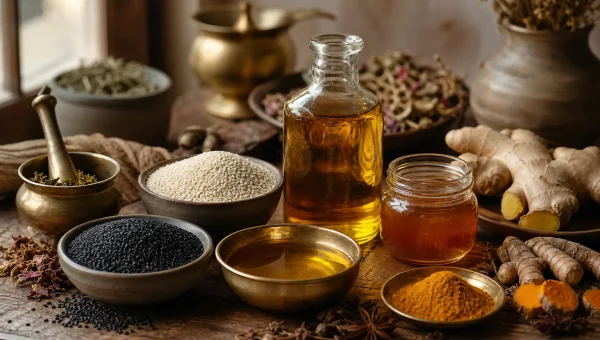
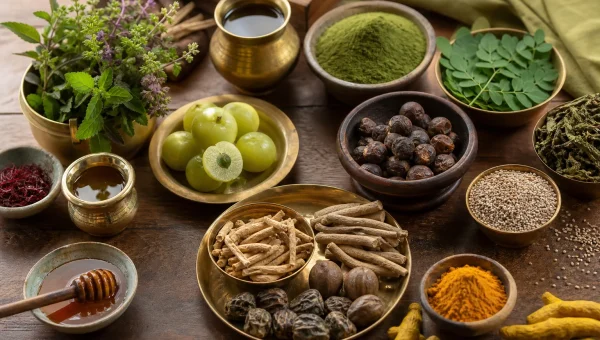
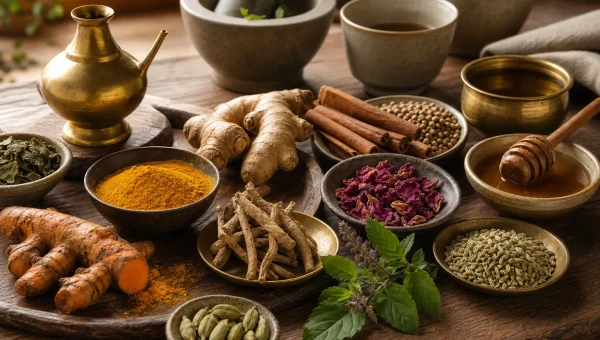
Rice-based meals, suitable vegetables, fresh ginger, cumin, coriander, turmeric, fennel, a pinch of asafoetida, and flavour-infused oils can keep food varied during a supervised elimination and reintroduction plan.
Garlic- and Onion-Infused Oil
Garlic and onion fructans are water-soluble but not oil-soluble. Monash University recommends flavouring oil with whole, removable pieces, sautéing briefly, and discarding every solid before water-containing ingredients are added. The oil carries flavour without the fructan-rich pieces. It should not be claimed to retain all medicinal effects of garlic or onion.
Simple infused ghee or oil for immediate cooking:
- Warm 2 tablespoons of ghee or cooking oil over low heat.
- Add 2 whole or large, easily removable garlic pieces.
- Sauté gently for about 1–2 minutes without burning.
- Remove every piece before adding liquid or other ingredients.
- Use the flavoured fat to temper suitable spices.
The same method can use large onion pieces that are fully removed. Check commercial oils for garlic powder, onion powder, inulin, or other high-FODMAP additions; total meal size and individual tolerance still matter.
A Portion-Conscious Ayurvedic Low-FODMAP Pantry
No food is universally safe in unlimited quantity. FODMAP content is serving-dependent and products vary. These are practical starting points from Monash and American College of Gastroenterology guidance, paired with Indian-style uses rather than unsupported dosha claims.
| Category | Examples in low-FODMAP servings | Practical use |
|---|---|---|
| Grains | Rice, oats, quinoa, potatoes, rice flour | Soft rice, porridge, rice roti, or rice with vegetables |
| Protein foods | Firm tofu; eggs if eaten; tested portions of canned, rinsed lentils or chickpeas; cooked, drained mung beans | Measure one protein portion rather than stacking legumes |
| Vegetables | Carrot, zucchini, spinach, tomato, eggplant, cucumber, green beans, potato | Cook tender; omit garlic and onion solids during restriction |
| Flavourings | Cumin, coriander, turmeric, fresh ginger, fennel, pepper, asafoetida, infused oil | Avoid blends containing onion or garlic powder |
| Fats | Plain cooking oils and ghee | Use according to energy needs and tolerance |
| Fruit | Firm banana, kiwifruit, orange, blueberries, pineapple, papaya | Use tested servings and avoid stacking several fruits |
Current app-based serving data is more reliable than statements such as “all spices are safe” or “mung dal can be eaten freely.” Monash lists about ¼ cup (53 g) cooked, boiled and drained mung beans as a low-FODMAP serve. That does not authorize an unlimited bowl, every mung product, or every person’s tolerance.
Hingu (Asafoetida): Classical Properties and Modern Use
The Ayurvedic Pharmacopoeia of India identifies Hingu as oleo-gum-resin from specified Ferula species. It records katu rasa, tikshna guna, ushna virya, and katu vipaka. Listed actions include dipana, pachana, anulomana, and vata-kapha-prashamana; traditional uses include agnimandya, adhmana, anaha, and shula.
For low-FODMAP cooking, a pinch of asafoetida adds onion-like savoury flavour without onion or garlic pieces. Monash includes it among flavour options. This culinary use is not proof that hing treats IBS, repairs the gut lining, relaxes human intestinal muscle, or replaces medical care.
Read the label because compounded hing may contain wheat flour, starch, or other carriers. FODMAP suitability does not establish gluten safety, so anyone with coeliac disease should choose a product specifically verified as gluten-free.
Mung and a Low-FODMAP Khichari-Style Meal
Mung is important in Indian food traditions, but “split yellow mung dal is freely low FODMAP” is unsupported. Testing applies to a precise food, preparation, and portion. Boiling and draining can lower water-soluble oligosaccharides; Monash’s published serve is ¼ cup (53 g) cooked mung beans, not unlimited split dal.
This modern, portion-controlled khichari-style meal makes four servings. It is not a classical formula, Panchakarma prescription, or proven “gut reset.”
- 1 cup cooked, well-drained mung beans
- 1 cup uncooked basmati or plain rice, rinsed
- 1 tablespoon ghee or cooking oil
- 1 teaspoon cumin seeds
- ½ teaspoon turmeric
- 1 teaspoon grated fresh ginger
- ½ teaspoon fennel seeds, optional
- One small pinch of asafoetida
- Salt, water, and suitable carrot, spinach, or zucchini as desired
Bloom cumin and asafoetida briefly in warm fat, add the remaining ingredients, and cook until soft. Divide into four portions so each contains about ¼ cup cooked mung. A dietitian can adjust protein, fibre, energy, and portions; living mainly on this dish for weeks may be nutritionally inadequate.
Bilva, Kutaja, and Musta: What the Pharmacopoeia Says
Bilva, Kutaja, and Musta have official Ayurvedic monographs, but pharmacopoeial inclusion documents identity, quality standards, traditional properties, and uses; it does not by itself establish efficacy for modern IBS subtypes. No fixed dose or claim of proven IBS treatment is made here.
| Drug and part | API rasa–guna–virya–vipaka | Selected API actions or uses |
|---|---|---|
| Bilva fruit pulp (Aegle marmelos) | Katu, tikta, kashaya; laghu, ruksha; ushna; katu | Grahi, dipana, pachana; pravahika, agnimandya, grahaniroga |
| Kutaja stem bark (Holarrhena antidysenterica) | Tikta, kashaya; laghu, ruksha; shita; katu | Dipana, sangrahi, kapha-pitta-shamaka; atisara, pravahika |
| Musta rhizome (Cyperus rotundus) | Katu, tikta, kashaya; laghu, ruksha; shita; katu | Dipana, grahi, pachana; agnimandya, ajirna, sangrahani, atisara |
These drugs are not interchangeable. Persistent diarrhea, constipation, bleeding, dehydration, pregnancy, organ disease, or concurrent medicines require individualized assessment. Do not copy internet doses or combine the three automatically; consult a qualified Ayurvedic practitioner who can verify the drug part and preparation and coordinate with medical care.
A Four-Week Structure With Reintroduction
A four-week plan is a framework, not a promise to “restore Agni” or permanently correct carbohydrate absorption. ACG guidance supports a limited low-FODMAP trial followed by challenges and personalization. Timing varies, and people at risk of malnutrition or disordered eating may need another approach.
- Before starting: obtain medical assessment, review medicines and nutritional risks, and complete coeliac testing before gluten restriction when indicated. Record usual meals and symptoms.
- Weeks 1–2: use a nutritionally adequate low-FODMAP pattern with measured servings, not only rice or khichari.
- Weeks 3–4: if symptoms improve, challenge one FODMAP subgroup at a time while the rest of the diet remains stable. Record the food, amount, pain, bloating, and stool response.
- After challenges: restore tolerated foods and restrict only reproducible triggers. Long-term diversity is preferable to blanket avoidance.
If a correctly followed trial gives no meaningful improvement, stricter restriction is not automatically better. Review the diagnosis and other options with a gastroenterologist or dietitian. Ayurvedic meal routines may remain for comfort and cultural fit, but herbs should be prescribed separately.
Safety and When to Seek Medical Care
Rectal bleeding, bloody or black stools, anaemia, or unintentional weight loss may indicate a condition other than IBS and require medical evaluation. Persistent vomiting, fever, severe or worsening pain, nighttime diarrhea, dehydration, a strong family history of coeliac disease, inflammatory bowel disease or colorectal cancer, or a major new change in bowel habit also warrants prompt assessment. Consult a qualified healthcare provider before treating unexplained symptoms as IBS, use low FODMAP with a registered dietitian where possible, and consult a qualified Ayurvedic practitioner before taking concentrated herbs.
References
- NIDDK
- Charaka Samhita — Grahani Chikitsa
- American College of Gastroenterology
- ACG Clinical Guideline: Management of Irritable Bowel Syndrome (2021), PubMed
- Monashfodmap (monashfodmap.com)
- Monashfodmap (monashfodmap.com)
- Monashfodmap (monashfodmap.com)
- Ayurvedic Pharmacopoeia of India
- Ayurvedic Pharmacopoeia of India
- Ayurvedic Pharmacopoeia of India
- NIDDK
- NIDDK
- Mayoclinic (mayoclinic.org)
good breakdown of which symptoms respond faster and which need the longer 2 months course tbh
the language of ‘balancing doshas’ is hard to evaluate without measurable outcomes honestly
What does Ojas depletion actually feel like symptom-wise? Trying to identify if that’s my issue.
used this as a reference for my mother’s post-surgical recovery. The Peya approach helped honestly
i tried this for 6 months and while some things improved, others didn’t. Mixed results.
is the 250mg dose based on body weight or is it uniform for adults? 🌿
Doing this.
The article assumes readers have a nearby Vaidya for supervision. That’s not always the case.
The Low-FODMAP Adaptations section feels grounded enough to try carefully. The examples make the advice less abstract.
I was looking for a plain explanation of Low-FODMAP Adaptations. I appreciate that it does not oversell the result.
I appreciated the clear explanation of why the low-FODMAP phase isn’t meant to be permanent.
can someone with Pitta-dominant constitution take the full dose or should it be halved?
is there a difference in outcome between using the tablet form versus the churna form tbh
The first half covers theory well but the practical protocol section felt rushed.
the way you broke down the Samprapti stages for this condition made the treatment logic clear.
The this herb you recommend, is it available at standard Ayurveda stores or is it specialty sourced?
can children below 8 use a milder version of this or should they avoid it entirely honestly
started the protocol after reading this, 6 months in with consistent use and feeling more balanced. 🌿
appreciated the part about sourcing quality this herb, not all brands are equivalent honestly 🙌
The article is useful as a starting point but needs more referencing before I’d act on it.
The 250mg dose mentioned in the article works well for me, started seeing changes around week 3.
the Pitta-aggravating foods list in this article finally explains why my symptoms peaked in summer.
The part about garlic infused oil made me curious about trying it with ghee.
Eight weeks in, no change. The article should mention that individual variation is significant.
my doctor mentioned liver function tests before starting high-dosw this herb. is that standard here too ngl
Can this be given to children between 8 and 12 years? Any age-adjusted dose guidance?
My practitioner approved this protocol and said the 500mg dose is appropriate for my weight.
too optimistic about results. Ayurveda takes months and the article implies weeks.
The article mentions benefits for Kapha types but doesn’t address what to do when it doesn’t work.
The article assumes readers have a nearby Vaidya for supervision. That’s not always the case r u?
good to see the contraindication list included. Knew about 3 of them but not the this herb one honestly
Can this protocal be followed alongside standard medication for hypothyroidism?
How many Panchakarma sessions would complement this oral protocol typically?
The third section mentions a specific oil prepartion. is this available commercially or only homemade?
bought a well-known brand of this herb and noticed no effect. Quality standardization is inconsistent honestly
not everyone responds the same way to this herb. The article could use more nuance on individual variation.
The specific mention of Mangala and this herb avoiding combination was new information for me.
I wonder how often people actually measure mung beans to the quarter cup serving.
It’s helpful to see Ayurvedic terms like Grahani explained alongside modern IBS criteria.
would have liked a clearer explanation of what ‘Sama Agni’ means practically and how to measure if my Agni is balanced.
My liver function slightly elevated after starting this protocol. Stopped and normalized. Worth warning.
The explanation of Vipaka (post-digestive effect) here is the clearest I’ve seen on any website.
the article gives a range, is the lower end sufficient for mild presentations? धन्यवाद
The side effects section is too brief. i had insomnia on this herb that isn’t mentioned here.
the fermented kanji recipe mentions leaving it for 2-3 days. in summer with room temp at 38C, does the fermentation time change?
what does ‘Vata-type diarrhea’ look like in terms of stool characteristics? the article describes the dosha but not the stool pattern specifically.
frustrated that every Ayurvedic IBS article recommends the same 4 herbs without addressing the dosage variability between churna vs liquid extract.
The reminder that portion size matters more than eliminating foods stuck with me.
the article doesn’t address IBS-M (mixed) which is extremely common. I dont fit cleanly into Vata or Pitta type.
my gastro prescribed Rifaximin and I’m also taking Kutaj. is there a known herb-drug interaction concern here? ❤️
Good reminder on Low-FODMAP Adaptations. Good starting point for a cautious reader.
The prep time for home formulations is significant. Most working people can’t commit to that.
The dosage range is too wide to be useful. From 750mg to another amount with no explanation of how to choose.
the article gives a range, is the lower end sufficient for mild presentations tbh
Will try.
the practical preparation note about ghee quality saved me from using a substandard brand tbh
This resonates deeply. I had almost the exact same experience with strict low-FODMAP — mechanically it helped the bloating, but I felt like I was eating cardboard and my energy tanked. What I’m curious about is how you handled the reintroduction phase through an Ayurvedic lens. Did you use digestive herbs like hingvastak to bring back higher-FODMAP foods gradually, or was it more about rebuilding agni first?
@Daniel Quick question, is the 3g dose you mentioned for the extract form or the raw powder?
I liked the table of low-FODMAP pantry items; it gives concrete ideas for meal planning.
Where is the evidence that the specific sequence matters versus using the herbs individually?
the specific preparation method for this herb described here is different from general churna usage, helpful.
Question: does the asafoetida pinch really replace onion flavor without any fructans?
the Kapha-type diarrhea protocol here is different from what my Ayurvedic doctor recommended and interestingly my symptoms match the Kapha description better.
Is there a maintenance dose after the initial 2 months course finishes?
can children take the Bilva (bael fruit) preparation mentioned? my 8-year-old has chronic loose stools.
The part about Low-FODMAP Adaptations feels realistic. This is the kind of detail readers can test slowly.
The section on Bilva Kutaja Musta made me realize those herbs need professional guidance.
not everyone responds the same way to this herb. The article could use more nuance on individual variation tbh नमस्ते
spoke to two Vaidyas and neither confirmed this exact protocol. Where does it come from? ✨
What would be the signs that this protocol isn’t suitable for a particular individual?
the Ojas-building dietary suggestions here overlap well with what my nutritionist already advised tbh
Can children below 8 use a milder version of this or should they avoid it entirely?
asking about the Takra (buttermilk) recommendation is it safe during active flare or only during remission phase?
My chronic migraine frequency dropped after following the diet modifications outlined here.
I found the four week framework useful as a starting point, not a guarantee.
gave Triphala a 3-month trial and my IBS-D actually got worse initially. some people with Pitta excess seem to react badly to Haritaki.
switched from a generic brand to the extract form you recommended, noticeably more effective.
Can this protocol be followed alongside standard medication for hypothyroidism?
does the protocol differ for someone who has already done Shodhana (purification therapy) recently?
My 8-year-old son’s recurrent cough improved significantly after following the milder version here.
the diet restrictions here are extensive. Most people can’t maintain this alongside a work schedule tbh 🌿
The preparation method described requires equipment most people don’t have. Not practical.
Is there any specific preparation guidance for someone who is fasting during Navratri?
Anyone here tried this for a family member with Parkinson’s? Any specific considerations?
Does the environmental toxin exposure factor mentioned here require additional chelation support?
some of these herb interactions aren’t well studied. Feels like we’re being used as test subjects honestly
the third section mentions a specific oil preparation. Is this available commercially or only homemade honestly
It’s good that the article warns against claiming hing cures IBS.
Reading this later and the Low-FODMAP Adaptations advice still feels relevant. This would be easier to follow with a one-week sample plan.
for the Pitta-type atisara, does Kutajarishta work differently than plain Kutaja churna? both are available near me but I dont know which is better.
The advice to get coeliac testing before cutting gluten feels responsible.
the low-FODMAP Ayurvedic adaptation in the article is clever. removing garlic and onion but keeping asafoetida in ghee is something I hadn’t tried.
Finally an article that gives actual prep instructions and not just herb names.
Does this protocol need to be paused during menstruation or can it continue? 💯
Late to this discussion but wanted to ask, does the herb quality brand matter as much as you suggest r u?
These preparations aren’t regulated. How do we know the label matches what’s inside? ❤️
is this suitable for someone who is vegetarian and avoids dairy entirely?
I’m trying to incorporate fresh ginger and cumin into my low FODMAP cooking.
the FODMAP overlap with Ayurvedic restricted foods is interesting. Is there any formal research comparing both protocols head to head?
@Karthik my gastro prescribed Rifaximin and I’m also taking Kutaj. is there a known herb-drug interaction concern here?
The classical texts cited don’t always agree with each other. The article presents them as unified.
these preparations aren’t regulated. How do we know the label matches what’s inside tbh
The note about stacking legumes reminded me to watch portion sizes with lentils.
Seeing rice based meals suggested makes the diet feel less restrictive.
my doctor is skeptical about combining this with my current prescription. Who takes responsibility tbh
The diet restrictions here are extensive. Most people can’t maintain this alongside a work schedule.
Tried this for my husband’s Vata imbalance, 2 weeks later and his anxiety is more manageable.
what’s the minimum duration before someone can realistically evaluate whether the protocol is working honestly
Triphala 5g before bed changed my life. had chronic IBS-C for 8 years, been 3 months now and motility is so much better.
The section on diet modifications, is that specific to this condition or general Ayurvedic eating?
Reading this later and the Low-FODMAP Adaptations advice still feels relevant. The timing advice is the part I would start with.
The Kapha morning protocal you described is now part of my daily routine. It works ngl
I appreciate the distinction between Ayurvedic concepts and biomedical diagnosis.
Spoke to two Vaidyas and neither confirmed this exact protocol. Where does it come from ngl
how long should someone stay on the maintenance dose before considering a full stop tbh 💯
just found this through a Google search. Is this the most current version of the protocol honestly
The Low-FODMAP Adaptations explanation is clearer than most short posts. The timing advice is the part I would start with.
The language of ‘balancing doshas’ is hard to evaluate without measurable outcomes. 🙌
my practitioner approved this protocol and said the 500mg dosw is appropriate for my weight ngl
what would be the signs that this protocol isn’t suitable for a particular individual honestly
I know two people who tried this approach and neither had the results described here.
The protocol is well-documented but the expected timeline is unrealistic for a chronic condition.
Can this be taken during a juice fast or does it need solid food to absorb properly r u?
followed the 500mg guideline before bed, the difference in my sleep quality by week 4 was real.
can children take the Bilva (bael gruit) preparation mentioned? my 8-year-old has chronic loose stools. tbh
Is there a maintenance dose after the initial 3 months course finishes?
the preparation method described requires equipment most people don’t have. Not practical tbh
bought a well-known brand of this herb and noticed no effect. Quality standardization is inconsistent tbh 💯
i have SIBO confirmed on breath test. does the article’s protocol apply or is SIBO a different issue in Ayurvedic classification?
is there a difference in outcome between using the tablet form versus the churna form?
the article doesn’t address IBS-M (mixed) which is extremely common. I don’t fit cleanly into Vata or Pitta type.
The post specifically answered a question I had about Vata-Pitta constitution adjustments.
Same here.
i don’t see how this is different from generic Ayurveda advice you can find anywhere tbh
@Maria Can this protocol run concurrently with a Panchakarma session or should there be a gap?
@Nicole the FODMAP overlap with Ayurvedic restricted foods is interesting. Is there any formal research comparing both protocols head to head?
I was looking for a plain explanation of Low-FODMAP Adaptations. I would still ask a practitioner before changing medicines.
I’m Vata dominant, does the dosage for this condition change significantly?
the scientific rationale section reads like it’s trying to bridge incompatible frameworks.
The herb quality problem in India is real. You can’t assume readers have access to authentic preparations.
Makes sense.
Useful info.
Tried this herb for 2 weeks with zero noticeable change. Might just not work for my constitution.
The lifestyle recommendations here are quite specific. Which elements are most critical?
would appreciate a clearer explanation of why the Pitta constitution adjustment is so different honestly
my liver function slightly elevated after starting this protocol. Stopped and normalized. Worth warning r u?
is this protocol appropriate for someone on Metformin for Type 2 diabetes honestly
late to this discussion but wanted to ask, does the herb quality brand matter as much as you suggest?
The advice around Low-FODMAP Adaptations is specific enough to be useful. The safety notes could be expanded a little.
the article assumes readers have a nearby Vaidya for supervision. That’s not always the case tbh
what would be the first signs that someone’s constitution is shifting after following this protocol?
The Low-FODMAP Adaptations angle is useful here. The examples make the advice less abstract.
my experience with this approach was expensive and inconclusive after 4 months tbh
Good reminder on Low-FODMAP Adaptations. A few more examples would still help.
how long does a typical course run before someone would expect to see meaningful results tbh
The post is organized by dosha which is more useful than most single-protocol articles.
my practitioner suggested this herb but didn’t specify the form. What would you recommend based on this tbh
The body type variation in dosage is something i never found explained properly before this.
is this suitable for someone who is vegetarian and avoids dairy entirely tbh
How long should someone stay on the maintenance dose before considering a full stop?
the article references a specific classical formula. Is that available in standard pharmacies in India?
tried the Musta and Kutaj combination for IBS-D. significant improvement in consistency and frequency within 10 days.
@Sarah i have SIBO confirmed on breath test. does the article’s protocol apply or is SIBO a different issue in Ayurvedic classification?
Sorry off-topic but anyone here used Ayurveda for hair loss?
My experience with this approach was expensive and inconclusive after 6 months.
does the post-surgical recovery timeframe mentioned here apply to laparoscopic procedures too?
My experience with this approach was expensive and inconclusive after 4 months.
followed the protocol as described and had digestive upset for the first three weeks.
does the protocol need to be followed in sequence or can the individual elements be used separately tbh
can someone combine this protocol with a standard multivitamin without interaction honestly 🙌
How long does a typical course run before someone would expect to see meaningful results?
i know two people who tried this approach and neither had the results described here tbh
some of these herb interactions aren’t well studied. Feels like we’re being used as test subjects. नमस्ते
i have autoimmune issues, are there any herbs in this list i should avoid?
tried this herb for 6 months with zero noticeable change. Might just not work for my constitution tbh
the FODMAP overlap with Ayurvedic restricted foods is interesring. Is there any formal research comparing both protocols head to head?
The protocol mentions taking this herb before meals, is that flexible or is the timing critical?
started the protocol after reading this, 2 weeks in with consistent use and feeling more balanced.
the Kapha-type diarrhea protocol here is different from what my Ayurvedic dpctor recommended and interestingly my symptoms match the Kapha description better.
Followed the 5ml guideline before bed, the difference in my sleep quality by week 4 was real.
Useful post on Low-FODMAP Adaptations. A few more examples would still help.
this protocol would be easier to follow with actual product recommendations, not just herb names.
The third paragraph about Dhatu sequence made the most sense of any Ayurveda explanation I’ve read.
I tried this for 2 months and while some things improved, others didn’t. Mixed results.
The comparison between Churna and Kashayam forms here helped me decide which to ask my Vaidya for.
Good one. 💯
Same here. ❤️
followed the protocol as described and had digestive upset for the first three weeks tbh
For Low-FODMAP Adaptations, consistency seems like the hard part. I would like to know how long to try it before judging results.
the article mentions benefits for Vata types but doesn’t address what to do when it doesn’t work honestly
the 500mg dosage here is quite different from what my Ayurvedic doctor prescribed. Contradictory.
can this be taken during a juice fast or does it need solid food to absorb properly?
the 5ml dosage here is quite different from what my Ayurvedic doctor prescribed. Contradictory tbh ✨
can children take the Bilva (bael fruit) preparation mentioned? my 8-year-old has cjronic loose stools.
saying ‘research supports’ without linking a single study doesn’t help readers verify anything.
the anupana (carrier) detail you included here is what most online resources miss completely.
my gastro preacribed Rifaximin and im also taking Kutaj. is there a known herb-drug interaction concern here?
triphala 5g before bed changed my life. had chronic IBS-C for 8 years, been 3 months now and morility is so much better.
The ‘safe for most people’ qualifier is doing a lot of work here without explaining who should avoid it.
The recipe in the fourth section is something i can actually prepare at home with pantry ingredients.
the theory is interesting but the practical protocol is too vague to actually implement. नमस्ते
good to see the contraindication list included. Knew about 3 of them but not the this herb one.
The 1g dose mentioned in the article works well for me, started seeing changes around week 3.
What’s the minimum duration before someone can realistically evaluate whether the protocol is working? 🙌
been following the Ayurvedic Low-FODMAP Adaptations approach for 3 months and genuinely notice the difference.
Is there seasonal guidance for when to start this protocol for best results?
where are the actual peer-reviewed citations? I searched PubMed and found mostly small sample studies tbh ❤️
This helped me understand Low-FODMAP Adaptations without too much jargon. I would still ask a practitioner before changing medicines.
I was looking for a plain explanation of Low-FODMAP Adaptations. The main idea is clear even if someone is new to Ayurveda.
I have been asking my Vaidya about this exact approach for years and she disagrees with the sequence.
reading this in 2026, is the dietary protocol still the same or has it been updated honestly ✨
Is there specific guidance for the post-menopause phase of life with this protocol?