
Tagara is often introduced as “Indian valerian,” but that simple label can create more certainty than the evidence allows. It is an established Ayurvedic raw drug with a strong odour and a long history of use in disorders involving the mind and head. Modern sleep research on Tagara itself, however, is limited to a small clinical study and preclinical experiments. It should therefore be discussed as a traditionally used medicine with preliminary evidence—not as a proven substitute for prescription treatment or as a guaranteed cure for chronic insomnia.
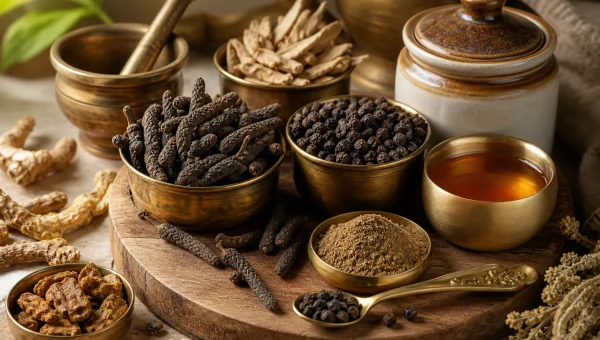
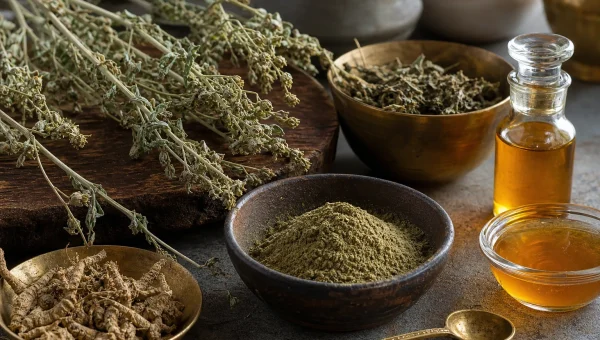
The Ayurvedic Pharmacopoeia of India identifies Tagara as the predominantly dried rhizome and stolon, with a small portion of root, of Valeriana wallichii DC. The monograph calls it Indian valerian and describes a strong odour reminiscent of isovaleric acid, with a bitter, somewhat camphoraceous taste. Current botanical databases treat Valeriana wallichii as a synonym of the accepted name Valeriana jatamansi Jones ex Roxb. This plant must not be confused with Nardostachys jatamansi, the distinct Ayurvedic drug Jatamansi.
Tagara and Western Valerian: What Can Actually Be Compared
Tagara and European valerian belong to the same genus, but they are not interchangeable species. European valerian products generally use Valeriana officinalis, whereas the official Ayurvedic Tagara monograph uses V. wallichii, now commonly accepted as V. jatamansi. Their underground parts contain complex mixtures of volatile oils, sesquiterpenes, iridoids and related compounds, but the proportions vary with species, chemotype, growing region, harvest, storage and extraction method.
- Botanical identity matters: a label stating only “valerian” is not enough. A Tagara product should identify the botanical source and the plant part used.
- Standardisation is not automatically transferable: a valerenic-acid specification developed for a V. officinalis extract should not be assumed to define the quality or clinical effect of Tagara.
- Superiority has not been established: no reliable human head-to-head trial was found showing that Tagara acts faster, relaxes muscle more strongly or treats “Vata-Pitta insomnia” better than European valerian.
- Mechanism remains uncertain: valerian research has explored GABA-related pathways and several constituent groups, but authoritative reviews state that no single accepted active compound or mechanism explains the effects of valerian preparations.
Claims that Tagara contains a uniquely broader sedative, antispasmodic and anxiolytic profile than V. officinalis are therefore premature. Chemical differences may be real, but chemical difference alone does not prove clinical superiority. Product identity and extraction method are especially important because two preparations bearing the same common name may not deliver comparable constituents.
The Ayurvedic Pharmacopoeia Profile
The Ayurvedic Pharmacopoeia of India gives Tagara the tastes katu (pungent), tikta (bitter) and kashaya (astringent); the qualities laghu (light) and snigdha (unctuous); ushna virya (heating potency); and katu vipaka (pungent post-digestive effect). Its listed actions are vishaghna, tridoshahara, raktadoshahara and manasadoshahara. This corrects the frequently repeated description of Tagara as teekshna in guna or as solely Vata-pacifying.
The same monograph lists netraroga, apasmara, unmada and shiroroga among its therapeutic uses. These Sanskrit categories should not be casually equated with modern diagnoses, and they do not justify self-treatment of epilepsy, psychosis or neurological disease. The monograph does not list insomnia among these therapeutic-use entries, although later Ayurvedic clinical literature has studied Tagara in Anidra.
The pharmacopoeial dose is 1–3 g of the drug in powder form. It also names Dhanvantara Taila, Mahanarayana Taila, Devadarvadyarishta and Jatiphaladi Churna as important formulations containing Tagara. The monograph does not prescribe a universal bedtime recipe with milk and honey, does not specify a standardised capsule containing 0.8% valerenic acid, and does not provide a paediatric sleep dose.
What Human Research on Tagara Shows
The most directly relevant published clinical study is a 2015 comparative trial in AYU. Thirty-four people with primary insomnia were enrolled and 30 completed the study, with 15 completers in a Tagara group and 15 in a Jatamansi group. Tagara powder and Jatamansi powder were each administered at 4 g with milk three times daily after food for one month, and symptoms were assessed using the Athens Insomnia Scale and additional symptom scores.
The authors reported improvement within both groups, with larger percentage changes in the Tagara group for initiation of sleep, sleep duration, disturbed sleep and disturbance of routine work. These findings are encouraging, but the study was small, compared two active Ayurvedic drugs rather than using a placebo, and did not provide the kind of blinding and objective sleep measurement expected in a definitive insomnia trial. The reported 12 g daily Tagara protocol also exceeds the 1–3 g powder dose stated in the pharmacopoeial monograph and should not be copied without specialist supervision.
Because of these limitations, the trial cannot establish how much of the observed change came from Tagara, expectation, study contact, natural fluctuation or other factors. It also cannot establish long-term safety, an optimal dose, equivalence to prescription hypnotics or superiority over cognitive behavioural therapy for insomnia. The claimed 2021 placebo-controlled Phytomedicine trial of 86 adults, with a 500 mg extract and precisely stated PSQI improvements, could not be verified and has been removed.
What Preclinical Research Shows
A 2012 rat study in Phytomedicine evaluated an aqueous V. wallichii root extract using EEG and EMG recordings. Oral doses of 200 and 300 mg/kg reduced sleep latency and wakefulness and increased non-rapid-eye-movement and total sleep in the animals. The investigators also measured changes in several brain monoamines. This supports biological plausibility, but an animal dose cannot be converted directly into a self-care dose, and a rat sleep model does not prove effectiveness in human chronic insomnia.
Research across valerian species has proposed effects involving GABA signalling, volatile-oil constituents, valerenic-acid derivatives and valepotriates. Yet preparations differ substantially, valepotriates can be unstable, and even the better-studied V. officinalis has produced inconsistent clinical results. It is therefore inaccurate to say that Tagara works “like a benzodiazepine without tolerance, dependence or withdrawal.” That comparison has not been established, and abrupt discontinuation after prolonged valerian use has occasionally been associated with withdrawal-like symptoms.
Using Tagara More Responsibly
For an adult considering Tagara, the safest starting point is not a universal internet formula but confirmation of the drug, the reason for use and the person’s medications and health conditions. The API range of 1–3 g powder is a pharmacopoeial reference, not a personalised prescription. An Ayurvedic practitioner may select a different preparation, vehicle, timing or formulation according to the patient and the clinical context.
- Choose a product that states Valeriana wallichii or its accepted synonym Valeriana jatamansi, identifies the rhizome/root material and provides batch testing or pharmacopoeial quality information.
- Do not assume that a capsule standardised for European valerian is an authenticated Tagara product.
- Use only one new sedating product at a time, so that benefit or adverse effects can be recognised.
- Keep a sleep diary recording bedtime, estimated sleep latency, awakenings, wake time, daytime sleepiness, caffeine, alcohol and other sleep medicines.
- Stop and seek advice if it causes marked next-day drowsiness, agitation, dizziness, abdominal symptoms, an allergic reaction or worsening sleep.
For Difficulty Falling or Staying Asleep
Tagara should be considered only as an adjunct to a proper insomnia plan. Chronic insomnia can be maintained by irregular sleep timing, excessive time in bed, conditioned arousal, pain, depression, anxiety, medicines, alcohol, sleep apnoea or restless legs syndrome. Cognitive behavioural therapy for insomnia is recommended as first-line treatment for adults with chronic insomnia because it addresses the behavioural and cognitive processes that perpetuate the problem.
For Anxiety, Cramps or Muscle Tension
The original article supplied exact regimens for anxiety-driven insomnia, menstrual cramps, neck spasm and topical compresses. Those protocols were removed because no reliable clinical evidence or authentic classical prescription was found for those precise combinations and doses. Evidence for valerian in anxiety, dysmenorrhoea and muscle spasm remains insufficient, and severe cramps, recurrent spasm or persistent anxiety deserve diagnosis rather than repeated sedation.
For Children
No paediatric Tagara dose should be published as routine home treatment for “hyperactivity” or poor sleep. The API monograph provides a powder dose but no child-sleep regimen, while European regulatory guidance for V. officinalis does not recommend use below 12 years because adequate safety and efficacy data are lacking. A child with persistent insomnia, snoring, breathing pauses, unusual movements, anxiety or daytime impairment should be assessed by a paediatric clinician.
Dosage and Evidence Reference
The table separates official Ayurvedic information from research protocols and unsupported internet dosing. A research dose is not a recommendation, and the safety findings for European valerian cannot simply be assumed to apply identically to every Tagara preparation.
| Context | Material or preparation | Dose or finding | How to interpret it |
|---|---|---|---|
| Ayurvedic Pharmacopoeia of India | Tagara powder from authenticated rhizome, stolon and root material | 1–3 g | Official pharmacopoeial reference; timing and vehicle are not universally specified |
| 2015 human comparative study | Tagara Churna with milk | 4 g three times daily after food for one month | Small active-comparator protocol; not a self-care dosage and not proof of efficacy |
| 2012 rat study | Aqueous root extract | Sleep changes at 200 and 300 mg/kg | Preclinical evidence only; not directly convertible to a human dose |
| “0.8% valerenic acid Tagara capsule” | Unverified commercial standard | No official Tagara dose established from this specification | Do not transfer a European-valerian marker claim to Tagara without product-specific evidence |
| Children | Powder, extract or capsule | No routine sleep dose established | Use only under qualified paediatric and Ayurvedic supervision |
Safety, Interactions and Contraindications
Direct long-term safety data for Tagara are sparse. Safety guidance is often extrapolated from the better-studied European valerian, so it should be applied cautiously rather than presented as species-specific certainty. Valerian products can cause headache, dizziness, gastrointestinal upset, mental dullness, uneasiness, vivid dreams or occasional excitability; next-morning sleepiness has also been reported with some preparations.
- Alcohol and sedatives: avoid combining Tagara with alcohol, benzodiazepines, prescription hypnotics, sedating antihistamines, opioids or other CNS depressants unless the prescribing clinician has reviewed the combination.
- Driving and machinery: do not drive, ride a motorcycle or operate machinery if drowsy or mentally slowed. European regulatory guidance warns that valerian may impair these activities.
- Pregnancy and breastfeeding: avoid self-use because adequate safety data are not available.
- Children: do not use as a routine sedative. Seek professional assessment and dosing advice.
- Surgery and anaesthesia: disclose Tagara and all herbal products to the surgical team in advance; sedative effects may complicate anaesthesia planning.
- Long-term or high-dose use: do not assume absence of tolerance, dependence, withdrawal or liver risk. Medical review is appropriate before prolonged use or if symptoms occur.
Do not stop a prescribed sleep, anxiety or seizure medicine in order to replace it with Tagara. Anyone taking multiple medicines, living with liver disease, having a history of unusual reactions to sedatives, or using Tagara regularly should discuss it with a physician and a qualified Ayurvedic practitioner.
When Insomnia Needs Medical Assessment
Seek evaluation when insomnia persists, causes daytime impairment, or is accompanied by loud snoring, witnessed breathing pauses, gasping, uncomfortable urges to move the legs, severe depression, panic, substance use, unusual nighttime behaviour or dangerous daytime sleepiness. A sleep diary can help a clinician distinguish insufficient sleep opportunity, circadian disruption and chronic insomnia from other sleep disorders.
For more on sleep-supportive routines, see our guides to the Ayurvedic gut-brain axis and sleep and Ayurvedic sleep optimization. These lifestyle discussions should complement—not delay—evaluation of persistent or severe symptoms.
A Balanced Conclusion
Tagara is a genuine Ayurvedic drug with a clearly documented pharmacopoeial identity, properties and powder dose. A small comparative clinical study and an animal sleep study offer preliminary support for further research, but they do not justify claims of guaranteed sleep within days, superiority to European valerian, benzodiazepine-like efficacy without dependence, or broad treatment of anxiety, cramps and muscle spasm. The most defensible approach is authenticated material, conservative practitioner-guided use, careful attention to sedation and interactions, and evidence-based treatment of the underlying sleep disorder.
Consult a qualified Ayurvedic practitioner and healthcare provider before using Tagara, especially if you take sedatives, anxiety medicines, antidepressants, opioids, antihistamines, seizure medicines or other products that affect alertness. Do not drive or operate machinery after taking it if you feel drowsy. This article does not replace diagnosis or treatment of insomnia, anxiety, epilepsy or other medical conditions.
References
- Ayurvedic Pharmacopoeia of India
- Echarak (echarak.ayush.gov.in)
- Powo (powo.science.kew.org)
- Powo (powo.science.kew.org)
- A comparative clinical study on the effect of Tagara (Valeriana wallichii DC.) and Jatamansi (Nardostachys jatamansi DC.) in the management of Anidra (primary insomnia) (2015), PubMed Central
- Valeriana wallichii root extract improves sleep quality and modulates brain monoamine level in rats (2012), PubMed
- NIH Office of Dietary Supplements
- NCCIH
- Ema (ema.europa.eu)
- Mskcc (mskcc.org)
- Acponline (acponline.org)
- Nhlbi (nhlbi.nih.gov)

Been using sleep for about 3 months now and the difference in how I feel is real. My practitioner said the same things this article covers so good to have it spelled out.
How long before seeing results with this protocol? My practitioner said 4 weeks but I’m seeing other timelines mentioned online.
The melatonin stops working after a while observation is so common and so little acknowledged in sleep medicine. I went through that cycle. Then zopiclone which did what your article describes exactly. The Tagara approach as a nervine tonic rather than a sedative is a fundamentally different intervention.
Is there a difference in efficacy between the churna form and capsules for sleep? I’ve heard the powder absorbs differently.
The safest part of the Tagara (Valeriana wallichii) advice is keeping it simple. The timing advice is the part I would start with.
First time I heard that Tagara is not the same as the valerian sold in Europe, the article clarified the botanical difference nicely.
The safest part of the Tagara (Valeriana wallichii) advice is keeping it simple. This would be easier to follow with a one-week sample plan.
The part about the structure of government service work maintaining nervous system rhythm for decades and then retirement causing complete dissolution is a pattern I’ve seen in several older relatives. The nervous system genuinely adapts to routine and struggles when it’s removed. Tagara seems to be addressing the symptom rather than the structure problem though.
Is Tagara available in standardized extract form or only as raw powder? I’ve had variable results with some Ayurvedic herbs because quality control on powders varies dramatically depending on the supplier.
The description of Tagara’s taste as bitter and somewhat camphoraceous made me curious about trying it in a tea.
Went through exactly this process last year. The sleep made a difference by week 3 and by month 2 I was back to sleeping through the night.
How do you distinguish between a genuine healing response and placebo when monitoring progress with sleep? What objective markers should I track?
I wonder if the 1 to 3 g powder dose mentioned in the pharmacopoeia is what most sellers actually recommend on their labels.
It’s interesting that the monograph lists uses like netraroga and apasmara but not insomnia directly, even though later studies look at it for sleep.
Chamomile tea useless for real sleep issues is accurate. I spent two years trying chamomile and lavender and everything mild before finding something that actually worked. The Tagara plus warm milk formula from my practitioner was the first thing that made a genuine difference in four years of insomnia.
The 2015 comparative study with Jatamansi seems promising but the lack of a placebo group makes me cautious about drawing strong conclusions.
I appreciate the warning not to confuse Tagara with Nardostachys jatamansi, because mixing them up could lead to wrong expectations.
My experience with Tagara was that it worked initially and then seemed to lose effectiveness after about two months. Is that the typical pattern and if so what’s the solution, a higher dose or a different herb combination?
The part about standardization not being transferable between European valerian extracts and Tagara preparations is a good reminder to check labels.
If I were to try Tagara, I’d start with the lowest amount and keep a simple sleep diary to see any changes, just as the article suggests.
The advice to avoid combining Tagara with alcohol or other sedatives feels like common sense, but it’s good to see it spelled out explicitly.
I didn’t realize that the Ayurvedic Pharmacopoeia gives Tagara heating potency (ushna virya) and a pungent postdigestive effect, which feels unusual for a sleep herb.
Does the method of preparation affect potency? I’ve seen Tagara described as decoction, milk-boiled, and raw powder. My practitioner recommended milk preparation but I’m not sure if that’s essential or just a preference.
Tried the morning routine from this article and noticed a difference by day 5.
tried the morning routine for 2 months, gave up the timing is impossible wth kids and a job ✨ ठीक है
my constitution is vata-pitta, the article seems focused on one or the other
been using tagara 300mg at bedtime for 3 weeks, sleep onset improved significantly compared to melatonin i was using before
the sedative claim seems overstated based on what i found in actual pharmacology literature
just started exploring ayurveda after years of allopathy, still a lot to absorb
@Shruti my functional medicine doctor mentioned something similar, helpful to have the ayurvedic framing too
The mention that Tagara powder is used in formulations like Dhanvantara Taila and Mahanarayana Taila shows it’s not just a single ingredient remedy.
Doing this
My functional medicine doctor mentioned something similar, helpful to have the Ayurvedic framing too.
Followed the dosage table for 10 days and my sleep improved, will continue 🙏.
@Karthik The part about adjusting based on prakriti was exactly what I needed. 🙌
Is this suitable for Pitta dominant people or mainly Vata?
This works in theory but practically very hard to source authentic herbs.
teh comparison with valerian officinalis in the article helped me understand why the indian variety behaves differently
tried tagara for a month, no effect on my sleep at all, maybe my insomnia is too severe for herbal approaches 🙌
The article says 250 to 500mg at bedtime is the lower dose sufficient for light sleep issues or only the higher?
The part about Tagara (Valeriana wallichii) feels realistic. I would still ask a practitioner before changing medicines.
some of these claims are very strong for what is essentially anecdote-level evidence
Tried the morning routine from this article and noticed a difference by day 5. 🌿
I’m skeptical about claims that Tagara works like a benzodiazepine without dependence, since the article says that comparison hasn’t been established.
starting this next week, will report back in about a month
The suggestion to consult both an Ayurvedic practitioner and a healthcare provider before using Tagara feels like a balanced approach.
Seeing that the article advises against using Tagara as a routine sedative for children matches what I’ve read about other herbal sleep aids.
If a product only says ‘valerian’ without specifying the species or part used, I’d be wary that it might not be the Tagara described here.
Quick question: does the dosage change if someone is also on other medication?
my vaidya recommended something similar last month, good to see the reasoning explained
tried this for 6 weeks and saw no difference, maybe im applying it wrong
the dosage here seems higher than what my ayurvedic doctor recommended
bookmarked this to share with my mother who has been struggling with the same issue
The part about Tagara (Valeriana wallichii) feels realistic. The main idea is clear even if someone is new to Ayurveda.
Noted
The part about Tagara (Valeriana wallichii) feels realistic. This feels more usable than a long list of herbs.
The Pitta protocol here caused a lot of heat and skin irritation for me.
Is Tagara safe to use with SSRIs? I’m on a low dose and don’t want CNS interactions.
off topic but has anyone here tried this approach for hair loss?
just found this post, the section 3 protocol seems intensive for a beginner, any lighter version?
how long before seeing results? teh article mentions 4 to 6 weeks but is that for everyone
the specific morning timing recommendation is practical, most articles skip that detail
Late to this but wanted to ask, do these recommendations still hold in 2027?
Just started exploring Ayurveda after years of allopathy, still a lot to absorb.
Where are the actual clinical trials? I need RCT data before trying anything.
This makes sense for Tagara (Valeriana wallichii). The main idea is clear even if someone is new to Ayurveda.
been following this for 3 weeks and my energy levels are much better, the protocol described here really clicked for me
Packaging this as science when most of it is tradition makes me skeptical.
This makes sense for Tagara (Valeriana wallichii). Good starting point for a cautious reader.
where can u source the herbs in india outside of major cities? i’m in a tier-2 town 🙌
The sedative claim seems overstated based on what I found in actual pharmacology literature.
the pitta protocol here caused a lot of heat and skin irritation for me
I would like more detail on Tagara (Valeriana wallichii). I would still ask a practitioner before changing medicines.
Reading this after finding it on Google, is this dosage still recommended? 🙏
The part about adjusting based on prakriti was exactly what I needed.
Starting this next week, will report back in about a month.
followed the dosage table for 10 days and my sleep improved, will continue 🙏 💯 नमस्ते
I would like more detail on Tagara (Valeriana wallichii). The main idea is clear even if someone is new to Ayurveda.
The specific morning timing recommendation is practical, most articles skip that detail.
where can you source the herbs in india outside of major cities? im in a tier-2 town
The dosage here seems higher than what my Ayurvedic doctor recommended.
Useful post on Tagara (Valeriana wallichii). The practical details matter more than people think.