
Between-meal eating is not automatically wrong in Ayurveda, but it is treated with caution because every bite asks agni to begin work again. A light snack can be useful when hunger is genuine and the previous meal has been digested. Habitual grazing, eating from boredom, or eating while the last meal still feels heavy is the pattern that most often weakens the clarity of appetite and encourages ama.
What Snacking Does to Digestive Fire
Ayurvedic dietetics places agni at the center of food choice, meal size, and timing. Charaka Samhita teaches that the proper quantity of food is the amount that digests in due time without disturbing normalcy, and that food should be eaten only after the previous meal has been digested. When food is taken too soon, the new food mixes with the earlier, incompletely digested food and quickly disturbs the doshas. In practical terms, this means that the problem is not a single small snack, but the habit of repeatedly eating before the body has completed the previous digestive task.
Classical Ayurveda describes ama as undigested or incompletely metabolized material associated with impaired agni. Ama is linked with heaviness, sluggishness, obstruction of channels, lack of taste, indigestion, and reduced enthusiasm. A snack that is heavy, cold, oily, stale, overly sweet, or taken without real appetite can therefore become another load on agni rather than support for the body.
There are also situations where a person may need planned nourishment between meals: a lighter-than-usual lunch, strong physical exertion, long work hours, pregnancy or lactation under professional guidance, childhood growth, or a medical nutrition plan. In such cases, Ayurveda still favors timing, simplicity, warmth, and digestive spices over constant nibbling.
The Golden Rule: Wait for Genuine Hunger
The classical rule is simple: eat when the previous meal is digested. Signs of readiness include genuine appetite, lightness of the body, clear belching without the taste of the previous meal, normal downward movement of vata, and proper urges for urine and stool. If the abdomen feels heavy, the tongue feels coated, there is burping with the taste of the last meal, or the desire to eat is mainly emotional, it is better to sip warm water or a light digestive infusion instead of adding food.
15 Agni-Friendly Snack Ideas
These snacks are selected for Ayurvedic practicality: they are small, relatively simple, and can include familiar digestive spices such as cumin, coriander, fennel, ginger, cardamom, ajwain, or pippali. They are not meant to replace proper meals, and the “best for” column should be adjusted for season, appetite, health condition, and constitution.
| Snack | Key Ingredient | Best For | Digestive Action | Avoid or Limit If |
|---|---|---|---|---|
| Warm puffed rice with ghee, cumin, and rock salt | Cumin (Jeeraka) | Vata or light pitta hunger | Light, warm, mildly deepana and pachana | Kapha heaviness or frequent starch cravings |
| Spiced buttermilk (takra) with roasted cumin | Buttermilk and cumin | Kapha and pitta types after a heavy lunch | Light, digestive, useful when appetite is dull but thirst is present | Strong vata dryness, chills, or intolerance to dairy |
| Soaked almonds, peeled, 5-7 pieces | Almond | Vata dryness or weak nourishment | Unctuous and grounding when taken in small quantity | Kapha congestion, nut allergy, or poor appetite |
| Warm ginger infusion | Ginger (Shunthi or Ardraka) | Kapha dullness and vata coldness | Deepana, pachana, anulomana | High pitta burning, gastritis symptoms, or blood-thinner use without clinician guidance |
| Fennel-coriander infusion | Fennel and coriander | Pitta heat with mild hunger | Light digestive support with a cooling tendency from fennel | Very low appetite where stronger deepana is needed |
| Roasted makhana with a little ghee and cumin | Cumin and ghee | Vata or pitta when a dry crunchy snack is desired | Light snack made more digestible with warmth and spice | Kapha sluggishness if eaten in large quantity |
| Small sweet potato with ghee and rock salt | Ghee | Vata hunger after exertion | Grounding, warm, and satisfying | Kapha heaviness or diabetes unless included in a planned diet |
| One or two soaked dates with cardamom | Cardamom (Ela) | Vata depletion or active days | Sweet nourishment balanced by aromatic deepana | Kapha imbalance or diabetes unless professionally planned |
| Amla preparation in a very small portion | Amalaki | Pitta tendency and need for a small sweet-sour bite | Traditionally valued as rasayana and pitta-pacifying | Sugary preparations in diabetes or kapha excess |
| Fennel seeds after a small snack | Fennel (Mishreya/Saunf) | Pitta and vata | Deepana, anulomana, and ama-dosha-hara | Using sugar-coated fennel in kapha or diabetes |
| Ajwain tea | Ajwain (Yavani) | Kapha gas, coldness, or bloating tendency | Deepana, pachana, rucya, anulomana | High pitta burning or pregnancy unless guided by a practitioner |
| Warm coriander-cumin-fennel tea | Dhania, Jeera, Saunf | Most constitutions when food is not truly needed | Supports the oral urge to snack while keeping intake light | When real hunger requires actual food |
| Thin mung soup in a small bowl | Mudga (green gram) | Weak appetite needing light nourishment | Light, warm, and meal-like without becoming heavy | When it becomes a second full meal too close to lunch |
| Small sesame-jaggery bite in cold weather | Sesame (Tila) | Vata in cold season | Warming and grounding in a small portion | Kapha heaviness, pitta heat, or diabetes |
| Cucumber with roasted cumin and rock salt | Cumin and rock salt | Pitta heat on warm days | Cooling food made easier with digestive spice | Vata coldness, bloating, or cold weather |
The Three Rules for Agni-Friendly Snacking
Agni-friendly snacking is less about finding a perfect snack and more about respecting the digestive state. The same food can help when taken at the right time and disturb when taken too soon, too often, too cold, or too heavily.
Rule 1: Timing
Do not snack while the previous meal is still present as heaviness, taste in belching, bloating, or dullness. A planned snack belongs after the prior meal has clearly digested, not immediately after lunch and not as continuous grazing. For many adults, this means that a true snack is occasional and small; if hunger appears every day soon after lunch, the main meal may need better balance rather than more snacking.
Rule 2: Simplicity
A snack should be simpler than a meal. Choose one main food and one or two digestive supports: puffed rice with cumin, warm mung soup, buttermilk with roasted cumin, or a seed infusion. Very mixed snacks, cold packaged foods, heavy sweets, and repeated handfuls of nuts are more like unplanned mini-meals and should be treated with the same care as meals.
Rule 3: Warmth and Digestive Spices
Ayurveda repeatedly values warm, freshly prepared, properly measured food for digestion. Between meals, this principle becomes even more important. Warm water, ginger infusion, cumin, coriander, fennel, cardamom, or ajwain can support agni without adding a heavy food burden. Cold smoothies, iced drinks, refrigerated leftovers, and sweetened drinks are less suitable when the purpose is to keep agni clear.
Snacking and the Dosha Pattern
Vata-type snacking often appears as irregular hunger, dryness, anxiety, or a need for grounding. A small warm snack with a little ghee or a soft cooked food is usually better than dry crackers. Pitta-type snacking often appears as sharp hunger, irritability, or heat; cooling but digestible choices such as fennel-coriander infusion, small amla preparations, or lightly spiced cucumber may fit better than pungent-heavy snacks. Kapha-type snacking often appears as boredom, sleepiness, or sweet craving; warm, light, stimulating options such as ajwain tea, ginger infusion, spiced buttermilk, or puffed rice with cumin are preferable to heavy, sweet, oily foods.
Herbs to Support Agni Between Meals
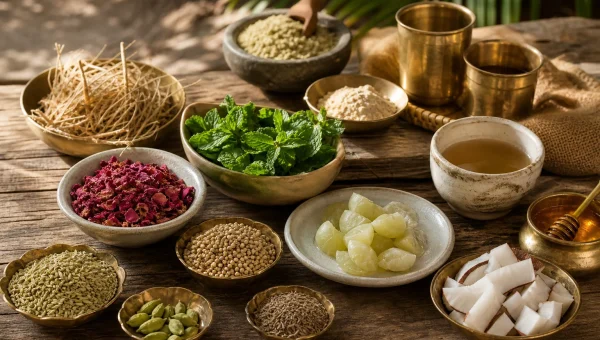
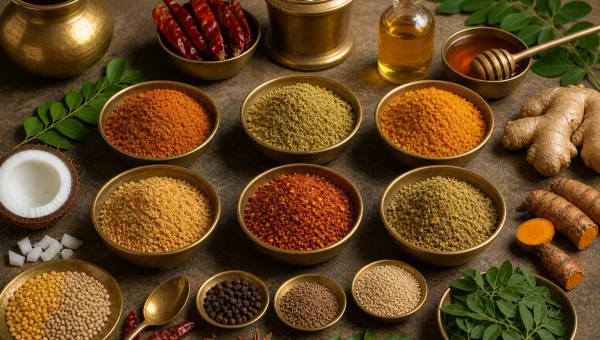
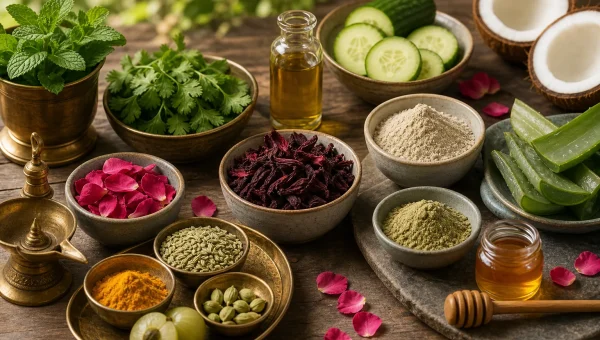
These herbs and spices are best understood as culinary digestive supports, not as a license to eat all day. Use small food-level quantities unless a qualified practitioner gives a specific therapeutic dose.
- Ginger (Zingiber officinale / Shunthi): traditionally described with deepana, pachana, anulomana, and ama-dosha-hara actions; useful when coldness, sluggishness, or kapha-vata heaviness is present.
- Cumin (Cuminum cyminum / Jeeraka): described as deepana, pachana, grahi, rucya, and kapha-vata-hara; useful in small amounts with light snacks and buttermilk.
- Cardamom (Elettaria cardamomum / Ela): described as rocana, deepana, anulomana, hrdya, and mutrala; useful where aromatic lightness is needed with sweet or milk-based foods.
- Fennel (Foeniculum vulgare / Mishreya or Saunf): described as deepana, vata-pitta-hara, anulomana, and ama-dosha-hara; useful when digestion needs support without excessive heat.
- Ajwain (Trachyspermum ammi / Yavani): described as deepana, pachana, rucya, anulomana, and shulahara; useful in very small amounts for gas-prone, cold, kapha-vata digestion.
- Pippali (Piper longum): described as deepana, rucya, rasayana, tridosha-hara, and rechana; because it is potent, it is better used under practitioner guidance rather than as a casual daily snack spice.
For more on the broader principles of Ayurvedic eating, see our guides on Ayurvedic digestive health and Ayurvedic breakfast recipes.
Safety and Disclaimer
These snack ideas are general educational suggestions for healthy adults. People with diabetes, pregnancy, lactation, eating disorders, digestive disease, kidney disease, liver disease, gallbladder disease, food allergies, or those taking blood thinners, diabetes medicines, blood-pressure medicines, or other regular medication should consult a qualified healthcare provider and a qualified Ayurvedic practitioner before using herbs, concentrated spices, or therapeutic preparations regularly.
One Actionable Tip
For one week, replace one habitual afternoon snack with warm coriander-cumin-fennel tea. Steep 1/4 teaspoon each of coriander seed, cumin seed, and fennel seed in about 250 ml hot water for 5-10 minutes, strain, and sip slowly. If true hunger remains after the tea and the previous meal feels digested, choose a small warm snack rather than returning to random grazing.
The 4kg in one year from desk snacking without changing main meals is my exact experience. My Ayurvedic doctor said the same thing about interrupted digestive fire. I stopped snacking entirely for three months and the weight normalized without any other change.
Can you clarify when snacking is okay according to Ayurvedic principles? The article says it can be done intelligently but the framework for when it’s appropriate versus disruptive is not entirely clear to me.
My father ate two meals a day his entire life and never snacked. Lived to 89 with perfect digestion. He thought my snacking habit was amusing and called it ‘eating before your food has been honored.’ The digestive fire concept is something he understood intuitively without ever studying Ayurveda.
The Snacking Done Right section feels grounded enough to try carefully. The examples make the advice less abstract.
The soaked almonds and a few dates suggestion actually works for satiety between meals. I replaced my 3pm biscuit habit with this and my afternoon energy improved noticeably. The difference is the protein, fat, and fiber combination versus the processed carbohydrate spike.
The Snacking Done Right section feels grounded enough to try carefully. Good starting point for a cautious reader.
What counts as a snack versus a small meal? I sometimes eat a small bowl of soup between lunch and dinner. Is that interrupting Agni or is it different because it’s warm and easy to digest?
The 15 snacks list is useful but I notice several of them still require preparation. For someone in back-to-back meetings the main appeal of the granola bar is pure convenience. Can you add some portable options that take zero prep?
The father who never snacked story is charming but survivorship bias is real. Some people manage fine on two meals. Others genuinely need more frequent fuel. Constitutional differences probably determine which pattern suits each person.
Tried eliminating snacking based on this approach and was genuinely hungry and irritable by 4pm for the first two weeks. By week three the hunger had adjusted and now i don’t think about food between meals at all. The adaptation period is real but worth it.
I never realized snacking could reset agni until I read about the empty stomach signal. Makes me rethink my desk munchies.
Which of the 15 snacks are suitable for Kapha types? Some of the heavier options like nuts and dates seem like they might be aggravating for Kapha.
The desk-eating observation is spot on. Eating while distracted reduces the cephalic phase of digestion and increases the amount of food needed to feel satisfied. This isn’t just Ayurveda, it’s supported by cognitive eating research.
The CCF tea tip sounds simple; I’ll try coriander cumin fennel steeped in hot water after lunch and see if my hunger feels clearer.
Soaked dates with ghee and cardamom seem like a sweet treat that won’t aggravate kapha if I keep the portion small.
I wonder if spiced buttermilk would work for me during a vata afternoon; the article says avoid cold or windy days.
Reading about jatharagni’s peak at 1 to 2 hours helped me understand why I feel sluggish when I snack too soon after a meal.
The idea of waiting for genuine hunger instead of eating out of habit is something I can apply to my midday break.
I appreciate the list that matches snacks to doshas; it makes choosing between sesame laddoo and amla murabba easier based on my pitta tendency.
For Snacking Done Right, consistency seems like the hard part. The article avoids making it sound like a quick fix.
For Snacking Done Right, consistency seems like the hard part. I appreciate that it does not oversell the result.
Herbal inclusion like a pinch of ajwain after a snack seems like an easy tweak to keep digestion smooth without extra calories.
For Snacking Done Right, consistency seems like the hard part. The timing advice is the part I would start with.
For Snacking Done Right, consistency seems like the hard part. I would like to know how long to try it before judging results.
For Snacking Done Right, consistency seems like the hard part. This would be easier to follow with a one-week sample plan.
For Snacking Done Right, consistency seems like the hard part. This feels more usable than a long list of herbs.
For Snacking Done Right, consistency seems like the hard part. The safety notes could be expanded a little.
For Snacking Done Right, consistency seems like the hard part. The main idea is clear even if someone is new to Ayurveda.
Reading this later and the Snacking Done Right advice still feels relevant. A few more examples would still help.
Reading this later and the Snacking Done Right advice still feels relevant. The timing advice is the part I would start with.
For Snacking Done Right, consistency seems like the hard part. The examples make the advice less abstract.
For Snacking Done Right, consistency seems like the hard part. Good starting point for a cautious reader.
Reading this later and the Snacking Done Right advice still feels relevant. This is the kind of detail readers can test slowly.
Reading this later and the Snacking Done Right advice still feels relevant. The practical details matter more than people think.
Reading this later and the Snacking Done Right advice still feels relevant. Small daily changes are easier to follow than a perfect plan.
Reading this later and the Snacking Done Right advice still feels relevant. Would be useful to see a short checklist next.
Reading this later and the Snacking Done Right advice still feels relevant. I would still ask a practitioner before changing medicines.
Reading this later and the Snacking Done Right advice still feels relevant. The article avoids making it sound like a quick fix.
Reading this later and the Snacking Done Right advice still feels relevant. I appreciate that it does not oversell the result.
Reading this later and the Snacking Done Right advice still feels relevant. The main idea is clear even if someone is new to Ayurveda.
Reading this later and the Snacking Done Right advice still feels relevant. This would be easier to follow with a one-week sample plan.
Reading this later and the Snacking Done Right advice still feels relevant. The safety notes could be expanded a little.
Reading this later and the Snacking Done Right advice still feels relevant. This feels more usable than a long list of herbs.
Reading this later and the Snacking Done Right advice still feels relevant. The examples make the advice less abstract.
Reading this later and the Snacking Done Right advice still feels relevant. I would like to know how long to try it before judging results.
The Snacking Done Right explanation is clearer than most short posts. The practical details matter more than people think.
Reading this later and the Snacking Done Right advice still feels relevant. Good starting point for a cautious reader.
The Snacking Done Right explanation is clearer than most short posts. A few more examples would still help.
The Snacking Done Right explanation is clearer than most short posts. Small daily changes are easier to follow than a perfect plan.
The Snacking Done Right explanation is clearer than most short posts. Would be useful to see a short checklist next.
The Snacking Done Right explanation is clearer than most short posts. I would still ask a practitioner before changing medicines.
The Snacking Done Right explanation is clearer than most short posts. I appreciate that it does not oversell the result.
The Snacking Done Right explanation is clearer than most short posts. The timing advice is the part I would start with.
The Snacking Done Right explanation is clearer than most short posts. This is the kind of detail readers can test slowly.
The Snacking Done Right explanation is clearer than most short posts. The article avoids making it sound like a quick fix.
The Snacking Done Right explanation is clearer than most short posts. This would be easier to follow with a one-week sample plan.
The Snacking Done Right explanation is clearer than most short posts. The safety notes could be expanded a little.
The Snacking Done Right explanation is clearer than most short posts. The main idea is clear even if someone is new to Ayurveda.
The Snacking Done Right explanation is clearer than most short posts. This feels more usable than a long list of herbs.
I liked the practical side of Snacking Done Right. The practical details matter more than people think.
I liked the practical side of Snacking Done Right. Small daily changes are easier to follow than a perfect plan.
The Snacking Done Right explanation is clearer than most short posts. The examples make the advice less abstract.
The Snacking Done Right explanation is clearer than most short posts. I would like to know how long to try it before judging results.
The Snacking Done Right explanation is clearer than most short posts. Good starting point for a cautious reader.
I liked the practical side of Snacking Done Right. A few more examples would still help.
I liked the practical side of Snacking Done Right. Would be useful to see a short checklist next.
I liked the practical side of Snacking Done Right. I would still ask a practitioner before changing medicines.
I liked the practical side of Snacking Done Right. This is the kind of detail readers can test slowly.