
For teachers, voice care is occupational maintenance. A full school day can combine sustained speaking, standing, emotional responsiveness, sensory overload, rushed meals, and little recovery. Ayurveda frames this pattern mainly through Vata and Pitta: Vata is stressed by constant movement, speech, multitasking, and irregular breaks, while Pitta is intensified by pressure, responsibility, heat, urgency, and the need to stay sharp. Within Vata, Udana Vata receives special attention because classical Ayurveda connects it with speech, effort, expression, strength, and higher cognitive functions.
The Teacher’s Occupational Ayurvedic Profile
Teaching creates a distinct pattern of strain: the voice is used repeatedly, the body often remains upright for hours, attention is split across many students, and emotional energy is spent managing learning, behavior, safety, and care. In Ayurvedic terms, this is a Vata-Pitta load. Vata becomes provoked by overuse, dryness, noise, irregular eating, and insufficient rest; Pitta becomes provoked by intensity, performance pressure, frustration, and a schedule that leaves little time to cool down.
Udana Vata is the primary Vata sub-dosha to consider in the professional voice. When it is supported, speech is steady, expression is clear, and teaching feels animated rather than forced. When it is overused, the teacher may notice hoarseness, vocal fatigue, throat dryness, shallow breathing, mental restlessness, difficulty sleeping, or a reduced capacity for creative expression. The Ayurvedic goal is therefore not only to soothe the throat, but to protect the full speech-breath-mind system that teaching depends on.
Voice Care: Ayurvedic Protocols for the Professional Voice
The teacher’s voice benefits from preparation, hydration, pacing, and recovery. Ayurveda favors warm, moistening, non-irritating support for a dry or strained throat, while modern vocal hygiene for teachers also emphasizes water intake, reduction of shouting, and early attention to persistent hoarseness.
The Daily Pre-Teaching Vocal Preparation
Before the first class, prepare the voice gently rather than forcing it into use. Sip warm water, keep a water bottle nearby, and avoid beginning the day with loud projection, repeated throat clearing, or dry-room speaking before the throat has warmed.
Warm hydration: Begin with warm water or a mild herbal infusion. For teachers with a dry throat, small frequent sips are more useful than one large drink. Avoid very cold drinks immediately before heavy speaking, especially when the throat already feels tight or dry.
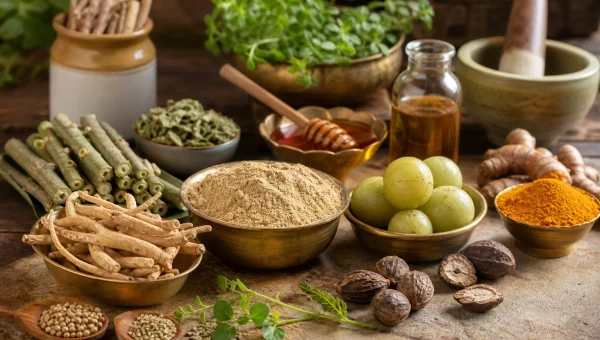
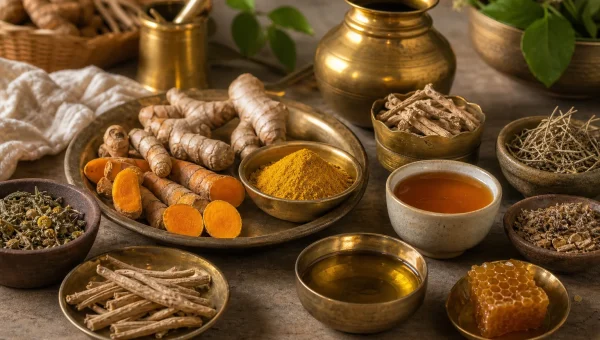
Yashtimadhu support: Yashtimadhu or Mulethi (Glycyrrhiza glabra) is a classical Ayurvedic herb used in throat and voice disorders, including svarabheda, the Ayurvedic term commonly associated with hoarseness or altered voice. A practical teacher’s preparation is a mild tea made by simmering a small quantity of the root in water and sipping it warm. Because licorice can raise blood pressure and lower potassium when used heavily or for long periods, it should be used cautiously and avoided without professional guidance in hypertension, kidney disease, heart disease, pregnancy, or when taking diuretics or cardiac medicines.
Gentle vocal warm-up: Use three to five minutes of low-effort humming, lip trills, and easy pitch glides before classroom speaking. These are gentle semi-occluded voice exercises used in voice care to reduce tension and prepare the vocal tract without harsh impact.
Classroom voice design: Face the students when speaking, use pauses instead of shouting, move closer to the class rather than raising volume, and use amplification where available. These practical changes preserve Udana Vata by reducing repeated forceful projection.
Herbs for Voice, Throat, and Teacher Resilience
Herbs should be chosen according to the teacher’s constitution, season, symptoms, medications, and medical history. The following are classical Ayurvedic options to discuss with a qualified practitioner rather than a universal self-prescription.
| Herb or Formula | Classical Ayurvedic Relevance | Teacher Use Pattern | Cautions |
|---|---|---|---|
| Yashtimadhu / Mulethi (Glycyrrhiza glabra) | Classically listed for kasa and svarabheda; sweet, cooling, unctuous, and nourishing in Ayurvedic pharmacology. | Dry, irritated throat; strained voice; warm tea or powder used under guidance. | Use cautiously in hypertension, edema, kidney or heart disease, pregnancy, and with diuretics or cardiac medicines. |
| Vasa (Adhatoda vasica) | Classically associated with respiratory conditions such as kasa and shvasa. | Kapha-type throat and airway congestion where a practitioner considers it appropriate. | Avoid in pregnancy unless directly prescribed; use cautiously when breastfeeding or taking medication. |
| Tulasi (Ocimum sanctum / Ocimum tenuiflorum) | Classically described as kaphahara and vatahara, with traditional use in kasa and shvasa. | Warm tea for Kapha-type heaviness, mucus, or seasonal throat vulnerability. | Use caution with anticoagulant medicines, surgery planning, pregnancy, or complex medical conditions. |
| Brahmi (Bacopa monnieri) | Classically described as medhya, rasayana, svarya, and vatahara. | Mental load, memory demand, overstimulation, and voice-mind fatigue in high-cognitive teaching work. | May not suit everyone; use practitioner guidance, especially with sedatives, thyroid medication, or pregnancy. |
| Ashwagandha (Withania somnifera) | A classical root drug used as a strengthening and restorative herb. | Evening support for depleted teachers when stress, poor sleep, and exhaustion dominate. | Avoid in pregnancy unless prescribed; seek guidance with thyroid disease, autoimmune conditions, sedatives, liver disease, or psychiatric medication. |
Sitopaladi Churna is a classical respiratory formula traditionally prepared with sugar candy, vamsalochana, pippali, cardamom, and cinnamon. It is commonly taken with honey or ghee in small quantities under Ayurvedic supervision. Because it contains a large sugar component, teachers with diabetes, insulin resistance, or strict sugar restriction should not use it casually.
Standing Fatigue: The Teacher’s Second Problem
Teachers often stand for long periods, and prolonged standing is associated with lower-limb discomfort, fatigue, swelling, and musculoskeletal strain. Ayurveda reads this as a Vata burden on the legs, joints, circulation, and lower back. The practical approach is to prevent dryness and strain before school and to reverse accumulated fatigue after school.
Before-School Prevention Protocol
Before leaving for school, give the feet and lower legs a few minutes of attention. This is especially useful for teachers who stand on hard floors, move between classrooms, or finish the day with aching feet and calves.
Lower-limb abhyanga: Massage the feet, ankles, calves, and thighs with warm oil for five to ten minutes before bathing or dressing. Sesame oil is traditionally favored for many Vata patterns, though oil choice should be adjusted for constitution, climate, skin sensitivity, and practitioner advice. Use firm but comfortable strokes upward from the feet toward the thighs.
Supportive flooring and footwear: Supportive shoes and anti-fatigue mats are practical allies for Vata protection. A mat near the main teaching position can reduce discomfort during long standing blocks, while cushioned, stable footwear reduces repeated stress through the feet, knees, hips, and lower back.
After-School Recovery
After the final class, the body needs a transition before the next round of emails, grading, commuting, or household work. Ten quiet minutes can change the whole evening pattern.
Viparita Karani: Lie down with the legs supported up a wall for five to ten minutes. This gentle inversion helps the legs recover from standing by assisting venous and fluid return, easing lower-leg heaviness, and calming Vata through stillness and supported rest.
Warm foot bath: Soak the feet in comfortably warm water for ten to fifteen minutes after a heavy teaching day. Keep the practice simple: warm water, quiet breathing, and no phone. A small amount of rock salt may be added if the skin tolerates it, but teachers with neuropathy, diabetes-related foot issues, wounds, infection, or reduced sensation should avoid hot soaking unless cleared by a clinician.
Classroom Stress: Mano Vaha Srotas Under Siege
The mental work of teaching is continuous: scanning the room, adapting explanations, remembering student needs, managing behavior, responding emotionally, and staying accurate with content. Ayurveda places this burden in the field of manas and prana, where overstimulation can produce irritability, mental fatigue, shallow breathing, poor sleep, and reduced patience. Restoration must therefore happen in small intervals, not only during vacations.
- Mauna between periods: Use two to ten minutes of intentional silence whenever the schedule allows. Sit or stand quietly without phone use, conversation, or planning. This protects the teacher’s speech energy and gives the mind a brief sensory reset.
- Nadi Shodhana: Practice alternate nostril breathing for three to five minutes after a difficult class or before the afternoon block. Keep the breath gentle, without strain or breath-holding. This supports steadier attention and calms accumulated nervous system arousal.
- Brahmi support: Brahmi is the classical medhya option for teachers who feel mentally overextended. It is best used as part of a broader routine that includes sleep, food timing, sensory reduction, and practitioner-guided dosing.
The 8-Minute Teacher Lunch Protocol
Many teachers eat while grading, answering messages, supervising students, or preparing the next class. Ayurveda discourages distracted eating because food should be taken with attention, calm, and awareness of quantity, timing, and suitability. If lunch is short, the answer is not to make it more intense; the answer is to make it simpler and more protected.
Leave the classroom if possible, sit down, take a few breaths before eating, and stop working for the minutes available. Favor warm, moist, easy-to-digest foods such as soup, kitchari, dal, cooked grains, or soft cooked vegetables over cold, dry, hurried meals. Eat slowly enough to taste the food. If the schedule truly allows only a few minutes, reduce meal complexity rather than increasing speed.
CCF tea made with cumin, coriander, and fennel may be used after lunch when it suits the person and season. Triphala should not be treated as a casual after-lunch fix for rushed eating; it is a classical formula that should be used according to bowel pattern, constitution, and professional guidance.
Energy Management Through the Teaching Day
The Ayurvedic day can be used as a practical planning map. Kapha hours favor steadiness but may feel slow, Pitta hours favor sharpness and digestion, and Vata hours are more vulnerable to depletion, scattered attention, and overstimulation. Teachers can use this rhythm to place the hardest work where the body-mind is naturally better supported.
| Time of Day | Ayurvedic Tendency | Teacher Strategy |
|---|---|---|
| Morning classes | Kapha steadiness, possible heaviness | Use warm water, gentle movement, and a soft vocal warm-up before projection. |
| Late morning to early afternoon | Pitta sharpness and stronger digestion | Teach complex material, eat the main meal calmly, and avoid overheating with anger or urgency. |
| Mid-afternoon | Vata mobility, fatigue, scattered attention | Use short breathing breaks, warm snacks if needed, quieter transitions, and less caffeine. |
| Evening | Recovery window when protected | Use lower-limb abhyanga, legs-up-the-wall, warm food, reduced screen intensity, and earlier sleep. |
Our complete Abhyanga guide, Brahmi guide, Dinacharya guide, and Ayurvedic stress management post provide broader daily-routine context for teachers and other high-demand professionals.
Safety note: Persistent hoarseness, voice change, throat pain, difficulty swallowing, breathing symptoms, a neck mass, tobacco history, or voice loss in a professional voice user should be evaluated by an ENT clinician or qualified healthcare provider. Current voice-care guidance recommends laryngeal evaluation when dysphonia does not improve within four weeks, or sooner when concerning features are present. Do not rely on herbs alone for persistent laryngitis, vocal nodules, reflux-related voice symptoms, infection, or unexplained hoarseness.
Actionable tip: This Friday after school, place your legs up the wall for ten minutes before opening email or beginning the next task. Keep the room quiet, breathe naturally, and let the body register that the teaching day has ended. This simple transition supports the legs, the voice, and the nervous system without requiring equipment, supplements, or extra planning.
Nothing in this article diagnoses, treats, or replaces medical care. Use it as educational information and consult a qualified Ayurvedic practitioner and licensed healthcare provider before starting herbs, supplements, detoxes, breathing practices, or therapeutic protocols, especially if pregnant, breastfeeding, managing a medical condition, or taking medication.
References
- Hopkinsmedicine (hopkinsmedicine.org)
- The Risk Factors Related to Voice Disorder in Teachers: A Systematic Review and Meta-Analysis (2019), PubMed Central
- Charaka Samhita — Vata dosha
- Clinical Practice Guideline: Hoarseness (Dysphonia) (Update) (2018), PubMed
- Royalberkshire (royalberkshire.nhs.uk)
- Lip Trill Effects on Vocal Function, Vocal Pitch, and Harmonics-to-Noise Ratio: A Multiple Baseline Study of Three Vocally Healthy Females (2023), PubMed Central
- Miracledrinksclinic (miracledrinksclinic.com)
- Pseudohyperaldosteronism, liquorice, and hypertension (2008), PubMed Central
- NCCIH
- Ayurvedic Pharmacopoeia of India
- A clinical review of different formulations of Vasa (Adhatoda vasica) on Tamaka Shwasa (asthma) (2010), PubMed Central
- Vasicine, alkaloid of Adhatoda vasica, a promising uterotonic abortifacient (1978), PubMed
- Ayurvedic Pharmacopoeia of India
- Effects of a standardized Bacopa monnieri extract on cognitive performance, anxiety, and depression in the elderly: a randomized, double-blind, placebo-controlled trial (2008), PubMed Central
- An investigation into the stress-relieving and pharmacological actions of an ashwagandha (Withania somnifera) extract: A randomized, double-blind, placebo-controlled study (2019), PubMed Central
- Scholarsresearchlibrary (scholarsresearchlibrary.com)
- Eijppr (eijppr.com)
- Evidence of health risks associated with prolonged standing at work and intervention effectiveness (2015), PubMed Central
- Negative Impacts of Prolonged Standing at Work on Musculoskeletal Symptoms and Physical Fatigue: The Fifth Korean Working Conditions Survey (2021), PubMed Central
- The Effect of Standing Mats on Biomechanical Characteristics of Lower Limbs and Perceived Exertion for Healthy Individuals during Prolonged Standing (2022), PubMed Central
- Stacks (stacks.cdc.gov)
- Health (health.clevelandclinic.org)
- LWW Journals
- Mindful Eating: A Review Of How The Stress-Digestion-Mindfulness Triad May Modulate And Improve Gastrointestinal And Digestive Function (2019), PubMed Central
- Effect of Alternate Nostril Breathing Exercise on Experimentally Induced Anxiety in Healthy Volunteers Using the Simulated Public Speaking Model: A Randomized Controlled Pilot Study (2017), PubMed Central
- Effects of alternate nostril breathing exercise on cardiorespiratory functions in healthy young adults (2021), PubMed Central
- Ayurvedacollege (ayurvedacollege.com)
- NCCIH


I taught primary school for 22 years before retiring. The description of the biology teacher is accurate for almost every teacher I knew. Eight minutes for lunch, five periods a day, and yes, the sound sensitivity at the end of term. Nobody talked about it as a health issue. We all just assumed it was part of the job.
The Udana Vata component for voice care is something I had not seen connected to teachers specifically before. I have a speech therapist friend who works with teachers and the vocal fatigue and nodule pattern she sees is almost universal in high-teaching-load jobs. The Ayurvedic interventions for Udana Vata might be worth exploring in that clinical context.
I am a music teacher and the laryngitis plus sound intolerance combination described here is something I have been struggling with for two years. My ENT says vocal rest and vocal hygiene. The vocal hygiene advice is generic. The Ayurvedic approach to supporting Udana Vata systematically is something I want to pursue.
Tried the sitopaladi churna and licorice root lozenges after reading this a month ago. My chronic morning throat clearing which I had for three years has reduced by about 80 percent. I was skeptical because throat clearing seems like such a minor complaint but it was affecting my confidence in speaking.
The detail about eating lunch in eight minutes while reviewing papers is the most accurate description of teacher reality I have read in a health article. The problem is not just the food choice but the stress state during eating. You cannot digest while your attention is split between food and student work. That alone probably explains half the digestion problems in teachers.
Good reminder on Teachers. I would still ask a practitioner before changing medicines.
I never thought about Udana Vata being linked to voice strain until reading this.
I am a teacher training educator and the occupational health picture painted here is accurate. Most new teacher wellness training focuses on work-life balance and time management without addressing the specific physiological depletion patterns. An Ayurvedic framework that identifies the constitutional damage accumulates from the job would be genuinely useful in teacher preparation.
this is the first article on teacher health that treats it seriously as a clinical issue rather than a lifestyle advice problem. the institutional conditions that create Vata aggravation in teachers are real and cannot be fixed by individual self-care alone. it would be helpful to address what systemic changes would actually protect teacher health.
My wife has been a secondary school teacher for 14 years. The accumulation of Vata depletion over that time is genuinely visible: she is thinner than when she started, more anxious, sleeps worse, and has lost the vocal resonance she had in her first few years. The pattern described here matches her progression almost exactly.
The tip about gargling with warm salt water and turmeric sounds easy to try tomorrow.
What is the recommendation for dry classroom air specifically? I teach in a building with central heating that creates extremely dry air from October through April. My nasal passages and throat are chronically irritated. Is there an Ayurvedic approach specifically for the environmental Vata aggravation of dry indoor air beyond a humidifier?
How often should I do the legs up the wall pose if I stand six hours a day?
I tried the nasya oil (sesame) protocol for three weeks for the dryness and vocal fatigue that was affecting my teaching. I was skeptical about administering oil through the nose but my Ayurvedic practitioner showed me the technique. The difference in dryness and vocal fatigue was noticeable within two weeks.
I wonder if the honey alone gargle works as well as the salt water mix.
Reading about Vyana Vata and standing fatigue made me check my shoes.
The eight minute lunch protocol is something I could actually fit in.
I’ve had hoarseness for weeks; seeing the suggestion to see an ENT first is responsible.
The idea of Mauna between classes feels doable even with a busy schedule.
I like that they mention CCF tea for hydration during peak Pitta hours.
Is Sitopaladi Churna safe to take with honey every day?
The section on Mano Vaha Srotas helped me understand why I feel mentally foggy after back to back lectures.
I’m curious about the exact amount of ginger slices for the foot bath.
The warning about licorice raising blood pressure is important for teachers with hypertension.
The safest part of the Teachers advice is keeping it simple. A few more examples would still help.
I plan to try the morning vocal warm up with humming and lip trills before my first class.
The safest part of the Teachers advice is keeping it simple. The practical details matter more than people think.
The safest part of the Teachers advice is keeping it simple. Would be useful to see a short checklist next.
The safest part of the Teachers advice is keeping it simple. Small daily changes are easier to follow than a perfect plan.
Seeing the Dosha timeline made me rearrange my lesson planning to match energy peaks.
The safest part of the Teachers advice is keeping it simple. I would still ask a practitioner before changing medicines.
The safest part of the Teachers advice is keeping it simple. This is the kind of detail readers can test slowly.
The safest part of the Teachers advice is keeping it simple. The article avoids making it sound like a quick fix.
The safest part of the Teachers advice is keeping it simple. I appreciate that it does not oversell the result.
The safest part of the Teachers advice is keeping it simple. The timing advice is the part I would start with.
The safest part of the Teachers advice is keeping it simple. This would be easier to follow with a one-week sample plan.
The safest part of the Teachers advice is keeping it simple. The safety notes could be expanded a little.
The safest part of the Teachers advice is keeping it simple. The main idea is clear even if someone is new to Ayurveda.
This helped me understand Teachers without too much jargon. The practical details matter more than people think.
The safest part of the Teachers advice is keeping it simple. This feels more usable than a long list of herbs.
The safest part of the Teachers advice is keeping it simple. The examples make the advice less abstract.
The safest part of the Teachers advice is keeping it simple. I would like to know how long to try it before judging results.
The safest part of the Teachers advice is keeping it simple. Good starting point for a cautious reader.
This helped me understand Teachers without too much jargon. A few more examples would still help.
This helped me understand Teachers without too much jargon. Small daily changes are easier to follow than a perfect plan.
This helped me understand Teachers without too much jargon. Would be useful to see a short checklist next.
This helped me understand Teachers without too much jargon. I would still ask a practitioner before changing medicines.
This helped me understand Teachers without too much jargon. This is the kind of detail readers can test slowly.
This helped me understand Teachers without too much jargon. The article avoids making it sound like a quick fix.
This helped me understand Teachers without too much jargon. This feels more usable than a long list of herbs.
This helped me understand Teachers without too much jargon. I appreciate that it does not oversell the result.
This helped me understand Teachers without too much jargon. The timing advice is the part I would start with.
This helped me understand Teachers without too much jargon. The examples make the advice less abstract.
This helped me understand Teachers without too much jargon. This would be easier to follow with a one-week sample plan.
This helped me understand Teachers without too much jargon. The safety notes could be expanded a little.
This helped me understand Teachers without too much jargon. The main idea is clear even if someone is new to Ayurveda.
This helped me understand Teachers without too much jargon. I would like to know how long to try it before judging results.
This helped me understand Teachers without too much jargon. Good starting point for a cautious reader.
The Teachers section feels grounded enough to try carefully. A few more examples would still help.
The Teachers section feels grounded enough to try carefully. The practical details matter more than people think.
The Teachers section feels grounded enough to try carefully. The timing advice is the part I would start with.
The Teachers section feels grounded enough to try carefully. Small daily changes are easier to follow than a perfect plan.
The Teachers section feels grounded enough to try carefully. Would be useful to see a short checklist next.
The Teachers section feels grounded enough to try carefully. I would still ask a practitioner before changing medicines.
The Teachers section feels grounded enough to try carefully. This is the kind of detail readers can test slowly.
The Teachers section feels grounded enough to try carefully. The article avoids making it sound like a quick fix.
The Teachers section feels grounded enough to try carefully. I appreciate that it does not oversell the result.
The Teachers section feels grounded enough to try carefully. This would be easier to follow with a one-week sample plan.