
Ayurvedic Diabetes Management: Understanding the Prameha Clinical Protocol
In classical Ayurvedic medicine, diabetes-like metabolic disturbance is discussed under the wider heading of Prameha, a group of urinary disorders marked by changes in urine quantity, color, consistency, smell, taste, and associated tissue metabolism. The Charaka Samhita describes Prameha as a condition involving the three doshas, especially Kapha in the early over-nourishment pattern, along with dushyas such as medas, mamsa, kleda, ojas, lasika, majja, and other body constituents.
For a modern patient, the safest way to understand a Prameha protocol is as complementary metabolic support: diet, movement, sleep regulation, and carefully selected herbs used alongside regular glucose monitoring and conventional diabetes care.
Medical Disclaimer: The Ayurvedic protocols described in this article are educational and complementary. They are not replacements for insulin, metformin, GLP-1 medicines, SGLT2 inhibitors, or any prescribed diabetes medication. Never discontinue or change prescribed medication without consulting your endocrinologist or primary care physician. Diabetes requires ongoing medical supervision.
The 20 Types of Prameha: Ayurveda’s Classification System
The Charaka Samhita classifies Prameha into 20 dosha-dominant types: 10 Kaphaja, 6 Pittaja, and 4 Vataja. This is not a one-to-one biomedical classification, but it is clinically useful in Ayurveda because it distinguishes over-nourishment, inflammatory/heat-dominant, and depletion-dominant patterns.
| Dosha Category | Number of Types | Classical Emphasis | General Ayurvedic Prognosis |
|---|---|---|---|
| Kaphaja Prameha | 10 types | Kapha, kleda, medas, heaviness, turbidity, over-nourishment | Most amenable when medas is not deeply vitiated |
| Pittaja Prameha | 6 types | Pitta-associated heat, discoloration, irritation, and metabolic sharpness | Generally yapya, meaning manageable or palliable |
| Vataja Prameha | 4 types | Vata dominance, tissue depletion, dryness, weakness, and difficult chronicity | Difficult when Vata is primary and tissues are depleted |
Madhumeha is described as a honey-like or sweet urinary presentation within the Prameha framework. Ayurveda gives special attention to whether the patient is strong and overweight with Kapha-Meda excess, or lean and depleted with Vata involvement, because the management principles differ significantly.
Core Herbs and Foods Used in a Prameha Protocol
A Prameha protocol is not simply a list of glucose-lowering herbs. Classical management begins with removing causative foods and habits, using barley-centered and light foods where appropriate, applying exercise and external therapies, and then selecting herbs according to the patient’s strength, dosha pattern, medications, digestion, kidney status, and glucose readings.
1. Meshashringi / Gurmar (Gymnema sylvestre)
Gymnema sylvestre is commonly known as Gurmar, a name associated with its sweet-taste-modifying action. Gymnemic acids can temporarily reduce sweet taste perception, and Gymnema extracts have been used in human studies as adjuncts in type 2 diabetes care. In practice, this herb requires caution because it may add to the glucose-lowering effect of diabetes medicines.
2. Vijaysar / Asana (Pterocarpus marsupium)
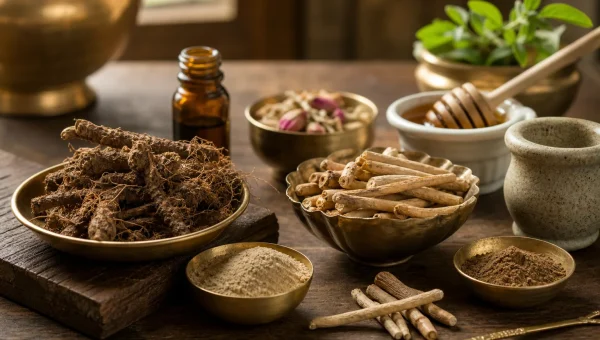
Vijaysar, also known as Asana or Bijaka, refers to the heartwood of Pterocarpus marsupium. Classical and traditional practice uses the heartwood in Prameha, including the familiar method of soaking the wood overnight and drinking the infused water. A multicenter Indian open trial of Vijaysar in newly diagnosed type 2 diabetes reported fasting and postprandial glucose improvement over 12 weeks, making it one of the better-known Ayurvedic herbs in Prameha discussions.
3. Methi (Trigonella foenum-graecum)
Fenugreek seeds are used as a food-herb in metabolic protocols because they contain soluble fiber, including galactomannan, and bioactive compounds such as 4-hydroxyisoleucine. Soaked seeds, seed powder, and standardized preparations are used differently; the safest choice depends on digestion, medication timing, and glucose monitoring.
4. Haridra (Curcuma longa)
Haridra is included in classical Prameha formulations, including combinations with Amalaki juice. Modern curcumin preparations are often paired with absorption-enhancing strategies such as piperine, but high-dose curcumin or turmeric extracts should be used carefully in people taking anticoagulants, diabetes medication, or multiple prescriptions.
5. Karavella / Bitter Gourd (Momordica charantia)
Bitter gourd is a bitter food traditionally used in metabolic diets. It contains constituents such as charantin, vicine, and polypeptide-p, which are discussed for glucose metabolism. In a practical Prameha diet, bitter gourd is best positioned as a food or supervised juice adjunct, not as a replacement for prescribed diabetes treatment.
The Clinical Protocol: Diet, Herbs, and Lifestyle
The Ayurvedic protocol for Prameha is built around nidana parivarjana, the removal of causative factors, followed by pathya diet, movement, appropriate herbal support, and careful monitoring. The goal is to reduce Kapha, kleda, and medas in strong or overweight patients while avoiding excessive depletion in lean, weak, or Vata-dominant patients.
Dietary Guidelines (Pathya-Apathya)
Classical Prameha diet gives special importance to barley, old grains, Mudga preparations, bitter vegetables, and lighter foods. It restricts the heavy, sweet, newly harvested, excessively unctuous, dairy-heavy, and sedentary pattern described as Kapha-promoting.
| Category | Prefer | Reduce or Avoid |
|---|---|---|
| Grains | Barley (Yava), roasted barley, barley porridge, old Shali rice, small millets where suitable | Freshly harvested grains, refined flour foods, sweet grain preparations |
| Legumes | Mudga (green gram/moong) soup and light legume preparations | Heavy, oily, or hard-to-digest legume preparations |
| Vegetables | Bitter vegetables, leafy greens, bitter gourd, fenugreek leaves, drumstick leaves where tolerated | Deep-fried vegetables, excess starchy vegetables, heavy sauces |
| Sweeteners | Only practitioner-guided use; honey appears in classical formulations but is not a free sweetener for modern diabetes | Sugar, jaggery sweets, sweet drinks, desserts, frequent snacking |
| Dairy and Heavy Foods | Light, individualized use only when digestion and glucose pattern allow | Excess curd, heavy milk preparations, cream, butter-heavy foods |
| Habits | Post-meal walking, regular exercise, stable sleep rhythm | Daytime sleeping, prolonged sitting, excess sleep, inactivity |
Barley deserves special attention because Charaka repeatedly emphasizes Yava in Prameha. Modern nutrition also recognizes barley as a source of beta-glucan soluble fiber, which can reduce the rise in blood glucose after carbohydrate-containing meals when used in sufficient amounts.
Herbal Formulation Schedule
The following schedule is an educational template, not a self-prescription. A qualified Ayurvedic practitioner should adjust herbs, dose, timing, and duration according to Prakriti, dosha dominance, digestion, bowel pattern, kidney and liver status, and current medications.
- Morning: Warm water, light movement, and practitioner-approved Methi seed water or bitter vegetable juice where suitable.
- Before meals: Meshashringi or another glucose-support herb only with glucose monitoring and medical supervision.
- Midday: Barley-based meal, Mudga soup, bitter vegetables, and a short walk after eating.
- Evening: Light dinner, reduced starch load, and avoidance of late-night sweets or heavy dairy.
- Bedtime: Sleep regulation rather than late snacking; herbs at night only if prescribed.
This schedule should work alongside prescribed medicines, HbA1c testing, and home or continuous glucose monitoring where recommended by the treating clinician.
Lifestyle Modifications (Vihara)
Charaka includes exercise, external applications, bathing, and avoidance of causative habits in Prameha management. In modern use, this translates into daily movement, reduced sitting time, post-meal walking, and sleep discipline.
- Post-meal walking: A 10- to 30-minute walk after meals is a practical way to blunt post-meal glucose rise.
- Vyāyāma: Regular exercise is especially important for strong, overweight, Kapha-Meda dominant patients.
- Udvartana: Dry powder massage is used traditionally for Kapha-Meda reduction and may be included when the patient is strong enough.
- Yoga and Pranayama: Gentle yoga and breathing practices can support consistency, stress regulation, mobility, and adherence to lifestyle change.
- Sleep discipline: Excess sleep and day sleep are avoided in Kapha-dominant Prameha patterns.
Individualizing the Protocol: Sthula and Krisha Patterns
Charaka distinguishes two broad patient patterns: the strong or overweight Prameha patient and the lean, weak, or depleted patient. The first pattern generally needs Kapha-Meda reducing measures such as lighter diet, barley, exercise, and carefully selected reducing therapies. The second pattern needs protection from excessive depletion, with nourishing and Vata-aware management.
This distinction matters clinically. A heavy, sedentary person with high appetite, central weight gain, and Kapha-Meda features should not receive the same intensity of nourishment as a lean person with weakness, dryness, fatigue, and Vata involvement. Correct Prameha management is therefore individualized rather than copied from a generic herb list.
Important Safety Considerations
Several precautions are essential when combining Ayurvedic interventions with diabetes medication or chronic disease care.
- Hypoglycemia risk: Gymnema, fenugreek, bitter gourd, and other glucose-support herbs may add to the effect of insulin, sulfonylureas, or other diabetes medicines. Monitor glucose more frequently when beginning any herb.
- Type 1 diabetes: Type 1 diabetes requires insulin. Herbs, diet, yoga, or Prameha protocols must never replace insulin therapy.
- Fenugreek timing: Fenugreek’s fiber content may interfere with absorption of oral medicines. Keep a 2- to 3-hour gap unless your clinician advises differently.
- Pregnancy: Therapeutic doses of fenugreek or bitter gourd should be avoided in pregnancy unless specifically supervised by a qualified clinician.
- Kidney and liver disease: Diabetic nephropathy, liver disease, or multiple medications require medical review before adding concentrated herbal extracts.
- G6PD deficiency: Bitter gourd preparations may be unsuitable for people with G6PD deficiency because of vicine-containing seeds.
- Product quality: Use only tested products from reputable sources, especially with herbal extracts, bhasma, or compound formulations.
Integrating Ayurveda with Modern Diabetes Care
The most responsible approach uses Ayurveda as an adjunct to evidence-based diabetes care. That means regular HbA1c testing, glucose monitoring, medication review, kidney and lipid assessment, and open communication between the patient, physician, endocrinologist, and qualified Ayurvedic practitioner.
Prameha management is strongest when applied early and consistently: removing Kapha-promoting causes, building a barley-centered and high-fiber diet where suitable, walking after meals, avoiding daytime sleep, and using herbs only with professional supervision. The goal is not to choose between Ayurveda and modern care, but to use a safe, monitored plan that respects both classical pattern assessment and current diabetes standards.
Nothing in this article diagnoses or treats a medical condition. Consult a qualified Ayurvedic practitioner and licensed healthcare provider before starting herbs, supplements, detoxes, Panchakarma, or therapeutic protocols, especially if pregnant, managing diabetes, using insulin or oral diabetes medicine, or living with kidney, liver, heart, or endocrine disease.
References
- Charaka Samhita — Prameha Chikitsa
- Charaka Samhita — Prameha Nidana
- Prameha in Ayurveda: correlation with obesity, metabolic syndrome, and diabetes mellitus. Part 1-etiology, classification, and pathogenesis (2011), PubMed
- Ec (ec.europa.eu)
- Consuming Gymnema sylvestre Reduces the Desire for High-Sugar Sweet Foods (2020), PubMed Central
- The effect of Gymnema sylvestre supplementation on glycemic control in type 2 diabetes patients: A systematic review and meta-analysis (2021), PubMed
- An open label study on the supplementation of Gymnema sylvestre in type 2 diabetics (2010), PubMed
- NCBI
- Ayurvedic Pharmacopoeia of India
- Flexible dose open trial of Vijayasar in cases of newly-diagnosed non-insulin-dependent diabetes mellitus. Indian Council of Medical Research (ICMR), Collaborating Centres, New Delhi (1998), PubMed
- Heartwood Extract of Pterocarpus marsupium Roxb. Offers Defense against Oxyradicals and Improves Glucose Uptake in HepG2 Cells (2022), PubMed Central
- Diosgenin, 4-hydroxyisoleucine, and fiber from fenugreek: mechanisms of actions and potential effects on metabolic syndrome (2015), PubMed Central
- Effect of fenugreek (Trigonella foenum-graecum L.) intake on glycemia: a meta-analysis of clinical trials (2014), PubMed
- NCCIH
- Health (health.harvard.edu)
- Curcumin Attenuates Hyperglycemia and Inflammation in Type 2 Diabetes Mellitus: Quantitative Analysis of Randomized Controlled Trial (2024), PubMed Central
- Influence of piperine on the pharmacokinetics of curcumin in animals and human volunteers (1998), PubMed
- Antidiabetic effects of Momordica charantia (bitter melon) and its medicinal potency (2013), PubMed Central
- Hypoglycemic efficacy and safety of Momordica charantia (bitter melon) in patients with type 2 diabetes mellitus (2020), PubMed
- Drugs (drugs.com)
- Link (link.springer.com)
- Effect of Yoga and Walking on Glycemic Control for the Management of Type 2 Diabetes: A Systematic Review and Meta-analysis (2023), PubMed Central
- Professional (professional.diabetes.org)
- Diabetesjournals (diabetesjournals.org)
- 6. Glycemic Goals, Hypoglycemia, and Hyperglycemic Crises: Standards of Care in Diabetes-2026 (2026), PubMed Central
I would like more detail on Diabetes Management. The article avoids making it sound like a quick fix.
Thank you for sharing the practical tip about sourcing. That’s something Ive been confused about
The bitter gourd and turmeric recommendations are well known but I hadn’t come across Vijaysar before. Does anyone have experience sourcing the heartwood in a reliable form? I’ve seen it sold as powder and as the traditional wooden tumbler but I’m not sure which preparation the classical protocols actually specify.
Your comment prompted me to finally try this. Thank you for the push!
I’m recovering from surgery and my integrative medicine team has incorporated some gentle Ayurvedic therapies into my rehabilitation. Seeing real results.
I would like more detail on Diabetes Management. Good starting point for a cautious reader.
Curious about the role of exercise specifically in the Prameha protocol. The article mentions Vyayama as important but I’d love more detail. How do the classical texts distinguish appropriate exercise intensity by dosha type? A Kapha-dominant Prameha patient presumably needs a very different approach to movement than a Vata type.
The integration of traditional explanation with modern physiological understanding is exactly what makes this content valuable. Not either/or but both together.
So encouraging to hear! Starting my first week and this is motivating me to stick with it.
I’m currently working with an Ayurvedic practitioner alongside my endocrinologist and articles like this one help me follow the reasoning behind what she recommends. The Prameha classification system is something she references but never had time to explain in detail. This fills in a lot of blanks.
What changed my thinking reading this is the framing of Prameha as a spectrum with different dosha involvement rather than a single diagnosis. I’d assumed Ayurvedic diabetes management was just a fixed herb list. Understanding that the protocol actually shifts depending on which of the 20 types is predominant makes it a much more serious clinical framework than I’d given it credit for.
I’m going to share this comment with my skeptical partner. Exactly what I needed to articulate why this works
I would like more detail on Diabetes Management. Small daily changes are easier to follow than a perfect plan.
The section on Pathya and Apathya, the do’s and don’ts of diet for Prameha, is where this article is strongest. Most content I’ve read focuses only on what herbs to add rather than the foundational dietary discipline that actually has to come first. Without that piece the herbs are doing much less work.
My rheumatologist was skeptical when I mentioned Ayurvedic treatment but I’m going to share this article with her. The clinical evidence cited might open a conversation.
I would like more detail on Diabetes Management. The examples make the advice less abstract.
Went for a consultation after reading this and the practitioner confirmed what I’d identified as my issues. Feeling confident starting treatment.
I came here to say exactly this and you said it better. Completely agree
The discussion of how classical and modern approaches to these therapies compare and contrast was particularly interesting from an academic standpoint.
my concern with articles like this is that people might delay proper medical treatment. A stronger disclaimer would be responsible.
My father has been managing Type 2 for over a decade and we’ve been exploring whether an Ayurvedic protocol could complement his current care. The distinction between Sahaja Prameha and Apathyanimittaja Prameha in the article is particularly relevant for him since lifestyle factors are clearly the dominant driver. Has anyone had success combining this approach with conventional medication management?
That’s a very fair point. We always recommend working with a qualified practitioner alongside any self-guided protocol. We’ll add a more prominent disclaimer.
I would like more detail on Diabetes Management. This is the kind of detail readers can test slowly.
the combination approach you described is exactly what my practitioner recommended too. Validation always feels good.
I would like more detail on Diabetes Management. I would like to know how long to try it before judging results.
From a practitioner’s perspective, the Prameha classification maps surprisingly well onto the different metabolic phenotypes we’re starting to recognize in modern endocrinology. The insulin-resistant obese patient and the lean Type 2 patient genuinely do need different approaches, and this framework seems to have anticipated that. Fascinating that the clinical differentiation was codified this early.
The professional background you bring to this comment is really valuable. Thank you for reading and contributing
The contraindications section is important and responsible. I wish more Ayurvedic content was this thoughtful about who these treatments are and aren’t appropriate for
Your experience with the diet changes mirrors mine almost exactly. Week two is when it clicks.
Useful post on Diabetes Management. A few more examples would still help.
I like this site generally but this particular article feels rushed compared to your usual standard. Some sections need more depth.
I’ll be honest, I spent quite a bit on the recommended herbs and supplements with minimal results. Buyer beware
Thank you for the honest feedback. You’re absolutely right that individual responses vary, and we should emphasize that more. We’ll update the article to include stronger caveats about individual variation.
The general advice is sound but the claim that this ‘cures’ or ‘fixes’ the condition is irresponsible wording. ‘May help manage’ is more accurate.
The safest part of the Diabetes Management advice is keeping it simple. The article avoids making it sound like a quick fix.
I’d echo the caution here and add one more: if you’re on metformin or any other oral hypoglycemic, herbs like bitter melon and gurmar have documented glucose-lowering effects. That’s not a reason to avoid them, but it does mean you need to monitor more closely if you introduce them. Please don’t self-manage without at least looping in your prescribing physician.
The breakdown of the 20 Prameha types really clarifies why a one size fits all herb approach doesn’t work.
The safest part of the Diabetes Management advice is keeping it simple. The timing advice is the part I would start with.
The safest part of the Diabetes Management advice is keeping it simple. This would be easier to follow with a one-week sample plan.
The safest part of the Diabetes Management advice is keeping it simple. The safety notes could be expanded a little.
Important point worth raising: for anyone with Type 1 or insulin-dependent diabetes, the herbs and dietary shifts described here interact with blood glucose in ways that are real and measurable. The article is careful about this but I’d second the caution strongly. Work with a practitioner who knows both your medication regimen and these protocols.
I tried adding fenugreek seed water to my morning routine and noticed a smoother postmeal glucose curve.
Does the Vijaysar tumbler method require a specific type of wood, or can any Pterocarpus marsupium piece be used?
The classification of 20 distinct types of Prameha is something I’ve never seen explained this clearly before. My father was diagnosed with type 2 diabetes and we always treated it as one monolithic condition. Understanding that Kapha-dominant and Pitta-dominant presentations might need different dietary approaches changes the conversation entirely.
Barley being highlighted is interesting; swapping white rice for it has given me fewer spikes.
A practical tip from the article is to keep a two hour gap between fenugreek and any oral medication.
The safest part of the Diabetes Management advice is keeping it simple. The examples make the advice less abstract.
I appreciate the clear disclaimer that these herbs complement, not replace, prescribed metformin or insulin.
The table linking dosha categories to modern correlations makes the ancient system feel surprisingly relevant.
Could the lifestyle practices like Udvartana and postmeal walking be adapted for someone with limited mobility?
In the case example, the HbA1c drop from 8.2% to 7.1% shows how protocol adjustments can work alongside unchanged metformin.