
For someone living with gastroparesis, even a small meal can feel as though it remains in the stomach for hours. Fullness after a few bites, nausea, belching, bloating, poor appetite, vomiting tendency, and unpredictable blood-sugar swings can turn eating into a daily challenge. In modern medicine, gastroparesis means delayed movement of food from the stomach into the small intestine in the absence of a mechanical blockage. In Ayurvedic language, this pattern is best approached as a Mandagni or Agnimandya presentation: a sluggish digestive fire with stagnation, heaviness, impaired movement, and Ama formation.
Ayurveda should not be used to replace medical diagnosis or emergency care for gastroparesis. It can, however, offer a structured complementary framework: protect Agni, choose light and warm foods, reduce Kapha-type heaviness, restore the proper direction of Vata, and use Deepana-Pachana herbs only when they are appropriate for the person’s strength, constitution, medicines, and underlying cause.
Mandagni: The Ayurvedic Framework
In Ayurveda, digestion is governed by Jatharagni, the central digestive fire. Classical Ayurvedic teaching places Grahani as the seat of Agni and explains that food nourishes the body properly only when Agni functions normally. When Agni becomes weak, food is not transformed cleanly, and Ama states may arise. In a gastroparesis-like presentation, this is commonly read as Mandagni with Kapha-type heaviness and stagnation, along with disturbance of Samana Vata and Apana Vata, the forces that support digestion, separation, and downward movement.
This Ayurvedic model does not claim that Mandagni and gastroparesis are identical diagnoses. Rather, it gives a practical clinical lens for symptoms such as early satiety, post-meal fullness, nausea, belching, bloating, abdominal discomfort, poor appetite, and slow digestive transit. The treatment logic is therefore Deepana to kindle Agni, Pachana to help digest Ama, Langhana to lighten the digestive burden, and Vatanulomana to restore the proper downward movement of Vata.
Bridging Ayurveda and Modern Gastroenterology
Modern sources describe gastroparesis as delayed gastric emptying without blockage. Common symptoms include feeling full soon after beginning a meal, remaining full long after eating, nausea, vomiting, bloating, belching, upper abdominal pain, heartburn, and poor appetite. Diabetes is one of the most important known causes because long-term high blood sugar can damage the vagus nerve and the stomach’s pacemaker cells, slowing normal movement through the digestive tract.
Conventional care focuses on identifying the cause, correcting dehydration and malnutrition, adjusting diet, managing blood glucose when diabetes is present, and using medicines or procedures when needed. Dietary guidance commonly includes smaller meals, lower fat, lower fiber, soft well-cooked foods, liquid or pureed meals when solids are not tolerated, gentle movement after eating, and avoiding lying down soon after meals. Ayurveda’s Mandagni protocol aligns with the practical aim of reducing digestive load while supporting rhythmic movement and tolerance of food.
Key Ayurvedic Herbs for Mandagni-Type Stagnation
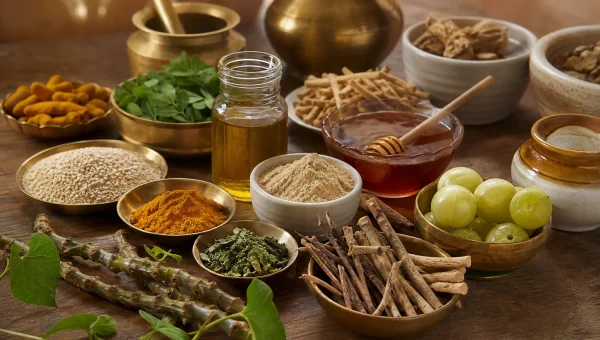
Herbs for gastroparesis-like symptoms should be selected according to constitution, strength, appetite, bowel pattern, heat signs, pregnancy status, diabetes medicines, anticoagulants, and the presence or absence of obstruction. The following herbs are classical digestive medicines, not universal prescriptions.
1. Shunthi / Nagara (Zingiber officinale) – Dry Ginger
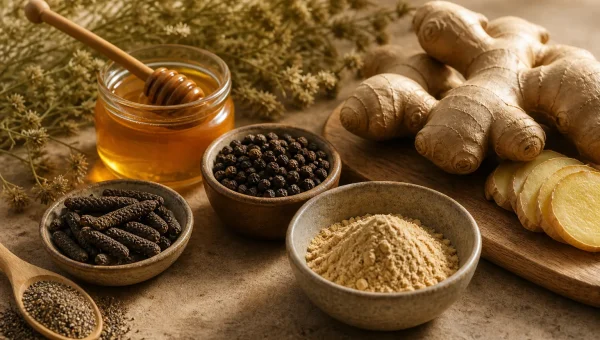
Shunthi is a major Deepana and Pachana herb in the Ayurvedic Pharmacopoeia of India. It is described as Katu in rasa, Laghu and Snigdha in guna, Ushna in virya, and Madhura in vipaka, with Anulomana, Deepana, Pachana, Vata-Kapha pacifying, and Amadoshahara actions. It is traditionally used in Agnimandya and Adhmana-type digestive conditions. Human motility trials on ginger have also reported accelerated gastric emptying in healthy volunteers and in functional dyspepsia, making Shunthi a rational herb to consider when nausea and slow emptying occur with coldness, heaviness, and low appetite.
2. Pippali / Magadhi (Piper longum) – Long Pepper
Pippali is listed in the Ayurvedic Pharmacopoeia of India as Madhura, Katu, and Tikta in rasa, Laghu and Snigdha in guna, Anushna in virya, and Madhura in vipaka. Its actions include Deepana, Kaphahara, Vatahara, Rucya, Rasayana, and Rechana. In Mandagni-type gastroparesis, Pippali is most appropriate when sluggish appetite, Kapha heaviness, gas, and weak digestive enthusiasm predominate. Because Pippali can influence absorption and can be too stimulating for some people, it should be used carefully with medicines and under practitioner guidance.
3. Chitraka (Plumbago zeylanica)
Chitraka is one of Ayurveda’s strongest Agni-kindling herbs. The Ayurvedic Pharmacopoeia of India describes Chitraka root as Katu in rasa, Laghu, Ruksha, and Tikshna in guna, Ushna in virya, and Katu in vipaka, with Deepana, Pachana, Grahi, Kapha-Vata pacifying, and Shulahara actions. Its therapeutic uses include Agnimandya and Grahani Roga. Because Chitraka contains potent constituents such as plumbagin and the API notes Shodhana before use, it should not be self-administered, especially by people with gastritis, ulcers, pregnancy, bleeding tendency, marked heat symptoms, or complex medication regimens.
4. Haritaki / Abhaya (Terminalia chebula)
Haritaki is useful when slow stomach emptying is accompanied by constipation, irregular elimination, gas, and obstructed downward movement. The Ayurvedic Pharmacopoeia of India describes Haritaki as Kashaya in rasa, Laghu and Ruksha in guna, Ushna in virya, and Madhura in vipaka, with Bhedaka and Kapha-Pitta pacifying actions, and includes Vibandha among its therapeutic uses. In a Mandagni protocol, Haritaki is not primarily a stomach stimulant; it is used to support the lower digestive pathway so that Vata can move in its proper direction.
5. Vidanga (Embelia ribes)
Vidanga is traditionally used when digestive stagnation is associated with Krimi-like features, coating, heaviness, foul belching, or fermentative intestinal patterns. The Ayurvedic Pharmacopoeia of India lists Vidanga as Katu and Tikta in rasa, Tikshna in guna, Ushna in virya, Katu in vipaka, and Krimijit and Kapha-Vata pacifying in action. It is not a routine herb for every gastroparesis case; it belongs in individualized care when the practitioner sees a clear indication.
6. Lavanga (Syzygium aromaticum) – Clove
Lavanga is useful as a supporting digestive herb when nausea, poor taste, belching, or bloating are prominent. The Ayurvedic Pharmacopoeia of India lists Lavanga as Katu and Tikta in rasa, Laghu and Tikshna in guna, Shita in virya, and Katu in vipaka, with Deepana, Pachana, Rucya, Shulahara, and Kapha-Pitta pacifying actions. Its listed uses include Chardi and Adhmana, making it a reasonable ingredient in carefully chosen digestive formulas.
Dosage Reference for Classical Herbs
The following table reflects general adult dose ranges from the Ayurvedic Pharmacopoeia of India where available. These are not gastroparesis prescriptions. People with severe nausea, vomiting, diabetes, pregnancy, ulcers, kidney disease, liver disease, frailty, feeding tubes, or multiple medications need individualized dosing from a qualified practitioner.
| Herb | Sanskrit Name | General API Dose | Useful Pattern | Safety Note |
|---|---|---|---|---|
| Dry ginger | Shunthi / Nagara | 1-2 g powder | Cold, heavy, low-appetite Mandagni with gas and bloating | Use caution with reflux, ulcers, heat signs, anticoagulants, and diabetes medicines |
| Long pepper | Pippali / Magadhi | 1-3 g powder | Kapha heaviness, weak appetite, gas, and low digestive enthusiasm | May be too heating or stimulating for some people; use carefully with medicines |
| Chitrak root | Chitraka | 1-2 g powder | Deep Mandagni, Grahani-type weakness, Kapha-Vata stagnation | Requires proper purification and practitioner supervision |
| Chebulic myrobalan | Haritaki / Abhaya | 3-6 g powder | Constipation, obstructed Vata, irregular bowel movement | Avoid unsupervised use in diarrhea, dehydration, pregnancy, or frailty |
| False black pepper | Vidanga | 0.25 g powder or 5-10 g decoction | Krimi-like digestive coating, heaviness, and Kapha-Vata stagnation | Use only when specifically indicated |
| Clove | Lavanga | 0.5-2 g powder | Nausea tendency, poor taste, belching, and bloating | Use caution with ulcers, strong heat signs, and anticoagulant medicines |
Classical Formulations for Mandagni Patterns
Classical formulations are best chosen after identifying whether the dominant pattern is Kapha heaviness, Vata obstruction, Pitta irritation, constipation, nausea, or malnutrition. In gastroparesis, a formulation that is ideal for one person may aggravate another, especially when there is burning, ulcer tendency, severe vomiting, or diabetic instability.
- Hingwashtak Churna: A classical digestive powder containing ingredients such as Maricha, Pippali, Shunthi, Hingu, cumin-type seeds, Yavani or Ajwain-type carminatives, and Saindhava Lavana. It is traditionally used for Agnimandya, Shula, Gulma, and Vata-related digestive discomfort. It is most suitable when gas, bloating, abdominal heaviness, and Vata-Kapha stagnation dominate.
- Chitrakadi Vati: A strong Deepana-Pachana formulation centered on Chitraka and other pungent digestive herbs. It may be considered in pronounced Mandagni and Ama states, but it should be supervised because Chitraka is Tikshna and Ushna.
- Lavangadi preparations: Lavangadi Vati and Lavangadi Churna are listed as important formulations associated with Lavanga. They are more appropriate when nausea tendency, poor taste, Kapha accumulation, and upper digestive discomfort are present.
- Vaishvanara Churna: A traditional formulation listed among important preparations containing Shunthi. It is considered when Vata obstruction, constipation tendency, and low digestive fire occur together, but it should be avoided without guidance in strong heat, loose stools, or active inflammation.
Dietary Protocol for Mandagni and Delayed Emptying
Diet is the foundation of care. The Ayurvedic principle is Langhana with Laghu, Ushna, well-cooked, soft, and easy-to-digest food. Modern gastroparesis dietary guidance similarly emphasizes small meals, lower fat, lower fiber, soft well-cooked foods, liquids or purees when solids are poorly tolerated, and careful hydration.
| Category | Better Choices | Limit or Avoid |
|---|---|---|
| Meal size | Five to six small meals; stop before heaviness begins | Large meals, late-night heavy dinners, overeating after long fasting |
| Texture | Soft, well-cooked, mashed, blended, or pureed foods | Hard, dry, raw, chewy, or fibrous foods |
| Grains | Rice gruel, thin khichari, soft rice, well-cooked semolina, thin porridge | Popcorn, raw grains, coarse bran, heavy breads, dense fried snacks |
| Pulses | Thin mung dal soup, strained dal, very soft khichari | Large servings of beans, chickpeas, rajma, chana, and undercooked pulses |
| Vegetables | Peeled, cooked, soft vegetables such as squash, pumpkin, bottle gourd, carrot, or zucchini | Raw salads, fibrous greens, cabbage-family vegetables, skins, peels, and stringy vegetables |
| Fat | Small measured amounts of ghee or oil when tolerated | Fried foods, creamy meals, large amounts of butter, oil, nuts, or seeds |
| Liquids | Warm water sips, thin soups, oral rehydration when needed, liquid nutrition if advised | Carbonated drinks, alcohol, iced drinks, and very large fluid volumes with meals |
Meal Timing and Daily Practices
Daily routine should reduce post-meal stagnation without exhausting the person. The aim is to keep food light, warm, rhythmic, and easy to move through the stomach.
- Walk gently after meals: A slow 10- to 15-minute walk after meals supports the conventional recommendation for gentle post-meal activity and matches the Ayurvedic preference for avoiding Kapha stagnation after eating.
- Stay upright after eating: Avoid lying down for at least two hours after meals unless a clinician gives different instructions. This helps reduce reflux and post-meal stagnation.
- Use warm, simple meals: Warm gruels, thin soups, and soft khichari are often better tolerated than cold, raw, or dry foods in Mandagni patterns.
- Keep the dinner light: A lighter evening meal reduces overnight heaviness and may improve morning appetite.
- Track tolerance: Keep a simple log of meal size, texture, fat, fiber, nausea, fullness duration, vomiting, bowel movement, and blood glucose if diabetic.
When to Seek Medical Care Urgently
Immediate medical care is needed for repeated vomiting, inability to keep liquids down, dehydration, fainting, severe abdominal pain, black or bloody vomit, black stools, rapid weight loss, very high or very low blood sugar, or suspected obstruction. Gastroparesis can lead to malnutrition, dehydration, bezoars, and dangerous glucose swings, so persistent or worsening symptoms should not be managed with home remedies alone.
Safety and Practitioner Guidance
Gastroparesis requires professional diagnosis and monitoring. Ayurvedic care should be coordinated with a qualified Ayurvedic practitioner and a licensed healthcare provider, especially in diabetic gastroparesis, pregnancy, severe weight loss, feeding-tube dependence, kidney disease, liver disease, cardiac disease, or use of anticoagulants, diabetes medicines, antiemetics, prokinetics, opioids, or antidepressants. Chitraka, strong Trikatu-style combinations, mineral preparations, and purgative herbs should not be self-prescribed. The safest starting point is dietary: small warm low-fat, low-fiber, soft meals, gentle post-meal walking, upright posture after eating, and professional review of herbs before use.
Actionable Tip: For the next seven days, simplify the digestive workload rather than adding many herbs. Eat five or six small warm meals, choose soft or blended textures, keep fat and fiber low, walk gently after meals, and avoid lying down for two hours after eating. Bring your food-and-symptom log to a qualified practitioner to decide whether Shunthi, Pippali, Hingwashtak Churna, or another Agni-supporting approach is appropriate for your exact pattern.
References
- NIDDK
- NIDDK
- NIDDK
- NIDDK
- American College of Gastroenterology
- Charaka Samhita — Grahani Chikitsa
- Ayurvedic Pharmacopoeia of India
- Effects of ginger on gastric emptying and motility in healthy humans (2008), PubMed
- Effect of ginger on gastric motility and symptoms of functional dyspepsia (2011), PubMed Central
- Ayurvedic Pharmacopoeia of India
- Openmedicinejournal (openmedicinejournal.com)
- Ijrap (ijrap.net)
- Dravyaguna notes



The Gastroparesis (Mandagni) section feels grounded enough to try carefully. I appreciate that it does not oversell the result.
The Sama Agni framework for understanding why the stomach’s contractile activity has reduced makes intuitive sense. The digestive fire concept as representing the coordinated muscular and enzymatic activity of the GI tract explains gastroparesis as profound Agni depletion rather than a structural failure alone.
Started the gastroparesis protocol my Ayurvedic doctor recommended last summer and my energy has been noticeably more consistent. This explains the mechanism.
The Gastroparesis (Mandagni) section feels grounded enough to try carefully. The safety notes could be expanded a little.
The story about losing twelve kilograms without trying really hit home; I’ve been dealing with unexplained weight loss and constant nausea for months.
One concern I have is about the use of ginger as a prokinetic. Ginger does have evidence for gastric motility improvement but it also increases gastric acid production which for some gastroparesis patients who have complicating GERD would be problematic. The article should acknowledge this contraindication.
The Gastroparesis (Mandagni) section feels grounded enough to try carefully. This feels more usable than a long list of herbs.
The Gastroparesis (Mandagni) section feels grounded enough to try carefully. The examples make the advice less abstract.
I wonder if the Trikatu churna tip would work for someone who also struggles with heartburn after meals.
The Gastroparesis (Mandagni) section feels grounded enough to try carefully. I would like to know how long to try it before judging results.
Reading about Mandagni as a Kapha dominant sluggish fire made me rethink why I feel heavy after even a small bowl of soup.
The article’s breakdown of how ginger’s 6 gingerol stimulates motilin receptors is something I haven’t seen explained in other gastroparesis pieces.
Some of the practices described require consultation with a qualified practitioner but the site provides no guidance on how to find one or what credentials to look for.
I tried this protocol and my condition worsened in the first month. I understand the initial aggravation concept but there should be a clear threshold for when to stop and seek medical care.
Has anyone tried Haritaki before bedtime and noticed a change in morning fullness?
I’m curious about the safety note on Chitrak does anyone know what lower dose looks like in practice
The idea of doing Vajrasana for five to ten minutes right after eating seems simple enough to try at work.
I liked how the piece linked vagus nerve dysfunction to Samana Vata and Apana Vata imbalance; it bridges two worlds nicely.
The dietary table that shows well cooked rice gruel as a Peya option gave me a concrete meal idea for flare ups.
Does the Vidanga recommendation assume you already have SIBO diagnosed, or is it preventive as well?
Seeing the dosage table made me realize how precise Ayurvedic dosing can be; I’ll need a good scale for the powders.
The mention of gastric emptying scans confirming six to eight hours of retention helped me understand why I feel bloated long after dinner.
I appreciate that the article stresses using these herbs alongside, not instead of, standard medical care.
The classical formulation Hingwashtak Churna sounds promising for nausea; has anyone used it with a warm meal as described?
It’s encouraging to read a case where four months of an individualized protocol brought back the ability to enjoy a normal meal without suffering.
The ginger protocol for someone with GERD complicating gastroparesis is not safe without close monitoring. Ginger increases gastric acid and in someone who already has reflux alongside delayed emptying this can make things significantly worse. I experienced this and had to stop after 2 weeks.
What is the Ayurvedic approach to idiopathic gastroparesis that has no identified cause? My gastric emptying study shows severe delay but all the potential causes, diabetes, surgery, scleroderma, have been ruled out. Does the protocol change when the underlying cause is unknown?
My practitioner wants to use mandagni alongside gastroparesis. Is this a common combination or is the article’s protocol more commonly used in isolation?
ginger as prokinetic: it does have evidence for gastric motility improvement but also increases gastric acid which for some gastroparesis patients with GERD would be problematic 🙌
initial aggravation concept is real but there should be a clear threshold for when to stop and seek medical care
I liked the practical side of Gastroparesis (Mandagni). Small daily changes are easier to follow than a perfect plan.