
Daily shaving, beard trimming, sweat, and sebum make men’s grooming more than a cosmetic habit. Male facial skin tends to be thicker, more sebaceous, and repeatedly stressed by razors and beard growth. An Ayurvedic grooming routine respects that reality: cleanse without stripping, soften hair before shaving, cool and soothe the skin afterward, and choose oils and herbs according to dryness, heat, oiliness, and sensitivity.
Ayurveda is a traditional Indian system of health that places daily routine, diet, herbs, cleansing, oiling, and seasonal adjustment within one practical framework. For men’s grooming, its value is simple: the same beard oil, shaving foam, and aftershave should not be used on every face. Dry, rough skin needs a different approach from red, reactive skin, and oily, congested beard skin needs a different approach again.
The Ayurvedic Understanding of Men’s Skin
Ayurvedic skin care begins with observation. The beard area may be dry and rough, hot and irritated, oily and congested, or a mixture of these patterns. Instead of choosing products only by fragrance or packaging, an Ayurvedic routine chooses opposite qualities: unctuous and softening care for dryness, cooling care for heat and redness, and lighter cleansing care for oiliness and heaviness.
Dosha-specific skin characteristics help guide a grooming routine:
- Vata-type skin and beard: Dry, thin, rough, flaky, tight after washing, and prone to early fine lines. It benefits from warm, nourishing oils such as sesame and almond, applied in small amounts to damp skin.
- Pitta-type skin and beard: Sensitive, warm, reddish, easily irritated after shaving, and prone to burning or inflamed-looking bumps. It benefits from cooling ingredients such as aloe vera, rose water, coconut oil in small amounts, and sandalwood.
- Kapha-type skin and beard: Oily, thick, dull, heavy, and prone to clogged follicles. It benefits from gentle cleansing, very light oiling, and bitter cleansing herbs such as neem used sparingly.
Our dosha body type quiz can help you identify your general constitution before building a grooming routine.
The Six Cornerstone Herbs for Men’s Grooming
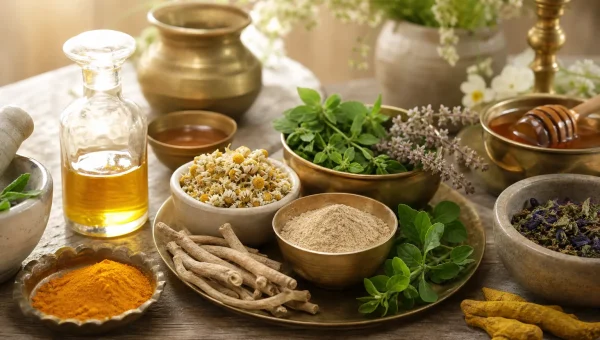
The following herbs are useful in men’s grooming because they connect classical Ayurvedic skin and hair care with practical beard, shaving, and facial-care needs. They should be used in appropriate forms, at appropriate dilution, and with attention to the person’s skin sensitivity.
1. Bhringraj (Eclipta alba / Eclipta prostrata)
Bhringraj is classically associated with hair and skin care. The Ayurvedic Pharmacopoeia of India identifies Bhringaraja as the whole plant of Eclipta alba and lists actions including Keshya (supportive to hair) and Tvacya (supportive to skin). For beard care, bhringraj is best used as an infused oil that conditions the beard, supports the skin beneath it, and fits well in a weekly beard-massage routine.
Preclinical work on Eclipta extracts supports its traditional reputation for hair-care use, but it should not be presented as a guaranteed cure for a patchy beard. Beard density is strongly influenced by genetics, age, hormones, and follicle distribution. Bhringraj oil is most appropriate as a conditioning and scalp-or-beard-skin support oil rather than as a promise of new beard growth.
2. Haridra (Curcuma longa, Turmeric)
Haridra is one of Ayurveda’s important skin herbs. The Ayurvedic Pharmacopoeia of India lists turmeric rhizome as Katu and Tikta in taste, Ruksha in quality, Ushna in potency, and includes actions such as Krimighna, Kushthaghna, Varnya, and Vishaghna. In grooming, this makes turmeric most suitable as a very small part of occasional masks for oily, dull, or blemish-prone skin.
Because turmeric is warming and strongly colored, it should not be used heavily on already red, burning, or very sensitive post-shave skin. A pinch blended with sandalwood powder, aloe vera, or rose water is usually more appropriate than a thick turmeric paste. Turmeric can temporarily stain the skin and can irritate some people when applied topically.
3. Chandana (Santalum album, Sandalwood)
Chandana, especially white sandalwood, is one of the most elegant herbs for men’s aftershave care. The Ayurvedic Pharmacopoeia of India identifies Sveta Chandana as the heartwood of Santalum album, describes its aromatic nature, and lists Shita Virya, Varnya, Dahaprasamana, Durgandhahara, Pittahara, and Kaphahara actions. These qualities make sandalwood especially useful after shaving, when the skin may feel hot, raw, or irritated.
Sandalwood powder may be blended with aloe vera gel or rose water for a short post-shave mask, while properly diluted sandalwood essential oil may be used in a beard oil or aftershave oil. Because authentic sandalwood oil is highly concentrated, only a few drops are needed in a full bottle of carrier oil.
4. Neem (Azadirachta indica)
Neem, or Nimba, is the bitter cleansing herb most relevant to oily, congested, acne-prone, or itchy beard-area skin. The Ayurvedic Pharmacopoeia of India includes several parts of Azadirachta indica and lists actions such as Kandughna, Krimighna, Kushthaghna, Vranashodhana, Kaphahara, and Pittahara for relevant neem preparations.
Neem is best used with restraint in grooming. Neem powder can be included in a short cleansing mask for oily skin, while neem seed oil should be used only in very small dilution inside a larger carrier-oil blend. It is not a direct substitute for benzoyl peroxide, antibiotics, or prescribed acne care, but it is a useful Ayurvedic support herb for men who need a cleaner, lighter beard-skin routine.
5. Ashwagandha (Withania somnifera)
Ashwagandha belongs more to internal men’s health than to ordinary topical grooming. The Ayurvedic Pharmacopoeia of India describes the root of Withania somnifera as Rasayana, Balya, Vata-Kapha-hara, and Vajikarana. In a grooming guide, its role is not that it should be rubbed into the beard, but that sleep, stress resilience, strength, and general vitality affect how consistently a man maintains healthy daily care.
Standardized ashwagandha extracts have been evaluated for stress and cortisol outcomes, but internal use should be individualized. Men taking sedatives, thyroid medication, immune-modifying medicines, or those with liver disease or complex medical conditions should speak with a qualified healthcare provider before using it.
6. Manjistha (Rubia cordifolia)
Manjistha is the classic rakta-supporting herb often included in Ayurvedic skin formulas. The Ayurvedic Pharmacopoeia of India identifies Manjistha as the dried stem of Rubia cordifolia. In men’s grooming, it is relevant where the skin pattern includes dullness, uneven tone, lingering marks, or recurrent inflammatory-looking skin concerns.
Manjistha is best treated as an internal or practitioner-guided herb rather than as a casual daily supplement. It can be part of an Ayurvedic plan for skin clarity, but it should be selected according to constitution, digestion, medications, and the exact skin condition being addressed.
The Ayurvedic Beard Oil Formula
A good beard oil should soften the beard, reduce roughness, support the skin beneath the beard, and avoid leaving the face greasy. The Ayurvedic approach is to choose the oil by skin condition rather than using one heavy fragrance blend for every man.
Base Oil Selection by Dosha
Use the following table as a practical starting point. Adjust the blend if the skin feels too heavy, too dry, too warm, or too irritated after use.
| Skin / Beard Type | Dominant Pattern | Best Base Oils | Why |
|---|---|---|---|
| Dry, wiry beard; rough skin; tightness after washing | Vata | Sesame oil + almond oil + a small amount of castor oil | Richer oils soften roughness, reduce dryness, and give weight to a wiry beard. |
| Sensitive skin; post-shave heat; redness or burning | Pitta | Jojoba oil + coconut oil + a small amount of sandalwood-infused oil | Lighter and cooling-feeling oils are better suited to heat and sensitivity. |
| Oily skin; thick beard; clogged-feeling follicles | Kapha | Jojoba oil + argan oil + a trace amount of neem seed oil | Low-residue oils condition the beard without making oily skin feel heavier. |
| Combination skin; dry beard but oily T-zone | Mixed | Jojoba oil + sesame oil + bhringraj-infused oil | This gives moderate nourishment without the heaviness of an all-sesame blend. |
DIY Ayurvedic Beard Oil Recipe
This balanced formula suits many men with a dry beard, mild shaving irritation, or combination skin. Reduce sesame oil if the face is very oily, and reduce coconut oil if it does not suit your skin.
Ingredients:
- 50 ml jojoba oil
- 25 ml sesame oil
- 15 ml coconut oil or almond oil
- 5 ml castor oil
- 5 ml bhringraj-infused sesame oil
- 3 to 4 drops sandalwood essential oil, optional
- 1 drop neem seed oil, optional for oily or congested beard skin
Method: Combine the oils in a clean dark glass bottle and shake gently. Apply 3 to 5 drops to a clean, slightly damp beard. Massage into the skin beneath the beard, then comb through. Use less oil for short beards and more for long, coarse beards. Stop use if itching, burning, rash, or unusual redness appears.
The Complete Ayurvedic Shaving Protocol
Shaving is repeated friction on a sensitive, hair-bearing area of the face. A gentler protocol prepares the beard, reduces razor drag, avoids harsh alcohol-heavy aftershaves, and gives the skin a cooling finish.
| Stage | Product | Key Ingredients | Duration | Ayurvedic Action |
|---|---|---|---|---|
| Pre-shave softening | Warm oil massage | Sesame oil for dry skin; jojoba or coconut oil for sensitive skin | 2 to 5 minutes before shaving | Softens stubble and reduces rough razor movement. |
| Gentle cleansing | Herbal cleansing paste | Neem powder in a very small amount, fuller’s earth, or plain aloe gel depending on skin type | 1 to 2 minutes, then rinse | Removes excess oil and sweat without aggressive scrubbing. |
| Shave medium | Creamy shaving layer | Aloe vera gel, a mild shaving cream, or a sandalwood-aloe paste | During shaving | Improves glide and protects the surface of the skin. |
| Post-shave cooling | Alcohol-free splash | Rose water and aloe vera gel | Immediately after rinsing | Provides a cool, soothing finish after razor friction. |
| Post-shave nourishment | Light aftershave oil or balm | Jojoba oil with a trace of sandalwood-infused oil | Leave on | Seals in comfort without making the face greasy. |
Internal Herbs for Men’s Skin Health
Topical grooming works best when digestion, sleep, stress, and daily routine are also addressed. Internal herbs should be used with more care than topical oils because they affect the whole body and may interact with medications or medical conditions.
| Herb | Sanskrit Name | Best Role in Grooming | Use Guidance |
|---|---|---|---|
| Manjistha | Manjistha (Rubia cordifolia) | Rakta-focused support for skin clarity and uneven-looking complexion patterns | Use under guidance from a qualified Ayurvedic practitioner. |
| Neem | Nimba (Azadirachta indica) | Bitter cleansing support for oily, itchy, or congested skin patterns | Do not self-prescribe long-term internal neem; seek professional guidance. |
| Ashwagandha | Ashwagandha (Withania somnifera) | General vitality, stress resilience, and men’s health support | Use cautiously with medications or medical conditions; avoid unsupervised long-term use. |
The Ayurvedic Daily Grooming Routine for Men
The classical idea of Dinacharya, or daily routine, turns grooming into a health habit. A practical men’s routine can be kept simple: clean the mouth, scrape the tongue, oil dry areas, shave gently, and protect the skin from unnecessary irritation.
- Oil pulling: Swish sesame or coconut oil briefly in the mouth, then spit it out and rinse. This is used as an oral-hygiene support and should not replace brushing, flossing, or dental care.
- Tongue scraping: Use a clean tongue scraper after waking. This supports oral cleanliness and gives a quick daily view of coating, dryness, and digestive heaviness.
- Light facial oiling: Apply 1 to 3 drops of the appropriate oil to damp skin when the face feels dry or tight. Oily skin may need this only on the beard area rather than the whole face.
- Abhyanga before shower: A short warm-oil self-massage before bathing is useful for men with dryness, roughness, stress, or Vata-type tension. Use lighter oil and less quantity if the skin is oily.
- Gentle shaving rhythm: Shave after softening the beard, avoid repeated passes over the same area, rinse with cool water, and finish with an alcohol-free soothing layer.
Our comprehensive Abhyanga oil massage guide explains oil selection and technique in more detail.
Safety and Disclaimer
Essential oils such as sandalwood should always be diluted in a carrier oil before facial use. Neem seed oil should be used only in tiny amounts in topical blends and should not be swallowed. Turmeric can stain skin and clothing and may irritate sensitive skin. Patch test every new oil, mask, or balm on the inner arm before applying it to the face. Avoid applying oils or masks over infected, bleeding, severely inflamed, or medically treated skin unless your clinician approves.
Important: This article is educational and does not replace medical, dermatological, dental, or Ayurvedic consultation. Men with acne, rosacea, eczema, folliculitis, psoriasis, fungal infection, unexplained rashes, allergies, liver disease, thyroid disease, immune disorders, or those taking prescription medications should consult a qualified healthcare provider or qualified Ayurvedic practitioner before starting internal herbs or intensive topical protocols.
One Actionable Tip
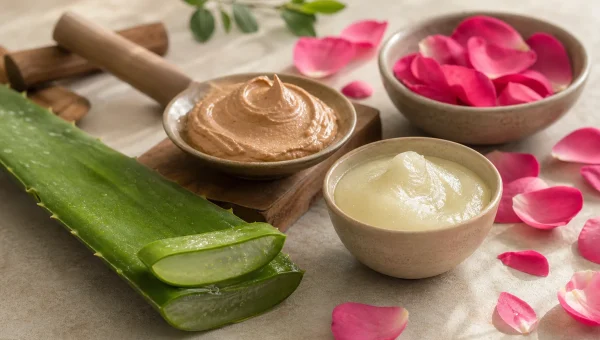
For the next seven days, replace a harsh post-shave splash with a simple alcohol-free finish: mix equal parts pure rose water and plain aloe vera gel in a small clean bottle, shake, and apply a thin layer after shaving. Keep it refrigerated, make a fresh small batch frequently, and stop if it stings, burns, or causes a rash. This single change often makes the rest of the routine easier because the skin is no longer being challenged by a strong aftershave immediately after razor friction.
References
- Male versus female skin: What dermatologists and cosmeticians should know (2018), PubMed Central
- Jddonline (jddonline.com)
- NCCIH
- Hopkinsmedicine (hopkinsmedicine.org)
- Ayurvedic Pharmacopoeia of India
- Hair growth promoting activity of Eclipta alba in male albino rats (2008), PubMed
- Eclipta prostrata promotes the induction of anagen, sustains the anagen phase through regulation of FGF-7 and FGF-5 (2019), PubMed Central
- Ayurvedic Pharmacopoeia of India
- Potential of Curcumin in Skin Disorders (2019), PubMed Central
- NCCIH
- Ayurvedic Pharmacopoeia of India
- Sandalwood Album Oil as a Botanical Therapeutic in Dermatology (2017), PubMed Central
- Ayurvedic Pharmacopoeia of India
- An Insight into the Dermatological Applications of Neem: A Review on Traditional and Modern Aspect (2021), PubMed
- The Antimicrobial Potential of the Neem Tree Azadirachta indica (2022), PubMed Central
- NIH Office of Dietary Supplements
- A prospective, randomized double-blind, placebo-controlled study of safety and efficacy of a high-concentration full-spectrum extract of ashwagandha root in reducing stress and anxiety in adults (2012), PubMed Central
- NCCIH
- A comprehensive review of Rubia cordifolia L.: Traditional uses, phytochemistry, pharmacological activities, and clinical applications (2022), PubMed Central
- Jojoba Oil: An Updated Comprehensive Review on Chemistry, Pharmaceutical Uses, and Toxicity (2021), PubMed Central
- The Effect of Aloe Vera Clinical Trials on Prevention and Healing of Skin Wound: A Systematic Review (2019), PubMed Central
- Skin anti-inflammatory activity of rose petal extract (Rosa gallica) through reduction of MAPK signaling pathway (2018), PubMed Central
- Art of Prevention: Essential Oils – Natural Products Not Necessarily Safe (2021), PubMed Central
- Tisserandinstitute (tisserandinstitute.org)
- Oil pulling and importance of traditional medicine in oral health maintenance (2017), PubMed Central
- Effectiveness of Oil Pulling for Improving Oral Health: A Meta-Analysis (2022), PubMed Central
Been using ayurvedic for about 3 months now and the difference in how I feel is real. My practitioner said the same things this article covers so good to have it spelled out.
✨ Sandalwood and vetiver are quality ingredients but genuine sandalwood oil is expensive. are there lower-cost authentic alternatives?
The difference between the Vata-type dry beard that needs heavy conditioning and the Pitta-type beard that grows fast but causes skin inflammation is useful. I have always had folliculitis alongside my beard and every grooming product I tried either dried my skin out or made the inflammation worse. The dosha approach to beard care is something I had not considered.
For Gentleman’s Grooming, consistency seems like the hard part. A few more examples would still help.
I switched to an entirely Ayurvedic grooming routine six months ago. The results on my skin are better than anything I used before. The biggest revelation was stopping the commercial face wash entirely and using ubtan instead. My skin is less oily not more oily as I expected.
the ingredient list for the beard oil suggests sandalwood and vetiver. these are quality ingredients but the cost of genuine sandalwood oil is significant. the article could address whether synthetic equivalents are acceptable or whether there are lower-cost authentic alternatives that provide similar benefits for beard conditioning.
I made the rose and aloe aftershave from this recipe and my razor burn which I have had for years from close shaving is almost completely gone. I tried everything from expensive commercial aftershaves to hydrocortisone cream. This recipe cost about 200 rupees in ingredients and works better.
For Gentleman’s Grooming, consistency seems like the hard part. I would still ask a practitioner before changing medicines.
sandalwood and vetiver are quality ingredients but genuine sandalwood oil is expensive. are there lower-cost authentic alternatives? 🌿
Started using a basic Ayurvedic beard oil about two months ago and the change in the skin texture underneath is genuinely noticeable. I had chronic dry patches along the jawline that I’d assumed were just normal. They’re mostly gone now. Curious whether the article addresses what to do when you’re clean-shaven — are the same oils appropriate as a general face moisturizer or does the formulation need to be different?
The section on dosha specific oils helped me understand why my beard feels dry in winter.
I am 43 and have been using the same commercial routine since I was 20. Reading this made me realize I have just been repeatedly damaging and inadequately moisturizing my skin for two decades. The simplicity of the Ayurvedic approach is striking. Wash less aggressively, oil more, less fragrance. Why is this not standard advice?
🌿 sandalwood and vetiver are quality ingredients but genuine sandalwood oil is expensive. are there lower-cost authentic alternatives?
💯 sandalwood and vetiver are quality ingredients but genuine sandalwood oil is expensive. are there lower-cost authentic alternatives?
I am generally unconvinced by natural grooming products because most have not been tested against mainstream products in controlled conditions. The anecdotal evidence in this article is interesting but the 20 years of skin improvement in your friend might have been coincidence or a change in diet or stress level. Can you point to any comparative studies?
found this post helpful. will try the suggested approach. (ref 1878-38)
found this post helpful. will try the suggested approach. (ref 1878-70)
That anecdote about the friend texting after four days made me curious about trying a homemade pre shave oil.
the Vata dry beard vs Pitta fast-growing beard with folliculitis is a useful distinction. I have always had folliculitis alongside my beard
switched to entirely Ayurvedic grooming 6 months ago. stopping the commercial face wash entirely and using ubtan instead. skin is less oily not more oily
Kapha skin for men thick, oily, prone to blackheads. most grooming content focuses on Vata or Pitta. the Kapha man needs lighter oils and more cleansing focus
What about Kapha-type skin for men, the skin that tends to be oily, prone to blackheads, and thick? Most Ayurvedic men’s grooming content focuses on Vata or Pitta. The Kapha presentation needs lighter oils and more cleansing focus rather than the conditioning emphasis in this article.
Sandalwood and vetiver are quality ingredients but genuine sandalwood oil is expensive. are there lower-cost authentic alternatives?
20 years of the same commercial routine. the simplicity of this approach is striking. wash less aggressively, oil more, less fragrance. why is this not standard advice?
found this post helpful. will try the suggested approach. (ref 1878-89)
The Gentleman’s Grooming section feels grounded enough to try carefully. Would be useful to see a short checklist next.
Pitta beard type with inflamed follicles and dry skin at the base. the contradiction seems to require a lighter oil rather than no oil. what carrier?
rose and aloe aftershave from this recipe. razor burn I’ve had for years from close shaving is almost completely gone
found this post helpful. will try the suggested approach. (ref 1878-12)
sandalwood and vetiver r quality ingredients but genuine sandalwood oil is expensive. r there lower-cost authentic alternatives?
🙌 Sandalwood and vetiver are quality ingredients but genuine sandalwood oil is expensive. are there lower-cost authentic alternatives?
found this post helpful. will try the suggested approach. (ref 1878-10)
Kapha skin for men thick, oily, prone to blackheads. most grooming content focuses on Vata or Pitta. the Kapha man needs lighter oils and more cleansing focus 🙏
kapha skin for men thick, oily, prone to blackheads. most grooming content focuses on Vata or Pitta. the Kapha man needs lighter oils and more cleansing focus नमस्ते
✨ Kapha skin for men thick, oily, prone to blackheads. most grooming content focuses on Vata or Pitta. the Kapha man needs lighter oils and more cleansing focus
found this post helpful. will try the suggested approach. (ref 1878-17)
Kapha skin for men thick, oily, prone to blackheads. most grooming content focuses on Vata or Pitta. the Kapha man needs lighter oils and more cleansing focus ❤️
found this post helpful. will try the suggested approach. (ref 1878-15)
I wonder if sandalwood really reduces post shave irritation for sensitive skin.
found this post helpful. will try the suggested approach. (ref 1878-18)
I was looking for a plain explanation of Gentleman’s Grooming. This is the kind of detail readers can test slowly.
sandalwood and vetiver are quality ingredients but genuine sandalwood oil is expensive. are there lower-cost authentic alternatives? ठीक है
🙌 Kapha skin for men thick, oily, prone to blackheads. most grooming content focuses on Vata or Pitta. the Kapha man needs lighter oils and more cleansing focus
found this post helpful. will try the suggested approach. (ref 1878-48)
I was looking for a plain explanation of Gentleman’s Grooming. The timing advice is the part I would start with.
I was looking for a plain explanation of Gentleman’s Grooming. This would be easier to follow with a one-week sample plan.
found this post helpful. will try the suggested approach. (ref 1878-29)
Kapha skin for men thick, oily, prone to blackheads. most grooming content focuses on Vata or Pitta. the Kapha man needs lighter oils and more cleansing focus धन्यवाद
found this post helpful. will try the suggested approach. (ref 1878-25)
sandalwood and vetiver are quality ingredients but genuine sandalwood oil is expensive. are there lower-cost authentic alternatives? 🙌
I was looking for a plain explanation of Gentleman’s Grooming. The examples make the advice less abstract.
Useful.
I was looking for a plain explanation of Gentleman’s Grooming. I would like to know how long to try it before judging results.
🙏 Kapha skin for men thick, oily, prone to blackheads. most grooming content focuses on Vata or Pitta. the Kapha man needs lighter oils and more cleansing focus
sandalwood and vetiver are quality ingredients but genuine sandalwood oil is expensive. are there lower-cost authentic alternatives? ✨
Been using a commercial aftershave balm for years and my skin still gets tight and red after shaving. Never connected it to the alcohol content until I read this. The idea of switching to something herb-based feels like a bigger change than it probably is — I think I’ve just been trained to think skincare for men has to sting a little to be working. Going to look into the formulations mentioned here.
I bought a beard oil from a small Ayurvedic brand last year mostly because the bottle looked nice, honestly. But I noticed my skin underneath was less itchy than it used to be during the dry winter months. Reading this makes me think there was something to it beyond marketing. Is there a meaningful difference between using neem-based versus sesame-based carrier oils for different skin types under the beard?
Kapha skin for men thick, oily, prone to blackheads. most grooming content focuses on Vata or Pitta. the Kapha man needs lighter oils and more cleansing focus 🙌
found this post helpful. will try the suggested approach. (ref 1878-37)
It seems Neem could be a good alternative to benzoyl peroxide for acne prone areas.
The advice around Gentleman’s Grooming is specific enough to be useful. The article avoids making it sound like a quick fix.
found this post helpful. will try the suggested approach. (ref 1878-39)
found this post helpful. will try the suggested approach. (ref 1878-40)
The advice around Gentleman’s Grooming is specific enough to be useful. This feels more usable than a long list of herbs.
found this post helpful. will try the suggested approach. (ref 1878-45)
found this post helpful. will try the suggested approach. (ref 1878-47)
found this post helpful. will try the suggested approach. (ref 1878-46)
🙏 sandalwood and vetiver are quality ingredients but genuine sandalwood oil is expensive. are there lower-cost authentic alternatives?
found this post helpful. will try the suggested approach. (ref 1878-49)
Kapha skin for men thick, oily, prone to blackheads. most grooming content focuses on Vata or Pitta. the Kapha man needs lighter oils and more cleansing focus ठीक है
found this post helpful. will try the suggested approach. (ref 1878-51)
Same here!
The Gentleman’s Grooming angle is useful here. The article avoids making it sound like a quick fix.
found this post helpful. will try the suggested approach. (ref 1878-54)
My friend mentioned using castor oil for beard thickness and noticed fewer patchy spots after a week.
found this post helpful. will try the suggested approach. (ref 1878-55)
found this post helpful. will try the suggested approach. (ref 1878-73)
kapha skin for men thick, oily, prone to blackheads. most grooming content focuses on Vata or Pitta. the Kapha man needs lighter oils and more cleansing focus 🌿
found this post helpful. will try the suggested approach. (ref 1878-57)
Sandalwood and vetiver are quality ingredients but genuine sandalwood oil is expensive. are there lower-cost authentic alternatives? धन्यवाद
found this post helpful. will try the suggested approach. (ref 1878-59)
After reading about Bhringraj, I’m tempted to add a few drops to my regular beard oil.
found this post helpful. will try the suggested approach. (ref 1878-60)
❤️ kapha skin for men thick, oily, prone to blackheads. most grooming content focuses on Vata or Pitta. the Kapha man needs lighter oils and more cleansing focus
The Gentleman’s Grooming angle is useful here. Good starting point for a cautious reader.
found this post helpful. will try the suggested approach. (ref 1878-71)
Good reminder on Gentleman’s Grooming. A few more examples would still help.
found this post helpful. will try the suggested approach. (ref 1878-63)
For oily skin types, the jojoba and argan blend described for Kapha sounds like a light option that won’t clog pores.
found this post helpful. will try the suggested approach. (ref 1878-65)
My wife gave me a small bottle of something she’d mixed — sandalwood, vetiver, maybe one other oil — and told me to use it instead of my foam. I was resistant for about a week, mostly out of habit. The difference in post-shave skin feel was noticeable within three days. Does the article cover what to do with a thick beard? I have trouble getting a close shave without the lather and I’m wondering if the pre-shave oil changes the approach entirely.
found this post helpful. will try the suggested approach. (ref 1878-67)
When the article mentioned higher collagen density in men’s skin, it explained why my shaving routine feels harsher than my partner’s.
found this post helpful. will try the suggested approach. (ref 1878-69)
Sure, the rose water and aloe vera spray tip is simple enough to try tomorrow after shaving.
found this post helpful. will try the suggested approach. (ref 1878-72)
I appreciate the safety note about diluting essential oils before applying them to the face.
found this post helpful. will try the suggested approach. (ref 1878-74)
found this post helpful. will try the suggested approach. (ref 1878-75)
Kapha skin for men thick, oily, prone to blackheads. most grooming content focuses on Vata or Pitta. the Kapha man needs lighter oils and more cleansing focus ✨
💯 kapha skin for men thick, oily, prone to blackheads. most grooming content focuses on Vata or Pitta. the Kapha man needs lighter oils and more cleansing focus
Sandalwood and vetiver are quality ingredients but genuine sandalwood oil is expensive. are there lower-cost authentic alternatives? 💯
found this post helpful. will try the suggested approach. (ref 1878-79)
found this post helpful. will try the suggested approach. (ref 1878-80)
found this post helpful. will try the suggested approach. (ref 1878-82)
I came for Gentleman’s Grooming and this answered the main question. This is the kind of detail readers can test slowly.
found this post helpful. will try the suggested approach. (ref 1878-84)
found this post helpful. will try the suggested approach. (ref 1878-85)
Kapha skin for men thick, oily, prone to blackheads. most grooming content focuses on Vata or Pitta. the Kapha man needs lighter oils and more cleansing focus 💯
found this post helpful. will try the suggested approach. (ref 1878-87)
found this post helpful. will try the suggested approach. (ref 1878-88)
found this post helpful. will try the suggested approach. (ref 1878-90)
found this post helpful. will try the suggested approach. (ref 1878-91)
found this post helpful. will try the suggested approach. (ref 1878-92)
I came for Gentleman’s Grooming and this answered the main question. Good starting point for a cautious reader.
found this post helpful. will try the suggested approach. (ref 1878-94)
found this post helpful. will try the suggested approach. (ref 1878-95)
🌿 Kapha skin for men thick, oily, prone to blackheads. most grooming content focuses on Vata or Pitta. the Kapha man needs lighter oils and more cleansing focus
The part about Gentleman’s Grooming feels realistic. Would be useful to see a short checklist next.
found this post helpful. will try the suggested approach. (ref 1878-98)
found this post helpful. will try the suggested approach. (ref 1878-99)