
She had seen specialist after specialist for years: gynecology, dermatology, pelvic floor therapy, pain management. The diagnosis was vulvodynia, a persistent vulvar pain condition that can make sitting, cycling, intimacy, tight clothing, and ordinary workdays feel difficult. Ayurveda does not replace medical evaluation for vulvar pain, but it offers a structured way to understand patterns of pain, burning, dryness, hypersensitivity, and pelvic guarding through the language of Vata, Pitta, Apana Vata, tissue nourishment, and local therapies performed with care.
Understanding Vulvodynia in Ayurvedic Terms
Vulvodynia is described in conventional medicine as vulvar pain lasting at least three months without a clear identifiable cause such as infection, skin disease, or another diagnosable disorder. Population estimates vary: several community studies place vulvodynia-like symptoms around 7 to 8 percent, while one U.S. survey reported 16 percent lifetime prevalence. Symptoms commonly include burning, stinging, rawness, soreness, irritation, pain with touch, pain with intercourse, and pain with prolonged sitting.
Ayurveda does not present a modern diagnostic label called vulvodynia. Instead, chronic vulvar pain is assessed under the wider classical framework of Yonivyapad, disorders of the female genital tract. In that framework, a Vata-dominant picture may present with piercing, variable, dry, spasmodic, or touch-sensitive pain; a Pitta-dominant picture may present with burning, heat, redness, tenderness, or inflammatory sensitivity; and many chronic cases show a Vata-Pitta pattern where burning and nerve-like sensitivity appear together.
Apana Vata, Pain, and Pelvic Sensitivity
The pelvic organs are closely linked with Apana Vata, the downward-moving aspect of Vata associated with menstruation, pregnancy, labor, elimination, and the lower pelvis. Classical discussion of Yonivyapad gives special importance to Vata because genital organs are described in relation to Apana Vayu, and female reproductive functions are governed by it. When Vata becomes disturbed in this region, the Ayurvedic approach emphasizes warmth, unctuousness, gentle regulation, local soothing measures, and removal of aggravating factors.
Root Factors Through the Ayurvedic Framework
Classical Ayurveda describes Yonivyapad as arising through disturbed dosha, especially Vata, along with faulty conduct, unsuitable diet and lifestyle, and disturbances of reproductive tissue. Charaka describes Vata-dominant disorders with symptoms such as piercing pain, stiffness, numbness, hardness, and abnormal sensations, while Pitta-dominant disorders are linked with excessive pungent, sour, salty, and alkaline intake and symptoms such as burning, heat, inflammation, and tenderness.
- Vata aggravation: Irregular routines, depletion, dryness, excessive strain, disturbed sleep, constipation tendencies, anxiety-driven muscle guarding, and pelvic floor tightness can intensify variable or nerve-like pain.
- Pitta aggravation: Very spicy, sour, salty, fermented, acidic, alcoholic, and heating foods can aggravate burning, redness, heat, and sensitivity in Pitta-dominant presentations.
- Local tissue depletion: Dryness, hormonal transitions, inadequate lubrication, repeated irritation, and over-cleansing can make vulvar tissue more reactive and tender.
- Pelvic floor guarding: Many people with vulvodynia have tension in the pelvic floor muscles, so local Ayurvedic care is best combined with appropriate pelvic floor assessment and therapy.
The complete Vata dosha guide explains the broader role of Vata in pain, dryness, sensitivity, and nervous-system reactivity, while the Pitta diet guide gives practical food guidance for burning and heat-dominant patterns.
Key Herbs in Ayurvedic Vulvodynia Support
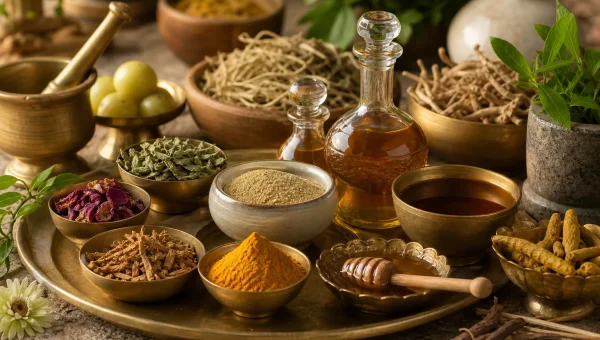
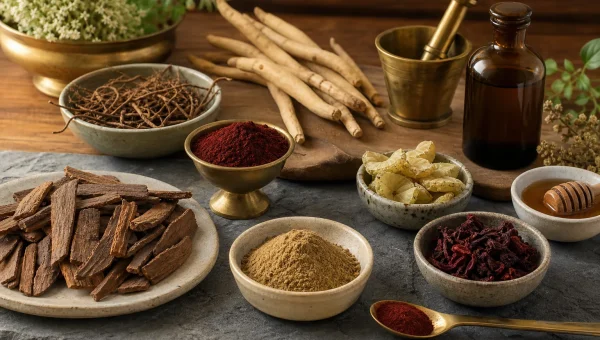
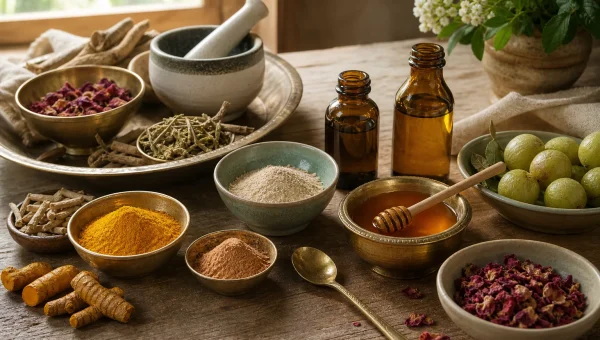
Herbs for vulvar pain are chosen by pattern rather than by diagnosis alone. A dry, variable, touch-sensitive Vata pattern is approached differently from a hot, burning, red, Pitta pattern. Internal herbs, oils, decoctions, and topical applications should be selected by a qualified practitioner after active infection, dermatological disease, severe lesions, and other medical causes have been assessed.
Shatavari (Asparagus racemosus)
Shatavari is one of Ayurveda’s primary nourishing herbs for female reproductive health. The Ayurvedic Pharmacopoeia of India describes Shatavari root as sweet and bitter in taste, heavy and unctuous in quality, cooling in potency, sweet after digestion, and associated with actions such as Balya, Rasayana, Pittahara, Vatahara, and Stanyakara. For vulvodynia support, it is most appropriate when burning or sensitivity is accompanied by dryness, depletion, hormonal transition, or Vata-Pitta imbalance.
Ashwagandha (Withania somnifera)
Ashwagandha is used when pain is accompanied by fatigue, poor sleep, stress reactivity, muscle tension, and Vata-type nervous-system sensitivity. The Ayurvedic Pharmacopoeia of India describes Ashwagandha root as bitter and astringent in taste, light in quality, heating in potency, sweet after digestion, and associated with Rasayana, Balya, Vata-kapha-apaha, and strength-promoting uses. In a hot, burning, highly Pitta presentation, it is usually balanced with cooling and moistening herbs rather than used alone.
Guduchi (Tinospora cordifolia)
Guduchi is chosen when Pitta heat, inflammatory tendency, fatigue, and recurrent sensitivity coexist. The Ayurvedic Pharmacopoeia of India describes Guduchi stem as bitter and astringent in taste, light in quality, heating in potency, sweet after digestion, and associated with Rasayana, Tridoshashamaka, Raktashodhaka, Balya, and Jvaraghna actions. In vulvodynia support, it belongs more to the systemic balancing plan than to direct self-application on vulvar tissue.
Yashtimadhu (Glycyrrhiza glabra)
Yashtimadhu, or licorice root, is valued for its sweet, unctuous, cooling, and tissue-soothing profile. The Ayurvedic Pharmacopoeia of India describes it as sweet in taste, heavy and unctuous in quality, cooling in potency, sweet after digestion, and associated with Vatapittajit, Raktaprasadana, Balya, Varnya, and wound-related uses. It may be selected in carefully prepared internal or external formulas where dryness, burning, and tissue irritation are prominent, but it is not suitable for unsupervised long-term use.
Chandana (Santalum album)
Shveta Chandana, white sandalwood heartwood, is a classical cooling herb for burning conditions. The Ayurvedic Pharmacopoeia of India describes it as sweet and bitter in taste, light and dry in quality, cooling in potency, pungent after digestion, and associated with Pittahara, Dahaprashamana, Trishnahara, and fragrance-related actions. In vulvar pain support, it is relevant to Pitta-dominant burning, but essential oils or concentrated aromatic preparations should never be applied to the vulvar area unless specifically prescribed and properly diluted by a qualified clinician.
Lodhra (Symplocos racemosa)
Lodhra is a classical astringent herb for female reproductive tissues. The Ayurvedic Pharmacopoeia of India describes Lodhra bark as astringent in taste, light in quality, cooling in potency, pungent after digestion, and associated with Kaphapittanut, Grahi, and uses such as Pradara, Shotha, and Raktapitta. It is most appropriate when there is Pitta-Kapha irritation, tenderness, discharge tendency, or tissue laxity, and less appropriate as a drying standalone herb in severe Vata dryness.
Ayurvedic External Therapies for Vulvodynia
Local Ayurvedic therapies can be helpful only when performed gently, hygienically, and with the correct indication. Vulvar tissue is delicate; harsh douching, strong essential oils, irritant soaps, or self-insertion of unverified products can worsen pain. A practitioner should first identify whether the presentation is Vata-dominant, Pitta-dominant, mixed, infectious, dermatological, hormonal, neuropathic, or pelvic-floor dominant.
Yoni Pichu
Yoni Pichu is a classical local therapy in which a sterile cotton or gauze pad is saturated with a prescribed medicated oil or ghee and placed locally for a limited time. Charaka describes tamponing with medicated oils in Vata-predominant Yonivyapad and recommends warm, unctuous measures such as irrigation, massage, and tamponing for Vata disorders of the female genital tract. In practice, Vata-type dryness and pain may call for warm, nourishing oils, while Pitta-type burning may call for cooling ghee or pitta-pacifying preparations.
Yoni Prakshalana
Yoni Prakshalana refers to a prescribed herbal wash or irrigation, selected according to dosha and tissue state. Classical guidance includes irrigation and local applications for female genital tract disorders, with cooling and Pitta-alleviating measures for Pitta-dominant presentations. For vulvodynia support, this should be mild, non-irritating, and professionally guided; it is not the same as routine commercial douching.
Abhyanga and Gentle Vata-Calming Care
Warm oil application to the body, especially the lower back, abdomen, hips, and thighs, can support Vata calming when pelvic pain is linked with dryness, tension, coldness, sleep disturbance, and anxiety-driven guarding. Classical management of Vata-dominant Yonivyapad emphasizes warmth, oiliness, fomentation, and Vata-pacifying measures. In chronic vulvar pain, these are best used as supportive therapies alongside medical diagnosis, pelvic floor therapy, and individualized herbal care.
Internal Protocol and Dose Ranges
The following dose ranges are adult oral ranges drawn from Ayurvedic pharmacopoeial monographs and are not a self-prescription. Vulvodynia often requires individualized dosing, correct formulation, short monitoring intervals, and coordination with a gynecologist, pelvic pain clinician, or pelvic floor physical therapist.
| Herb | Sanskrit Name | Common Form | Classical Adult Oral Range | Best-Fit Pattern | Primary Ayurvedic Role |
|---|---|---|---|---|---|
| Shatavari | Shatavari | Root powder | 3–6 g | Dryness, depletion, Vata-Pitta sensitivity | Cooling nourishment, reproductive tissue support |
| Ashwagandha | Ashwagandha | Root powder | 3–6 g | Vata pain with fatigue, stress, poor sleep | Strength, grounding, Vata support |
| Guduchi | Guduchi | Stem powder or decoction | 3–6 g powder or 20–30 g decoction material | Pitta heat with fatigue or systemic sensitivity | Rasayana, Pitta balance, tissue resilience |
| Yashtimadhu | Yashtimadhu | Root powder | 2–4 g | Dry, burning, irritated tissue states | Cooling, unctuous, Vata-Pitta soothing |
| Chandana | Shveta Chandana | Heartwood powder | 3–6 g | Burning, heat, Pitta-dominant sensitivity | Pitta cooling, burning support |
| Lodhra | Lodhra | Bark powder or decoction | 3–5 g powder or 20–30 g decoction material | Pitta-Kapha irritation, discharge tendency, tissue laxity | Astringent toning, Pitta-Kapha balance |
Dietary Modifications for Vulvodynia
Dietary support depends on whether the pain is primarily burning and hot, dry and sharp, or mixed. In Pitta-dominant vulvar burning, the classical direction is to reduce excessive pungent, sour, salty, alkaline, fermented, alcoholic, and overheating foods while emphasizing cooling, moist, gently sweet, and simple meals. In Vata-dominant pain, regular warm meals, adequate healthy fats, soft cooked foods, and stable meal timing are often more important than restrictive eating. Any low-oxalate or highly restricted diet should be individualized, time-limited, and supervised so that nutritional depletion does not worsen Vata.
Pelvic Floor and Yoga Considerations
Pelvic floor tension is common in vulvodynia, and conventional guidance includes assessment for pelvic floor dysfunction and use of pelvic floor physical therapy when appropriate. Ayurvedic yoga support should therefore emphasize release, grounding, and breath rather than aggressive strengthening. Gentle options include supported Supta Baddha Konasana, supported Child’s Pose, Viparita Karani if comfortable, slow diaphragmatic breathing, and Bhramari pranayama. Any posture that increases burning, pressure, or guarding should be stopped.
Putting the Plan Together
A practical Ayurvedic vulvodynia support plan begins with diagnosis and safety screening, then identifies the dominant pattern: Vata dryness and nerve-like pain, Pitta burning and heat, Kapha-Pitta discharge or heaviness, or a mixed pattern. The plan may combine Pitta-pacifying diet, Vata-calming routine, selected herbs, gentle local therapy, pelvic floor care, bowel regularity, sleep support, and symptom tracking. The Shatavari women’s health guide and Ayurvedic fertility treatment guide offer additional context for reproductive tissue nourishment and Vata-Pitta balance.
Actionable Tip: For the next three weeks, keep a simple vulvar pain diary with morning pain score, burning score, sitting tolerance, bowel pattern, sleep quality, menstrual timing, food triggers, and stress level. At the same time, simplify the evening routine: avoid alcohol, very spicy foods, sour fermented foods, and late caffeine; eat a warm, moist, easy-to-digest dinner; practice five minutes of slow diaphragmatic breathing; and discuss a cooling, nourishing herb such as Shatavari with a qualified practitioner if dryness or burning is prominent.
Nothing in this article diagnoses, treats, or cures a medical condition. Use it as educational information and consult a qualified Ayurvedic practitioner, gynecologist, pelvic pain specialist, pelvic floor physical therapist, or healthcare provider before starting herbs, supplements, local therapies, detoxes, or therapeutic protocols, especially if pregnant, breastfeeding, managing a medical condition, or taking medication.
References
- NCBI
- ACOG
- Mayoclinic (mayoclinic.org)
- Prevalence of symptoms consistent with a diagnosis of vulvodynia: population-based estimates from 2 geographic regions (2014), PubMed
- Chronic vulvar and other gynecologic pain: prevalence and characteristics in a self-reported survey (2006), PubMed Central
- Charaka Samhita — Yonivyapat Chikitsa
- Ayurvedic Pharmacopoeia of India
- Ayurvedic Pharmacopoeia of India
- Antihyperalgesic effects of ashwagandha (Withania somnifera root extract) in rat models of postoperative and neuropathic pain (2018), PubMed
- An investigation into the stress-relieving and pharmacological actions of an ashwagandha (Withania somnifera) extract: A randomized, double-blind, placebo-controlled study (2019), PubMed
- NCCIH
- Tinospora cordifolia (Willd.) Hook. f. and Thoms. (Guduchi) – validation of the Ayurvedic pharmacology through experimental and clinical studies (2010), PubMed Central
- NCBI
- NCCIH
- Medsafe (medsafe.govt.nz)
- Ayurvedic Pharmacopoeia of India
- ACOG
- Mayoclinic (mayoclinic.org)
- Evaluation and Treatment of Vulvodynia: State of the Science (2023), PubMed Central
11 specialists is my number too. I stopped counting at 9. The vulvodynia diagnosis takes years and the ‘learn to manage it’ endpoint is the worst possible outcome of a healthcare system encounter. The Ayurvedic explanation of why my pain has an inflammatory and nervous system component is the first thing that has made clinical sense.
The Pitta-Vata pattern for vulvodynia burning, hypersensitivity, dryness alternating with inflammation is exactly my presentation. My pelvic floor PT works on the physical component. The Ayurvedic cooling and vata-pacifying approach addresses a different layer of the same problem.
I want to add for other vulvodynia patients: keep your pelvic floor PT. The Ayurvedic approach described here is supportive, not a replacement for the hands-on work that PT provides. I’ve found the two complementary but neither sufficient alone.
The Shatavari application for vaginal dryness is this external or internal use? The article mentions both contexts but the distinction is clinically important, especially for someone navigating this condition for the first time.
The article lists Shatavari internally as 3 to 5 grams in warm milk twice daily, and also mentions Shatavari Ghrita as one of the oils used in Yoni Pichu. So both routes exist, but the main dosage table covers internal use. Worth clarifying with a practitioner which form applies to your situation.
I’ve had vulvodynia for 8 years and the diet modification alone eliminating oxalate-rich foods, reducing Pitta-aggravating foods reduced my flare frequency by about 40% within a month. No medication, no procedures. Just food changes. I wish I’d known this 7 years ago.
That 40 percent reduction is striking. Did you track oxalates specifically or focus more on the broader Pitta-pacifying changes like cutting alcohol and caffeine? Trying to figure out where to start.
The psychological impact of vulvodynia is addressed in the opening but deserves more space. Four years of severe chronic pelvic pain changes how you relate to your body, your relationships, your identity. The healing is physical and psychological simultaneously.
Yes, and I think that is where Shirodhara fits into this. When pain has been present for years, the nervous system is running a constant alarm. Calming that central hypersensitivity is not separate from treating the physical pain, it is part of the same process. The article connects both without treating them as unrelated problems.
Shirodhara is mentioned here specifically for calming the central nervous system and the emotional load of chronic pain amplification. That autonomic hypersensitivity angle is rarely touched in conventional treatment plans, which tend to stay purely physical. It does seem like the nervous system piece needs its own focus.
The evening routine suggestion at the end is the most practical part. Shatavari in warm milk before bed sounds manageable as a starting point, not overwhelming.
Three weeks is a short enough window to test without feeling like a huge commitment. I noticed the article specifically says warm milk and not hot, which seems like a detail that actually matters for how the herb is absorbed.
Agreed. The morning pain scoring on a 1 to 10 scale is a smart addition too. It gives actual data on whether the dosha pattern is shifting rather than just relying on memory of how bad things felt on a given day.
The morning pain tracking on a 1 to 10 scale is actually a practical detail that makes the two to three week window feel more structured instead of just waiting and hoping. Easier to notice a gradual shift when you are writing it down daily rather than trying to remember how last Tuesday compared to three weeks ago.
Is there any guidance for vulvodynia that coexists with endometriosis? The two conditions often occur together and the treatment intersects in complicated ways. The article addresses them separately but many patients have both.
The article does not address that overlap directly but the Pitta-dominant inflammatory pathway described here seems like where the two conditions would intersect most. Both involve chronic pelvic inflammation. Worth asking a practitioner specifically about managing both at once rather than treating them as two separate protocols.
I appreciate that this article exists but want to be honest: I tried several of the herbs mentioned for 3 months and saw no meaningful change. Vulvodynia is a heterogeneous condition and the Ayurvedic approach will not work for everyone. Please keep your conventional care team involved.
The distinction between provoked vestibulodynia and generalized vulvodynia in Ayurvedic terms would have helped me earlier. My condition is provoked and localized is the protocol the same as for generalized pain?
The article gave a clear picture of how Ayurveda looks at vulvodynia beyond just symptom masking.
I had never heard of Yashtimadhu being used for burning pain before. Does the topical use need a practitioner to prepare it, or is there a ready-made option available?
from what i have gathered, some Ayurvedic pharmacies carry licorice-based topical formulations, but the article specifically says external pelvic therapies should be done with a qualified practitioner and sterile materials. probably worth a consultation before trying anything on your own in that area
Eliminating oxalate foods and reducing pitta diet changed my flare frequency by nearly half within a month. no medication change. just food
Keep your pelvic floor PT. ayurvedic is complementary not replacement. both together is better than either alone. speaking from experience
provoked vestibulodynia vs generalized, the article treats them together. my condition is provoked and localized. same protocol?
im a patient advocate and this article is the most responsibly framed Ayurvedic vulvodynia content ive seen. sharing with my community with a note about complementary care
Sitz bath with cooled Triphala water for 6 weeks. burning days reduced from daily to 3-4 times per week. small but real
@Paul found this post helpful. will try the suggested approach. (ref 1852-40)
The Apana Vata explanation actually helped me connect some dots. My pain always worsens around menstruation and the article explains why that timing makes sense within the Ayurvedic framework.
The Pitta-Vata combined presentation described here matched mine almost exactly. Burning most of the time with intermittent stabbing that gets worse around menstruation. I had attributed the cyclical pattern to hormones without ever understanding why, so the Apana Vata and menstrual function connection in the article was genuinely clarifying.
i’m a patient advocate and this article is the most responsibly framed Ayurvedic vulvodynia content I’ve seen. sharing with my community with a note about complementary care
My gynecologist and the Ayurvedic practitioner I see have very different vocabularies for the same problem. Reading something that tries to map them together is useful even if the mechanisms do not always line up perfectly.
The oxalate section caught my attention. I eat a lot of spinach daily and have been flaring for months. Not sure if that is the cause but it seems worth cutting back for a few weeks to see.
Is Yoni Pichu something that needs a trained practitioner to administer or can it be done at home? The article mentions medicated oil on gauze but I want to confirm the oils listed are actually available outside of a clinic.
The connection between urge suppression and pelvic pain was something I had never read before. The idea that habitually holding the urge to urinate can worsen vulvar hypersensitivity sounds strange but it is the kind of detail no specialist ever mentioned to me.
11 years of this condition and the Pitta-Vata explanation is the first framework that maps to the cycling pattern of my symptoms throughout the month
found this post helpful. will try the suggested approach. (ref 1852-11)
The article focuses mostly on generalized burning but mentions provoked vestibulodynia once in the context of Ama accumulation. For cases where pain only occurs with contact or pressure, would the Pitta cooling protocol still be the right starting point or is that a separate Yonivyapad presentation?
Good question actually. The article ties Ama accumulation specifically to provoked vestibulodynia rather than the generalized burning, which suggests the starting protocol might differ. Assessing both the Vata dryness and the Pitta inflammation separately before defaulting to one approach seems like the logical step.
Eleven specialists in four years and still no clear answer on why the pain exists. That opening honestly describes what a lot of women go through. Whether or not the Ayurvedic explanation is fully provable, at least it offers a reason to investigate rather than just telling you to manage it.
The Yoni Pichu section was new to me. I had not heard of medicated oil application at the vaginal opening as a treatment approach. Does this require a practitioner each time or can someone follow the protocol at home after initial guidance?
From what the safety section says, the first sessions should be with a practitioner to confirm no active infection and to pick the right oil for your presentation. Ksheerabala Taila versus Chandana Taila depends on whether the pattern is more Vata or Pitta dominant, and that distinction isn’t always obvious to identify on your own early on.
That makes sense. I was wondering if someone could self-select between the oils but you are right, figuring out whether the pattern is more Vata or Pitta is not something I would trust myself to do without guidance. The dryness versus burning distinction seems important to get right.
That makes sense. I assumed I could just pick one and start but you are right that identifying the dominant pattern first changes which oil to use. The article does say Ksheerabala Taila for dryness and nerve pain, Chandana Taila for burning. Probably worth a consultation to know which fits before starting.
That makes sense, especially since the article specifically says Yoni Pichu must be done with sterile materials and only after ruling out active infection. The distinction between Ksheerabala Taila and Chandana Taila really does seem like it depends on whether the dryness and nerve pain or the burning is the bigger issue, and that is not always obvious from the outside early on.
I’d guess the oil selection is the trickiest part to manage independently. The article lists Ksheerabala Taila for Vata-dominant dryness and nerve pain, and Chandana Taila or Shatavari Ghrita for Pitta-dominant burning, but working out which category you fall into probably needs at least one practitioner assessment before attempting it at home.
The section on Ashwagandha and nervous system hypersensitivity resonated with me. My pain gets noticeably worse during stressful periods at work. Doctors always said stress does not cause it but the timing has been too consistent over two years to dismiss.
I have been taking Shatavari for about three months for general reproductive health and noticed reduced dryness. Not connecting it to vulvodynia specifically at the time, but reading this makes me think some of what I experienced was Vata-related all along.
The dryness reduction you noticed is exactly what the article attributes to Shatavari nourishing Artava Dhatu and reducing Vata dryness in vulvar mucosa. Three months is roughly the window the research suggests for tissue-level changes. Reading this makes your experience sound less like coincidence.
The Bhramari breathing recommendation surprised me. I did not expect pranayama to appear in a chronic pelvic pain article but reading about the autonomic nervous system component made it make sense.
The Apana Vata explanation for pelvic floor tightness is interesting. My physical therapist always focused on what to do about the tension but never on why it might be developing. Framing it as downward-moving Vata that governs elimination and reproductive function gives a different lens on the same problem.
Started the evening routine from the actionable tip section about ten days ago. No caffeine or alcohol after 2 pm, Shatavari stirred into warm milk before bed. Too soon to say anything definitive but mornings have felt calmer. Curious whether the timing matters or if taking it in the morning would have the same effect.
Eight to sixteen percent of women at some point in their lives and still routinely undiagnosed for years. The opening story about eleven specialists over four years mirrors what so many people describe online. Something is clearly not working in how this condition gets handled in conventional settings.
Supta Baddha Konasana and Viparita Karani are already part of my regular yoga practice for lower back tension. I had no idea they were specifically relevant here. Going to hold them longer and add Bhramari breath after reading the pranayama section.
The safety note about Yashtimadhu and hypertension is appreciated. I have slightly elevated blood pressure and would have just started taking it without checking. The disclaimer section at the end is more careful than what I usually see on sites covering Ayurvedic protocols.
The Chandana section was the herb I had not come across before in Ayurvedic reading. Sandalwood for burning vulvar pain makes intuitive sense given its use in urinary conditions. Is the internal powder form commonly available or mostly found in specialized compound formulations?
The point about chronic urge suppression creating Apana Vata backflow into pelvic tissues is something I never saw mentioned in any conventional resource. I spent years in a job where bathroom breaks were genuinely difficult to take. Whether that contributed I cannot say for certain but it is worth sitting with.
The actionable tip at the end is practical enough to actually try. Taking Shatavari in warm milk before bed and tracking a morning pain score on a simple 1 to 10 scale is something you can start without a full protocol in place. That kind of structured self-observation also tells you something about which dosha is driving your pattern.
What helped me most was the Apana Vata explanation. Once you see that dryness, spasm, and hypersensitivity in pelvic tissue can all trace back to the same Vata imbalance, the treatment choices feel less arbitrary. The conventional approach never offered that kind of internal logic.
i’m a patient advocate and this article is the most responsibly framed Ayurvedic vulvodynia content ive seen. sharing with my community with a note about complementary care
I appreciate the breakdown of Vata and Pitta types, it helps me think about my own pattern.
The dietary section was more specific than I expected. Reducing high-oxalate foods during flares is something I had seen mentioned in other contexts, but connecting that to a broader Pitta-pacifying approach and cutting caffeine and alcohol after 2 pm gives it a cleaner framework to follow.
I had not come across Yoni Pichu before. The idea of applying medicated oil directly at the site of the pain rather than relying only on systemic herbs makes sense for something as localized as vulvar tissue irritation. I would want to know more about sourcing sterile materials and finding a practitioner who can supervise it properly.
The part about eleven specialists over four years before an Ayurvedic consultation is not surprising, but it is painful to read. The absence of a structural cause never meant the absence of a real condition, and it’s good to see the Apana Vata framework being applied here seriously rather than as a vague catch-all. Is the Sitz bath preparation with Triphala something that can be done at home safely, or does it require supervision initially?
The section on Ashwagandha and central sensitization stood out. The article explains how chronic pain amplification happens at the neurological level, not just in local tissue. That helps explain why some women get limited relief from topical treatments alone when the nervous system itself has become the problem.
The yoga recommendations here are different from what I usually see. Releasing and grounding postures for a tight hyperactive pelvic floor rather than strengthening makes more sense when you think about the spasm component of Vata-driven pain. Supta Baddha Konasana and Viparita Karani are both accessible and low-risk to try.
I did not know Shatavari was being used specifically for vulvar mucosal dryness. I have seen it recommended generally for women’s health but this article connects it to the actual tissue mechanism through steroidal saponins and Artava Dhatu nourishment. That level of specificity is more useful than just calling it a tonic.
Same thought here. I looked up the steroidal saponin research and it does seem more specific than the usual women’s tonic framing. The Artava Dhatu concept is new to me but it makes sense that nourishing reproductive tissue at that level would be different from just taking a general adaptogen.
The steroidal saponin mechanism is what makes Shatavari stand out from other adaptogens here. You can actually point to a biological reason for the mucosal nourishing effect rather than just citing tradition. That specificity matters when explaining an Ayurvedic choice to a gynecologist who is skeptical of the whole framework.
The daily Yoni Prakshalana wash using Triphala and Lodhra decoctions is something I had not seen described in this much detail before. Restoring tissue pH through a warm herbal rinse sounds gentler than some of the conventional recommendations I have been given. Has anyone here actually built this into a daily routine?
What struck me reading this was that after eleven specialists over four years, someone finally offered a structural explanation instead of just another prescription. The Apana Vata framework at least gives a reason for why pelvic hypersensitivity happens, even if you approach traditional medicine with some skepticism. That framing alone seems worth understanding.
The opening stayed with me. Eleven specialists over four years and still no explanation for why the pain exists, only descriptions of it and instructions to manage it. A framework that points to an underlying imbalance and a structured path for addressing it is a different kind of offer entirely, even if it takes time to work through.
The dietary section was more specific than I expected. Not just avoid spicy foods, but explaining that high urinary oxalates from spinach and certain nuts may irritate vulvar tissue through a different pathway than general Pitta aggravation. That distinction between inflammatory load and localized oxalate irritation is something I want to ask my gynecologist about.
The Chandana section surprised me. I associated sandalwood with skincare products, not with treating burning vulvar pain from the inside. The article frames it as a classical Pitta-cooling herb for pelvic and urinary tissues, used both as a powder internally and in topical preparations. Adding it to the list of things to research further.
The case report reference in the Yoni Pichu section caught my attention. Eight weeks for significant symptom improvement in a condition overlapping with vulvodynia is a shorter timeline than most approaches I have read about. Does anyone know if the LWW journal article from 2023 is accessible without an institutional subscription?
The Vata-Pitta breakdown finally made sense to me. I have that intermittent stabbing plus constant burning pattern and never knew there was a name for it in Ayurvedic terms. Going to look into Shatavari as a starting point.
Shatavari in warm milk before bed is exactly what the dosage table recommends for nourishing vulvar mucosa and reducing Vata dryness. Starting there before adding the Pitta cooling herbs separately makes sense given the overlapping presentation you are describing.
My pelvic floor physical therapist has said the same thing about hyperactive muscles being almost universal in vulvodynia. The article saying Ayurvedic yoga for this condition focuses on releasing postures rather than strengthening lines up exactly with what I have been told. Supta Baddha Konasana is already part of my weekly routine for this reason.
Started the Shatavari in warm milk routine about three weeks ago following the actionable tip at the end of this article. It is too early to say anything definitive but morning burning feels slightly lower than it was. Planning to track it on a simple number scale for another few weeks before drawing any conclusions.
Same here!
The actionable tip at the end is practical. Two grams of Shatavari in warm milk before bed feels manageable to try before committing to a full protocol. Tracking pain on a scale each morning is a good way to actually see if something is working.
Eleven specialists over four years and still only offered lidocaine cream is unfortunately very relatable. The part about Apana Vata disturbance and how it connects to pelvic floor tightness was new to me and I want to read more about that.
The yoga postures mentioned here are very different from what I expected. I was doing strengthening exercises for the pelvic floor which apparently is the opposite of what helps with vulvodynia. Supta Baddha Konasana for releasing rather than tightening makes a lot more sense given how tight pelvic floors contribute to the pain.
The oxalate section was interesting to me. The article says the evidence is mixed which I appreciate because a lot of sites present that restriction as settled science when it clearly is not. Reducing spinach and chocolate during flares sounds worth trying regardless.
The Yoni Pichu section was the part I had the most questions about. I had never heard of this therapy before and the case report reference from LWW is reassuring. Eight weeks is not a long time if it actually produces measurable results.
The disclaimer section is actually what made me take the rest of the article seriously. It lists contraindications for Yashtimadhu with hypertension and kidney disease and flags the thyroid consideration with Ashwagandha. That level of specificity about what not to do alongside the protocol is rare and made the whole piece feel more trustworthy.
The tip about cutting caffeine and alcohol after 2pm seems simple but I never connected that directly to vulvar burning before. Three weeks is a reasonable window to actually test whether the dietary piece is doing anything.
Had no idea vulvodynia affects 8 to 16 percent of women at some point. That statistic alone explains why so many women feel like they are dealing with it in complete isolation. At least the Yonivyapad framework gives a way to categorize what is happening rather than just calling it pain with no identifiable cause.
Lodhra is listed as part of the vaginal wash formula but I had never come across it before reading this. Looking into the tannin-based mechanism for reducing hypersensitivity in vulvar mucosa made it click. Strange that such a targeted herb is not more widely discussed.
The explanation of how Ashwagandha relates to central sensitization was new to me. I had only ever thought of it as a general stress and fatigue herb, not something with a specific mechanism relevant to neuropathic pelvic pain.
Thank you.
The case report citing Yoni Pichu use over eight weeks with documented symptom improvement is the kind of reference that makes these therapies easier to take seriously. Eight weeks is also a realistic trial window rather than expecting results in days.
After reading about Yoni Pichu, I wonder if the oil needs to be warmed to a specific temperature.
The opening about the woman who stopped wearing jeans and could not sit through a full workday is what stayed with me. That kind of daily functional loss from a condition that gets dismissed or undertreated for years is exactly the gap this type of framework is trying to fill.
Cutting out fermented foods and vinegar is harder than it sounds if you eat a lot of spiced or pickled food regularly. But framing it as reducing Pitta-driven inflammation rather than just a vague dietary restriction makes it feel more purposeful and easier to stick with.
does the Yoni Pichu therapy need to be scheduled completely separately from pelvic floor physiotherapy, or can both happen in the same week? trying to figure out how to fit this into what i already have going on with my PT
the distinction between Vata-dominant and Pitta-dominant presentations finally gave me a way to describe what i experience. i have always had more burning than stabbing, and seeing that mapped to specific herbs like Chandana and Yashtimadhu rather than a one-size approach actually helped me understand where to start
the part about oxalate foods during flares was new to me in an Ayurvedic context. i had only seen low-oxalate recommendations from conventional gynecologists before. curious if anyone has tracked that change alongside the broader Pitta-pacifying diet and noticed which one made the bigger difference
the Shatavari in warm milk tip at the end is something i can actually begin without needing to source anything unusual. three weeks is a realistic time frame to notice a shift, and the morning pain tracking scale is a practical way to stay honest about whether it is working
the Shirodhara section caught me off guard. i did not expect a therapy targeting the nervous system to come up in an article specifically about vulvar pain, but once the article explained central sensitization and Vata hypersensitivity it made complete sense why calming the brain would matter here
came across this while looking for chronic pelvic pain resources for a family member. the section on Chandana for burning pain in urinary and vulvar tissue was not something i had seen covered anywhere before. passing this along
the article describes Vata-Pitta combined as the most common clinical finding, but for someone whose pain only shows up with touch or pressure and not spontaneously, would the protocol shift at all? or does the same herb and diet approach apply regardless of whether the pain is provoked or constant
never encountered the term Apana Vata before this. the idea that chronically suppressing the urge to urinate could eventually disrupt pelvic tissue function is something i want to ask my practitioner about. that one explanation connected more dots than anything i read from conventional sources
the actionable tip at the end is specific enough to actually follow without guessing. no caffeine or spicy food after 2pm, two grams of Shatavari in warm milk before bed, and a simple 1 to 10 morning pain score. that is a real starting point, not just general advice
The part about Apana Vata and pelvic hypersensitivity clicked for me. I had never heard vulvar pain explained through a dosha lens before and it actually made more sense than anything the specialists told me.
Curious whether the Pitta pacifying diet changes alone make a noticeable difference before adding any herbs. The article mentions cutting alcohol, caffeine, and spicy foods but does not say how long before there is a measurable shift in the burning symptoms.
Eleven specialists over four years and still no framework for why the pain was there. That opening really put into perspective how much conventional medicine focuses on symptom management without addressing the underlying pattern.
The oxalate reduction point was new to me. I had no idea spinach and chocolate could contribute to vulvar irritation during flares. Starting to track that alongside the broader Pitta dietary changes and see whether there is any overlap for my symptoms.
Useful. 🌿
It would be helpful to see a sample daily routine that combines the herbs with the dietary tip.
The Yoni Prakshalana with Triphala and Lodhra is described as a daily wash during active treatment phases. Is that intended as a long term maintenance practice as well or only during flares? The article does not fully clarify that distinction.
The safety section stood out to me. Too many Ayurveda articles skip contraindications entirely. Calling out Yashtimadhu specifically for hypertension and kidney conditions, and Ashwagandha for thyroid disease, is the kind of specific caution that makes this feel clinically serious.
The mention of suppressing natural urges made me reflect on lifestyle habits that could aggravate pelvic discomfort.
Bhramari pranayama for autonomic hypersensitivity is something I had not connected to pelvic pain before. The nervous system component often gets ignored in treatment and it was good to see it addressed directly alongside the herbal protocol.
The part about Apana Vata governing the pelvic region actually made something click for me. My wife has been dealing with this for two years and doctors kept saying there was nothing structurally wrong. Having a framework that explains why the pain exists feels like a completely different starting point than just being told to manage it.
Honest question for anyone who has tried Yoni Pichu. The article mentions Ksheerabala Taila for Vata-type presentations with dryness and nerve pain. Is this something you can do at home or does it really need a practitioner the first time? The sterile materials requirement makes me think it is not fully DIY.
Sharing this with my partner who has seen multiple specialists without finding real answers. The opening description about stopping cycling and not being able to sit through a full workday is exactly what she describes. Good to see a structured path rather than just another list of things to avoid.
The distinction between Vata and Pitta presentations is interesting. Sharp stabbing versus burning are actually different nerve mechanisms so it makes sense they respond to different herbs. The combined Vata-Pitta being the most common clinical finding matches what I have read about neuropathic vulvar pain generally.
Question: does the protocol suggest any specific timing for Shatavari if someone is also taking thyroid medication?
I was skeptical coming in because so many articles just list herbs without explaining the reasoning. This one traces the pathway from Apana Vata disturbance to hypersensitivity in vulvar tissue. That is more mechanistic than I expected and it made me actually read the dosage table.
The warning about ruling out active infection before Yoni Pichu is important. That step gets skipped and it can make inflammation worse. Good that the disclaimer is clear rather than buried at the bottom.
Tried Shatavari in warm milk before bed for a few weeks after reading something similar elsewhere. The morning pain score idea in the actionable tip is smart because you get actual numbers to track instead of a vague sense of whether things are improving.
The oxalate section is one I have seen debated a lot online. This article is honest that the evidence is mixed rather than claiming it definitely works for everyone. That kind of balance makes me take the rest of the protocol more seriously than articles that promise everything.
Bhramari pranayama for calming autonomic hypersensitivity is something my yoga teacher mentioned last year but I never connected it to chronic pelvic pain specifically. The explanation here about reducing the neurological amplification component makes that connection much clearer.
Seeing the reference to Chandana as a cooling herb makes me curious about trying sandalwood oil topically for burning sensations.
The opening story about stopping cycling and not being able to sit through a full workday without pain is what drew me in. Four years and eleven specialists with nothing beyond lidocaine and amitriptyline. The Ayurvedic framework around Apana Vata disturbance at least gives a structural explanation for why pelvic hypersensitivity develops. Worth reading slowly.
Going to try the Shatavari in warm milk before bed this week. Tracking a pain score each morning is a practical idea because it gives you something measurable instead of just a vague sense of whether things improved. The three-week window seems reasonable.
The Lodhra wash formula with Triphala and neem is interesting. My grandmother mentioned Lodhra for inflammatory conditions years ago but I never connected it to this specific application. The tissue-toning mechanism through tannin content makes sense as an explanation for why it would reduce vulvar hypersensitivity.
Three weeks of cutting spicy food and alcohol after 2pm actually reduced my evening burning noticeably. I was skeptical that dietary changes alone could shift something this chronic but the Pitta connection to burning pain explains the timing. Morning baseline was different by week two.
Curious about sourcing medicinal-grade Chandana Taila for topical use. Sandalwood products are widely adulterated and the article recommends it for the Pitta-dominant burning presentation without addressing quality or sourcing. That gap matters for something applied to such sensitive tissue.
The article mentions Ama accumulation in the pelvic Srotases as relevant to provoked vestibulodynia specifically. Does the protocol emphasize different herbs for that presentation versus generalized burning? Wondering whether Guduchi would take priority over Chandana for someone where touch sensitivity is the main symptom rather than spontaneous burning.
Noted!
Sharing this for someone who has spent two years being passed between gynecologists and pelvic floor physical therapists with no lasting relief. The Vata-Pitta combined presentation description, burning with intermittent stabbing and extreme sensitivity to touch, matches her symptoms more precisely than anything in her clinical records.
The yoga suggestions here are underrated. Viparita Karani for twenty minutes in the evening alongside the Pitta dietary changes made a real difference in baseline pelvic floor tension within about ten days. The posture focus on releasing rather than strengthening is the opposite of what most physical therapy protocols emphasize.
The central sensitization explanation for Ashwagandha’s role is something I had not seen spelled out before. The neurological amplification piece explains why standard pain management fails for many women with this condition. The nervous system is the actual driver, not just the local tissue.
The opening story about seeing eleven specialists over four years without getting a real explanation hit close to home for someone I know who went through something very similar. The Apana Vata framework at least gives a way to think about what might be happening in the body rather than just being told to manage it. Curious whether the Shatavari in warm milk protocol is something that can be started without a full Ayurvedic consultation first or if that is necessary.
The safety section does draw a line between the internal herbs and the external therapies. Shatavari and the dietary changes seem like reasonable starting points while arranging a proper consultation, but the Yoni Pichu protocols clearly need a practitioner involved first given the sterility requirements and the oil selection question you raised.
The yoga postures section was something I did not expect in an article focused on this condition. Supta Baddha Konasana and Viparita Karani are postures I already do for lower back tension and had no idea they were also relevant for pelvic floor hypersensitivity. The connection between tight pelvic floor muscles and chronic vulvar pain makes a lot of things click.
The article describes the exact cycle so many women go through, years of specialists and a diagnosis that does not come with any real explanation for why the pain is there. The point about Pitta-driven burning from diet choices and accumulated stress is something I had not seen framed that way before. Gives a different starting point for thinking about it.
Wondering if the oxalate reduction recommendation is something practitioners suggest across all presentations or mainly for the provoked vestibulodynia type where urinary irritation is more of a factor. The broader Pitta-pacifying diet cutting out alcohol and spicy foods after 2 pm seems like it would help regardless of presentation based on what the article describes.
The statistic about vulvodynia affecting 8 to 16 percent of women and still being one of the most underdiagnosed conditions in women’s health is genuinely frustrating to read. Most people dealing with chronic pelvic pain get told to learn to manage it with no deeper explanation. The Yonivyapad categories in classical texts naming these patterns specifically is something I had not come across before.
Sharing this with my sister who has been dealing with burning vulvar pain for almost two years alongside pelvic floor PT. The PT helped reduce spasm but the burning component never fully went away. The Chandana and Yashtimadhu suggestions for the Pitta burning side are new territory for her and I am curious what a practitioner would say about adding them to what she is already doing.
The Ashwagandha section caught my attention because I had never connected nerve sensitization and central sensitization with vulvar pain before. The idea that the nervous system is amplifying pain signals beyond what the tissue damage would explain alone makes the neuropathic component clearer. Had not considered ashwagandha as relevant here beyond general stress and sleep support.
I started the shatavari in warm milk routine two weeks ago and honestly the morning burning has been noticeably less intense. Still early but something is shifting.
Sharing this with my wife who has been dealing with this for three years and been through almost as many specialists as the woman described at the beginning. She was never offered anything like this framework.
The yoga section surprised me. I had assumed strengthening the pelvic floor was always the goal but the article explains why releasing and grounding postures matter more here. Viparita Karani is now part of my evening routine.
The section on Yoni Pichu was something I had not come across before. The distinction between Ksheerabala Taila for dryness-type pain and Chandana Taila for burning-type makes sense given the Vata versus Pitta breakdown earlier in the article.
The explanation of Apana Vata governing downward pelvic movement helped me understand why my practitioner keeps focusing there. I had not connected nerve hypersensitivity to that specific subtype before reading this.
keep ur pelvic floor PT. ayurvedic is complementary not replacement. both together is better than either alone. speaking from experience
I appreciate that the article names ashwagandha for nervous system hypersensitivity specifically. Central sensitization is something my pain specialist mentioned and seeing it connected to a herb with an actual mechanism is helpful.
The yoni prakshalana section mentions Triphala, Lodhra, and neem for the herbal wash. Are these combined in equal parts or is there a standard ratio? My practitioner has suggested something similar but I want to understand the reasoning better.
Sharing this.