A person may wake up with one side of the face suddenly weak: the eyelid does not close, the mouth pulls to one side, water spills while drinking, speech feels unclear, and smiling becomes uneven. In modern medicine this pattern may be Bell’s palsy, but the first responsibility is not to assume. Sudden facial droop can also be a sign of stroke or another neurological disorder, so urgent medical assessment comes first.
Ayurveda describes a closely related clinical pattern under the name Ardita, a Vata-predominant disorder in which the face becomes drawn or distorted and normal movements of the eye, mouth, speech, jaw, and related structures are affected. The Ayurvedic protocol is best understood as a supervised adjunct: protect the eye, obtain appropriate neurological care, calm aggravated Vata, nourish the head and facial channels, and support gradual neuromuscular recovery with oil therapies, Nasya, gentle heat, diet, and facial rehabilitation.
This article presents a corrected, safety-first Ayurvedic framework for Bell’s palsy as Ardita Vata. It preserves the classical intent of Ayurveda while keeping modern red-flag care and physician-directed treatment in the foreground.
What Ayurveda Understands as Ardita Vata
Ardita is described in the Ayurvedic literature as a disorder of facial distortion and impaired movement caused primarily by aggravated Vata. The Charaka Samhita, in Chikitsa Sthana chapter 28, describes deviation of the mouth, nose, eyebrow, forehead, eye, and jaw, with difficulty in normal facial functions such as speaking, chewing, blinking, and holding food properly in the mouth. The same chapter places Ardita among important Vata disorders and gives a specific treatment direction using nasal medication, oil over the head, nourishing therapies, fomentation, and poultice.
In the classical model, Vata governs movement, nerve-like activity, speech, blinking, facial expression, sensory responsiveness, and coordination. When Vata becomes disturbed in the upper body, especially the head, face, jaw, neck, and channels supplying the sense organs, the result may appear as asymmetry, stiffness, tremor, pain, dryness, speech change, or inability to move the affected side normally. This makes Ardita a natural Ayurvedic comparison for many presentations of peripheral facial palsy, including Bell’s palsy after medical causes have been evaluated.
The Sushruta Samhita also describes prodromal and clinical features of facial paralysis, including shivering, horripilation, altered sensation, pricking pain, numbness, and stiffness of the jaw or neck. These details are important because Ayurveda does not see the face in isolation; it evaluates the head, neck, jaw, sensory organs, digestion, sleep, strength, and Vata-provoking habits together.
Bell’s Palsy: The Modern Medical Starting Point
Bell’s palsy is an acute weakness or paralysis of one side of the face due to dysfunction of the facial nerve. It commonly affects eyelid closure, blinking, smiling, taste, tearing, drooling, and speech clarity. The exact cause is often not known, but inflammation and swelling of the facial nerve are central features, and viral triggers such as herpes simplex are often discussed in conventional explanations.
Medical treatment should not be delayed. Current conventional guidance emphasizes oral corticosteroids within 72 hours of symptom onset for appropriate patients, physician assessment to exclude other causes, and careful eye protection whenever the eyelid does not close fully. Antiviral medicine may be considered by a physician in selected cases, especially severe presentations or when viral reactivation is suspected, but it should not replace steroid-based medical care when steroids are indicated.
Most people improve over weeks to months, but some develop persistent weakness, involuntary facial movements, excessive tearing, eye complications, or incomplete recovery. Ayurveda’s role is therefore supportive and rehabilitative: it aims to pacify Vata, nourish affected tissues, support regular facial movement, and reduce avoidable aggravating factors while medical care continues.
The Ayurvedic Treatment Framework for Bell’s Palsy
The classical line of treatment for Ardita includes Nasya or nasal medication, Murdhni Taila or oil therapies for the head, Tarpana or nourishing therapy, Nadi Sweda or localized fomentation, Upanaha or poultice, and Vata-pacifying diet and medicines. In practice, this is organized by phase so that the patient is not overtreated in the acute stage and can receive more active rehabilitation once the diagnosis is stable.
A qualified Ayurvedic practitioner should individualize the plan according to onset date, severity, eye closure, digestion, age, pregnancy status, diabetes, blood pressure, current medicines, and whether the presentation is pure Vata, Vata-Kapha, or associated with burning, redness, fever, infection, or ear eruptions.
Phase 1 – Acute Care: Days 1 to 14
The first two weeks focus on safety, eye protection, physician-directed treatment, and gentle Vata pacification. Heavy detoxification, strong purgation, intense sweating, and forceful facial manipulation are avoided unless a qualified physician has a clear reason. The affected facial nerve and eye are vulnerable, so the approach should be warm, soft, steady, and non-irritating.
Eye protection is essential. If the eye does not close completely, the cornea can dry or become scratched. Use lubricating drops in the day, ointment at night if prescribed, protective glasses during the day, and eyelid taping or an eye patch at night as advised by a healthcare provider. Do not apply steam, hot towels, oils, herbal powders, or lepa near an unprotected open eye.
Nidana Parivarjana, or removal of aggravating causes, begins immediately. Avoid cold wind on the face, sleeping directly under a fan or air conditioner, cold head baths, late nights, fasting, dry food, excessive talking, chewing very hard foods, emotional strain, and suppression of natural urges. Favor rest, warm food, regular sleep, and calm routines that reduce Vata aggravation.
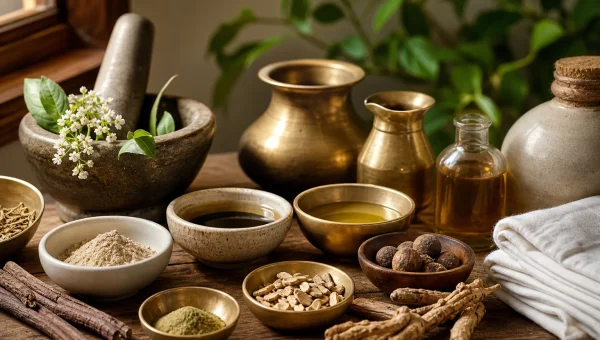
Gentle facial and neck Abhyanga may be used when the skin is intact and the eye is protected. Warm medicated oil such as Ksheerabala Taila, Mahanarayana Taila, Dhanvantaram Taila, or plain sesame oil may be selected by the practitioner. Massage should be light, slow, and upward-lifting, covering the cheek, jaw, temple, ear region, side of the neck, and upper shoulder. Pressure over the eye should be avoided.
Mild Swedana may follow oil application when suitable. A warm towel compress or gentle localized steam can be applied to the cheek, jaw, and neck for a short duration. The aim is comfort and softening, not heavy sweating. Heat is avoided if there is fever, active infection, severe burning, skin inflammation, or inability to protect the eye.
Pratimarsha Nasya is the gentler daily form of Nasya. In many Ayurvedic traditions it is given as one to two drops of suitable oil in each nostril, often after light facial oiling and mild warmth. In Bell’s palsy, this should be started only after medical assessment and under Ayurvedic guidance, especially if the patient has sinus infection, cold, cough, fever, recent nasal surgery, pregnancy, asthma flare, or poor tolerance to oils.
Phase 2 – Subacute Rehabilitation: Weeks 3 to 8
Once urgent causes have been addressed and the acute phase is stable, treatment can become more rehabilitative. This is the phase where Nasya, head oil therapies, localized fomentation, supervised facial exercise, and Vata-nourishing formulations are often used more consistently.
Nasya Karma is central in the classical management of Ardita. Ayurveda treats the nose as an important route for disorders of the head and sense organs. In modern anatomical language, the nasal cavity is a highly vascular mucosal surface with olfactory and trigeminal nerve connections that are widely discussed in intranasal drug-delivery science. This does not mean every nasal oil directly reaches the facial nerve, but it explains why the nasal route deserves careful, respectful use rather than casual self-experimentation.
For home care, practitioners commonly choose Pratimarsha Nasya with a small dose of medicated oil. For clinic care, Marsha Nasya may be used in larger therapeutic doses after preparation with facial Abhyanga and mild Swedana. The exact oil, number of drops, frequency, and duration should be selected by a qualified Ayurvedic practitioner, because excessive or wrongly timed Nasya can cause irritation, heaviness, headache, cough, nausea, or worsening congestion.
| Therapy | Classical Purpose | Practical Use in Ardita | Safety Note |
|---|---|---|---|
| Pratimarsha Nasya | Gentle daily oleation of the nasal route | Small dose of suitable oil, commonly one to two drops per nostril, when appropriate | Avoid during fever, acute cold, sinus infection, immediately after food, or without guidance in pregnancy |
| Marsha Nasya | Therapeutic Nasya after preparation | Clinic-administered course for stronger Vata disorders of the head and face | Should be performed only by a trained practitioner after proper assessment |
| Murdhni Taila | Oil therapy for the head region | Head massage, oil retention, or related therapies selected according to strength and stage | Avoid chilling after oil therapy; keep the head warm and dry |
| Nadi Sweda | Localized fomentation | Gentle warmth to the cheek, jaw, ear region, and neck after oiling | Protect the eye; avoid strong heat, burning, fever, or acute inflammation |
| Upanaha | Warm poultice and nourishment | Used selectively for stiffness, pain, and Vata-Kapha presentation | Not for irritated skin, infection, or near an unprotected eye |
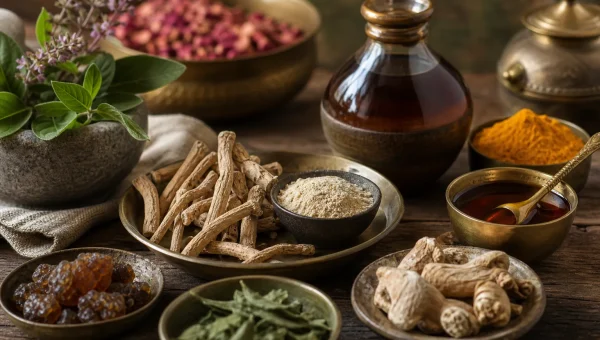
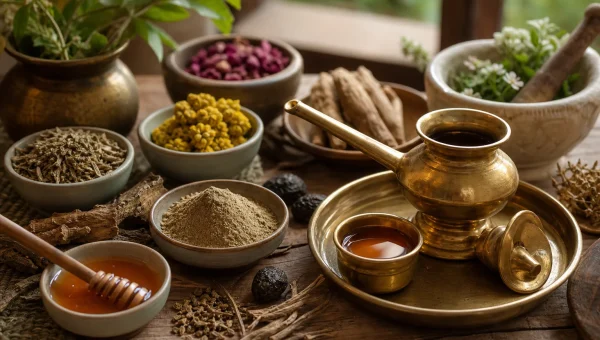
Key Ayurvedic Herbs and Formulations
Oral herbs and formulations should not be taken casually during Bell’s palsy, especially if the person is taking steroids, antivirals, diabetes medicine, blood pressure medicine, anticoagulants, sedatives, thyroid medicine, or immunosuppressants. The following are commonly discussed in Ayurvedic practice for Vata support, strength, nourishment, and recovery, but the final selection belongs to a qualified practitioner.
| Herb / Formulation | Botanical / Classical Identity | Traditional Role in Ardita Care | Use Guidance |
|---|---|---|---|
| Bala | Sida cordifolia | Vata-pacifying, strengthening, and nourishing; widely used in oils such as Ksheerabala | Use only under supervision, especially in hypertension, heart disease, pregnancy, or stimulant sensitivity |
| Ashwagandha | Withania somnifera root | Strength, sleep support, recovery from weakness, and Vata nourishment | Avoid self-use in pregnancy, autoimmune disease, thyroid disorders, liver disease, or sedative use unless medically supervised |
| Brahmi | Bacopa monnieri | Medhya Rasayana traditionally used for mind, nerves, memory, and calmness | Dose and form should be individualized; may cause digestive heaviness in some people |
| Guduchi | Tinospora cordifolia | Rasayana support when recovery follows fever, fatigue, or depleted strength | Avoid self-use in autoimmune disease, transplant medicines, or complex immune disorders unless medically supervised |
| Dashamula | Ten-root group: five large roots and five small roots | Classical Vata-supporting group used in decoctions, oils, fomentation, and Basti planning | Internal decoctions and Basti require practitioner selection and monitoring |
| Ksheerabala Taila | Oil traditionally prepared with Bala, milk, and sesame oil | Commonly selected for Vata disorders, massage, and gentle Nasya when suitable | Nasal use should be guided; external use still requires eye protection |
| Mahanarayana Taila | Classical medicated oil used externally in Vata disorders | Facial, neck, shoulder, and jaw massage when stiffness and Vata pain are present | Patch test; avoid eyes, broken skin, and excessive heat after application |
Facial Exercise and Neuromuscular Re-Education
Facial exercises should be gentle and precise. The goal is not to force the weak side into movement, but to retrain symmetrical movement without creating strain. Use a mirror, sit upright, relax the jaw, and practice small controlled movements: soft eye closure, gentle eyebrow lift, slight smile, lip rounding, cheek puffing, and slow pronunciation of labial sounds such as “pa,” “ba,” and “ma.” Stop if the face spasms, tightens strongly, or begins to develop unwanted linked movements.
Ayurvedic self-care may include light oil application over facial marma regions such as the temple, lateral eye region, jaw, and neck, but pressure must be gentle. The eye itself should never be pressed or massaged. When synkinesis or abnormal co-contraction appears, a facial nerve physiotherapist or specialist should guide the exercise plan.
Diet and Lifestyle for Vata Pacification
Diet should be warm, moist, easy to digest, and regular. Favor rice gruel, mung dal, vegetable soups, soft khichari, cooked vegetables, ghee in small suitable amounts, warm water, cumin, ginger in modest quantities if tolerated, and nourishing foods appropriate to digestion. Avoid dry snacks, cold drinks, excess raw food, fasting, late-night meals, and irregular eating, all of which can aggravate Vata.
Sleep and warmth matter. Cover the affected ear and cheek in cold wind, avoid direct fan exposure, keep the neck warm, and maintain a regular bedtime. Gentle walking is acceptable when strength permits, but heavy gym training, exhausting pranayama, strong kapalabhati, intense cold exposure, and long screen sessions with an unprotected eye should be avoided during the early recovery period.
Red Flags: When Facial Weakness Is Not Simple Bell’s Palsy
Any new facial droop should be treated as urgent until a clinician rules out serious causes. Ayurveda should not be used as the first or only response when symptoms suggest stroke, tumor, infection, autoimmune disease, trauma, or broader neurological involvement.
- Stroke signs: facial droop with arm weakness, speech difficulty, confusion, severe dizziness, sudden severe headache, or trouble walking requires emergency care.
- Forehead sparing: if the lower face is weak but the forehead moves normally, central neurological causes must be considered urgently.
- Ear blisters or severe ear pain: facial palsy with vesicles in or around the ear may suggest Ramsay Hunt syndrome and requires prompt medical care.
- Bilateral facial palsy: weakness on both sides of the face may suggest systemic illness and needs medical investigation.
- Slow progression: facial weakness developing gradually over weeks or months is not typical Bell’s palsy and needs further evaluation.
- Other neurological symptoms: double vision, limb weakness, difficulty swallowing, numbness beyond the face, severe imbalance, or altered consciousness needs urgent medical attention.
- Eye pain, redness, or vision change: an unclosing eye can become damaged and should be examined promptly.
A Practical 12-Week Integrative Timeline
The following timeline is an educational framework, not a prescription. It assumes that a physician has assessed the patient, ruled out emergencies, and started appropriate conventional care when indicated.
Days 1 to 3: Seek urgent medical evaluation. Discuss corticosteroid treatment and antiviral consideration with the physician. Start eye protection immediately if the eyelid does not close. Avoid cold wind, excessive talking, and self-massage near the eye.
Days 4 to 14: Continue prescribed medical care. Begin gentle Vata-pacifying routine: warm food, regular sleep, protection from cold, light facial and neck Abhyanga, mild warmth away from the eye, and practitioner-approved Pratimarsha Nasya if suitable.
Weeks 3 to 6: Add supervised clinic therapies such as Marsha Nasya, head oil therapy, Nadi Sweda, or poultice when appropriate. Begin mirror-guided facial exercises and gentle speech movements. Monitor for eye dryness, pain, synkinesis, and incomplete eye closure.
Weeks 7 to 12: Continue rehabilitation, facial retraining, and Vata-nourishing diet. Practitioner-selected Rasayana support such as Chyawanprash or other formulations may be considered if digestion, blood sugar, and constitution permit. If recovery is incomplete after three months, or symptoms worsen at any point, referral to a facial nerve specialist is appropriate.
What to Do This Week
If Bell’s palsy began within the last 72 hours, see a physician immediately and ask about steroid treatment, eye protection, and whether antivirals are appropriate in your case. If the diagnosis is already confirmed and urgent care is underway, schedule an assessment with a qualified Ayurvedic practitioner before starting Nasya or oral herbs. For safe home support, begin with warmth, rest, eye care, soft food, avoidance of cold wind, and gentle facial relaxation rather than aggressive manipulation.
The simplest Ayurvedic principle for the first week is this: protect the eye, protect strength, protect warmth, and calm Vata. Stronger therapies can wait until the body is ready and the diagnosis is clear.
Medical Disclaimer: This article is for educational purposes only. Facial nerve palsy requires prompt medical evaluation to exclude stroke and other serious causes. The Ayurvedic protocol described here is intended as a complementary adjunct, not a replacement for conventional medical care. Herbs, oils, Nasya, Panchakarma, and supplements can interact with medicines or be unsuitable in some conditions. Consult a qualified Ayurvedic practitioner and healthcare provider before starting any treatment, especially if pregnant, diabetic, hypertensive, immunocompromised, elderly, or taking medication.
References
- NHS
- Entnet (entnet.org)
- Mayoclinic (mayoclinic.org)
- Hopkinsmedicine (hopkinsmedicine.org)
- Cochrane (cochrane.org)
- Charaka Samhita — Vatavyadhi Chikitsa
- Charaka Samhita — Vata dosha
- Wisdomlib — classical text
- Easyayurveda (easyayurveda.com)
- Internationaljournal (internationaljournal.org.in)
- Easyayurveda (easyayurveda.com)
- Wjpmr (wjpmr.com)
- Non-Invasive Strategies for Nose-to-Brain Drug Delivery (2020), PubMed Central
- Ijmsar (ijmsar.com)
- Ayurmedinfo (ayurmedinfo.com)
- Wjpr (wjpr.net)
- Chyawanprash: A Traditional Indian Bioactive Health Supplement (2019), PubMed Central
- LWW Journals
- Sadyovamana – An effective therapy in the management of Bell’s palsy – A case report (2022), PubMed Central
What’s the correct dosage of vata for an adult with moderate symptoms? The article describes the approach but not the specific quantities.
How long before seeing results with this protocol? My practitioner said 4 weeks but I’m seeing other timelines mentioned online.
My cousin had Bell’s palsy two years ago and the prednisone helped the drooping partially but the eye dryness and the residual twitching never fully resolved. The doctors said it was just how it was. I am sending her this article. The description of Ardita Vata and the specific nerve pathway logic is the most detailed explanation I have seen outside a neurology textbook. Is nasya something that can be started months after the initial episode or is it only useful in the acute phase?
As a neurologist I treat Bell’s palsy regularly. The standard prednisone protocol has good evidence for recovery rates. The Ayurvedic additions described here are complementary rather than conflicting and there is no pharmacological reason to avoid the Abhyanga and Nasya components alongside steroid treatment.
I appreciate the framing but the case study is a sample of one. The natural history of this condition means some people improve without intervention.
The Ashwagandha internal protocol for nerve regeneration alongside the external Kshara application is a combination I had not seen described before. My Ayurvedic physician used something similar but did not explain the rationale. Reading it here makes me more confident in what I am doing.
The quality of vata supplements varies enormously. Without standardization data this is hard to act on practically. Which supplier and what specification?
Are there food interactions with vata that I should be aware of? My Ayurvedic doctor mentioned something about dairy but wasn’t specific.
The description of the patient waking up unable to blink really hit home; makes the condition feel immediate.
Went through exactly this process last year. The vata made a difference by week 3 and by month 2 I was back to sleeping through the night.
I wonder how many people with Bell’s palsy try Nasya before seeing a neurologist.
The advice around Bell’s Palsy (Ardita Vata) is specific enough to be useful. This would be easier to follow with a one-week sample plan.
Using warm Mahanarayan Taila for facial massage seems like a soothing addition to standard care.
Is Kalyanaka Ghritam safe for someone with high triglycerides, or should they switch to Bala Taila right away?
The article makes a clear link between Viral HSV-1 reactivation and aggravated Vata, which feels plausible.
I appreciate the caution about protecting the eye during steam therapy; corneal damage is no joke.
Seeing the reference to Dashamula decoction makes me want to look up its exact herb list.
Would a short course of Greeva Basti be helpful if neck stiffness appears after week three?
The timeline of twelve weeks for noticeable improvement matches what I’ve read about steroid response.
I’m skeptical about claiming 95% recovery without objective measurements like electroneurography.
The mention of Marma points like Apanga and Shankha gives a concrete self care step to try.
It’s reassuring that the protocol can run alongside prednisone rather than replacing it.
the warm oil massage on the affected side really helped reduce the stiffness, started seeing movement by week 3
Been following this for 3 weeks and my energy levels are noticeably steadier throughout the day.
Just found this searching for alternatives to long-term medication. How does one find a qualified Ayurvedic practitioner to supervise this?
Without parallel corticosteroid treatment, this protocol alone may not be sufficient for severe cases. Please consult a neurologist.
Could you clarify whether the herbal preparation needs to be freshly made each day or if a week’s batch is acceptable?
My Ayurvedic practitioner recommended the same protocol. Good to see it written out clearly with timings.
The mechanism explanation is interesting. I would like to understand whether the effect diminishes with long-term use.
good artcle, bookmarked. will share w/ my doctor next visit
the digestive angle makes sense to me but i’m curious about the topical applications mentioned briefly at the end
some of the herb names in english vs sanskrit are confusing, i ended up buying the wrong thing
I have a question about the duration. Is the 30-day protocol meant to be repeated or is one cycle sufficient for chronic cases?
The section on timing was exactly what I was missing. Started the morning dose earlier and sleep improved. 🌿
how many sessions of Nasya per week during the acute phase? the article mentions 7 days but doesn’t say how many daily
finding the herbs in my city is nearly impossible, the ones available are often low quality
Is this protocol safe to follow alongside standard allopathic treatment, or does it need to be spaced out?
The timeline expectations seem unrealistic for a chronic condition. Most patients I’ve spoken to report much longer recovery arcs.
shared this with my mom, she has been struggling with this for years and finally has a proper plan 🌿
I’m skeptical of the causal claims here. Symptom improvement after starting a protocol can easily be a placebo response or regression to the mean. 🙌
Without knowing a patient’s Prakriti and Agni status, applying a generic protocol seems premature. This kind of generalized advice can actually cause harm. ✨
Reading this in 2027, recovered fully using a combination of the Nasya protocol described here and physiotherapy. The combination matters. ❤️
I tried a similar protocol for 6 weeks and saw no improvement. It may depend heavily on individual constitution.
2 weeks in n no change yet. maybe giving up soon
The article would benefit from more rigorous sourcing. The studies referenced are mostly observational, not randomized controlled.
This helped me understand Bell’s Palsy (Ardita Vata) without too much jargon. The practical details matter more than people think.
does anyone know if this works the same way for Kapha types? feels like the article is more Vata focused
tried it, didnt work for me. maybe need proper vaidya supervision
I started this protocol last month. Would it be acceptable to continue Triphala alongside it or would that be too much?
does the Vata-pacifying diet apply strictly or can we make modifications based on what’s available locally?
This helped me understand Bell’s Palsy (Ardita Vata) without too much jargon. I appreciate that it does not oversell the result.
the dose ranges seem very broad, like 1 to 3 grams is quite a big difference. would be more helpful with narrower guidance
honestly i’ve been doing this for 2 months and the results are underwhelming. might just be my body type ठीक है
works!! been doin this 2 months n feeling much better tbh
This helped me understand Bell’s Palsy (Ardita Vata) without too much jargon. This feels more usable than a long list of herbs.
the recovery time expectations here seem optimistic for older patients, my father took almost a year
same issue here, doc said try ayurveda. will try this n update
I notice the article doesn’t address interactions with thyroid medication. Is there a concern there?