
There is a specific kind of tiredness that comes from staring at screens all day: burning, grittiness, heaviness, intermittent blur, and the feeling that the eyes are no longer recovering between work sessions. In Ayurveda, this pattern is approached not only as a surface dryness problem but as a disturbance of ocular nourishment, heat, blinking, daily habits, and the surrounding environment.
The Ayurvedic approach to dry eyes is practical and layered. It uses lubricating and cooling measures for the eye region, internal herbs that support snigdha quality and rasayana care, clinician-supervised therapies such as Netra Tarpana, and simple changes in screen behavior, humidity, blinking, sleep, and diet. Artificial tears may still be useful, especially in moderate or severe dry eye, but Ayurveda adds a broader daily-care framework for people whose symptoms are aggravated by screen fatigue, wind, air-conditioning, irregular sleep, and Vata-Pitta aggravation.
Shushkakshipaka: Dry Eyes in Ayurveda
Shushkakshipaka is described in Ayurvedic ophthalmology as a disorder of the whole eye region, commonly interpreted through Vata and Pitta involvement. Classical symptom language includes gharsha or rubbing/gritty sensation, toda or pricking pain, daha or burning, kunita or difficulty opening the eyes comfortably in light, avila darshana or unclear vision, and raktaraji or visible redness/congestion. This matches the mixed dryness, irritation, heat, and visual fatigue that many screen users describe.
In Ayurvedic reasoning, Vata dries and roughens the ocular tissues while Pitta and Rakta contribute heat, burning, redness, and sensitivity. The treatment logic is therefore dual: restore lubrication and nourishment without increasing heaviness, and cool irritation without making the tissues dull or congested. A good dry-eye plan does not rely on one measure alone; it combines local care, internal support, eye-rest habits, and removal of drying triggers.
Modern dry eye definitions also treat dry eye as more than a lack of tears. Dry eye disease is described as a loss of tear-film homeostasis involving tear-film instability, hyperosmolarity, ocular-surface inflammation and damage, and neurosensory abnormalities. This is why a person may feel burning, dryness, pain, fatigue, or fluctuating vision even when the eye does not look dramatically dry from the outside.
Identifying Your Dry Eye Pattern
Ayurvedic treatment is most useful when the dominant pattern is identified. The table below is a practical guide for recognizing tendencies; it is not a diagnosis and should not replace examination by an ophthalmologist or qualified Ayurvedic eye-care practitioner.
| Pattern | Ayurvedic Reading | Common Signs | Primary Care Focus |
|---|---|---|---|
| Vata-dominant dryness | Dry, rough, depleted ocular surface | Gritty or sandy sensation, worse in wind or air-conditioning, tired eyes, eyelids feel dry on waking | Warmth, lubrication, nourishment, regular sleep, Vata-pacifying food and routine |
| Pitta-dominant irritation | Heat and irritation in the eye region | Burning, redness, light sensitivity, heat sensation, worsening after late nights, spicy food, or long screen sessions | Cooling care, Pitta-pacifying diet, avoidance of heat triggers, prompt evaluation if redness or pain is strong |
| Vata-Pitta screen-fatigue pattern | Dryness with heat and ocular strain | Burning plus grittiness, intermittent blur, eye fatigue in the evening, symptoms aggravated by reduced blinking | Blink retraining, screen breaks, Triphala-based support, supervised Tarpana when appropriate |
| Kapha or lid-margin congestion pattern | Heaviness, stickiness, blocked oil flow, or lid involvement | Sticky lids on waking, crusting, heaviness, oily lid margins, recurrent irritation around the eyelashes | Lid hygiene, warm compresses, professional assessment for meibomian gland dysfunction or blepharitis |
Netra Tarpana: Classical Eye Nourishment
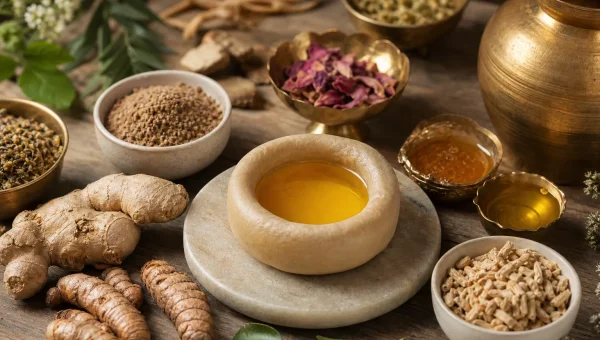
Netra Tarpana means nourishing or satiating the eyes. In this therapy, a trained practitioner creates a clean ring around the eye region and retains lukewarm medicated ghee over the eyes for a prescribed duration. Because the substance comes into close contact with the ocular surface, Tarpana should be performed only in a proper clinical setting with attention to cleanliness, temperature, timing, suitability, and contraindications.
For dry, strained, Vata-Pitta eye patterns, Triphala Ghrita is one of the most important classical preparations used in Ayurvedic eye care. Triphala is made from Haritaki, Bibhitaki, and Amalaki, and the ghrita form combines this herbal base with ghee and related classical processing. In clinical practice, Triphala Ghrita Tarpana or related ghee-based Tarpana methods are selected when the eye needs both lubrication and cooling nourishment.
Tarpana is generally avoided during acute infection, severe redness, corneal injury, active discharge, uncontrolled inflammation, or severe eye pain unless a qualified eye-care professional has evaluated the condition. When properly indicated, it is usually given as a short course rather than an occasional cosmetic treatment, and the duration is adjusted to the person’s strength, eye condition, dosha pattern, and tolerance.
The Daily Triphala Eye-Care Practice
Triphala is central to Ayurvedic eye care because its three fruits bring together cleansing, cooling, rasayana, and chakshushya associations in classical practice. For dry eyes, Triphala can be used internally under guidance, as part of medicated ghrita in professional procedures, or as a carefully prepared external application when a practitioner has advised it.
At home, the safest Triphala practice is not to pour gritty or non-sterile herbal liquid into the eyes. If Triphala is used around the eyes, it should be freshly prepared, very well filtered, cooled, and used only in a manner advised by a qualified practitioner. A lower-risk household option is a clean, cooled Triphala compress placed over closed eyelids, not into the open eye. Any liquid used directly in the eye must be free from particles and contamination, because even a tiny herbal particle can irritate or scratch the ocular surface.
For people with contact-lens irritation, recent eye surgery, corneal abrasion, eye infection, severe pain, marked redness, immune compromise, or unexplained vision changes, herbal eye washes should be avoided unless specifically approved by an ophthalmologist. In those cases, sterile ophthalmic lubricants and medical evaluation are the safer first step.
Internal Herbal Protocol: Nourishing From the Inside
Dry eyes often worsen when the body is depleted, overheated, irregular, or under-rested. Ayurveda therefore looks beyond the eye surface and supports rasa, rakta, digestion, sleep, bowel regularity, and the moistening snigdha quality of the tissues. The herbs below are not meant to be taken all together; a practitioner chooses according to constitution, symptoms, digestion, medication use, and the dominant Vata, Pitta, or Kapha pattern.
1. Yashtimadhu – Licorice Root (Glycyrrhiza glabra)
Yashtimadhu is classically described as sweet, cooling, nourishing, snigdha, Vata-Pitta pacifying, raktaprasadana, and chakshushya. This makes it suitable in formulas where burning, dryness, and tissue sensitivity coexist. Traditional use is usually in powder, decoction, ghee, or compound preparations rather than as a high-dose long-term supplement.
Safety: Licorice is not a casual herb for everyone. Prolonged or high intake can contribute to high blood pressure, low potassium, fluid retention, and medication interactions. People with hypertension, kidney disease, heart disease, pregnancy, diuretic use, steroid use, or potassium-related problems should use it only with professional supervision.
2. Shatavari – Asparagus racemosus
Shatavari is classically sweet and bitter, heavy, unctuous, cooling, nourishing, Pitta-pacifying, rasayana, and associated with netrya support. In dry-eye care it is most relevant when the person shows a dry, heated, depleted pattern: dry mouth or skin, low resilience, irritability from heat, poor sleep, or dryness aggravated by overwork.
Use: Shatavari is commonly taken with warm milk, ghee, or water in practitioner-selected doses. It may not suit everyone, especially when there is heavy Kapha, sluggish digestion, congestion, or sensitivity to the plant family. People with medical conditions or hormone-sensitive concerns should consult a qualified clinician before use.
3. Amalaki – Indian Gooseberry (Phyllanthus emblica / Emblica officinalis)
Amalaki is one of Ayurveda’s most important cooling rasayana fruits and is classically associated with chakshushya support. It is valued where Pitta signs are prominent: burning, heat, redness tendency, acidity, late nights, and inflammatory sensitivity. It also provides antioxidant nutrients, including vitamin C and polyphenols, that support general tissue resilience.
Use: Amalaki may be used as fresh fruit, powder, preserve, or in classical formulations such as Triphala and Chyavanaprasha. People with acidity, loose stools, diabetes medication, or restricted diets should choose form and dose carefully with guidance.
4. Triphala – Haritaki, Bibhitaki, and Amalaki
Internal Triphala is traditionally used as a gentle rasayana and bowel-supporting formula. In dry-eye patterns, it is especially useful when eye strain is accompanied by irregular digestion, constipation tendency, heaviness from poor routine, or Pitta-Kapha accumulation. Its three fruits bring together scraping, nourishing, cooling, and rejuvenating qualities in a balanced way.
Use: Triphala is often taken at bedtime in a small practitioner-selected dose with warm water, or used within ghrita preparations when more nourishment is needed. It should be avoided or used cautiously in pregnancy, loose stools, dehydration, very low body weight, active gastrointestinal irritation, or when taking medicines that may be affected by bowel changes.
5. Punarnava – Boerhavia diffusa
Punarnava is most relevant when dry-eye symptoms occur with puffiness, heaviness around the eyes, sluggish Kapha features, or fluid-retention tendencies. It is not the main herb for simple dryness; it belongs more to patterns where the eyelids or surrounding tissues feel swollen, heavy, or poorly drained while the ocular surface still feels irritated.
Safety: Punarnava has diuretic traditional use and should be used carefully by people with kidney disease, fluid-electrolyte issues, pregnancy, low blood pressure, or those taking diuretics, blood-pressure medicines, or kidney-related medication. In such cases, professional supervision is essential.
Daily Habits That Make or Break Dry Eye Recovery
Herbs and procedures work best when the causes of daily drying are reduced. Screen work, incomplete blinking, low humidity, air-conditioning, ceiling-fan exposure, contact-lens strain, late nights, and irregular meals can keep Vata and Pitta aggravated even when good remedies are used.
The 20-20-20 Rule with Conscious Blinking
Every 20 minutes of screen time, look at something at least 20 feet away for about 20 seconds. During that pause, blink slowly and completely several times. Screen use commonly reduces blink rate and increases incomplete blinking, which prevents even spreading of the tear film. A full blink is a small but powerful treatment: it spreads tears, supports the lipid layer, and gives the ocular surface a moment of recovery.
Screen Setup and Humidity
Keep the screen slightly below eye level so the eyelids naturally cover more of the eye surface. Avoid direct air from fans, car vents, heaters, and air-conditioners. Dry indoor air aggravates evaporation, so a clean humidifier can help when the room is very dry. Keep the screen at a comfortable distance, enlarge text instead of leaning forward, and reduce glare from windows or harsh lighting.
Lid Care for Sticky or Oily-Lid Patterns
When the eyelids feel sticky, heavy, crusted, or oily, the problem may involve the lid margin or meibomian glands. A warm compress over closed lids, followed by gentle lid hygiene as advised by an eye-care professional, can support the natural oil layer of the tear film. This is different from cooling care for red, burning eyes; heavy or congested lids often need warmth and cleansing rather than more cold applications.
Ghee and Supportive Fats in the Diet
Ayurveda uses ghee as a deeply Vata-pacifying and nourishing food when digestion is able to handle it. For a dry, rough, Vata-Pitta pattern, small amounts of good-quality ghee with meals may support the moistening quality of the diet. People with high cholesterol, gallbladder disease, pancreatitis history, severe Kapha symptoms, or fat-restricted medical diets should follow medical advice before increasing ghee.
Omega-3-rich foods or supplements may also be considered as part of a dry-eye plan, but they are not a guaranteed stand-alone cure. People taking blood thinners, those with bleeding disorders, surgery planned, or fish/supplement sensitivities should consult their healthcare provider before using omega-3 supplements.
Castor Oil: Use Only Ophthalmic-Grade Products
Castor-oil-based ophthalmic lubricants are used in modern eye care for evaporative dry eye and meibomian gland-related dryness. This does not mean ordinary household castor oil should be put into the eyes. Only sterile ophthalmic-grade castor-oil eye drops or clinician-approved products should be used, and contact-lens wearers should follow the product instructions carefully.
Palming and Eye Rest
Rub the palms together until warm, then gently cup them over the closed eyes without pressing on the eyeballs. Rest in darkness for two to three minutes and breathe slowly. Palming does not replace treatment for dry eye disease, but it helps reduce visual strain, relax the eye region, and interrupt the constant sensory load of screen work.
Nasya: Supporting the Head and Eye Region Through the Nasal Route
Ayurveda gives special importance to the nasal route for disorders of the head region. Classical Nasya uses medicated oils or other preparations through the nostrils, and Anu Taila is one of the well-known oil preparations used for this purpose. Because the tear drainage system and nasal cavity are anatomically connected through the nasolacrimal pathway, nasal and ocular comfort can influence each other in daily experience.
For dry-eye care, Nasya should be understood as supportive rather than a replacement for eye treatment. A practitioner may choose Anu Taila or another preparation when dryness is linked with Vata aggravation, head dryness, sinus dryness, poor sleep, or screen-related strain. Nasya should be avoided during acute cold, sinus infection, immediately after heavy meals, after alcohol, during severe headache, during pregnancy unless specifically advised, or when oil in the nose is not tolerated.
When to Seek Medical Care
Dry eye symptoms need professional evaluation when there is severe redness, eye pain, sudden vision change, marked light sensitivity, discharge, injury, contact-lens-related pain, one-sided worsening, or symptoms that continue despite basic care. Conditions such as Sjogren’s disease, thyroid eye disease, blepharitis, meibomian gland dysfunction, allergy, medication effects, corneal damage, and autoimmune disease can present with dryness or burning and require specific diagnosis.
Safety note: Nothing in this article diagnoses or treats a medical condition. Use it as educational information and consult a qualified Ayurvedic practitioner, ophthalmologist, or healthcare provider before starting herbs, supplements, medicated ghee, Nasya, eye washes, or therapeutic protocols, especially if pregnant, managing a medical condition, taking medication, wearing contact lenses, or having persistent eye symptoms. Anything used in or near the eye must be sterile or freshly prepared as professionally directed and completely free from particles.
Start Here Tonight
Begin with the safest foundations: reduce direct airflow, lower the screen slightly below eye level, use the 20-20-20 rule with complete blinking, rest the eyes with gentle palming, and improve sleep timing. If the eyes feel sticky or oily at the lids, use a warm compress over closed eyelids. If they feel hot, red, or sharply painful, do not experiment with home eye remedies; seek eye-care evaluation.
For deeper Ayurvedic support, discuss Triphala, Amalaki, Shatavari, Yashtimadhu, Nasya, or Netra Tarpana with a qualified practitioner who can match the remedy to your pattern. The most effective Ayurvedic dry-eye plan is not the strongest remedy; it is the right combination of nourishment, cooling, hygiene, rest, and daily habits applied consistently and safely.
References
- Efficacy of Triphala Ghrita and Goghrita Manda Tarpana in the management of Shushkakshipaka w.s.r. to dry eye syndrome: An open labelled randomized comparative clinical trial (2020), PubMed Central
- Efficacy of Triphala Ghrita and Goghrita Manda Tarpana in the management of Shushkakshipaka w.s.r. to dry eye syndrome: An open labelled randomized comparative clinical trial (2020), PubMed
- Jaims (jaims.in)
- Shushkakshipaka (dry eye syndrome): A case study (2011), PubMed Central
- Tfosdewsreport (tfosdewsreport.org)
- Eyewiki (eyewiki.org)
- Video display terminal use and dry eye: preventive measures and future perspectives (2022), PubMed Central
- Aoa (aoa.org)
- Aao (aao.org)
- Eyewiki (eyewiki.org)
- Jaims (jaims.in)
- Dravyaguna notes
- Ayurvedic Pharmacopoeia of India
- Pseudohyperaldosteronism, liquorice, and hypertension (2008), PubMed Central
- Ayurvedic Pharmacopoeia of India
- Plant profile, phytochemistry and pharmacology of Asparagus racemosus (Shatavari): A review (2013), PubMed Central
- Functional and Nutraceutical Significance of Amla (Phyllanthus emblica L.): A Review (2022), PubMed Central
- Phyllanthus emblica: a comprehensive review of its phytochemical composition and pharmacological properties (2023), PubMed Central
- Therapeutic Uses of Triphala in Ayurvedic Medicine (2017), PubMed Central
- Phytochemical, therapeutic, and ethnopharmacological overview for a traditionally important herb: Boerhavia diffusa Linn (2014), PubMed Central
- Ethnomedicinal values of Boerhaavia diffusa L. as a panacea against multiple human ailments: a state of art review (2023), PubMed Central
- Low-concentration homogenized castor oil eye drops for noninflamed obstructive meibomian gland dysfunction (2002), PubMed
- Therapeutic potential of castor oil in managing blepharitis, meibomian gland dysfunction and dry eye (2021), PubMed
- Relevance of Lipid-Based Products in the Management of Dry Eye Disease (2017), PubMed Central
- Cochrane (cochrane.org)
- A randomized controlled trial of omega-3 fatty acids in dry eye syndrome (2013), PubMed Central
- Identification and estimation of bioactive constituents Negundoside, Berberine chloride, and Marmelosin by HPLC and HPTLC for development of quality control protocols for Ayurvedic medicated oil formulation (2021), PubMed Central
- Jaims (jaims.in)
- NCBI
- NCCIH



I was using artificial tears six times a day before trying the Ayurvedic approach. The Triphala eyewash is what made the biggest difference. Three months in and I use drops maybe twice a week in bad screen days. The improvement was gradual but unmistakable.
The gritty foreign-body sensation description is perfect. That’s exactly how screen fatigue feels. I’m a graphic designer and spend about 10 hours a day looking at screens. The Trataka practice and the palming described here are the two things I now do during every break.
Is the Triphala eyewash safe to do at home without specific instruction? The dilution ratio and the container sterilization matter and I want to be careful since this involves direct eye contact.
The Tarpana therapy sounds beneficial but isn’t accessible outside of specialized clinics. What’s the best home equivalent for someone who can’t access panchakarma treatments but wants the Shuskhakshipaka protocol?
The connection between liver function and eye lubrication in Ayurveda is something I never saw mentioned in any ophthalmology context. My dry eyes started at the same time as some liver function anomalies that my doctor was monitoring. Whether they’re related I can’t prove but the timeline is suspicious.
I was looking for a plain explanation of Approach to Dry Eyes (Shushkakshipaka). Small daily changes are easier to follow than a perfect plan.
Castor oil as a single eye drop before bed changed my dry eye experience completely. It’s a classical Ayurvedic recommendation and it works. The viscosity keeps the eye lubricated overnight. My ophthalmologist actually now recommends it.
The explanation of Shushkakshipaka matching screen fatigue really clicked for me.
The Meibomian gland dysfunction angle is interesting. Warm compress treatment for MGD is already evidence-based in ophthalmology. The Ayurvedic warm oil compress tradition predates this recommendation by centuries and is likely addressing the same anatomical dysfunction.
Zero drops after six weeks is a remarkable outcome. My target would be getting from 4 drops per day to 1. Does the Ayurvedic protocol show dose-response improvement or is it more of an all-or-nothing shift?
I tried the Triphala eye wash after reading and noticed less gritty feeling by night.
Wondering if the ghee recommendation works with store bought clarified butter or needs homemade.
I have Sjogren’s syndrome which causes severe dry eyes. The autoimmune component makes my dry eye different from screen-fatigue dry eye. Is the Ayurvedic protocol appropriate for autoimmune dry eye or is it designed for Vata-aggravation type?
The section on Nasya surprised me; linking nasal oil to eye moisture makes sense anatomically.
I appreciate the breakdown of Vata Pitta versus Kapha patterns; it helps pick the right herbs.
Has anyone done a full Netra Tarpana course at home and seen TBUT improve?
The advice to blink fully during the 20 20 20 rule is something I’ll start doing tomorrow.
I’m skeptical about using castor oil drops without a doctor’s check, even if it’s ophthalmic grade.
Using a humidifier at my desk cut the evening burning noticeably.
The internal herb list makes me think about adding Shatavari to my smoothie.
Did the study mention any side effects from long term Triphala internal use?
I found the tip about screen angle 15 20 degrees below eye level easy to adjust.
the Netra tarpana protocol gave me 3 days of comfortable vision after a period of very dry eyes from travel
Overall, the blend of classical texts and modern research gives a balanced view.
This helped me understand Approach to Dry Eyes (Shushkakshipaka) without too much jargon. The safety notes could be expanded a little.
The Approach to Dry Eyes (Shushkakshipaka) section feels grounded enough to try carefully. Would be useful to see a short checklist next.
💯 the Netra tarpana protocol gave me 3 days of comfortable vision after a period of very dry eyes from travel
how often can you do Netra tarpana safely. the article says weekly but some practitioners say twice
for contact lens wearers, can the triphala wash be used or does it affect the lens material
how often can you do Netra tarpana safely. the article says weekly but some practitioners say twice asked this last week
for contact lens wearers, can the triphala wash be used or does it affect the lens material asked this earlier
I was looking for a plain explanation of Approach to Dry Eyes (Shushkakshipaka). This feels more usable than a long list of herbs.
The advice around Approach to Dry Eyes (Shushkakshipaka) is specific enough to be useful. Would be useful to see a short checklist next.
@Vinay 🌿 the Netra tarpana protocol gave me 3 days of comfortable vision after a period of very dry eyes from travel
how often can you do Netra tarpana safely. the article says weekly but some practitioners say twice asked this earlier
the Netra tarpana protocol gave me 3 days of comfortable vision after a period of very dry eyes from travel asked this earlier
The advice around Approach to Dry Eyes (Shushkakshipaka) is specific enough to be useful. Good starting point for a cautious reader.
The Approach to Dry Eyes (Shushkakshipaka) angle is useful here. I would still ask a practitioner before changing medicines.
triphala wash sounds nice but if someone has a corneal condition, herbal solutions could be risky
the Netra tarpana protocol gave me 3 days of comfortable vision after a period of very dry eyes from travel asked this just now
the Netra tarpana protocol gave me 3 days of comfortable vision after a period of very dry eyes from travel asked this last week
how often can you do Netra tarpana safely. the article says weekly but some practitioners say twice asked this just now
the Netra tarpana protocol gave me 3 days of comfortable vision after a period of very dry eyes from travel asked this recently
I came for Approach to Dry Eyes (Shushkakshipaka) and this answered the main question. Would be useful to see a short checklist next.
triphala wash sounds nice but if someone has a corneal condition, herbal solutions could be risky asked this earlier
The part about Approach to Dry Eyes (Shushkakshipaka) feels realistic. Small daily changes are easier to follow than a perfect plan.
The part about Approach to Dry Eyes (Shushkakshipaka) feels realistic. This would be easier to follow with a one-week sample plan.
sorry off-topic but does anyone here have experience using Ayurveda for hair loss
🌿 triphala wash sounds nice but if someone has a corneal condition, herbal solutions could be risky
This makes sense for Approach to Dry Eyes (Shushkakshipaka). I appreciate that it does not oversell the result.
how often can you do Netra tarpana safely. the article says weekly but some practitioners say twice asked this recently
for contact lens wearers, can the triphala wash be used or does it affect the lens material asked this recently
for contact lens wearers, can the triphala wash be used or does it affect the lens material asked this just now
Useful post on Approach to Dry Eyes (Shushkakshipaka). The practical details matter more than people think.
triphala wash sounds nice but if someone has a corneal condition, herbal solutions could be risky asked this just now
how often can you do Netra tarpana safely. the article says weekly but some practitioners say twice 🙏
For Approach to Dry Eyes (Shushkakshipaka), consistency seems like the hard part. The practical details matter more than people think.