
My grandmother kept a small brass container of black pepper on the kitchen shelf, separate from the spice rack and treated almost like medicine. When I coughed as a child, she crushed a few peppercorns into warm honey. When my grandfather’s digestion slowed after a heavy meal, she stirred a pinch of pepper powder into warm buttermilk. What looked like kitchen wisdom has a real place in Ayurveda: Maricha (Piper nigrum) is not merely a seasoning, but a sharp, warming, channel-clearing herb used in digestive, respiratory, metabolic, skin, and microbial conditions.
Most people today know black pepper as the herb that helps curcumin work better. That use is valid: piperine, a major alkaloid of black pepper, has been shown to increase curcumin exposure in human pharmacokinetic work, and it can also affect drug-transport and drug-metabolizing pathways such as P-glycoprotein and CYP3A4. But reducing Maricha to a bioavailability enhancer misses its wider Ayurvedic identity.
Classical Ayurveda places Maricha among the pungent, heating medicines that kindle Agni, clear Kapha, penetrate obstruction, and support the movement of Vata when heaviness and stagnation dominate. The Ayurvedic Pharmacopoeia of India describes Maricha fruit as katu and tikta in taste, laghu, ruksha, and tikshna in qualities, ushna in potency, and katu in post-digestive effect. Its listed actions include Dipana, Medohara, Shleshmahara, Chedana, Jantunashana, Kaphavatajit, and Vatahara, with therapeutic use in Shvasa, Shula, Krimiroga, and Tvagroga. That gives Maricha a much broader therapeutic profile than “pepper for absorption.”
1. Nasal Congestion and Kapha in the Head
Maricha is traditionally suited to thick, heavy, Kapha-type congestion rather than hot, burning, bleeding, or very dry nasal irritation. In the Charaka tradition, Maricha appears among substances used in head-clearing procedures, and its pungent, sharp, heating nature helps explain why small internal doses are used when mucus is dense, appetite is low, and the head feels heavy.
Simple household use: crush 2–3 black peppercorns and mix with 1 teaspoon of honey. Take slowly so it coats the throat. This is best suited to adults with Kapha-type heaviness and mucus. Do not put pepper powder inside the nostrils, do not inhale pepper smoke at home, and avoid this remedy if there is burning acidity, mouth ulcers, bleeding, or marked Pitta aggravation.
2. Kapha-Type Heaviness, Sluggish Digestion, and Metabolic Stagnation
Maricha’s classical identity as Dipana, Pachana, Medohara, and Shleshmahara makes it especially relevant when weight gain or heaviness is accompanied by low appetite, sluggish digestion, coating on the tongue, sleepiness after meals, and a sense of cold, damp stagnation. Its role is not to “melt fat” by itself, but to sharpen digestion and reduce Kapha-type accumulation when used in the right constitution and diet.
Modern pharmacology also describes piperine as influencing fat-cell differentiation and lipid metabolism in preclinical models. In Ayurvedic language, this fits the traditional use of Maricha when Meda, Kapha, and Ama are obstructing metabolic clarity. For a deeper foundation, see the guide on Agni, the digestive fire in Ayurveda.
Practical use: mix a small pinch to 1/8 teaspoon freshly ground black pepper into warm water, thin buttermilk, soup, or cooked food. For people with acidity, ulcers, loose stools, or strong Pitta symptoms, culinary seasoning is safer than concentrated dosing.
3. Shvitra and Supervised Skin Repigmentation Support
Classical sources list Maricha under Tvagroga, a broad Ayurvedic category of skin disorders. In modern dermatology, piperine and black-pepper-derived preparations have been evaluated for melanocyte stimulation and as an adjunct to narrowband UVB care in vitiligo. This does not make raw pepper paste a safe home treatment; the useful topical work involves controlled preparations and supervised light exposure.
Safe interpretation: for vitiligo or white skin patches, Maricha belongs in the conversation only under the care of a dermatologist and qualified Ayurvedic practitioner. Avoid applying raw pepper, pepper oil, or pepper paste to depigmented skin, broken skin, the face, or children’s skin, because irritation and burns can worsen the problem. For background on topical herbal applications, see the guide on Lepam therapy.
4. Oral Biofilm and Mouth Freshening Support
Maricha’s pungent, scraping, and Jantunashana actions make sense in oral care when the goal is freshness, reduction of slimy coating, and Kapha-type heaviness in the mouth. Piperine has demonstrated antibiofilm activity against Streptococcus mutans, one of the important bacteria associated with dental plaque and caries formation.
Gentle use: use black pepper as a culinary spice in soups, vegetable preparations, rasam, or herbal digestive blends rather than rubbing raw pepper directly into the gums. For bleeding gums, loose teeth, severe pain, swelling, ulcers, or suspected infection, consult a dentist; pepper should not replace dental treatment.
5. Ama-Type Fever Support and Post-Fever Appetite
In Ayurveda, every fever is not treated the same way. When feverishness is accompanied by heaviness, coating on the tongue, poor appetite, body ache, and sluggish digestion, the early Ayurvedic emphasis is often Deepana-Pachana: rekindling digestive fire and helping the body process Ama. Maricha is appropriate only in that Kapha-Ama pattern, especially in very small quantities and usually as part of Trikatu or a similar warming digestive approach.
Simple Trikatu-style preparation: combine equal parts Maricha, dry ginger, and long pepper, and use only a small pinch with honey or warm water after food. This is not a substitute for fever treatment. Avoid heating herbs in high fever, burning sensation, dehydration, delirium, rash, neck stiffness, breathing difficulty, persistent vomiting, or fever lasting more than 72 hours without medical evaluation. See the full guide on Trikatu, the three-pungent formula.
6. Vata-Type Pain, Cold Stiffness, and Nerve-Pathway Sensitivity
The Ayurvedic Pharmacopoeia of India includes Shula and Vataroga among the therapeutic indications connected with Maricha, while also listing Vatahara and Kaphavatajit actions. This does not mean pepper is suitable for every pain condition. Its best logic is in cold, stiff, heavy, obstructed, Kapha-Vata patterns rather than hot, inflamed, burning, or ulcerative pain.
Piperine activates TRPV1, the same receptor family associated with pungent heat sensations. This helps explain why pepper feels penetrating and warming, and why controlled pungent substances are sometimes used in external pain applications. Do not apply raw pepper powder directly to sensitive skin, neuropathic feet, diabetic skin, wounds, or inflamed joints. People with neuropathy, diabetes, shingles pain, or unexplained nerve pain should seek medical assessment.
7. Productive Cough and Kapha-Type Breathing Support
Maricha is classically linked with Shvasa and Shleshmahara action, making it most appropriate when cough is productive, mucus is thick, and the chest feels heavy. It is less appropriate for dry, burning, blood-streaked, or highly irritated coughs, where heating pungent herbs can aggravate symptoms.
| Pattern | Preparation | Adult Amount | Frequency |
|---|---|---|---|
| Thick Kapha cough | Crushed black pepper with honey | 2–3 peppercorns + 1 tsp honey | Once or twice daily |
| Cold, heavy chest with low appetite | Maricha + dry ginger in warm water | A small pinch of each | After food, once daily |
| Kapha-type chronic tendency | Trikatu churna with honey | 250–500 mg | Under practitioner guidance |
| Blocked nose with throat coating | Pepper-honey lick followed by warm water | 2 peppercorns + 1 tsp honey | Once daily as needed |
Important: honey should not be given to infants under 1 year. Persistent cough, wheezing, chest pain, high fever, blood in sputum, low oxygen, or breathing difficulty requires medical care.
8. Liver, Bile, and Digestive-Enzyme Support
Maricha supports the liver indirectly through its action on Agni, Pachaka Pitta, appetite, and the processing of heavy food. Its Ayurvedic role is not a harsh “detox,” but a small, sharp digestive support when meals are oily, cold, excessive, or Kapha-producing.
Contemporary work on piperine includes liver-enzyme and metabolic parameters in fatty-liver contexts as well as protective mechanisms in animal models of drug-induced liver injury. Because piperine can affect drug metabolism, concentrated extracts should not be casually combined with medicines, alcohol-heavy routines, or existing liver disease protocols without medical guidance.
Food-level use: add freshly ground black pepper to warm soups, mung dal, vegetable stews, rasam, or buttermilk. This is gentler and more Ayurvedically appropriate than taking large pepper doses as a “liver cleanse.”
9. Antifungal and Skin-Microbe Support
Maricha’s Jantunashana and Tvagroga profile supports its traditional use in microbial and skin contexts, especially where Kapha-type dampness, itching, coating, or heaviness is present. Piperine has also been evaluated for activity against Candida albicans biofilm and hyphal formation, which gives a modern parallel to its traditional anti-microbial logic.
Safe interpretation: do not apply raw pepper to ringworm, fungal rashes, nail infections, genitals, eyelids, or broken skin. Fungal infections often need confirmed diagnosis and appropriate antifungal treatment. Maricha may belong in a practitioner-designed formula, but home pepper paste can burn, inflame, and spread irritation.
Dosage Reference and Safety Notes
The Ayurvedic Pharmacopoeia of India gives Maricha powder dosage as 250 mg to 1 g. In home practice, this usually means a small pinch to about 1/4 teaspoon, depending on constitution, indication, preparation, and tolerance. Start low; freshly ground pepper is stronger than old powder.
Contraindications and cautions:
- Avoid medicinal doses in active acidity, gastritis, peptic ulcer, burning urination, mouth ulcers, bleeding disorders, or strong Pitta aggravation.
- Pregnancy and breastfeeding: culinary use is usually enough; avoid concentrated medicinal dosing unless guided by a qualified practitioner.
- Children should not receive strong pepper preparations without professional guidance; honey is unsafe for infants under 1 year.
- Piperine can affect drug metabolism and transport pathways. Speak with a physician before using concentrated piperine or medicinal pepper doses with anticoagulants, anticonvulsants, immunosuppressants, antiretrovirals, diabetes medicines, blood-pressure medicines, statins, or any narrow-therapeutic-index drug.
- Stop use if burning, reflux, abdominal pain, rash, dizziness, diarrhea, or worsening symptoms occur.
The beauty of Maricha is that it is already present in many kitchens. Used wisely, it can clear Kapha, sharpen appetite, support sluggish digestion, warm cold Vata-Kapha patterns, and complement respiratory and skin formulas. Used carelessly, it can aggravate Pitta, irritate tissues, and interact with medicines. Treat it with the respect Ayurveda gives it: small dose, correct pattern, proper vehicle, and guidance when the condition is medical.
Nothing in this article diagnoses or treats a medical condition. Use it as educational information and consult a qualified Ayurvedic practitioner or physician before starting herbs, supplements, detoxes, topical applications, or therapeutic protocols, especially if pregnant, managing a condition, treating a child, or taking medication.
References
- Ayurvedic Pharmacopoeia of India
- Charaka Samhita — List of herbs in Charak Samhita
- Charaka Samhita — Apamarga Tanduliya Adhyaya
- Influence of piperine on the pharmacokinetics of curcumin in animals and human volunteers (1998), PubMed
- Piperine, a major constituent of black pepper, inhibits human P-glycoprotein and CYP3A4 (2002), PubMed
- Antiallergic effect of piperine on ovalbumin-induced allergic rhinitis in mice (2015), PubMed
- Piperine inhibits eosinophil infiltration and airway hyperresponsiveness by suppressing T cell activity and Th2 cytokine production in the ovalbumin-induced asthma model (2009), PubMed
- Piperine, a component of black pepper, inhibits adipogenesis by antagonizing PPARγ activity in 3T3-L1 cells (2012), PubMed
- Effect of piperine in the regulation of obesity-induced dyslipidemia in high-fat diet rats (2011), PubMed Central
- UV irradiation affects melanocyte stimulatory activity and protein binding of piperine (2006), PubMed
- Amides from Piper nigrum L. with dissimilar effects on melanocyte proliferation in-vitro (2007), PubMed
- The effect of topical piperine combined with narrowband UVB on vitiligo treatment: A clinical trial study (2018), PubMed
- Effects of the natural compounds embelin and piperine on the biofilm-producing property of Streptococcus mutans (2016), PubMed
- An Ayurvedic formulation ‘Trikatu’ and its constituents (1992), PubMed
- Effects of piperine, the pungent component of black pepper, at the human vanilloid receptor (TRPV1) (2005), PubMed
- Piperine relieves neuropathic pain induced by paclitaxel in mice (2025), PubMed
- The impact of piperine on the metabolic conditions of patients with NAFLD and early cirrhosis: a randomized double-blind controlled trial (2024), PubMed
- Piperine as Therapeutic Agent in Paracetamol-Induced Hepatotoxicity in Mice (2022), PubMed
- Protective mechanisms of piperine against acetaminophen-induced hepatotoxicity may be mediated through TGFBRAP1 (2020), PubMed
- Piperine Impedes Biofilm Formation and Hyphal Morphogenesis of Candida albicans (2020), PubMed
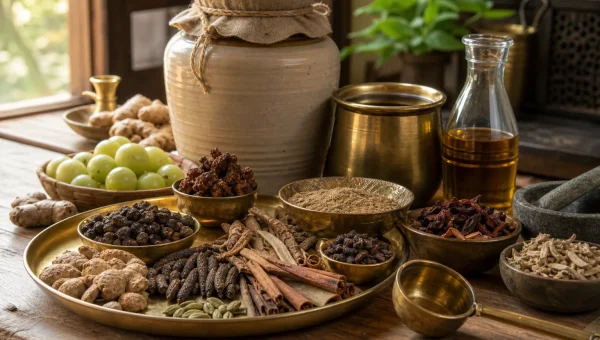
My grandmother’s separate small brass container of black pepper makes complete sense now. She gave it with honey for cough, with buttermilk for digestion, with ghee for cold weather. She was running a pharmacy. I had nine uses for black pepper from this article and could match at least six to specific things she did.
How long before seeing results with this protocol? My practitioner said 4 weeks but I’m seeing other timelines mentioned online.
Started the curcumin protocol my Ayurvedic doctor recommended last summer and my energy has been noticeably more consistent. This explains the mechanism.
The explanation that piperine enhances bioavailability not just for curcumin but for multiple nutrients and pharmaceuticals is something that should be more widely known. The mechanism through TRPV1 activation increasing intestinal permeability in a controlled way is interesting but also raises questions about whether long-term piperine consumption at therapeutic doses has unwanted permeability effects.
The Maricha (Black Pepper) Beyond Bioavailability angle is useful here. This would be easier to follow with a one-week sample plan.
The use of pepper for respiratory conditions is something I have seen my mother use for years. Pepper in warm ghee as a cough remedy, pepper in chai for congestion. We never questioned it. But after reading this and finding that piperine has documented bronchodilatory activity I am genuinely impressed by the empirical pharmacology in our kitchen.
I want to be precise about the bioavailability enhancement claim. Piperine’s 2000% increase in curcumin bioavailability is from one relatively small study and the mechanism involves inhibiting glucuronidation, which slows metabolism rather than increasing absorption per se. Whether this is purely beneficial depends on what else the patient is taking that might be similarly affected.
Are there food interactions with curcumin that I should be aware of? My Ayurvedic doctor mentioned something about dairy but wasn’t specific.
The story about the grandmother’s brass container really reminded me of how spices were once treated like medicine in many homes.
The Maricha (Black Pepper) Beyond Bioavailability angle is useful here. The examples make the advice less abstract.
The Maricha (Black Pepper) Beyond Bioavailability angle is useful here. I would like to know how long to try it before judging results.
Trying the pepper and honey mix for a sore throat last week I noticed it eased the irritation faster than plain honey.
My practitioner wants to use digestion alongside curcumin. Is this a common combination or is the article’s protocol more commonly used in isolation?
It’s interesting to see piperine’s role in curcumin absorption explained alongside its other traditional uses like digestion support.
The connection between black pepper and vitiligo treatment is something I hadn’t heard before; the topical paste idea sounds worth experimenting with.
Reading about the Trikatu combination makes me want to explore ginger and long pepper alongside black pepper for my morning routine.
The explanation of using pepper during fever to burn Ama clarified why some elders suggest warming spices even when you feel hot.
The safety notes about avoiding high doses with certain medications reminded me to consult a doctor before supplementing.
The steam inhalation method with crushed peppercorns seems simple enough to try during a sinus flare-up.
Learning that piperine can act on TRPV1 channels gives a new perspective on how pepper might help with nerve discomfort.
The liver support section made me think about having a bit of pepper before a big holiday meal to prepare digestion.
Considering black pepper as an antifungal agent the neem and pepper paste for ringworm sounds like a useful home remedy.
The reference to Charaka Samhita and Ashtanga Hridayam adds credibility to the claims beyond just modern studies.
Seeing the dosage range of 250 to 500 mg helps me gauge how much ground pepper to use without overdoing it.
Will try this!
have been researching this topic for months and this article fills a specific gap I had 🙌
i forwarded this to my Ayurvedic practitioner and she said the protocol is sound
It’s fascinating that a common kitchen spice has such a wide range of applications from respiratory health to skin pigmentation.
i tried a similar protocol for 2 months with no results. individual variation is real and should be emphasized
🙏 have been researching this topic for months and this article fills a specific gap I had
one of the better explained Ayurvedic articles ive come across. the dosage specifics are what made it actionable
would be helpful to have the main points in a summary table for quick reference
i tried a similar protocol for 2 months with no results. individual variation is real and should be emphasized asked this recently
one of the better explained Ayurvedic articles I’ve come across. the dosage specifics are what made it actionable
started following this blog 6 months ago and the quality of sourcing has improved my trust significantly
have been researching this topic for months and this article fills a specific gap I had asked this last week
💯 sorry off-topic but does anyone here have experience using Ayurveda for hair loss
I tried a similar protocol for 2 months with no results. individual variation is real and should be emphasized asked this earlier
this protocol is the most specific ive seen. tried the first 2 weeks and already seeing results
i tried a similar protocol for 2 months with no results. individual variation is real and should be emphasized asked this last week
the article would benefit from more citations. claims are made confidently without sources in some sections
one of the better explained Ayurvedic articles ive come across. the dosage specifics are what made it actionable asked this last week
would be helpful to have the main points in a summary table for quick reference asked this recently
started following this blog 6 months ago and the quality of sourcing has improved my trust significantly asked this recently
started following this blog 6 months ago and the quality of sourcing has improved my trust significantly asked this earlier
i tried a similar protocol for 2 months with no results. individual variation is real and should be emphasized asked this just now
would be helpful to have the main points in a summary table for quick reference asked this just now
one of the better explained Ayurvedic articles I’ve come across. the dosage specifics are what made it actionable asked this last week
have been researching this topic for months and this article fills a specific gap I had
I forwarded this to my Ayurvedic practitioner and she said the protocol is sound asked this last week
have been researching this topic for months and this article fills a specific gap I had asked this recently
have been researching this topic for months and this article fills a specific gap I had asked this just now
the article would benefit from more citations. claims are made confidently without sources in some sections 🌿
the article would benefit from more citations. claims are made confidently without sources in some sections asked this just now
I forwarded this to my Ayurvedic practitioner and she said the protocol is sound 🌿
would be helpful to have the main points in a summary table for quick reference asked this earlier