
If your ultrasound report says “multiple intramural fibroids” and your doctor has mentioned watchful waiting, medication, procedure-based treatment, or surgery, there is also a complementary conversation worth having. Ayurveda does not replace gynecological evaluation, ultrasound monitoring, or treatment when symptoms are significant, but it can offer a structured way to support digestion, menstrual regularity, Kapha balance, Apana Vayu, and bleeding control while you remain under medical care.
Uterine fibroids are benign tumors that arise from the smooth muscle of the uterus. Their behavior depends on size, number, and location: some remain small and quiet, while others contribute to heavy bleeding, pelvic pressure, pain, anemia, urinary symptoms, bowel symptoms, or fertility concerns. Ayurveda approaches this terrain through pattern recognition rather than through a single disease label, and the closest classical framework is Granthi, a knot-like or glandular swelling formed through dosha and tissue disturbance.
Medical disclaimer: Uterine fibroids vary greatly in size, location, number, and symptom burden. This post is for educational purposes only and does not replace care from a qualified gynecologist, Ayurvedic physician, or healthcare provider. Heavy bleeding, anemia, severe pain, pelvic pressure, infertility concerns, postmenopausal bleeding, or rapidly changing symptoms require medical assessment. Always discuss herbs, formulas, castor oil packs, fasting, or major diet changes with your healthcare provider before beginning.
Fibroids Through the Ayurvedic Lens: Granthi, Apana Vayu, and the Uterine Field
Ayurveda does not give uterine fibroids a one-to-one name in the way modern gynecology uses “leiomyoma” or “fibroid,” but the classical concept of Granthi is highly relevant. Granthi means a knot, lump, or glandular swelling, and classical descriptions connect its formation with disturbed doshas affecting tissues such as muscle, blood, and fat. When this framework is applied to fibroids in the uterus, practitioners commonly assess the pattern as a Kapha-Vata type of Granthi in the Garbhashaya, with Pitta and Rakta involvement when bleeding is prominent.
- Kapha aspect: Fibroids are dense, solid, and often slow-growing. This resembles Kapha qualities such as heaviness, stability, accumulation, and compactness. A Kapha-predominant presentation may include weight gain, sluggish digestion, thick coating on the tongue, heaviness in the pelvis, water retention, and a tendency toward cysts or glandular swellings.
- Vata aspect: Vata governs movement, nerve regulation, pain, circulation, and the downward flow of Apana Vayu. When Vata is disturbed in the pelvic region, menstrual pain, irregular cycles, bloating, constipation, lower back discomfort, and a feeling of pelvic constriction may accompany the fibroid picture.
- Pitta-Rakta aspect: When heat and blood tissue are involved, the main presentation is heavy or prolonged menstrual bleeding, clots, burning sensations, irritability, inflammation, or worsening symptoms around the menstrual phase. In Ayurvedic language, this overlaps with patterns described under Asrgdara, Raktapradara, or excessive uterine bleeding.
The Hormonal Picture: Translating Without Forcing
Modern gynecology describes fibroids as hormone-sensitive benign smooth-muscle tumors. Estrogen and progesterone influence fibroid growth, and many fibroids grow slowly during reproductive years and tend to shrink after menopause. Ayurveda does not use the language of estrogen receptors or progesterone receptors, but it does recognize that reproductive tissue, menstrual blood, digestion, fat tissue, and the downward movement of Apana Vayu are closely linked.
A clean Ayurvedic plan does not need to reduce everything to “estrogen dominance.” Instead, it asks practical questions: Is digestion heavy or sluggish? Is bowel elimination regular? Is there excess Kapha from sedentary habits, excess sweets, excess dairy, fried foods, or overeating? Is Pitta showing through heavy bleeding or heat? Is Vata disturbed through stress, poor sleep, travel, constipation, or chronic depletion? The answers guide the protocol more safely than a one-size-fits-all herb list.
Kanchanara Guggulu: The Classical Granthi Formula
If there is one classical formula often selected by Ayurvedic practitioners for Granthi-type, glandular, or Kapha-accumulation presentations, it is Kanchanara Guggulu. The formula traditionally combines Kanchanara bark with Guggulu and supporting herbs such as Triphala, Trikatu, Varuna, and aromatic digestive herbs. Its purpose in this context is not to act as a substitute for ultrasound monitoring, but to address the Kapha-Meda tendency toward accumulation, sluggish metabolism, and knot-like tissue formations.
Kanchanara bark is listed in the Ayurvedic Pharmacopoeia of India as Bauhinia variegata stem bark. Its classical actions include digestive support, scraping and astringent qualities, and use in glandular swellings such as Gandamala and Apaci. Guggulu is also listed in official Ayurvedic standards and is traditionally used in conditions involving swelling, metabolic sluggishness, and Granthi-type formations. For fibroid care, this formula should be taken only under practitioner guidance, especially if you are pregnant, trying to conceive, on blood thinners, taking hormonal medication, or experiencing unexplained bleeding.
Practitioner-Guided Internal Support
The following table shows how key herbs and formulas are traditionally positioned in an Ayurvedic fibroid-support plan. These are not self-prescription instructions. Powder, decoction, extract, tablet strength, and duration vary widely, so dose and suitability should be decided by a qualified practitioner after reviewing your constitution, symptoms, medicines, ultrasound findings, menstrual pattern, and fertility plans.
| Herb / Formula | Sanskrit Name / Botanical | Traditional Use in This Context | Typical Classical Reference Range | Important Safety Note |
|---|---|---|---|---|
| Kanchanara Guggulu | Kanchanara, Guggulu, Triphala, Trikatu, Varuna and supporting herbs | Kapha-type Granthi, glandular swelling tendency, sluggish tissue metabolism | Tablet strength varies; use only as directed by practitioner or product standard | Avoid self-use during pregnancy, fertility treatment, unexplained bleeding, or complex medication use |
| Kanchanara bark | Bauhinia variegata | Astringent, light, Kapha-reducing support for glandular swelling patterns | 20–30 g crude drug for decoction in API adult guidance | Best used as part of a supervised formula rather than as an isolated long-term herb |
| Ashoka bark | Saraca asoca / Saraca indica | Heavy uterine bleeding patterns, uterine support, Rakta-Pitta involvement | 20–30 g crude drug for decoction in API adult guidance | Seek medical care for heavy bleeding, clots, dizziness, anemia, or bleeding between periods |
| Lodhra bark | Symplocos racemosa | Astringent support for Pradara, Raktapitta, and Kapha-Pitta uterine discharge or bleeding patterns | 3–5 g powder or 20–30 g decoction in API adult guidance | Not a replacement for evaluation of abnormal uterine bleeding |
| Haridra | Curcuma longa | Daily culinary Kapha-Pitta support, digestive and cleansing spice | 1–3 g powder in API adult guidance | Use cautiously with anticoagulants, gallbladder disease, or before surgery unless cleared by a clinician |
| Shatavari | Asparagus racemosus | Cooling, nourishing female reproductive tonic when depletion, dryness, burning, or Pitta irritation is present | Practitioner-directed; preparation and dose vary | Not the first choice for a heavy Kapha-dominant fibroid pattern unless clearly indicated |
Ashoka and Lodhra for the Bleeding-Predominant Pattern
Many women seek support not because the fibroid itself is large, but because the bleeding is exhausting. In Ayurveda, this is where Ashoka and Lodhra become especially important. Ashoka is classically associated with Asrgdara, a condition of excessive uterine bleeding, while Lodhra is associated with Pradara and Raktapitta. Both are astringent, cooling, and stabilizing, making them more suitable when Pitta and Rakta are involved along with Kapha.
These herbs should be matched to the person, not just the diagnosis. A woman with pale skin, dizziness, shortness of breath, fatigue, and very heavy bleeding needs blood work and medical care, not only herbs. A woman with mild-to-moderate heavy flow, stable hemoglobin, and a monitored fibroid may use Ashoka- or Lodhra-based support as part of a broader supervised plan that also includes iron status, digestion, bowel regularity, diet, rest, and follow-up imaging.
External Therapies: A Safe Castor Oil Pack Approach
Castor oil packs over the lower abdomen are a practical home version of external Snehana, or oil application. In Ayurveda, castor is connected with Vata-pacifying and downward-moving actions, and gentle warmth over the lower abdomen may help soften abdominal tension, support relaxation, and encourage healthy Apana Vayu. This practice should be treated as supportive comfort care, not as a stand-alone treatment for shrinking fibroids.
This external approach should not be confused with Uttara Basti, a clinical Ayurvedic procedure in which medicated substances are administered through the vaginal or urinary route by a trained physician. Uttara Basti is not a home practice and should never be attempted without qualified clinical supervision.
Home Castor Oil Pack Protocol
Use this protocol only when your healthcare provider has cleared heat and abdominal oil application for your situation. Do not use it during active menstruation, heavy bleeding, pregnancy, suspected pregnancy, immediately after ovulation while trying to conceive, acute pelvic infection, unexplained pelvic pain, fever, open skin irritation, or immediately after abdominal surgery.
- Use cold-pressed castor oil and a clean cotton flannel cloth large enough to cover the lower abdomen from below the navel to the pubic bone.
- Apply enough oil to moisten the cloth without making it drip. Place the cloth over the lower abdomen while lying on an old towel, because castor oil stains fabric.
- Cover with a protective layer and place a warm—not burning—hot water bottle or heating pad over the cloth.
- Rest for 30–45 minutes with slow breathing. Keep the temperature comfortable and stop immediately if there is burning, dizziness, cramping, nausea, or increased bleeding.
- Afterward, clean the skin with mild soap and warm water. Store the cloth in a sealed container and replace it regularly for hygiene.
- Use one to three times weekly only when appropriate for your cycle, symptoms, and medical guidance.
The Anti-Kapha Diet for Fibroid Management
Diet is one of the most useful Ayurvedic tools for reducing Kapha load and supporting the internal terrain around fibroids. The goal is not harsh restriction. The goal is to make meals warm, light, cooked, high in plant foods, rich in fiber, and easy to digest while reducing the heavy, cold, oily, sweet, and sedentary patterns that aggravate Kapha.
Foods to Prioritize
Build meals around warm cooked vegetables, legumes, moderate whole grains, digestive spices, and bitter or astringent tastes. This style supports digestive fire, bowel regularity, and healthy weight, all of which matter in a fibroid-support plan.
- Bitter and leafy greens: Fenugreek leaves, mustard greens, spinach, amaranth leaves, moringa leaves, arugula, dandelion greens, and bitter gourd in cooked form.
- Cruciferous vegetables: Cabbage, cauliflower, broccoli, radish, turnip, and Brussels sprouts when tolerated by digestion.
- Light legumes: Moong dal, masoor dal, horse gram in suitable constitutions, and well-spiced lentil soups.
- Kapha-reducing spices: Ginger, black pepper, long pepper, turmeric, cumin, coriander, ajwain, mustard seed, and fenugreek seed.
- Warm fluids: Warm water, cumin-coriander-fennel water, ginger tea, or simple digestive herbal infusions suited to your constitution.
- Fiber-rich meals: Vegetables, legumes, fruits in moderation, and whole grains such as barley, millet, or old rice when they suit your digestion.
Foods to Significantly Reduce
Reduce foods that increase heaviness, sluggishness, inflammation, constipation, water retention, or rapid weight gain. This does not mean every item must be permanently forbidden; it means these foods should not form the daily foundation of a fibroid-support diet.
- Refined sugar and refined flour: Sweets, pastries, biscuits, sweetened drinks, white bread, and frequent desserts.
- Heavy dairy in excess: Cheese, cream, ice cream, cold yogurt, and large amounts of milk, especially at night or with poor digestion.
- Fried and oily foods: Deep-fried snacks, fast food, reheated oils, and very greasy meals.
- Cold foods and drinks: Ice water, cold smoothies, ice cream, and refrigerator-cold meals that weaken digestive fire.
- Excess red or processed meat: Especially when it replaces vegetables, legumes, and fiber-rich foods.
- Alcohol: Especially when bleeding is heavy, sleep is poor, Pitta is aggravated, or liver function needs support.
Apana Vayu, Stress, Sleep, and Pelvic Rhythm
The uterus is governed by Apana Vayu, the downward-moving aspect of Vata responsible for menstruation, elimination, childbirth, and pelvic flow. When Apana is disturbed by chronic stress, poor sleep, irregular meals, constipation, excessive travel, overwork, or emotional strain, menstrual symptoms often feel more chaotic even when the fibroid size has not changed.
The Ayurvedic prescription here is rhythm. Eat at regular times, sleep early, keep the bowels moving, reduce overstimulation at night, and practice gentle daily movement. Restorative yoga, slow walking, supported forward bends, diaphragmatic breathing, and Yoga Nidra can help calm Vata and reduce the sense of pelvic guarding. During menstruation, keep practice gentle and avoid strong inversions, intense abdominal work, overheating, and exhaustion.
Monitoring Fibroid Size and Symptoms
If you and your gynecologist choose watchful waiting or complementary management, monitoring is essential. Ultrasound is commonly used to identify fibroid size, number, and location, and follow-up frequency should be decided by your clinician based on symptoms, fibroid type, fertility goals, age, bleeding pattern, and any change in pain or pressure.
Track more than the scan report. Keep a simple monthly record of cycle length, number of bleeding days, clotting, pad or tampon count, pain level, pelvic pressure, urinary frequency, bowel changes, fatigue, dizziness, and any missed work or daily activities. Bring this record to both your gynecologist and Ayurvedic practitioner so the plan remains grounded in observable changes.
Seek prompt medical care if you develop very heavy bleeding, dizziness, faintness, shortness of breath, known anemia, bleeding after menopause, sudden severe pelvic pain, new urinary retention, worsening bowel symptoms, rapid abdominal enlargement, or bleeding during pregnancy. These signs require medical evaluation before continuing any home protocol.
When Ayurvedic Management Is Supportive, Not Sufficient
Ayurveda is most useful as a supportive and preventive system when fibroids are small, stable, mildly symptomatic, or being medically monitored. It can also support recovery routines, digestion, strength, and recurrence-prevention habits after conventional treatment. But some fibroid situations require medication, procedural care, or surgery, and delaying needed treatment can worsen anemia, pain, fertility outcomes, or pressure symptoms.
- Heavy or prolonged bleeding with low iron or anemia
- Submucosal fibroids that distort the uterine cavity
- Fibroids associated with infertility, recurrent pregnancy loss, or pregnancy complications
- Fibroids causing urinary retention, frequent urination, constipation, bowel pressure, or severe pelvic pressure
- Rapidly changing symptoms or sudden severe pain
- Postmenopausal bleeding or new growth after menopause
- Any case where your gynecologist recommends urgent intervention
A mature fibroid plan does not ask you to choose blindly between Ayurveda and modern gynecology. It asks you to use both wisely: diagnostic imaging, blood work, and medical treatment when needed; diet, herbs, daily rhythm, stress regulation, bowel support, and Apana Vayu care where appropriate.
For broader Ayurvedic context, see our overview of Stri Roga: women’s diseases in Ayurveda. For related uterine bleeding patterns, our guide to Lodhra and Ashoka explains why these two classical barks are so often used in women’s health formulations. For nervous-system support, Yoga Nidra for beginners is a gentle place to begin.
You deserve a complete picture of your options. Fibroids are not a reason to panic, and they are not a reason to ignore your body. With proper diagnosis, monitoring, qualified guidance, and a steady daily protocol, many women can make informed choices before, during, or after conventional treatment.
References
- NCBI
- Mayoclinic (mayoclinic.org)
- Mayoclinic (mayoclinic.org)
- Easyayurveda (easyayurveda.com)
- Ayurvedic Pharmacopoeia of India
- Ijapr (ijapr.in)
- Plant profile, phytochemistry and pharmacology of Asparagus racemosus (Shatavari): A review (2013), PubMed Central
- Easyayurveda (easyayurveda.com)
- Link (link.springer.com)
- NHS
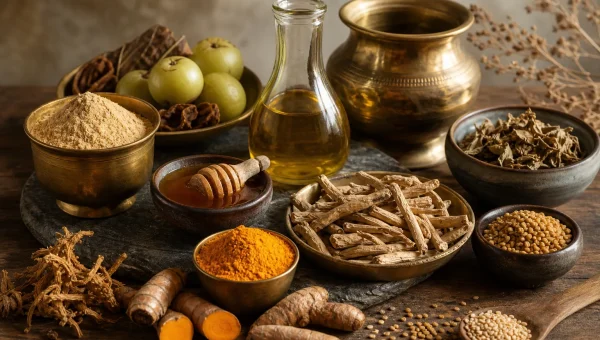
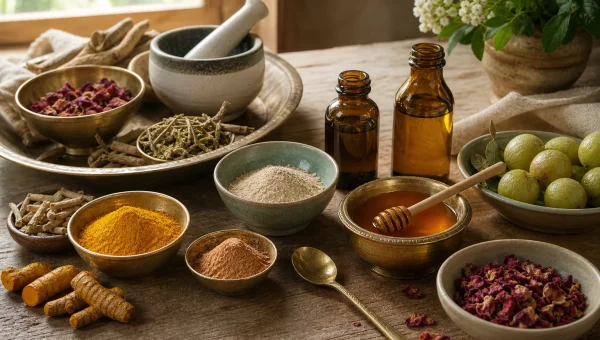
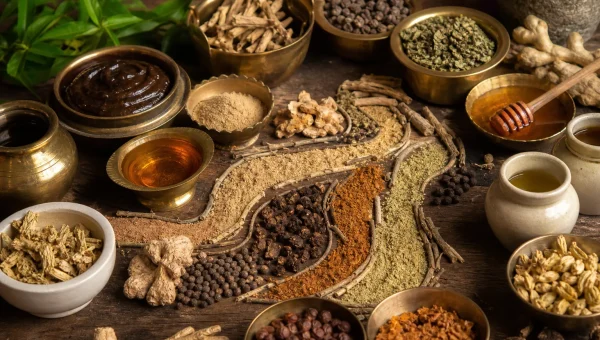
My gynecologist gave me exactly those two options: watchful waiting or surgery. I spent three months looking for the third conversation. Finding Ayurvedic management for fibroids felt like finding something that had been there all along but no one in the conventional system thought to mention.
I have three intramural fibroids, the largest at 4.2cm. My periods are heavy but not debilitating. I have been on the Kanchanar Guggulu protocol for 6 months. My last ultrasound showed no growth. My gynecologist considers that a good outcome.
This is the first time I have seen someone lay out the Granthi framing alongside actual clinical context without dismissing conventional imaging. My scan showed submucosal fibroids last year and the conversation with my gynaecologist was exactly as you described — watch or operate, nothing in between. Would love to know more about how to find a practitioner who actually specialises in this.
I tried the dietary recommendations for fibroids over 4 months. No reduction in fibroid size on imaging but my period pain, which had been severe, dropped from 8/10 to 3/10 on the pain scale. My gynecologist is pleased with that outcome even though the fibroids themselves did not change.
I want to flag that the article does not adequately address the circumstances where fibroids require urgent intervention regardless of Ayurvedic management. Submucosal fibroids affecting fertility or fibroids causing iron-deficiency anemia from blood loss are not appropriate candidates for watchful waiting of any kind.
The castor oil pack protocol described here is something I have been doing for 3 months for fibroid management. Whether it is reducing the fibroids I cannot confirm without imaging. But the pelvic heaviness that was my main complaint has improved substantially.
I had a myomectomy 3 years ago and two fibroids have returned. My gynecologist says the recurrence rate is high and a second surgery is likely in the future. Starting the Ayurvedic protocol alongside monitoring to see whether I can slow the recurrence.
My wife has multiple fibroids and her doctor is monitoring. She has been on the dietary protocol described here for 8 weeks. The castor oil packs are the thing she has been most consistent with. Imaging in two months will tell us something.
The section on Granthi helped me connect the Ayurvedic concept of a knot to what my ultrasound showed.
Went through exactly this process last year. The ayurvedic made a difference by week 3 and by month 2 I was back to sleeping through the night.
One question I have is how often the castor oil pack should be done if I also have a heavy period.
I am a 28-year-old with a fibroid and was told not to worry because I am young. Everything I read says to address this early. The Ayurvedic preventive approach for younger women described here resonates more than the ‘wait and see’ advice I was given.
Ultrasound at 6 months is the minimum interval to observe any meaningful change from a herbal protocol. This article does not mention imaging schedule recommendations for monitoring. Patients trying this approach need to know how often to check progress.
After reading about Kanchanara Guggulu I wonder if the dosage might need adjustment for someone with a sensitive stomach.
When the article mentioned stress worsening fibroids it made me think about my own work deadlines.
I found the anti kapha diet suggestions practical especially the focus on bitter greens and warm legumes.
The explanation of estrogen dominance as a Kapha-Pitta imbalance gave me a new way to look at my lab results.
It would be useful to hear more about how Ashoka bark extract interacts with conventional medications for bleeding.
The monitoring schedule with ultrasounds every three months then six months seems reasonable for small fibroids.
I appreciate the honesty about when Ayurvedic management may not be enough and surgery might be needed.
The idea of using Triphala at bedtime to support liver detoxification sounds like a simple addition to my routine.
for PMDD specifically, how does the ashwagandha-shatavari combination compare to just shatavari alone
fibroid management with herbs alone may not be realistic for fibroids over 5cm. surgery option shouldn’t be dismissed
Seeing the reference to the 2013 study on stress and fibroid risk encouraged me to look into restorative yoga.
shatavari for 3 months alongside the dietary changes. my PMDD symptoms in the luteal phase are 50% less intense
how do you know if Pitta or Kapha is the dominant factor in fibroid growth. the differentiation criteria aren’t clear
fibroid management with herbs alone may not be realistic for fibroids over 5cm. surgery option shouldn’t be dismissed asked this just now
the article doesn’t mention that shatavari is not suitable for estrogen-sensitive conditions. important omission
using the article’s approach to heavy bleeding with lodhra and ashoka. 2 months in, flow normalized significantlt
the fibroid protocol, does it work for submucosal fibroids or mainly intramural
how do you know if Pitta or Kapha is the dominant factor in fibroid growth. the differentiation criteria aren’t clear asked this last week
the article doesnt mention that shatavari is not suitable for estrogen-sensitive conditions. important omission asked this recently
i tried the PMDD protocol for 4 months, the physical symptoms improved but mood component didn’t change much
how do you know if Pitta or Kapha is the dominant factor in fibroid growth. the differentiation criteria aren’t clear asked this recently
for PMDD specifically, how does the ashwagandha-shatavari combination compare to just shatavari alone asked this just now
how do you know if Pitta or Kapha is the dominant factor in fibroid growth. the differentiation criteria aren’t clear asked this just now
i tried the PMDD protocol for 4 months, the physical symptoms improved but mood component didnt change much
shatavari for 3 months alongside the dietary changes. my PMDD symptoms in the luteal phase are 50% less intense asked this last week
for PMDD specifically, how does the ashwagandha-shatavari combination compare to just shatavari alone asked this earlier
No results for me
धन्यवाद! the fibroid protocol, does it work for submucosal fibroids or mainly intramural
i tried the PMDD protocol for 4 months, the physical symptoms improved but mood component didnt change much asked this recently
using the article’s approach to heavy bleeding with lodhra and ashoka. 2 months in, flow normalized significantly
the article doesnt mention that shatavari is not suitable for estrogen-sensitive conditions. important omission
I would like more detail on Fibroid Management. I would like to know how long to try it before judging results.
💯 sorry off-topic but does anyone here have experience using Ayurveda for hair loss
fibroid management with herbs alone may not be realistic for fibroids over 5cm. surgery option shouldn’t be dismissed asked this earlier
for PMDD specifically, how does the ashwagandha-shatavari combination compare to just shatavari alone asked this last week
for PMDD specifically, how does the ashwagandha-shatavari combination compare to just shatavari alone asked this recently
the fibroid protocol, does it work for submucosal fibroids or mainly intramural asked this last week
Reading this later and the Fibroid Management advice still feels relevant. The practical details matter more than people think.
I tried the PMDD protocol for 4 months, the physical symptoms improved but mood component didn’t change much asked this recently
the fibroid protocol, does it work for submucosal fibroids or mainly intramural asked this recently