
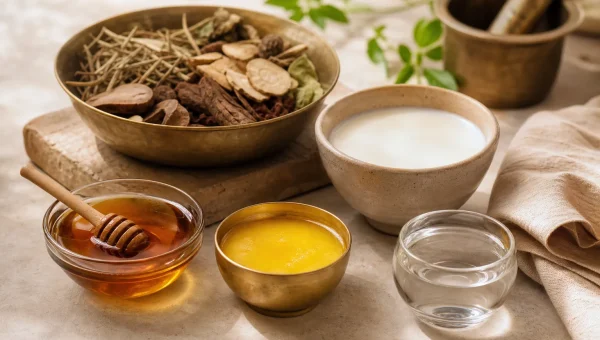
A person with osteoarthritic knee pain walks into a herbal pharmacy and sees two bottles: one labeled “Turmeric Curcumin 500 mg” and another labeled “Boswellia serrata Extract 400 mg.” Which one should be chosen? The front-label numbers do not provide a reliable answer. A curcumin capsule may contain purified curcuminoids, a turmeric extract, a phospholipid complex, essential oils, piperine, or a dispersible formulation. A Boswellia capsule may contain powdered resin, a general extract, total boswellic acids, or a proprietary extract enriched in selected boswellic acids.
Curcumin and Boswellia serrata are both widely marketed for inflammatory and painful conditions, particularly knee osteoarthritis. They are not interchangeable substances, however, and neither can be judged by milligrams alone. Their Ayurvedic identities, chemical constituents, absorption characteristics, clinical preparations, and safety considerations differ. The most useful comparison therefore examines the actual product, the condition being treated, and the clinical trial that most closely resembles that product.
What Is Actually Being Compared?
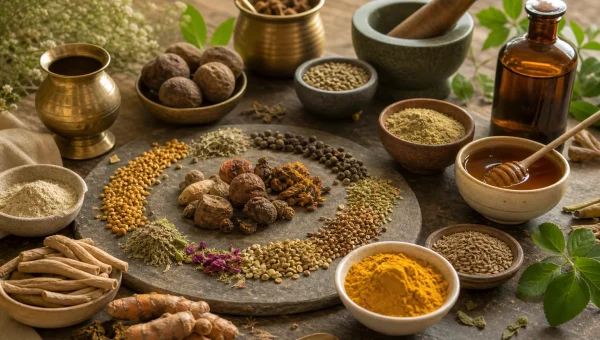
“Curcumin” generally refers to one curcuminoid obtained from the rhizome of Curcuma longa, although supplement labels often use the term for mixtures of curcumin, demethoxycurcumin, and bisdemethoxycurcumin. “Boswellia” usually refers to an extract of the oleo-gum-resin exuded by Boswellia serrata. The latter contains several pentacyclic triterpenes, including beta-boswellic acid, acetyl-beta-boswellic acid, 11-keto-beta-boswellic acid, and acetyl-11-keto-beta-boswellic acid, commonly abbreviated AKBA.
This distinction matters because whole turmeric, standardized curcuminoids, enhanced curcumin formulations, raw Boswellia resin, and AKBA-enriched extracts are pharmacologically different preparations. A clinical outcome obtained with one proprietary extract cannot automatically be assigned to every product bearing the same plant name.
Ayurvedic Pharmacopoeia: Haridra and Kunduru
The Ayurvedic Pharmacopoeia of India identifies Haridra as the dried and cured rhizome of Curcuma longa. Its monograph records tikta and katu rasa, ruksha guna, ushna virya, katu vipaka, and actions including kaphapittanut, vishaghna, varnya, kushthaghna, krimighna, and pramehanashaka. The monograph gives an adult oral guidance range of 1–3 g of the crude drug in powder form.
The Pharmacopoeia identifies Kunduru as the exudate of Boswellia serrata and gives Shallaki as a Sanskrit synonym. It records madhura, katu, and tikta rasa; guru, snigdha, and tikshna guna; ushna virya; madhura vipaka; and actions including balya, kaphahara, vatahara, and kaphapittahara. Its crude-drug dose is also listed as 1–3 g.
These Ayurvedic descriptions apply to authenticated whole crude drugs as defined in the pharmacopoeial monographs. They should not be converted directly into doses for purified curcumin, concentrated boswellic-acid extracts, nanoparticles, phospholipid complexes, or other modern delivery systems. Classical Ayurvedic selection also considers the person’s constitution, dosha state, agni, associated symptoms, stage of disease, preparation, vehicle, and accompanying medicines rather than treating “inflammation” as a single uniform diagnosis.
Mechanisms: Useful Context, Not a Clinical Verdict
Laboratory mechanisms help explain why these substances are being investigated, but a molecular target observed in a cell or enzyme assay does not by itself establish a clinical effect in humans. The achievable concentration, metabolism, protein binding, formulation, tissue exposure, and duration of treatment all affect whether an experimental mechanism is clinically relevant.
Curcumin: Broad Signaling Effects
Curcumin is a diarylheptanoid and a major yellow curcuminoid of turmeric. In experimental systems it has affected several pathways involved in inflammatory signaling, oxidative responses, cellular survival, and gene transcription. Frequently discussed targets include NF-kappa B-associated signaling, cyclooxygenase-2 expression, inducible nitric oxide synthase, inflammatory cytokines, mitogen-activated protein kinases, AP-1, and STAT3.
It is more accurate to describe curcumin as a multi-target experimental modulator than as a selective inhibitor equivalent to an established anti-inflammatory drug. Many mechanistic findings come from preclinical models using concentrations that may not be reproduced after ordinary oral dosing. Human outcomes must therefore be evaluated from clinical trials rather than inferred from the number of pathways listed for the compound.
Oral exposure is also highly formulation-dependent. Curcumin has low aqueous solubility and undergoes extensive intestinal and hepatic metabolism. Phospholipid complexes, micelles, nanoparticles, essential-oil combinations, and piperine-containing products have been developed to alter absorption, but these technologies are not equivalent to one another. Comparisons based only on total milligrams can consequently be misleading.
Boswellia: Boswellic Acids and the 5-LOX Question
Boswellic acids were historically described as inhibitors of 5-lipoxygenase, the enzyme involved in leukotriene formation. AKBA and 11-keto-beta-boswellic acid can inhibit 5-lipoxygenase in certain laboratory systems, but pharmacokinetic evaluations have found very low circulating concentrations of these keto-boswellic acids after oral administration. Their activity can also change in the presence of albumin and under whole-blood assay conditions.
For this reason, selective 5-lipoxygenase inhibition should not be presented as the complete or clinically proven explanation for Boswellia’s effects. Other proposed targets include cathepsin G, an immune-cell serine protease, and microsomal prostaglandin E synthase-1. Beta-boswellic acid may reach higher systemic concentrations than AKBA in some preparations. The relevant mechanism is likely to depend on the composition and delivery of the individual extract.
Head-to-Head Comparison
The following comparison separates verified pharmacopoeial information from formulation-dependent experimental and clinical findings. It does not imply that every supplement sold under either name has the same composition or therapeutic effect.
| Parameter | Curcumin or Curcuma Extract | Boswellia Extract |
|---|---|---|
| Botanical source | Rhizome of Curcuma longa | Oleo-gum-resin exudate of Boswellia serrata |
| Main labeled constituents | Curcumin or total curcuminoids | Total boswellic acids, selected boswellic acids, or AKBA |
| API rasa | Tikta, katu | Madhura, katu, tikta |
| API guna | Ruksha | Guru, snigdha, tikshna |
| API virya and vipaka | Ushna virya; katu vipaka | Ushna virya; madhura vipaka |
| Mechanistic picture | Multiple signaling effects described mainly in experimental models | Boswellic-acid effects vary by constituent, concentration, and assay |
| Oral exposure | Low and highly dependent on delivery technology | Variable; AKBA and KBA may have low systemic exposure |
| Most consistent clinical signal | Symptom improvement in some knee osteoarthritis trials | Symptom improvement in some knee osteoarthritis trials |
| Important limitation | Trials use substantially different formulations and doses | Extract composition and boswellic-acid standardization vary widely |
| Common tolerability concerns | Nausea, reflux, abdominal upset, diarrhea, or constipation | Abdominal discomfort, nausea, diarrhea, or other mild digestive symptoms |
Clinical Evidence by Condition
Knee osteoarthritis is the condition for which both botanical groups have the clearest clinical signal. Evidence for bowel disease, asthma, metabolic conditions, and exercise-related soreness is less suitable for a direct curcumin-versus-Boswellia ranking because the populations, preparations, outcomes, and study quality differ considerably.
Knee Osteoarthritis
A 2018 systematic review and meta-analysis concluded that curcuminoid and Boswellia formulations were statistically more effective than placebo for knee-osteoarthritis pain and function. The authors also emphasized limitations that remain central to interpretation: small trials, differing formulations, incomplete reporting, and limited long-term data. A 2020 Boswellia-focused meta-analysis included seven trials with 545 participants and reported improvements in pain, stiffness, and function, but the included products and comparators were heterogeneous.
A 2025 systematic review and network meta-analysis compared Curcuma longa, Boswellia serrata, and mixed formulations. Modified Boswellia preparations performed favorably for some measures of joint function, while modified Curcuma preparations showed notable pain reduction. Results for mixed formulations were considered promising but still required further investigation. Such rankings apply to the included trial products and should not be treated as a universal ranking of all retail supplements.
The frequently cited Haroyan trial was published in 2018, not 2014. It enrolled 201 adults with osteoarthritis and lasted 12 weeks. Participants received placebo, a turmeric preparation providing 333 mg of curcuminoids per capsule, or a combination providing 350 mg of curcuminoids and 150 mg of boswellic acid per capsule; the active capsules were taken three times daily. Both active preparations improved selected outcomes relative to placebo. The combination showed significant effects in physical-performance tests and the WOMAC pain index, whereas the curcumin preparation’s significant advantage was mainly seen in physical-performance testing.
This trial compared a particular curcumin product with a particular curcumin-plus-Boswellia product. It did not contain a Boswellia-only arm, so it cannot answer whether Boswellia alone is better than curcumin alone. It provides product-specific support for the tested combination rather than proof that every curcumin-Boswellia pairing is synergistic.
A 2008 randomized, double-blind, placebo-controlled trial evaluated a proprietary Boswellia extract called 5-Loxin in 75 people with knee osteoarthritis. Participants received 100 mg daily, 250 mg daily, or placebo for 90 days. Both active groups improved in pain and physical-function measures, and the higher-dose group showed improvement on some measures as early as day seven. Synovial-fluid matrix metalloproteinase-3 was also measured and decreased in the active groups.
The metalloproteinase result is an exploratory biomarker finding. It does not establish that the extract regenerates cartilage or prevents structural progression of osteoarthritis. Demonstrating disease modification would require appropriately designed imaging or structural-outcome trials over a substantially longer period.
A 2013 two-arm study compared a fixed Curcuma-Boswellia formulation with celecoxib. Thirty participants were enrolled and 28 completed 12 weeks of treatment. The combination was given at 500 mg twice daily and celecoxib at 100 mg twice daily. Both groups improved, but between-group differences in pain and several functional measurements were not statistically significant. Its small sample, limited design, and use of a single proprietary formulation make it an exploratory comparison rather than a basis for declaring the botanical combination equivalent or superior to celecoxib.
Ulcerative Colitis and Crohn Disease
Curcumin has been evaluated as an adjunct to standard treatment in ulcerative colitis. Randomized trials have added curcumin to mesalamine or related maintenance therapy rather than using it as a replacement. A placebo-controlled trial published in 2015 reported better clinical and endoscopic outcomes when curcumin was added to mesalamine in patients with active mild-to-moderate ulcerative colitis. A later meta-analysis found an improved likelihood of clinical response with adjunctive curcumin, while noting the small number and variability of available trials.
The appropriate conclusion is that selected curcumin preparations may have a role as specialist-supervised adjuncts in ulcerative colitis. The results do not justify stopping mesalamine, corticosteroids, immunomodulators, biologic medicines, or other prescribed treatment. Curcumin products also differ markedly in dose and delivery, and a lower-dose trial did not reproduce the same induction benefit.
Boswellia has older clinical data in inflammatory bowel conditions. An early comparison of a Boswellia resin extract with mesalazine in active Crohn disease reported improvement in disease-activity scores. A subsequent randomized, placebo-controlled maintenance trial found a good safety profile but did not demonstrate effective maintenance of Crohn remission. A small collagenous-colitis trial produced an uncertain result that was insufficient to establish routine treatment.
These findings do not support naming Boswellia as the preferred supplement for Crohn disease. Crohn disease and ulcerative colitis can cause bleeding, strictures, malnutrition, abscesses, fistulas, and other serious complications; botanical products should be considered only with the treating gastroenterologist.
Asthma and Allergic Conditions
A small placebo-controlled trial published in 1998 enrolled 80 adults with bronchial asthma and evaluated a Boswellia preparation for six weeks. Symptom and examination outcomes favored the active group, but this isolated, older trial does not provide a modern treatment standard. Reliable comparative data showing Boswellia to be superior to curcumin for asthma or allergic rhinitis are not established.
Neither supplement should replace inhaled corticosteroids, bronchodilators, biologic therapy, allergen management, or an asthma action plan. Delaying effective treatment during wheezing or breathing difficulty can be dangerous. Any complementary use should be discussed with a respiratory physician, particularly when asthma is poorly controlled.
Metabolic and Exercise-Related Uses
Curcumin has been examined in varied metabolic and exercise studies, but differences in formulation, participant health, duration, outcome selection, and study quality prevent a dependable head-to-head recommendation against Boswellia. Claims that curcumin is categorically preferable for metabolic syndrome or delayed-onset muscle soreness exceed the available comparative data.
Likewise, mechanistic references to COX-2, NF-kappa B, or leukotrienes are not sufficient to select one supplement for an individual. The clinical condition, diagnosis, current treatment, formulation, and patient-important outcomes remain more relevant than choosing the product with the longest list of proposed molecular targets.
Formulation and Dose: Why the Front Label Misleads
A stated capsule weight may represent the entire extract, the carrier complex, the total curcuminoids, the resin, or one standardized fraction. Two products labeled “500 mg” may therefore deliver very different quantities and patterns of absorption. The dose used in a trial should be interpreted together with the extract specification, standardization, delivery system, dosing frequency, and treatment duration.
Curcumin Products
Clinical curcumin preparations include conventional curcuminoid extracts, turmeric extracts containing volatile oils, phospholipid complexes, micellar preparations, colloidal or nanoparticle dispersions, and products combined with piperine. These technologies can alter systemic exposure, but fold-increase claims are specific to the tested formulation, comparator, analytical method, and study conditions. They should not be transferred to another brand merely because it uses a similar marketing term.
A systematic review of arthritis trials found substantial variation in curcumin formulations, with daily doses extending from approximately 120 mg to 1,500 mg and study durations from four to 36 weeks. This range is descriptive, not a universal dosing recommendation. Greater absorption is not automatically better for every person, and highly bioavailable products require particular attention to safety.
The Ayurvedic Pharmacopoeia’s 1–3 g guidance applies to powdered Haridra as a crude drug. It is not equivalent to 1–3 g of purified curcuminoids. Culinary turmeric also cannot be converted reliably into a clinical curcumin dose without authenticated composition and analytical testing.
Boswellia Products
Boswellia labels may specify raw resin, extract ratio, total boswellic acids, individual boswellic acids, or a proprietary enhanced formulation. “Sixty-five percent boswellic acids,” for example, does not mean 65 percent AKBA. Products standardized to different constituents cannot be compared by total extract weight alone.
Some knee-osteoarthritis trials used 100–250 mg daily of proprietary enriched extracts, while other studies used different extract masses, compositions, and schedules. There is no universally validated requirement that every effective product contain a particular minimum AKBA percentage. Authentication, manufacturing quality, contaminant testing, and correspondence with a studied formulation are more informative than a single prominent number on the label.
The Ayurvedic Pharmacopoeia’s 1–3 g dose refers to Kunduru exudate as the crude drug. It should not be applied directly to concentrated extracts. An Ayurvedic practitioner may also choose a formulation and anupana according to the patient’s presentation rather than prescribing isolated boswellic acids as though they were identical to classical Shallaki or Kunduru.
Safety Profile and Contraindications
Both botanical groups have generally been tolerated in short clinical trials, but “natural” does not mean risk-free. Product adulteration, incorrect botanical identity, contaminants, concentrated delivery systems, underlying disease, and interactions with prescribed medicines can alter the risk.
Curcumin precautions: Oral turmeric or curcumin may cause nausea, reflux, abdominal discomfort, diarrhea, constipation, or vomiting. Liver injury has been reported in association with some supplements, particularly products designed to produce high bioavailability. A user who develops unusual fatigue, poor appetite, dark urine, persistent nausea, itching, or jaundice should stop the product and seek medical assessment promptly.
Supplement-level turmeric or curcumin use during pregnancy may be unsafe, and safety above ordinary food quantities during breastfeeding is insufficiently characterized. People taking prescription medicines, including medicines with narrow therapeutic ranges, should have the complete ingredient list reviewed by a healthcare provider or pharmacist. Piperine and other absorption enhancers must be included in that review because they may affect the handling of medicines as well as curcumin.
Boswellia precautions: Reported adverse effects are usually digestive, including abdominal discomfort, nausea, or diarrhea, although allergic reactions are possible with any botanical product. LiverTox has not linked Boswellia convincingly to clinically apparent liver injury, but that finding does not guarantee the safety of every mixed or contaminated supplement.
Pregnancy, breastfeeding, childhood use, prolonged high-dose use, and use with complex medication regimens require professional guidance because dependable safety information is limited. Anyone preparing for surgery or taking medicines that affect bleeding, immunity, inflammation, or drug transport should disclose Boswellia and curcumin use to the treating team rather than stopping or continuing them according to a generic internet rule.
Should You Take Both Together?
A combination is scientifically plausible because the two preparations contain different chemical families and may influence different biological processes. Clinical support, however, is formulation-specific. The 2018 Haroyan trial found that one fixed curcumin-Boswellia product produced broader improvement than the tested curcumin product, but it did not demonstrate that all combinations are superior or that independently selected capsules will reproduce the same result.
Combining supplements also increases the number of ingredients, excipients, absorption enhancers, and potential adverse effects. A person should not construct a regimen simply by adding the highest labeled dose of each product. For osteoarthritis, a more defensible approach is to select a quality-controlled preparation that closely matches a clinical trial, review it alongside current medicines, define a measurable goal such as walking tolerance or a validated pain score, and reassess after an agreed period.
In Ayurveda, combining herbs is not based solely on accumulating modern anti-inflammatory targets. A qualified practitioner considers whether the drug’s rasa, guna, virya, vipaka, dosha effects, preparation, and vehicle are appropriate for the individual. Haridra and Kunduru have distinct pharmacopoeial profiles, so their combination is not automatically suitable for every person or every condition described as inflammatory.
Practical Summary: Which to Choose?
There is no universal winner. For knee osteoarthritis, both standardized curcumin and Boswellia preparations have produced symptom improvement in some trials. For other conditions, the comparison becomes less certain and should not displace established medical care.
| Clinical Situation | Evidence-Based Interpretation | Practical Position |
|---|---|---|
| Mild-to-moderate knee osteoarthritis | Both have placebo-controlled clinical support, but results are product-specific and heterogeneous | Either may be considered as a supervised adjunct; compare exact formulation, quality, tolerability, and cost |
| Need for improved joint function | Modified Boswellia preparations have ranked favorably in some comparative analyses | This does not establish superiority of every Boswellia product |
| Need for pain reduction | Modified Curcuma preparations have shown notable pain effects in comparative analyses | Selection should still match a studied preparation and account for liver and digestive safety |
| Ulcerative colitis | Selected curcumin preparations have adjunctive data with mesalamine | Use only with gastroenterology supervision; do not replace prescribed treatment |
| Crohn disease | Boswellia results are mixed, and a maintenance trial did not show efficacy | Neither product should be self-selected as routine Crohn therapy |
| Asthma or allergic symptoms | Boswellia support rests largely on a small, older asthma trial | Neither supplement replaces inhalers, emergency medication, or specialist care |
| Metabolic syndrome or exercise soreness | Dependable direct comparative data are lacking | A head-to-head first choice cannot be assigned |
| Ayurvedic treatment | Haridra and Kunduru have different rasa, guna, vipaka, and recorded actions | Selection and dose should be individualized by a qualified Ayurvedic practitioner |
For most consumers, the decisive questions are not simply “curcumin or Boswellia?” but “which authenticated preparation, for which diagnosed condition, at what trial-supported dose, for how long, with which medicines, and with what monitoring?” Knee-osteoarthritis data justify cautious consideration of either botanical group or a studied combination as an adjunct. They do not justify replacing exercise therapy, weight management where appropriate, physiotherapy, medical assessment, or prescribed analgesic and anti-inflammatory treatment.
Disclaimer: This article is for educational and informational purposes only. It does not provide a diagnosis, individualized Ayurvedic prescription, or medical treatment recommendation. Curcumin, turmeric, Kunduru, Shallaki, and Boswellia extracts differ substantially in composition and may cause adverse effects or interact with medicines. Consult a qualified Ayurvedic practitioner and an appropriate healthcare provider before beginning supplementation, particularly if you have liver, gallbladder, gastrointestinal, bleeding, respiratory, or inflammatory bowel disease; take prescription medicines; are preparing for surgery; or are pregnant or breastfeeding. Do not stop prescribed medicines or delay urgent medical care in order to use a botanical product.
References
- Dravyaguna notes
- Ayurvedic Pharmacopoeia of India
- NCCIH
- Cancer (cancer.gov)
- Bioavailability of Oral Curcumin in Systematic Reviews: A Methodological Study (2024), PubMed Central
- Boswellia serrata: an overall assessment of in vitro, preclinical, pharmacokinetic and clinical data (2011), PubMed
- Identification of human cathepsin G as a functional target of boswellic acids from the anti-inflammatory remedy frankincense (2009), PubMed
- Efficacy of curcumin and Boswellia for knee osteoarthritis: Systematic review and meta-analysis (2018), PubMed
- Link (link.springer.com)
- Evaluating the efficacy and safety of Curcuma longa, Boswellia serrata, and their mixed formulation in treating knee osteoarthritis: A systematic review and network meta-analysis (2026), PubMed
- Link (link.springer.com)
- Link (link.springer.com)
- Spandidos-publications (spandidos-publications.com)
- Curcumin in Combination With Mesalamine Induces Remission in Patients With Mild-to-Moderate Ulcerative Colitis in a Randomized Controlled Trial (2015), PubMed
- Curcumin use in ulcerative colitis: is it ready for prime time? A systematic review and meta-analysis of clinical trials (2020), PubMed
- [Therapy of active Crohn disease with Boswellia serrata extract H 15] (2001), PubMed
- Randomized, placebo-controlled, double-blind trial of Boswellia serrata in maintaining remission of Crohn’s disease: good safety profile but lack of efficacy (2011), PubMed
- Interventions for treating collagenous colitis (2008), PubMed
- Effects of Boswellia serrata gum resin in patients with bronchial asthma: results of a double-blind, placebo-controlled, 6-week clinical study (1998), PubMed
- Frontiersin (frontiersin.org)
- NCBI
The head-to-head comparison is exactly what the patient in the opening scenario deserved. Telling someone both herbs treat inflammation without explaining the different mechanisms, the different conditions they’re optimized for, and the different evidence quality for each is clinically insufficient.
I have both OA knees and chronic intestinal inflammation. The different mechanisms here suggest I might actually benefit from both herbs targeting different pathways rather than choosing one. Is there any evidence on the combination versus individual use?
Same here
Good reminder on Curcumin vs Boswellia. A few more examples would still help.
The IBD application for Boswellia is where the evidence is strongest and most directly comparable to pharmaceutical alternatives. The Crohn’s and UC data is more robust than most people realize and it’s the application where I’d be most comfortable making a recommendation.
The bioavailability problem with curcumin needs more emphasis here. All the mechanism data is compelling but in vivo effectiveness depends on plasma concentration, which without lipid co-administration or piperine is negligible. How you take it determines whether any of the mechanism data applies to you.
Switched from curcumin to Boswellia for my knee OA based on a similar comparison I found in research literature and the difference in pain reduction was meaningful enough that I stayed with Boswellia. The OA application seems to favor Boswellia particularly for degradation-related pain.
Is the AKBA content standardization in commercial Boswellia products reliable? I’ve seen significant variation in how products report standardization and some seem to count total boswellic acids rather than AKBA specifically, which the research suggests is the most bioactive component.
The dosage range given is wide. Is there a way to determine where in the range I should start?
Not skeptical about Ayurveda generally but some claims here need stronger evidence
good info, sharing with my father who has been looking for something like this
The comparison of curcumin and boswellia formulations makes me wonder which extract actually delivers the most AKBA for knee pain.
The different tissue distribution between the two herbs is the piece I hadn’t understood before. Boswellic acids concentrate in joint synovial tissue in ways that curcumin doesn’t. That explains why Boswellia seems more effective for joint-specific applications than curcumin at equivalent doses.
Good reminder on Curcumin vs Boswellia. The article avoids making it sound like a quick fix.
I noticed the article points out that front label milligrams can be misleading, especially with phospholipid complexes versus plain powder.
I use both simultaneously based on the different mechanism logic and haven’t had any adverse interaction. But I’m aware that’s anecdote not evidence. Is there any safety data on the combination specifically?
Good article on this subject. #55
Does anyone have experience using a Boswellia serrata extract that’s standardized to total boswellic acids rather than just AKBA?
The trial data for Boswellia in knee OA is actually quite solid for herbal medicine standards. Several well-designed trials with meaningful patient-reported outcome improvements. The curcumin data is more diffuse because of formulation variability. This article correctly reflects the evidence asymmetry.
Where do you recommend sourcing the herbs mentioned here in India?
Is the morning or evening timing more important for this protocol overall?
I appreciate how specific the instructions are compared to most Ayurveda articles
Shared this with my Ayurveda practitioner. She agreed with most points धन्यवाद
The contraindications section was important and often missing from similar articles
Thanks for the clear explanation.
Are there clinical studies backing the specific herb combination you mentioned?
Interesting perspective here.
The part about Curcumin vs Boswellia feels realistic. The practical details matter more than people think.
Does either help with the kind of inflammation that causes brain fog?
Does this apply to children or only adults?
Does the combination work better or is there a ceiling effect where adding both doesn’t add much?
Can this be combined with modern medication or is it better standalone?
Six weeks on curcumin 1g daily, knee pain down maybe 30-40%. Couldn’t say what % was curcumin vs lifestyle
Thanks!
The section on dosage was the most practically useful for me
I’ve been alternating the two but now thinking I should combine them based on this
Anyone else tried this for longer than 6 months? Wondering about long-term effects
Is this suitable for elderly patients or does the dosage need adjustment? ❤️
Would love a follow-up article going deeper on the herb preparation methods
Good article on this subject. #85
The cytokine pathway differences you explained are actually useful for understanding which to choose
Good article on this subject. #65
How long typically before seeing results with this approach?
The part about Curcumin vs Boswellia feels realistic. This feels more usable than a long list of herbs.
The Ayurvedic framing made this topic much easier to understand than the Western medical version
The Ayurvedic Pharmacopoeia ranges for Haridra and Kunduru are interesting, but the article rightly warns against applying those doses to modern extracts.
The absorption problem with both is real. AKBA form for Boswellia and BCM-95 for curcumin seem best
What’s the typical duration of the treatment before reassessing?
I tried a similar approach last year but without the specific sequencing. Wonder if that’s why it didn’t work
I’ve been taking boswellia for a knee issue for about three months and the reduction in morning stiffness has been real, but I haven’t tried combining it with curcumin. The section on their different mechanisms — COX-2 versus NF-kB pathways — actually clarifies why one might work for certain pain patterns and not others. Would a lower dose of each together be preferable to a high dose of either alone?
The 5-LOX vs COX-2 distinction is the key difference most people don’t understand. Well explained
Good article on this subject. #73
The connection between gut health and this condition is the angle most allopathic doctors miss
Will try
Been following Ayurveda for 5 years and this article still taught me something new
My doctor dismissed this as pseudoscience. Going to try it anyway and report back
Good article on this subject. #76
This explains something I’ve experienced but couldn’t name. Good validation
Useful post
Did this for 6 weeks exactly as described, going to update here with results
The traditional context helps understand why it’s done this way. Not just ‘eat this herb’ ❤️
I’m curious whether the phospholipid complex curcumin really improves absorption enough to matter in everyday use.
Doing this धन्यवाद
Good article on this subject. #79 ✨
Good article on this subject. #83
started this 3 weeks ago, too early to say but the process itself feels right
Does this protocol change if someone is pregnant or breastfeeding?
My rheumatologist okayed Boswellia but not curcumin because of surgery bleeding risk धन्यवाद
The seasonal variation angle is underused in most health content. Good to see it here 🙏
The 2025 network meta analysis showing modified Boswellia performing well for joint function caught my eye.
tbh wasnt expecting much from this but the specifics are actually helpful
It’s helpful that the piece separates mechanistic lab findings from actual clinical outcomes, since many blogs conflate the two.
Good information on this topic.
Helpful article, thank you.
Will try this approach soon.
Good article on this subject. #74
Tried this, results were good.
I’ve read that piperine can boost curcumin uptake, but the article notes that not all formulations include it.
The Haroyan trial described in the article used a combination capsule, but it didn’t include a Boswellia only arm, which limits direct comparison.
Seeing the mention of nausea and reflux as common tolerability concerns makes me think about taking these supplements with food.
This helped clarify my doubts.
Useful and actionable.
Following this protocol now.
Bookmarked for future reference. 🙌
The section on ulcerative colitis clarifies that curcumin works best as an adjunct, not a replacement for mesalamine.
I appreciate the caution about using Boswellia for asthma without discussing it with a respiratory physician first.
Good article on this subject. #56 🌿
Overall, the article reminds me that choosing between curcumin and boswellia depends more on the specific product and condition than on the plant name alone.
Good article on this subject. #57
Good article on this subject. #58
Good article on this subject. #59
Good article on this subject. #60
Good article on this subject. #61
Good article on this subject. #62
Good article on this subject. #63
Good article on this subject. #64
Good article on this subject. #66
Good article on this subject. #67
Good article on this subject. #68
Good article on this subject. #69
Good article on this subject. #70
Good article on this subject. #71 💯
Good article on this subject. #72
Good article on this subject. #75
Good article on this subject. #77
Good article on this subject. #78
Good article on this subject. #80 ✨
Good article on this subject. #81
Good article on this subject. #82
Good article on this subject. #84