
At a glance
| Dosha | Vata |
| Elements | Vayu and Akasha: air and ether/space |
| Primary qualities | Dry, light, cold, rough, subtle, mobile |
| Governs | Movement, nerve impulses, breath, speech, circulation, elimination, creativity, sensory activity |
| Main sites | Colon, pelvis, thighs, ears, bones, skin, nervous system |
| Season and time | Late autumn, early winter, dry/windy weather; old age; afternoon and pre-dawn hours |
| Balancing principle | Warmth, oiliness, steadiness, nourishment, regularity and calm |
Understanding
Vata dosha is the Ayurvedic principle of movement and communication. Formed from Vayu and Akasha, it is naturally light, dry, cold, subtle and mobile. Because all movement in the body depends on Vata, classical Ayurveda gives it special importance: it supports breathing, blinking, speech, swallowing, circulation, nerve activity, peristalsis, urination, menstruation, childbirth, enthusiasm and mental quickness. Vata is not “bad”; it is essential for life. Problems arise when its natural mobility becomes excessive or irregular, usually through too much dryness, cold, fasting, travel, stress, sleeplessness, overexertion, irregular meals or excessive stimulation.
When balanced vs aggravated
When Vata is balanced, a person tends to feel energetic, imaginative, alert, flexible, expressive and light in body and mind. Digestion and elimination are regular, sleep is adequate, the senses are clear, and movement feels coordinated. When Vata is aggravated, the same qualities become excessive: dryness may appear as dry skin, cracking joints or constipation; lightness may become low stamina or weight loss; coldness may cause chilliness and stiffness; mobility may show as restlessness, tremors, variable appetite, wandering pains, gas, insomnia, anxiety or scattered attention. Since Vata easily disturbs other doshas, restoring routine, nourishment and warmth is often the first step in Ayurvedic care.
Balancing diet
Favour
- Warm, freshly cooked, moist and mildly oily meals, taken at regular times.
- Soft grains such as rice, wheat, oats and well-cooked porridge.
- Soups, stews, khichadi, mung dal, root vegetables and cooked seasonal vegetables.
- Healthy fats in suitable amounts, such as ghee, sesame oil or warm milk preparations where tolerated.
- Sweet, sour and salty tastes in moderation, as they help ground and nourish Vata.
- Warming digestive spices such as ginger, cumin, ajwain, fennel, hing and black pepper, chosen according to tolerance.
- Ripe fruits such as banana, mango, cooked apple, dates or soaked raisins, taken appropriately.
- Warm water or herbal teas instead of cold drinks.
Reduce
- Cold, dry, raw, stale or very light foods, especially when digestion is weak.
- Excess salads, crackers, dry cereals, popcorn and dehydrated snacks.
- Irregular eating, skipped meals, fasting without supervision and eating while anxious or rushed.
- Excess beans, cabbage, cauliflower and gas-forming foods unless well cooked with spices.
- Very bitter, astringent and pungent foods in excess, as they may increase dryness or lightness.
- Cold drinks, iced foods and excessive caffeine.
- Overuse of stimulants, smoking and alcohol, which can disturb Vata and sleep.
Daily routine
Vata is balanced by rhythm. Wake, eat, work, exercise and sleep at consistent times as much as possible. Begin the day calmly, avoid rushing, and use warm oil self-massage with sesame oil or a physician-selected medicated oil when suitable. Gentle yoga, slow stretching, walking, breathing practices, meditation, prayer, chanting or quiet reflection help settle Vata more than intense, irregular exercise. Keep the body warm, protect the head and ears in cold wind, reduce excessive travel and screen stimulation, and aim for early, sufficient sleep. A warm bath, light dinner, foot massage and calming evening routine are especially helpful for Vata-type insomnia or restlessness.
Best herbs
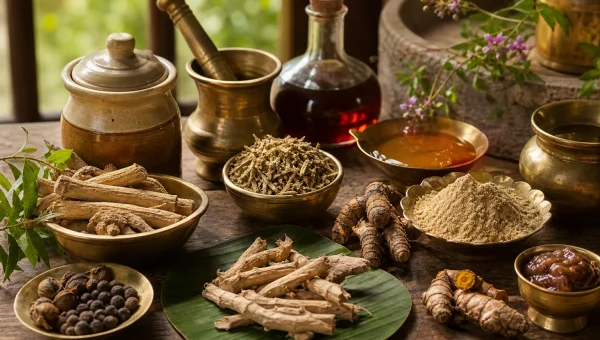
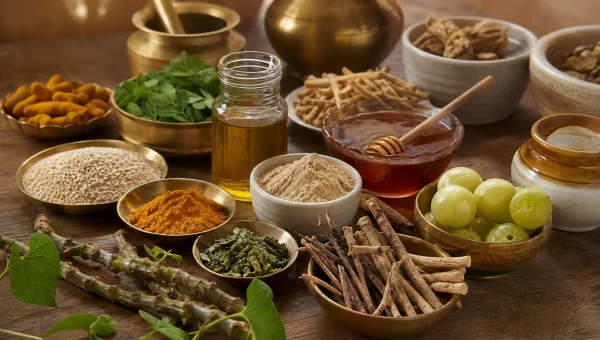
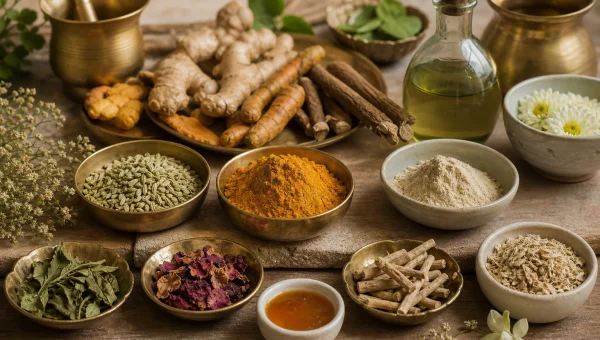
Classically used Vata-balancing herbs are generally warming, nourishing, grounding or nervine in action. Common examples include Ashwagandha for strength and Vata-related depletion, Bala for weakness and tissue support, Dashamula for Vata disorders involving pain and stiffness, Shatavari where dryness and depletion need cooling nourishment, Guduchi where inflammation and debility coexist, Haritaki for Vata-related constipation and Apamarga or Eranda-based preparations in physician-guided contexts. Medicated ghee, sesame oil, Mahanarayana taila, Dhanvantaram taila and other classical formulations may be selected according to prakriti, digestion, age, strength and disease stage. Herbs should not be self-prescribed for pregnancy, chronic illness, autoimmune disease, kidney or liver disease, psychiatric medication use, anticoagulant use or complex medical conditions.
Signs of imbalance
- Dry skin, dry lips, cracking joints or rough hair.
- Constipation, gas, bloating, abdominal gurgling or variable appetite.
- Cold hands and feet, sensitivity to wind or cold weather.
- Insomnia, light sleep, frequent waking or vivid, restless dreams.
- Anxiety, fearfulness, overthinking, nervousness or scattered attention.
- Irregular energy: bursts of activity followed by fatigue.
- Wandering, shifting or pricking pains.
- Muscle twitching, tremors, cramps or stiffness.
- Low body weight, dryness-related weakness or tissue depletion.
- Irregular menstruation, painful cramps or dryness-related reproductive discomfort.
- Hoarseness, excessive talking, rapid speech or mental restlessness.
- Palpitations or breath irregularity that requires medical assessment if persistent or severe.
FAQ
The quickest practical approach is warmth, oiliness and routine: eat a warm cooked meal, sip warm water, rest in a quiet place, apply warm sesame oil to the feet or body if suitable, and avoid cold food, fasting, overwork and excessive screen stimulation.
No. Anxiety can have many medical, psychological and social causes. Ayurveda often views restlessness, fear, insomnia and racing thoughts as signs of aggravated Vata affecting the mind, but persistent anxiety should be assessed by a qualified health professional.
Small amounts may be tolerated in warm weather and with strong digestion, but frequent raw, cold or dry meals usually aggravate Vata. Cooked, warm, moist and lightly spiced food is generally more suitable.
References
- Charaka Samhita, Sutrasthana, Vatakalakaliya Adhyaya: classical discussion of Vata’s importance, functions and role in health and disease.
- Charaka Samhita, Sutrasthana, Maharoga Adhyaya: description of major disease groupings and Vata-related disorder patterns.
- Sushruta Samhita, Sutrasthana, Doshadhatumalakshayavriddhi Vijnaniya: classical explanation of dosha increase, decrease and related signs.
- Ashtanga Hridaya, Sutrasthana, Ayushkamiya Adhyaya: classical summary of doshas, their elemental basis, qualities and normal functions.
- Ashtanga Hridaya, Sutrasthana, Doshabhediya Adhyaya: classical classification of dosha subtypes and their seats and functions.
- Bhavaprakasha Nighantu: traditional materia medica references for herbs such as Ashwagandha, Bala, Haritaki, Guduchi and Shatavari.
- Ayurvedic Pharmacopoeia of India, Government of India: official monographs for selected Ayurvedic medicinal plants and quality standards.

This ties vata to movement, breath, speech, and circulation in a way that finally makes the concept feel concrete.
late autumn and early winter always feel like the months when dryness and restlessness ramp up, so the seasonal link makes sense.
The food list is practical. Warm rice, oats, stews, and cooked vegetables are a lot easier to follow than strict rules.
Regular meals and a calmer bedtime routine seem like the real center of the advice here.
The symptoms list was spot on for what a lot of people call nervous energy, especially the dry skin, gas, and variable appetite pieces.
Nice breakdown of the herbs too, since ashwagandha, haritaki, and dashamula are doing different jobs instead of being treated like one fix.
It helps that vata is described as essential rather than bad, because that makes the whole article feel more balanced.
How much ginger is usually enough before it starts feeling too heating for someone with a sensitive stomach?
Would warm milk preparations still make sense for people who avoid dairy, or is that more of an optional traditional note?
Sesame oil massage sounds appealing, but is that meant to be daily or just during dry weather and high stress periods?
The schedule advice is useful, but what counts as regular if someone works nights or has a pretty erratic commute?
Some of this seems helpful, but I would still want to see bigger human studies before assuming the herb choices work the same for everyone.
Warm, oily foods are a good idea for many people, yet that advice could backfire for anyone dealing with reflux or heat sensitivity.
Herbs like ashwagandha and dashamula can be pretty strong, so dosage and interactions feel like a bigger issue than a short guide can cover.