
Polycystic Ovarian Disease (PCOD), often discussed clinically within the wider spectrum of Polycystic Ovary Syndrome (PCOS), is not a single-issue condition. It commonly involves a pattern of irregular or absent periods, signs of excess androgens such as acne or unwanted hair growth, polycystic ovarian appearance in some people, and metabolic concerns such as insulin resistance or abdominal weight gain. Food does not “fix” PCOD by itself, but the daily pattern of meals, movement, sleep, and stress management strongly shapes the metabolic environment in which hormones function.
Ayurveda does not name PCOD as a modern diagnostic category in the classical texts. In Ayurvedic practice, a PCOD-like presentation is commonly understood through impaired agni digestive-metabolic function, ama accumulation, kapha and meda dhatu excess, disturbed apana vata affecting menstrual rhythm, and pitta-rakta aggravation when acne, heat, irritability, or inflammation dominate. A practical Ayurvedic diet therefore emphasizes warm, cooked, lightly spiced meals that are satisfying but not heavy, with steady meal timing and daily bitter, pungent, and astringent elements to support kapha-meda balance.
This 7-day meal plan is designed as a realistic Indian grocery-store template. It uses familiar grains, dals, vegetables, spices, and simple cooking methods. It is not a replacement for medical care or an individualized Ayurvedic prescription, but it gives a structured way to begin eating in a manner that supports digestion, metabolic steadiness, and menstrual health.
Before the Meal Plan: Core Dietary Principles for PCOD
These principles apply every day, not only during the 7-day plan. They are meant to reduce heaviness, improve meal regularity, and make the diet easier to sustain over several months.
- Keep lunch as the main meal. For many people, lunch is the best time to digest a fuller meal containing grains, dal, vegetables, and a modest amount of fat.
- Keep dinner light and earlier than bedtime. A simple soup, khichdi, dalia, or light roti-vegetable meal is usually better than a late, heavy dinner.
- Favour warm, cooked food over cold raw meals. Steamed, sautéed, soupy, and freshly cooked preparations are easier to digest than frequent smoothies, chilled foods, and large raw salads.
- Limit refined sugar and refined flour. Choose whole grains, millets, dals, vegetables, nuts, seeds, and moderate fruit portions instead of sweets, sweet drinks, biscuits, and maida-based foods.
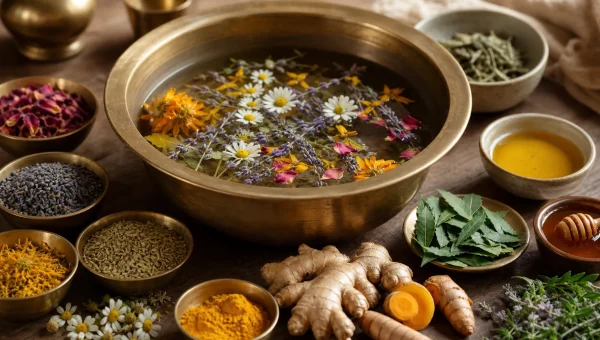
- Use spices intelligently. Cumin, coriander, fennel, turmeric, ginger, black pepper, ajwain, mustard seed, curry leaves, and fenugreek can make kapha-heavy meals lighter and more digestible.
- Include bitter and astringent foods regularly. Bitter gourd, methi, leafy greens, turmeric, drumstick leaves, guava, pulses, and millets can help make the diet more kapha-balancing.
- Use dairy selectively. Heavy, cold, sweet dairy such as ice cream, sweet lassi, and frequent paneer can aggravate kapha in many people. Small amounts of ghee or well-spiced buttermilk may be suitable when digestion tolerates them.
Practitioner-Guided Herbal Supports
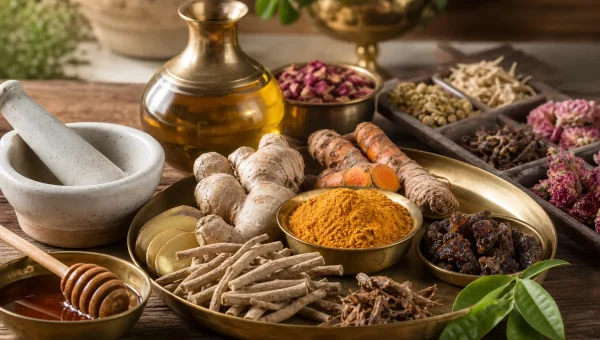
Herbs and classical formulations should be chosen according to constitution, menstrual pattern, digestion, body weight, skin symptoms, thyroid status, medication use, fertility goals, and pregnancy possibility. The adult dose ranges listed in pharmacopoeial sources are general references, not instructions to self-prescribe.
| Herb or Formula | Classical / Botanical Name | Verified Traditional Reference Point | Practical Caution |
|---|---|---|---|
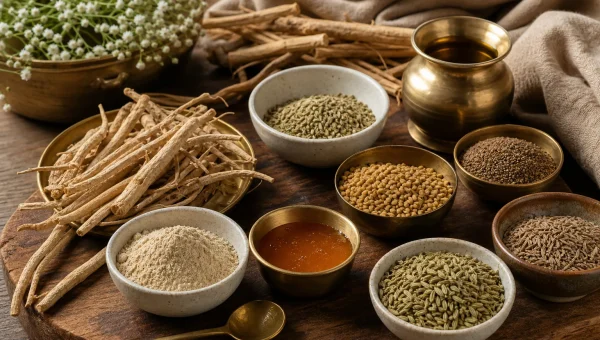
| Shatavari | Śatāvarī; Asparagus racemosus root | Classically described as cooling, nourishing, balya, rasayana, pittahara, and supportive to reproductive and lactation-related indications. | Not automatically suitable for every kapha-heavy presentation. Use under guidance, especially with significant congestion, heaviness, or weight gain. |
| Ashwagandha | Aśvagandhā; Withania somnifera root | Classically described as balya, rasayana, vata-kaphapaha, and useful in weakness and vata-dominant conditions. | Avoid self-use during pregnancy or breastfeeding, and use caution with liver disease, thyroid medication, sedatives, or autoimmune conditions. |
| Kanchanara Guggulu | Kañcanāra Guggulu; a classical formula containing Kanchanara bark, Triphala, Trikatu, Varuna, spices, and purified Guggulu | Listed in the Ayurvedic Formulary of India with classical indications including granthi, gandamala, apaci, and related kapha-granthi presentations. | It should not be treated as a universal “ovarian cyst dissolving” tablet. Guggulu-containing formulas may interact with medications and require professional supervision. |
| Triphala | Triphala Cūrṇa; Haritaki, Bibhitaki, and Amalaki | A classical three-fruit formula commonly used to support bowel regularity and gentle metabolic cleansing in an Ayurvedic framework. | May loosen stools or aggravate dryness in some people. Dose and timing should be individualized. |
| Guduchi | Guḍūcī; Tinospora cordifolia stem | Classically described with actions such as dīpana, rasayana, tridoṣaśamaka, and use in conditions including prameha and jvara. | Do not self-prescribe in pregnancy, autoimmune illness, liver disease, or while taking immune-modulating medicines. |
Note on Kanchanara Guggulu: This is a respected classical formula for kapha-granthi-type presentations, but PCOD management requires assessment of the person, not only the ultrasound finding. It is best used when a qualified Ayurvedic practitioner finds it appropriate.
The 7-Day PCOD Meal Plan
Use this plan as a rotating template. Portions should be adjusted to appetite, activity, body size, and medical needs. If a practitioner has prescribed herbs, take them exactly as instructed; otherwise begin the morning simply with warm water.
Day 1: Monday
Morning (7:00 AM): 1 glass warm water. Sit quietly for a few minutes before breakfast and avoid beginning the day with tea, coffee, or sweets.
Breakfast (7:30 AM): Moong dal chilla (2 medium) made with grated bottle gourd, ginger, cumin, and 1/4 teaspoon turmeric. Serve with coriander-mint chutney. Drink ginger tea without milk or sugar if desired.
Lunch (12:30 PM): 1 cup cooked brown rice or hand-pounded rice. Lauki sabzi cooked with cumin, coriander, and 1 teaspoon ghee. 1 bowl moong dal with turmeric and cumin. Add a small side of steamed beetroot with lemon and black pepper.
Snack (4:00 PM): 1 small apple with a pinch of cinnamon.
Dinner (7:00 PM): Vegetable khichdi made with rice, moong dal, carrots, beans, ginger, turmeric, and a small amount of ghee. Keep it soupy and moderate in quantity.
Day 2: Tuesday
Morning: Warm water. If digestion is sluggish, add a few slices of fresh ginger boiled briefly in the water.
Breakfast: Ragi porridge cooked with water, topped with 4 to 5 soaked peeled almonds. Add only a very small amount of jaggery if needed, or use cinnamon for sweetness. Ragi is a calcium-rich millet and works well when cooked warm and soft.
Lunch: 2 jowar rotis. Palak sabzi with garlic and cumin. 1 bowl lightly spiced rajma. Add 1 teaspoon ghee over the rotis if digestion is strong.
Snack: Roasted makhana, 1/4 cup, dry-roasted with turmeric, black pepper, and a pinch of rock salt.
Dinner: Clear vegetable soup with spinach, tomato, bottle gourd, and a pinch of hing. Boil 1/2 teaspoon methi seeds into the broth and strain if the bitterness is too strong.
Day 3: Wednesday
Morning: Warm water. Optional fenugreek tea may be made by soaking 1 teaspoon methi seeds overnight, boiling them in the morning, and straining.
Breakfast: 2 steamed idlis with sambar. Use vegetables such as drumstick, pumpkin, carrots, or bottle gourd in the sambar. Avoid extra oil in the tempering.
Lunch: 1 cup cooked foxtail millet or quinoa. Bitter gourd sabzi with onion, tomato, mustard seeds, and curry leaves. 1 bowl toor dal. Add a small cucumber-coriander side with roasted cumin and lemon.
Snack: 1 small pear and 1 tablespoon roasted pumpkin seeds.
Dinner: Moong dal soup with grated ginger, black pepper, turmeric, and fresh coriander. Add 1 small bajra roti if needed.
Day 4: Thursday
Morning: Warm water followed by a few minutes of gentle walking or stretching.
Breakfast: Vegetable upma made with broken wheat or millet rava, not refined semolina. Add carrots, peas, curry leaves, mustard seeds, ginger, and lemon.
Lunch: 2 multigrain rotis. Tinda or parval sabzi. 1 bowl chana dal. Add a small bowl of steamed broccoli or green beans with lemon and 1/2 teaspoon freshly ground flaxseed.
Snack: Cumin-coriander-fennel tea. If hungry, add a small handful of roasted chana.
Dinner: Vegetable dalia cooked with bottle gourd, carrots, turmeric, ginger, and black pepper. Keep the texture soft and moist.
Day 5: Friday
Morning: Warm water. Avoid starting the day with packaged juice, biscuits, or sweet tea.
Breakfast: Besan chilla (2 medium) with grated zucchini or lauki and a pinch of ajwain. Serve with green chutney.
Lunch: 1 cup cooked brown rice. Drumstick sambar. Cluster beans sabzi with garlic, cumin, and minimal oil. Add 1 teaspoon ghee if the meal feels dry.
Snack: 1 cup unsweetened spiced buttermilk (takra) with roasted cumin, rock salt, and curry leaves. Skip this if dairy worsens bloating, acne, congestion, or heaviness.
Dinner: Pumpkin soup with ginger, cinnamon, black pepper, and a small drizzle of ghee. Add 1 small jowar roti if needed.
Day 6: Saturday
Morning: Warm water with a calm start to the day. Keep breakfast freshly cooked rather than packaged.
Breakfast: Poha with peanuts, curry leaves, turmeric, mustard seeds, and lemon. Add peas or finely chopped vegetables for more fibre.
Lunch: 2 bajra rotis. Mixed vegetable sabzi with carrots, beans, cabbage, ginger, garlic, and coriander. 1 bowl masoor dal. Add lightly steamed sprouts with lemon if they digest well.
Snack: 4 to 6 walnuts. Walnuts provide plant omega-3 alpha-linolenic acid and make a satisfying snack when portions are moderate.
Dinner: Khichdi with moong dal, spinach or amaranth leaves, turmeric, ginger, and 1 teaspoon ghee. Keep it warm, simple, and easy to digest.
Day 7: Sunday
Morning: Warm water. Keep Sunday meals structured rather than turning the day into continuous snacking.
Breakfast: Warm dalia porridge with a small amount of ghee, a few raisins, and slivered almonds. Drink ginger-cinnamon tea if desired.
Lunch: 1 cup cooked foxtail millet. Baingan bharta with minimal oil. 1 bowl sambar with drumstick and moringa leaves. Moringa leaves are nutrient-dense and traditionally known as Shigru.
Snack: 1 guava with rock salt and black pepper, or roasted chana if fruit cravings are frequent.
Dinner: Light vegetable stew with ash gourd, carrots, cumin, coriander, and 1/4 teaspoon fenugreek powder stirred in near the end. Add 1 small roti if needed.
Foods to Minimize During the Plan
The aim is not punishment or extreme restriction. The aim is to reduce foods that are heavy, highly refined, overly sweet, or difficult to digest when kapha-meda and insulin-related concerns are prominent.
- Refined sugar and sweet drinks: White sugar, mithai, packaged juices, soft drinks, sweet tea, sweet coffee, and desserts as daily habits.
- White flour: Maida bread, biscuits, noodles, pasta, naan, cakes, and bakery snacks.
- Deep-fried foods: Pakoras, samosas, chips, pooris, and repeated-use-oil snacks.
- Cold heavy dairy: Ice cream, cold milk, sweet lassi, and frequent paneer-heavy meals, especially when there is bloating, acne, congestion, or weight gain.
- Ultra-processed packaged foods: Foods built mainly from refined flour, sugar, excess salt, low-quality fats, and additives should be occasional rather than routine.
Lifestyle Adjustments That Amplify the Diet
Diet works best when paired with movement, sleep regularity, and stress reduction. In PCOD, consistency matters more than intensity.
Walk for 30 minutes most mornings. A steady walk before or after breakfast supports daily movement, weight management, mood, and metabolic health. It does not need to be a gym session.
Practice abhyanga twice a week. Use warm sesame oil if it suits your skin and constitution. Massage gently before a warm bath. Keep the pressure comfortable and avoid abdominal massage during menstruation, pregnancy, acute pelvic pain, or unexplained bleeding.
Sleep at a regular time. Ayurveda favours a steady daily rhythm. A consistent sleep schedule, lighter dinner, and less screen stimulation at night can support appetite regulation, stress resilience, and next-day energy.
Realistic Expectations and Timeline
This plan is not a 7-day cure. It is a 7-day template to repeat, rotate, and individualize over time. PCOD patterns usually respond gradually when diet, movement, sleep, stress management, and medical care are aligned.
- Week 1 to 2: Digestion may feel lighter, bloating may reduce, and energy after meals may become steadier.
- Week 3 to 6: Cravings, heaviness, and post-meal sleepiness may begin to improve when meals are consistent.
- Month 2 to 3: Some people notice more predictable cycles, less premenstrual discomfort, or improvements in skin and weight trends.
- Month 3 to 6: This is a sensible time to review symptoms, weight, cycle pattern, and relevant laboratory markers with a healthcare professional.
PCOD does not develop overnight, and it should not be approached with quick-fix thinking. Give the body a steady routine, observe the response, and adjust the plan with professional guidance where needed.
Disclaimer: This meal plan is for general educational and wellness purposes. It does not replace diagnosis, medical treatment, or individualized Ayurvedic care. If you are taking metformin, oral contraceptives, fertility medicines, thyroid medicines, blood thinners, antidepressants, liver-related medicines, or any hormonal medication, consult your physician and a qualified Ayurvedic practitioner before using herbs or classical formulations. Pregnant or breastfeeding individuals should not follow an herbal protocol without professional guidance.
Food is the most intimate daily conversation between the body and the outside world. For PCOD, that conversation should be warm, regular, digestible, fibre-rich, lightly spiced, and steady. This plan gives you a practical framework for making that rhythm easier to follow.
References
- World Health Organization
- Current Guidelines for Diagnosing PCOS (2023), PubMed Central
- ASRM
- The effect of low glycemic index diet on the reproductive and clinical profile in women with polycystic ovarian syndrome: A systematic review and meta-analysis (2021), PubMed Central
- NCCIH
- Physiological aspects of Agni (2010), PubMed Central
- Ayurvedic Pharmacopoeia of India
- Ayurvedic Pharmacopoeia of India
- Dravyaguna notes
- Therapeutic Uses of Triphala in Ayurvedic Medicine (2017), PubMed Central
- NCCIH
- NCBI
- Rxlist (rxlist.com)
- NCCIH
- Millets (millets.res.in)
- Moringa oleifera is a Prominent Source of Nutrients with Potential Health Benefits (2021), PubMed Central
- Walnuts (walnuts.org)
- Lifestyle management in polycystic ovary syndrome – beyond diet and physical activity (2023), PubMed Central
My doctor isn’t familiar with Ayurveda. How do I discuss this with them without getting dismissed?
my practitioner recommended almost the exact same thing. great to see it validated here
Great to hear this is working for you. Your grandmother’s wisdom was ahead of its time!
I have had PCOD for 9 years. Every time I researched PCOD diets I found contradictory advice. This 7-day plan is specific enough to follow without second-guessing every meal. The logic behind each food choice being tied to hormone regulation and Kapha balance makes it more convincing than generic healthy eating lists.
changed my perspective completely!! i was doing it all wrong before this
The Spearmint tea recommendation is something my gynecologist mentioned based on research showing its effect on androgens. Seeing it framed in Ayurvedic terms alongside clinical evidence makes the recommendation feel more well-rounded than either purely conventional or purely traditional approaches alone.
What’s the best time of year to start this? Does the season matter for effectiveness?
This is the kind of content that makes Ayurveda accessible to beginners without dumbing it down
The professional background you bring to this discussion is really valuable. Thank you for reading and contributing.
I liked the practical side of PCOD Diet Plan. Small daily changes are easier to follow than a perfect plan.
Interesting perspective, but I’ve read contradicting information from other Ayurvedic sources. How does a beginner know who to trust?
The emphasis on eating your largest meal at midday is the hardest part for me to follow practically because of work. Do you have suggestions for what to do when your schedule genuinely does not allow a proper lunch break? I am wondering if eating a medium meal at noon and a slightly smaller dinner is a reasonable compromise or if the timing shift matters more than the size ratio.
great topic, average execution. I’d love to see this rewritten with specific product recommendations and exact dosing schedules.
We appreciate your candid feedback. You’re right that we should distinguish more clearly between traditional knowledge and clinical evidence. We’re working on adding more research citations.
I tried the day 3 meal plan exactly as written and the evening Shatavari milk made me quite nauseous on an empty stomach. Is Shatavari supposed to be taken with a meal or as a separate drink? I have seen different instructions from different sources.
For PCOD specifically I want to flag that dairy can be inflammatory for some people with elevated androgens. The meal plan includes ghee and milk throughout. For women whose PCOD involves significant inflammatory markers, dairy elimination may produce better results than dairy inclusion even in Sattvic form.
The timing suggestion for the main meal between noon and one makes sense with Ayurvedic agni concepts.
The inclusion of flaxseeds on day 2 is interesting from a phytoestrogen perspective. My endocrinologist has conflicting views on flaxseed for hormone-sensitive conditions. Does Ayurveda address the estrogen modulation concern with flaxseeds in conditions of hormonal imbalance?
As someone who has followed PCOD diets from multiple practitioners I notice this meal plan is significantly lower in protein than what most functional medicine approaches recommend for insulin-resistant PCOD. Could you add protein guidance since many PCOD women also deal with insulin resistance that requires higher protein intake?
I wonder if swapping brown rice for quinoa on day three would affect the kapha balance.
I have been following a modified version of this plan for 4 weeks. Not perfect adherence but roughly 80 percent. My cycle which had been 45 days came in at 38 days this month. I know one cycle is not a pattern but it is the first change I have seen in 2 years of trying different approaches.
does anyone know where to buy Lodhra in the US? the article recommends Lodhra as a key herb for PCOD but i cannot find it at any Indian grocery store near me and online options have inconsistent quality. is there a reliable online source?
The herbal protocol looks thorough, especially the note on Kanchnar Guggulu for cyst reduction.
My wife has PCOD and I am trying to understand it better to support her dietary changes. One concern I have is that this meal plan does not address what to substitute for family meals where these specific ingredients are not available. A real-world adaptation guide would help couples navigating this together.
After reading about avoiding raw salads, I’ll try steamed beetroot with lemon as a side.
tried the Triphala at night for a week and while digestion improved I woke up with loose stools 3 days out of 7. did anyone else experience this adjustment phase? my practitioner said it normalizes after 2-3 weeks but I wanted to know if others experienced this initially.
One practical tip is to keep ghee to just a teaspoon or two each day, which feels doable.
After 3 months on this meal plan pattern combined with consistent yoga my testosterone came down by 18 points. My gynecologist reviewed my bloodwork and while she is not an Ayurveda advocate she acknowledged the dietary changes clearly correlated with the hormonal improvement.
Does the plan suggest any alternatives for those who can’t find fresh drumstick?
The emphasis on warm, cooked meals aligns with what I’ve heard about strengthening digestion.
It might be helpful to batch-cook the moong dal chilla batter for busy mornings.
I appreciate that the snack options include nuts and fruit rather than processed bars.
The suggestion to finish dinner by 7:30 PM and fast overnight could help with insulin sensitivity.
Maybe adding a pinch of black pepper to the fenugreek tea would boost its absorption.
The lifestyle adjustments like morning walk and abhyanga seem like they’d complement the diet well.
I’m curious whether the jaggery amounts are low enough not to spike blood sugar.
The article mentions using sesame oil for self-massage; warm sesame oil feels soothing on the abdomen.
Good to know.
Overall, the plan gives a clear structure that can be adapted over weeks rather than expecting instant results.
does the 7-day structure , can I repeat it monthly? work differently for men vs women? curious about this 🌿
the day 3 lunch with bitter gourd , this worked for me after 6 weeks of consistency.
asked my vaidya about the fennel and coriander morning water. he agreed but said to add triphala first.
the article is good but the 7-day structure , can I repeat it monthly? should come with a stronger dosage caution.
Does the fennel and coriander morning water work differently for men vs women? curious about this.
For your note about avoiding cold food for kapha-type PCOD, is morning or evening application better?
similar issue here. still figuring out the 7-day structure , can I repeat it monthly? for my situation.
i have kapha prakriti, does the 7-day structure , can I repeat it monthly? still apply for me?
the evidence for your note about avoiding cold food for kapha-type PCOD is still thin. anecdotal results vary widely.
reading about the 7-day structure , can I repeat it monthly? here for the first time. need to research more 💯
not sure about that. I’d verify the day 3 lunch with bitter gourd with an ayurveda doctor first.
Three months in with the fennel and coriander morning water, bloodwork showed improvement in my last checkup.
Seems overhyped to me. the fennel and coriander morning water didn’t work for anyone in my family 💯
similar issue here. still figuring out the fiber-rich breakfast structure you suggested for my situation.
The article is good but your note about avoiding cold food for kapha-type PCOD should come with a stronger dosage caution.
question about the day 3 lunch with bitter gourd , what if someone has high pitta? same dosage?
tried the fennel and coriander morning water for about 3 weeks now and genuinely impressed with the results.
reading about the fennel and coriander morning water here for the first time. need to research more.
Found this old post searching for . Anyone know if the protocol changed?
Found this old post searching for the fiber-rich breakfast structure. Anyone know if the protocol changed?
didn’t work for me either. the fiber-rich breakfast structure you suggested seems to benefit some people but not all.