
Overnight oats are popular because they are convenient, filling, and easy to prepare ahead. From an Ayurvedic perspective, the usual refrigerator-cold version needs a few adjustments because Ayurveda gives importance to Agni, the digestive fire, and to the qualities of food: warm or cold, light or heavy, dry or unctuous.
This article does not ask you to give up overnight oats. It shows how to prepare them in a way that is gentler on digestion: use the right oats, add appropriate spices, avoid eating them icy cold, and adjust the recipe for Vata, Pitta, or Kapha.
The Ayurvedic Problem with Cold Breakfasts
Ayurveda describes Agni as the principle responsible for digesting and transforming food. Classical dietary guidance also gives importance to eating food warm, in a suitable quantity, with some unctuousness, and only after the previous meal has been digested. A bowl of cold, dense oats straight from the refrigerator is therefore not the most supportive way to begin the day for many people, especially when digestion is variable or sluggish.
Cold, heavy, and damp breakfasts may feel especially unsuitable for people with dominant Vata or Kapha patterns. Vata is commonly supported by warm, moist, grounding food, while Kapha is supported by lighter, warmer, well-spiced food. Pitta can usually tolerate cooler foods better, but even Pitta benefits from avoiding an icy-cold breakfast.
For some people, standard overnight oats can feel heavy after eating, especially when combined with cold milk, yogurt, banana, large amounts of sweetener, and too many toppings. The Ayurvedic solution is not to make the recipe complicated; it is to change the qualities of the bowl.
The Fix: Three Ayurvedic Principles Applied to Overnight Oats
Making overnight oats work better within Ayurvedic guidelines requires three simple modifications: bring in digestive spices, remove the refrigerator chill before eating, and use a modest amount of fat or unctuous ingredient when appropriate for your constitution.
1. Add Digestive Spices During Soaking
Spices such as cinnamon, dry ginger, cardamom, fennel, black pepper, and long pepper are used differently according to constitution. Cinnamon and dry ginger are warmer and better suited to Vata and Kapha in small amounts. Fennel and cardamom are gentler aromatic choices for Pitta. Adding spices while the oats soak helps their flavor spread evenly through the bowl.
2. Bring to Room Temperature or Warm Gently Before Eating
Remove the oats from the refrigerator 20 to 30 minutes before breakfast, or warm them gently on the stove over low heat. You do not need to cook them heavily; the goal is to take off the chill. For food safety, do not leave milk-based or perishable oats sitting out for more than two hours, and shorten that time in very hot weather.
3. Include a Suitable Fat Source
A small amount of ghee, coconut oil, or nut butter adds the unctuous quality valued in Ayurvedic dietary guidance. Vata usually benefits most from this addition. Pitta can use coconut oil or a small amount of ghee. Kapha should keep fat minimal and use more warmth and spice instead.
Dosha-Specific Overnight Oats: 3 Recipes
Each recipe below uses the same general method, then changes the liquid, spices, sweetener, and toppings to match the needs of Vata, Pitta, or Kapha. The recipes are for one serving and are meant as practical breakfast templates, not personalized medical prescriptions.
Base Ratio
This base ratio works best with rolled oats because they soften reliably overnight while still keeping structure. Steel-cut oats usually need cooking or a separate hot-soak method, so they are not the best choice for this simple refrigerator method.
- 1/2 cup rolled oats for Vata or Pitta, or 1/3 cup rolled oats for Kapha
- 1/2 to 3/4 cup liquid, adjusted by dosha
- Spices according to constitution
- Small amount of sweetener, if needed
- Fat source according to constitution
- Morning toppings added after warming or resting
Combine the oats, liquid, spices, sweetener, and fat in a glass jar or covered bowl. Stir well, cover, and refrigerate for 6 to 8 hours. In the morning, remove from the refrigerator and let sit briefly at room temperature, or warm gently on the stovetop. Add toppings just before eating.
Recipe 1: Vata-Balancing Overnight Oats
Key qualities needed: warm, moist, grounding, mildly sweet, nourishing, and unctuous.
Vata needs the most protection from cold, dry, and irregular meals. This version uses warm spices, ghee, soaked nuts, and soft fruit to make the bowl more grounding and easier to enjoy in the morning.
Ingredients
Use these measured ingredients for one serving. Keep the texture soft and creamy rather than dry or overly thick.
- 1/2 cup rolled oats
- 3/4 cup whole milk, oat milk, or almond milk
- 1 teaspoon ghee
- 1/2 teaspoon cinnamon powder
- 1/4 teaspoon dry ginger powder
- A pinch of cardamom powder
- A small pinch of freshly grated nutmeg
- 1 to 2 teaspoons jaggery, maple syrup, or one chopped soft date
- A pinch of salt
Morning Toppings
Add toppings after the oats have rested or warmed. Choose soft, soaked, or ripe toppings rather than dry and crunchy handfuls.
- 5 to 6 soaked almonds, peeled if desired and sliced
- 1 tablespoon raisins, soaked overnight with the oats
- 1/2 ripe banana or a few spoonfuls of stewed apple
- Optional: a small drizzle of honey, added only when the oats are warm rather than hot
Warming method for Vata: Warm this version on the stove for 2 to 3 minutes over low heat, adding a splash of milk or water if needed. Stir in honey only after removing the oats from heat and allowing them to cool from hot to comfortably warm.
Recipe 2: Pitta-Balancing Overnight Oats
Key qualities needed: cool but not cold, sweet, gentle, mildly aromatic, and soothing.
Pitta digestion is often sharper than Vata or Kapha digestion, so this recipe does not need strong heating spices. It uses cardamom, fennel, coconut, rose, and cooling fruit accents while still avoiding the shock of a refrigerator-cold breakfast.
Ingredients
Use these ingredients for a creamy, mild bowl. Keep pungent spices low and let the aromatic spices carry the flavor.
- 1/2 cup rolled oats
- 3/4 cup coconut milk, dairy milk, or almond milk
- 1 teaspoon coconut oil or 1/2 teaspoon ghee
- 1/4 teaspoon cardamom powder
- 1/4 teaspoon fennel seed powder
- A tiny pinch of cinnamon, optional
- 1 to 2 teaspoons maple syrup or coconut sugar
- 1/2 teaspoon food-grade rose water, optional
Morning Toppings
Add these toppings after the oats have come closer to room temperature. Choose fresh, sweet, and light toppings rather than sour, salty, or spicy additions.
- 2 tablespoons pomegranate seeds
- 1 tablespoon shredded coconut
- 3 to 4 fresh mint leaves, torn
- 1/4 cup diced ripe pear or sweet apple
Temperature for Pitta: Let the oats sit out for 15 to 20 minutes before eating. Gentle warming is also fine, but avoid making this version heavily spiced or very hot.
Recipe 3: Kapha-Balancing Overnight Oats
Key qualities needed: warm, light, stimulating, less sweet, and well-spiced.
Kapha types should be the most cautious with cold, heavy, sweet breakfasts. If Kapha is strong, freshly cooked porridge is usually the better choice. When using overnight oats, keep the portion smaller, use more water than milk, minimize fat, and warm the bowl before eating.
Ingredients
Use these ingredients for a lighter and more stimulating bowl. The portion is intentionally smaller than the Vata and Pitta versions.
- 1/3 cup rolled oats
- 1/2 cup warm water mixed with 1/4 cup low-fat milk or thin plant milk
- 1/2 teaspoon cinnamon powder
- 1/4 teaspoon dry ginger powder
- 1/8 teaspoon turmeric powder
- A tiny pinch of black pepper
- A tiny pinch of clove powder
- 1 teaspoon honey, added in the morning only when the oats are warm rather than hot
Morning Toppings
Keep toppings light and measured. Avoid making this bowl heavy with large amounts of nuts, nut butter, sweet fruit, or dairy.
- 1 tablespoon pumpkin seeds
- 1 tablespoon finely chopped green apple
- 1 teaspoon unsweetened dried cranberries, optional
- Optional: a tiny pinch of long pepper, used occasionally rather than as a daily habit
Warming method for Kapha: Warm this version on the stove for 3 to 4 minutes until it becomes porridge-like. Add honey only after removing from heat and allowing the oats to cool from hot to comfortably warm.
Spice Sourcing and Quality
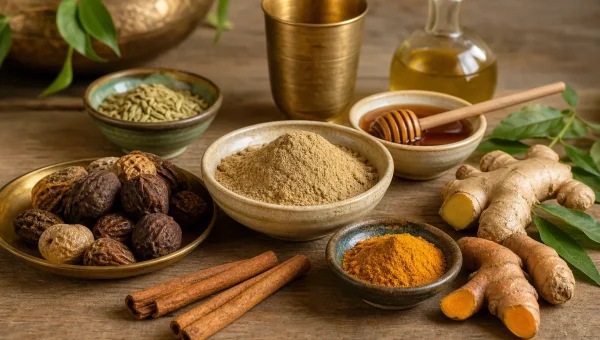
Use fresh, clean, aromatic spices in small amounts. Whole spices usually keep their aroma better than powders, so buy whole cardamom pods, cinnamon sticks, nutmeg, and dried ginger when practical, and grind or grate small amounts as needed.
| Spice | Classical Ayurvedic Identity | Useful Role in These Recipes |
|---|---|---|
| Cinnamon | Tvak, the inner bark of Cinnamomum zeylanicum | Warm, aromatic support for Vata and Kapha; use only a small pinch for Pitta |
| Dry ginger | Shunthi, dried rhizome of Zingiber officinale | Heating, digestive spice suited especially to Vata and Kapha recipes |
| Cardamom | Sukshmaila, seeds of Elettaria cardamomum | Aromatic and gentle; useful in Vata and Pitta recipes |
| Fennel | Mishreya, fruit of Foeniculum vulgare | Gentle digestive spice especially useful for the Pitta version |
| Black pepper | Maricha, fruit of Piper nigrum | Sharp, heating spice; use a tiny pinch in Kapha recipes |
| Long pepper | Pippali, fruiting spike of Piper longum | Classically digestive and strengthening; use only a tiny occasional pinch |
If you use cinnamon daily, choose Ceylon cinnamon when possible. Cassia cinnamon can contain much higher coumarin levels than Ceylon cinnamon, so heavy daily use of cassia is best avoided.
Common Mistakes to Avoid
These mistakes make overnight oats colder, heavier, sweeter, or less suitable for digestion. Correcting them keeps the recipe aligned with the Ayurvedic purpose of the bowl.
- Eating straight from the refrigerator. Let the oats rest briefly or warm them gently before eating.
- Adding honey before soaking or cooking it into the oats. Ayurveda traditionally avoids heating honey, so add it only in the morning when the oats are warm rather than hot.
- Using too much sweetener. Sweet taste can be grounding, but excess sweetness makes the bowl heavy, especially for Kapha.
- Using steel-cut oats for this simple method. Rolled oats soften more reliably overnight; steel-cut oats usually need cooking or a hot-soak method.
- Adding medicinal herb powders casually. Herbs such as ashwagandha, triphala, or strong spice formulas should be used according to individual need, not as automatic breakfast ingredients.
- Overloading toppings. Keep toppings measured and purposeful. A few soaked nuts, seeds, or fruit pieces are enough.
Making It a Practice
Spend five minutes in the evening combining oats, liquid, and the right spices for your constitution. In the morning, take the chill off, add your toppings, and eat calmly. The same bowl becomes very different when it is warm, moderately portioned, and spiced with intention.
Try the version that best matches your dominant dosha for one week. Notice your appetite, energy, heaviness, bloating, and comfort before lunch. Those everyday signals help you understand whether the breakfast is suitable for you.
Disclaimer: This article offers general dietary guidance based on Ayurvedic principles. Individual needs vary according to constitution, season, age, health status, medication use, pregnancy, allergies, and digestive conditions. If you have celiac disease, gluten sensitivity, diabetes, food allergies, pregnancy-related concerns, chronic digestive symptoms, or any medical condition, consult a qualified Ayurvedic practitioner and your healthcare provider before making major dietary changes or adding medicinal herbs.
References
- Charaka Samhita — Agni
- Ijrap (ijrap.net)
- Pdfs (pdfs.semanticscholar.org)
- Banyanbotanicals (banyanbotanicals.com)
- Svasthaayurveda (svasthaayurveda.com)
- Banyanbotanicals (banyanbotanicals.com)
- Ia800501 (ia800501.us.archive.org)
- Viruddha Ahara: A critical view (2012), PubMed Central
- NCCIH
- Realsimple (realsimple.com)
- Fsis (fsis.usda.gov)
- NCCIH
I have been making overnight oats for 3 years and never understood why I felt slightly off afterward. Trying the warm spice modification described here this week. The cardamom and ginger addition to cold prep seems like a simple change worth testing.
Clear, evidence-based, and practical. Everything a good health article should be
How long before seeing results with this protocol? My practitioner said 4 weeks but I’m seeing other timelines mentioned online.
practitioner told me the same thing. good to see its validated here too
I travel for work constantly and overnight oats in the hotel mini fridge are my go-to breakfast. Preparing a little packet of cardamom, cinnamon, and ginger to stir in and then warming briefly in the microwave is now my compromise. Better than nothing and takes 2 minutes.
I liked the practical side of Overnight Oats the Ayurvedic Way. I would still ask a practitioner before changing medicines.
I work in healthcare and appreciate the balanced approach here. Not anti-medicine, just complementary
started this journey as a complete skeptic. Now I recommend it to everyone who asks.
The tip about letting the oats come to room temperature before eating rather than eating them straight from the fridge is something I can actually do without changing the whole recipe. Small adjustment but it fits with what you’re saying about cold food suppressing digestive fire first thing in the morning.
yep the combination approach is what worked for me too. good to see it validated
This level of detail is what sets this site apart from the dozens of other Ayurveda blogs
The lifestyle changes recommended here are excellent. The supplement recommendations, less so. Hard to know what dose actually works
I never thought about oats being problematic in the morning specifically because of the cold temperature. I always assumed heavy was the issue, not cold. Going to try the cardamom and ginger version this week and see if it sits differently. The idea of warming the spices in ghee first before mixing in makes a lot of sense.
How long should I continue this before expecting results? I’m on week two with no change yet.
My doctor in Bangalore suggested something similar but used different herbs. Is there regional variation in how Ayurvedic practitioners approach this condition?
Having studied both Ayurveda and Western nutrition, I think this article overstates some benefits while ignoring well-established nutritional science.
Great to hear this is working for you. Your grandmother’s wisdom was ahead of its time!
I liked the practical side of Overnight Oats the Ayurvedic Way. This feels more usable than a long list of herbs.
Thank you for engaging with this so deeply! Your perspective adds so much value to the conversation here.
My Kapha-dominant digestive system has always had trouble with oats regardless of temperature. This article suggests Kapha types should reduce oats in favor of lighter grains. That recommendation addresses my problem at the grain level rather than just the temperature.
The practical recipe with ashwagandha milk heated and poured over the overnight oat base is something I can actually do in 3 minutes in the morning. This is the kind of bridge recipe between Ayurvedic principle and modern convenience that people actually need.
I have seen two Ayurvedic practitioners tell me never eat oats (too Kapha) and one tell me oats are fine if properly spiced. The variation in practitioner opinion on specific foods is frustrating. This article at least gives me a principle I can apply myself rather than waiting for a definitive ruling.
One thing I noticed is that adding cinnamon and ginger while the oats soak really changes the flavor profile.
I am a runner who needs overnight oats for the convenience and carbohydrate timing. I cannot give them up but I can add warming spices. The compromise framing in this article is pragmatic and more useful than a prescriptive approach.
My practitioner in Pune has been doing this for 30 years and confirms everything here. The agni protocol for this condition has solid traditional backing.
I wonder if using coconut milk instead of regular milk makes a noticeable difference for Pitta types.
Letting the jar sit on the counter for twenty minutes before eating seems to take the chill off without cooking it.
A teaspoon of ghee stirred in right before eating gives the oats a silky texture that I hadn’t expected.
The Kapha version uses less oats and more water, which feels lighter and might suit a slower metabolism.
Is it safe to add raw honey after warming the oats, or should the oats be completely cool first?
I appreciate the tip about buying whole spices and grinding them fresh for better medicinal value.
Using cardamom and fennel together creates a sweet, cooling note that works well for Pitta mornings.
Avoiding steel cut oats is important because they stay too firm and can be hard to digest after soaking.
The suggestion to warm the oats gently on low heat for a couple of minutes seems simple enough to try.
I find the idea of adding a pinch of salt to balance sweet flavors interesting for Vata types.
Having pumpkin seeds and dried cranberries as toppings adds a pleasant crunch to the Kapha recipe.
The article’s advice about not heating honey above forty degrees Celsius is something I hadn’t considered before.
Same here
yeah I had the same experience, took about 3 weeks for me to notice though
good point, my Ayurvedic doctor said something similar when I asked
Trying the Vata recipe with warmed almond milk and a pinch of nutmeg could be a comforting start to the day.
the soaking time for ragi, is 8 hours a minimum or will 4 to 5 hours still activate the enzymes you mention?
why does cold-prep specifically need warm spices? is it about digestibility of cold food or the starch type?
does the type of milk matter? I use almond milk and wasn’t sure if the Ayurvedic properties change
can the overnight oats be prepared in summer without refrigeration or does it need to be chilled?
can the overnight oats be preprd in summer without refrigeration or does it need to be chilled?
sorry to go off topic but any tips for Ayurvedic approach to knee pain?
does the type of milk matter? I use almond milk and wasn’t sure if the ayurveduc properties change
Doing this now
sorry off-topic but has anyone here used Ayurveda for hair loss? nothing seems to work
the soaking time for ragi, is 8 hours a minimum or will 4 to 5 hours still activate the enzymes u mention?
Helpful
off topic but can these herbs be taken with thyroid medication? my doctor doesnt know
unrelated question but does anyone know a good vaidya in Pune?