
For some people, social anxiety feels less like ordinary nervousness and more like a whole-body alarm that begins before the social event has even started. The mind rehearses conversations, the body tightens, the breath becomes shallow, and ordinary actions such as eating in public, entering a meeting, or speaking in a group can feel disproportionately exposing.
Ayurveda does not reduce this pattern to “shyness.” It reads the mind-body pattern through manas, the doshas, the subtle channels of the mind, and the daily forces that either stabilize or unsettle the nervous system. In this lens, social anxiety is often understood as aggravated vata affecting the mano vaha srotas, with prana vayu becoming quick, unsteady, and over-responsive to incoming impressions.
The Ayurvedic Framework for Social Anxiety
In Ayurveda, manas is the inner instrument of perception, attention, thought, restraint, and emotional response. The mano vaha srotas are the channels through which mental activity and the body influence one another. When these channels are clear and sattva is supported, the person can perceive social situations with proportion and steadiness. When vata becomes excessive and rajas or tamas dominate the mind, the same social situation may be interpreted as threatening, humiliating, or impossible to face.
Vata is the dosha of movement, communication, sensory activity, motor function, and mental quickness. In a balanced state, it supports alertness, creativity, and adaptive response. In an aggravated state, its mobility and irregularity can appear as restlessness, anticipatory worry, racing thoughts, variable appetite, disturbed sleep, trembling, dryness, and avoidance. Social anxiety fits this pattern when the person is not simply afraid of people, but is caught in a repetitive loop of prediction, self-monitoring, and withdrawal.
Prana vayu is especially important in this reading because it governs the intake of impressions and the first movement of response. When prana vayu is steady, the senses receive information without flooding the mind. When it is disturbed, ordinary social signals can feel sharp, excessive, and difficult to digest. The Ayurvedic goal is therefore not only to “calm the mind,” but to give prana vayu a stable rhythm and a grounded seat.
How This Differs from Modern Explanations
Modern clinical language describes social anxiety disorder as a persistent fear of being judged, embarrassed, rejected, or scrutinized in social or performance situations. Neurobiological accounts often discuss fear-circuit activation, including the amygdala and insula, along with the regulatory role of prefrontal networks. Ayurveda uses a different map, but the practical direction is compatible: reduce excessive reactivity, improve regulation, and help the person re-enter avoided situations with steadier internal support.
The integrative approach is strongest when Ayurveda is used as a foundation for nervous-system steadiness while evidence-based mental healthcare addresses avoidance, distorted self-evaluation, and exposure to feared situations. Cognitive-behavioral therapy, especially with exposure-based components, remains a central treatment option for clinically significant social anxiety. Medication may also be appropriate when prescribed by a qualified clinician.
Primary Herbs for Vata in the Mano Vaha Srotas
Ayurvedic herbs for this pattern are best selected according to constitution, digestion, sleep, strength, medications, and the exact quality of the anxiety. The ranges below refer to traditional crude-drug adult references from the Ayurvedic Pharmacopoeia of India where available; they are not personal prescriptions and do not translate directly to concentrated extracts.
| Herb | API Identity | Classical Actions | Traditional Adult Range | Best-Fit Ayurvedic Use |
|---|---|---|---|---|
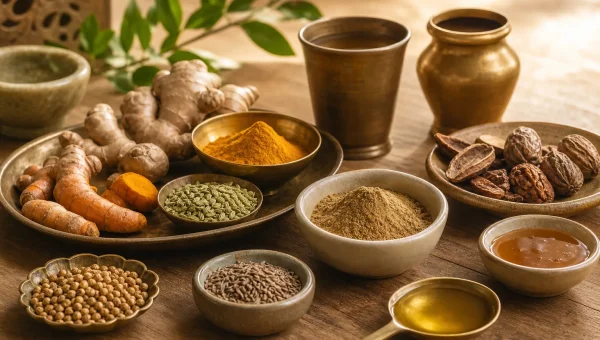
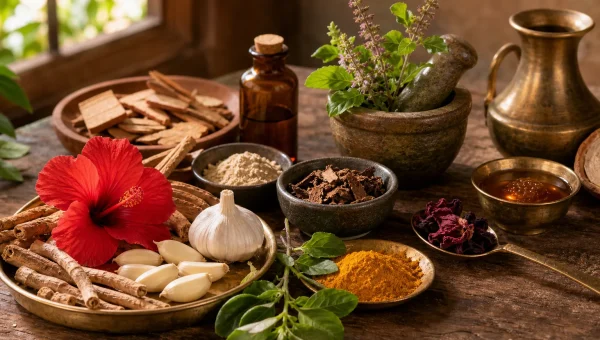
| Ashwagandha | Withania somnifera root | Rasayana, balya, vajikarana, vata-kapha pacifying | 3–6 g root powder | Useful when anxiety is accompanied by depletion, poor sleep, low strength, nervous fatigue, or chronic stress load. |
| Brahmi | Bacopa monnieri whole plant | Medhya, rasayana, vatahara, matiprada, moha-hara | 1–3 g powder | Useful when worry loops, overthinking, poor concentration, and mental restlessness dominate the presentation. |
| Shankhapushpi | Convolvulus pluricaulis whole plant | Medhya, rasayana, balya, moha-nashaka | 3–8 g powder | Useful as a classical medhya herb where mental agitation, fearfulness, and depleted steadiness are prominent; identity should be confirmed because regional substitutions exist. |
| Jatamansi | Nardostachys jatamansi rhizome | Medhya, nidrajanana, tridosha pacifying | 2–3 g powder or 5–10 g decoction | Useful when anxiety is tied to sleep disturbance, rumination, and a need for grounding without excess stimulation. |
In practice, these herbs are not automatically combined. A vata-depleted person with insomnia may need a different plan from a pitta-dominant person whose social anxiety appears with heat, irritability, sweating, and fear of public failure. A qualified practitioner may also choose classical formulations rather than single herbs.
Where Vacha Fits and Why It Should Not Be Self-Prescribed
Vacha, commonly identified with Acorus calamus, appears in Ayurvedic contexts related to speech, cognition, and mental clarity, but it is not appropriate as a casual home remedy for social anxiety. Safety concerns around beta-asarone and the importance of proper processing make it a practitioner-only herb. It should be used only when selected, purified, and dosed by a qualified Ayurvedic physician.
The Grounding Protocol: Addressing Vata at Its Root
The Ayurvedic approach begins by reducing the conditions that keep vata moving without rhythm: irregular sleep, skipped meals, cold and dry food, overstimulation, excessive travel, too much screen exposure, and constant mental rehearsal. Grounding means increasing warmth, steadiness, oiliness, nourishment, and repetition. These qualities directly oppose the light, dry, cold, and mobile tendencies of aggravated vata.
Abhyanga
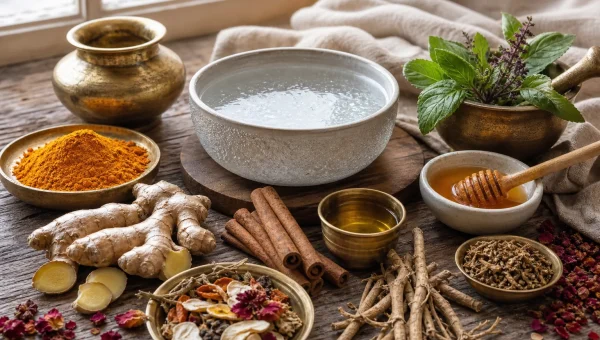
Abhyanga, the practice of warm oil application and massage, is a practical daily method for bringing steadiness to the body before trying to reason with the mind. For a vata-social-anxiety pattern, warm sesame oil or a practitioner-selected vata-pacifying taila may be applied before bathing, especially to the feet, scalp, ears, shoulders, chest, and back. A short, consistent practice is usually more valuable than an occasional elaborate one.
Shirodhara
Shirodhara is a supervised Ayurvedic therapy in which a steady stream of warm liquid, often oil or another medicated medium, is poured over the forehead. For people whose social anxiety is accompanied by insomnia, sensory overload, rumination, and inability to settle after social exposure, it may be considered as part of a practitioner-guided plan. It should not be treated as a stand-alone cure or performed casually without proper assessment.
Dietary Strategies for Vata-Driven Social Anxiety
Diet is central because an unsettled gut rhythm often keeps vata unstable. The aim is not a rigid “anxiety diet,” but a reliable pattern of warm, cooked, moist, and nourishing meals that the person can digest comfortably. Social anxiety often worsens when breakfast is skipped, caffeine is used as a substitute for food, or the person goes into social situations underfed and overstimulated.
- Anchor meal timing: Eat at predictable times, especially breakfast and lunch, so the body does not enter social situations in a depleted state.
- Favor warm, cooked meals: Soups, khichadi, rice with dal, stewed vegetables, cooked grains, and gently spiced food are more vata-pacifying than cold, dry, raw, or irregular meals.
- Use healthy unctuousness: Small amounts of ghee or suitable oils can help counter dryness when digestion allows.
- Reduce stimulants: Excess caffeine, energy drinks, carbonated beverages, and very spicy or very drying foods can intensify the quick, sharp quality of vata in sensitive people.
- Support evening settling: A simple warm evening routine, with a light digestible dinner and reduced screens before sleep, is often more useful than adding many supplements.
Pranayama for Social Anxiety
Pranayama is especially relevant because breath is a bridge between voluntary practice and involuntary arousal. For social anxiety, the best practices are gentle, rhythmic, and repeatable. Forceful breath retention, aggressive kapalabhati, or intense breathwork can aggravate vata in sensitive people and should be avoided unless supervised.
- Nadi Shodhana: Practice alternate nostril breathing for five minutes in the morning and again before a known social challenge. Keep the breath soft and even.
- Bhramari: Practice five to ten rounds of humming exhalation, letting the sound remain smooth rather than loud or strained. This can be useful when the mind is caught in repetitive self-talk.
- Extended exhalation: Inhale gently for four counts and exhale for six to eight counts, stopping if there is air hunger, dizziness, or strain.
The Role of Dinacharya in Stabilizing Vata
Dinacharya, the daily regimen, is one of Ayurveda’s most important tools for long-term vata regulation. A person with social anxiety often tries to prepare mentally for every event, but Ayurveda first asks whether the body has a reliable rhythm. Waking, eating, working, exercising, and sleeping at consistent times gives the nervous system fewer surprises to manage.
A simple vata-stabilizing dinacharya may include waking at a consistent time, cleansing the mouth, drinking warm water, applying oil to the body or at least the feet, practicing five minutes of pranayama, eating a warm breakfast, taking movement before heavy screen exposure, and closing the day with a predictable wind-down routine. The power is in repetition, not complexity.
A Practitioner-Guided Sequence
A safe Ayurvedic sequence usually begins with rhythm before herbs. First stabilize meals, sleep, bowel rhythm, and morning practice. Then add abhyanga and gentle pranayama. Only after these foundations are in place should herbs be selected according to constitution, digestion, medications, and the dominant quality of the anxiety.
- Foundation phase: Consistent meals, sleep timing, warm cooked food, reduced stimulants, and daily five-minute breath practice.
- Grounding phase: Warm oil application, slower evenings, reduced late-night media, and regular movement that does not exhaust the person.
- Herbal phase: Practitioner-selected herbs such as ashwagandha, brahmi, shankhapushpi, or jatamansi, chosen for the person rather than for the diagnosis alone.
- Exposure-support phase: Use breath, routine, and therapeutic support to gradually re-enter avoided social situations instead of relying only on avoidance or reassurance.
When to Seek Professional Help
Social anxiety becomes clinically important when it causes persistent avoidance, interferes with work or study, prevents relationships, disrupts eating or speaking in public, or produces intense distress before ordinary interactions. In such cases, Ayurvedic support should be integrated with qualified mental healthcare. Cognitive-behavioral therapy, exposure-based work, and prescribed medication can be essential, and Ayurveda can support the body’s baseline steadiness while those treatments do their work.
Safety and Disclaimer
This article is educational and is not a substitute for diagnosis or treatment by a qualified healthcare professional. Consult a qualified Ayurvedic practitioner and a licensed mental health provider before using herbs for anxiety, especially if you are pregnant, breastfeeding, taking psychiatric medication, using sedatives, managing thyroid or autoimmune conditions, preparing for surgery, or experiencing severe impairment. Do not stop prescribed medication without medical supervision.
Actionable Tip: For seven consecutive days, practice Nadi Shodhana for five minutes at the same time each morning before screens or conversation. Record your anxiety level from 0 to 10 before practice and again ten minutes after practice. This gives you a simple personal record of whether rhythmic breathing helps your own baseline steadiness.
References
- Nimh (nimh.nih.gov)
- Nice (nice.org.uk)
- Japanese Society of Anxiety and Related Disorders/Japanese Society of Neuropsychopharmacology: Clinical practice guideline for social anxiety disorder (2021) (2023), PubMed Central
- Functional neuroimaging of anxiety: a meta-analysis of emotional processing in PTSD, social anxiety disorder, and specific phobia (2007), PubMed Central
- The prefrontal cortex, pathological anxiety, and anxiety disorders (2022), PubMed Central
- Charaka Samhita — Manas
- Charaka Samhita — Manovaha srotas
- Charaka Samhita — Vata dosha
- Charaka Samhita — Psychiatric diseases
- Charaka Samhita — Arthedashmahamooliya Adhyaya
- Charaka Samhita — Unmada Chikitsa
- Charaka Samhita — Dinacharya
- Ayurvedic Pharmacopoeia of India
- A prospective, randomized double-blind, placebo-controlled study of safety and efficacy of a high-concentration full-spectrum extract of ashwagandha root in reducing stress and anxiety in adults (2012), PubMed Central
- NIH Office of Dietary Supplements
- Ayurvedic Pharmacopoeia of India
- Effects of a standardized Bacopa monnieri extract on cognitive performance, anxiety, and depression in the elderly: a randomized, double-blind, placebo-controlled trial (2008), PubMed Central
- Charaka Samhita — Buddhi
- Fate of β-asarone in Ayurvedic Sodhana process of Vacha (2013), PubMed Central
- Jahm (jahm.co.in)
- Shirodhara: A psycho-physiological profile in healthy volunteers (2013), PubMed Central
- Breathing Practices for Stress and Anxiety Reduction: Conceptual Framework of Implementation Guidelines Based on a Systematic Review of the Published Literature (2023), PubMed Central
- Effect of Alternate Nostril Breathing Exercise on Experimentally Induced Anxiety in Healthy Volunteers Using the Simulated Public Speaking Model: A Randomized Controlled Pilot Study (2017), PubMed Central
- Humming (Simple Bhramari Pranayama) as a Stress Buster: A Holter-Based Study to Analyze Heart Rate Variability (HRV) Parameters During Bhramari, Physical Activity, Emotional Stress, and Sleep (2023), PubMed Central
- Banyanbotanicals (banyanbotanicals.com)
- NCCIH
- NCCIH
The elevator script is something I know exactly. My husband rehearses conversations before calling me. He’s 38, successful by every external measure, and spends enormous energy on these mental preparations. This is the first time I’ve seen the behavior described clinically with a potential treatment approach.
I live with what this article describes and I’m 31. The restaurant avoidance because of being observed eating is precisely accurate. The continuous script is exhausting in a way that’s hard to explain to people who don’t have it. Finding an Ayurvedic framing is interesting but I’m also in CBT which helps.
The Vata in the mano vaha srotas framing is something my Ayurveda teacher mentioned once and I never fully understood until reading this. The nervous energy without a stable seat is exactly how social anxiety feels physically, like something circulating without anywhere to land.
Is there a difference in efficacy between the churna form and capsules for vata? I’ve heard the powder absorbs differently.
Tried Brahmi for social anxiety for three months. The cognitive chatter reduced noticeably, that specific pre-social rumination became less relentless. It didn’t cure the anxiety but it changed the texture of it. The constant script became quieter. That’s enough to make social situations more manageable.
The Vata-without-stable-seat explanation is interesting but social anxiety disorder has a clear neurobiological basis involving the amygdala and prefrontal cortex. Does the Ayurvedic treatment framework address both the cognitive and physiological components or mainly one?
This is the first Ayurvedic article I’ve seen that distinguishes between mild shyness and clinical social anxiety disorder and treats the severe presentation as deserving serious clinical attention. Most content in this space conflates them.
Are there food interactions with vata that I should be aware of? My Ayurvedic doctor mentioned something about dairy but wasn’t specific.
Went through exactly this process last year. The vata made a difference by week 3 and by month 2 I was back to sleeping through the night.
The research cited is old and small. n=96 for a genomic study in 2015 would not pass peer review today. I’d want to see updated work before drawing strong conclusions.
The description of rehearsing lines in the elevator really resonated with my own experience before presentations.
The fact that he was 31 and had never told anyone about the script is the most common feature of this condition. Social anxiety is deeply private because disclosing it is itself a social act that triggers the anxiety. Finding treatment often happens late for this reason.
I wonder how consistent abhyanga compares to regular exercise for calming vata.
does this protocol help with school or exam anxiety for teenagers or is it designed for adults
This makes sense for Social Anxiety Through an Ayurvedic Lens. The article avoids making it sound like a quick fix.
Is the social avoidance pattern mentioned in the article a symptom the Ayurvedic protocol specifically addresses, or is this more relevant to clinical-level social anxiety disorder?
the diet restrictions list is very long. for someone with anxiety about food too this could be counterproductive
Shankhapushpi before social situations made a noticeable difference for me after about 4 weeks on it. the racing thoughts before meetings reduced
the protocol says Brahmi morning and Ashwagandha evening. does the timing matter a lot or is it flexible
section on reducing screen time is fine advice but not specific enough to social anxiety. more relevant context for how digital stress worsens Vata would help
This helped me understand Social Anxiety Through an Ayurvedic Lens without too much jargon. The practical details matter more than people think.
The Abhyanga recommendation for Vata anxiety is well-grounded. Daily self-oil massage specifically reduces cortisol levels and the calming effect on the nervous system is measurable.
The idea of mano vaha srotas as a channel for mental movement feels like a fresh way to think about anxiety.
Social anxiety disorder often has a genetic and neurobiological basis that herbal treatment alone cannot address. The article should integrate the role of cognitive behavioral therapy more centrally.
article focuses on herbs but social anxiety is a real condition that might need therapy. should mention CBT or ACT explicitly
Ashwagandha + Brahmi combination for 2 months and my work meetings are less dread-inducing. from where I was that’s progress
This helped me understand Social Anxiety Through an Ayurvedic Lens without too much jargon. Small daily changes are easier to follow than a perfect plan.
the grounding practices section (Prithvi mudra, warm foot bath with Vata oil) were more effective than I expected. the physical calming effect is real
how long before the Brahmi starts working for anxiety? weeks or months
is there something specific for public speaking anxiety or is the general protocol the same
the diet restrictions list is very long. for someone with anxiety about food too this could be counterproductive Curious if others had same experience.
section on reducing screen time is fine advice but not specific enough to social anxiety. more relevant context for how digital stress worsens Vata would help Anyone else tried this?
The dual approach of reducing Vata through lifestyle alongside herbal tonics addresses the root constitutional tendency rather than just suppressing symptoms. This is the main advantage over anxiolytic medication. curious to hear others’ experiences
The dual approach of reducing Vata through lifestyle alongside herbal tonics addresses the root constitutional tendency rather than just suppressing symptoms. This is the main advantage over anxiolytic medication.
This helped me understand Social Anxiety Through an Ayurvedic Lens without too much jargon. The main idea is clear even if someone is new to Ayurveda.
The Mano Vaha Srotas framing for social anxiety is precise. The distinction between Prana Vata and Vyana Vata in the anxiety manifestation is classical and clinically useful.
Brahmi + Shankhapushpi together are they taken simultaneously or at different times
The Abhyanga recommendation for Vata anxiety is well-grounded. Daily self-oil massage specifically reduces cortisol levels and the calming effect on the nervous system is measurable. Has anything changed since?
The Social Anxiety Through an Ayurvedic Lens section feels grounded enough to try carefully. Small daily changes are easier to follow than a perfect plan.
The Social Anxiety Through an Ayurvedic Lens section feels grounded enough to try carefully. A few more examples would still help.
Social anxiety disorder often has a genetic and neurobiological basis that herbal treatment alone cannot address. The article should integrate the role of cognitive behavioral therapy more centrally. Anyone else tried this?
The Social Anxiety Through an Ayurvedic Lens section feels grounded enough to try carefully. This is the kind of detail readers can test slowly.
Ashwagandha + Brahmi combination for 2 months and my work meetings are less dread-inducing. from where I was that’s progress Has anything changed since?
The Social Anxiety Through an Ayurvedic Lens section feels grounded enough to try carefully. The timing advice is the part I would start with.
does this protocol help with school or exam anxiety for teenagers or is it designed for adults curious to hear others’ experiences
the protocol says Brahmi morning and Ashwagandha evening. does the timing matter a lot or is it flexible Has anything changed since?
Has anyone tried shirodhara and noticed a change in their baseline stress levels?
The Social Anxiety Through an Ayurvedic Lens section feels grounded enough to try carefully. The main idea is clear even if someone is new to Ayurveda.
The Social Anxiety Through an Ayurvedic Lens section feels grounded enough to try carefully. This feels more usable than a long list of herbs.
The Social Anxiety Through an Ayurvedic Lens section feels grounded enough to try carefully. The safety notes could be expanded a little.
how long before the Brahmi starts working for anxiety? weeks or months Has anything changed since?
Social anxiety disorder often has a genetic and neurobiological basis that herbal treatment alone cannot address. The article should integrate the role of cognitive behavioral therapy more centrally. Anyone else tried this? Has anything changed since?
The Social Anxiety Through an Ayurvedic Lens section feels grounded enough to try carefully. I would like to know how long to try it before judging results.
The Social Anxiety Through an Ayurvedic Lens section feels grounded enough to try carefully. The examples make the advice less abstract.
Shankhapushpi before social situations made a noticeable difference for me after about 4 weeks on it. the racing thoughts before meetings reduced curious to hear others’ experiences
is there something specific for public speaking anxiety or is the general protocol the same Would appreciate any updates on this.
I find the dietary suggestions about warm cooked meals easy to integrate into a busy schedule.
Pranayama before social events seems like a practical tool worth testing.
Brahmi + Shankhapushpi together are they taken simultaneously or at different times Has anything changed since?
The article’s link between prana vayu dysregulation and hypervigilance matches what I’ve read about sensory overload.
I was looking for a plain explanation of Social Anxiety Through an Ayurvedic Lens. This is the kind of detail readers can test slowly.
the diet restrictions list is very long. for someone with anxiety about food too this could be counterproductive curious to hear others’ experiences
I was looking for a plain explanation of Social Anxiety Through an Ayurvedic Lens. The article avoids making it sound like a quick fix.
Ashwagandha + Brahmi combination for 2 months and my work meetings are less dread-inducing. from where I was that’s progress Anyone else tried this?
I was looking for a plain explanation of Social Anxiety Through an Ayurvedic Lens. The timing advice is the part I would start with.
I was looking for a plain explanation of Social Anxiety Through an Ayurvedic Lens. This would be easier to follow with a one-week sample plan.
It would be helpful to see more research on the combined use of brahmi and ashwagandha for social worry.
article focuses on herbs but social anxiety is a real condition that might need therapy. should mention CBT or ACT explicitly Has anything changed since?
I was looking for a plain explanation of Social Anxiety Through an Ayurvedic Lens. This feels more usable than a long list of herbs.
I was looking for a plain explanation of Social Anxiety Through an Ayurvedic Lens. The examples make the advice less abstract.
I was looking for a plain explanation of Social Anxiety Through an Ayurvedic Lens. I would like to know how long to try it before judging results.
I was looking for a plain explanation of Social Anxiety Through an Ayurvedic Lens. Good starting point for a cautious reader.
The advice around Social Anxiety Through an Ayurvedic Lens is specific enough to be useful. A few more examples would still help.
how long before the Brahmi starts working for anxiety? weeks or months Has anything changed since? Anyone else tried this?
does this protocol help with school or exam anxiety for teenagers or is it designed for adults curious to hear others’ experiences Anyone else tried this?
Shankhapushpi before social situations made a noticeable difference for me after about 4 weeks on it. the racing thoughts before meetings reduced Anyone else tried this?
The advice around Social Anxiety Through an Ayurvedic Lens is specific enough to be useful. Would be useful to see a short checklist next.
how long before the Brahmi starts working for anxiety? weeks or months Six months in and still relevant.
Is the social avoidance pattern mentioned in the article a symptom the Ayurvedic protocol specifically addresses, or is this more relevant to clinical-level social anxiety disorder? Anyone else tried this?
The advice around Social Anxiety Through an Ayurvedic Lens is specific enough to be useful. I appreciate that it does not oversell the result.
the diet restrictions list is very long. for someone with anxiety about food too this could be counterproductive curious to hear others’ experiences Anyone else tried this?
the protocol says Brahmi morning and Ashwagandha evening. does the timing matter a lot or is it flexible Has anything changed since? curious to hear others’ experiences
is there something specific for public speaking anxiety or is the general protocol the same curious to hear others’ experiences
The advice around Social Anxiety Through an Ayurvedic Lens is specific enough to be useful. The main idea is clear even if someone is new to Ayurveda.
The Abhyanga recommendation for Vata anxiety is well-grounded. Daily self-oil massage specifically reduces cortisol levels and the calming effect on the nervous system is measurable. curious to hear others’ experiences
Social anxiety disorder often has a genetic and neurobiological basis that herbal treatment alone cannot address. The article should integrate the role of cognitive behavioral therapy more centrally. curious to hear others’ experiences
does this protocol help with school or exam anxiety for teenagers or is it designed for adults Anyone else tried this?
The advice around Social Anxiety Through an Ayurvedic Lens is specific enough to be useful. I would like to know how long to try it before judging results.
article focuses on herbs but social anxiety is a real condition that might need therapy. should mention CBT or ACT explicitly Anyone else tried this?
The Social Anxiety Through an Ayurvedic Lens angle is useful here. The practical details matter more than people think.
The Social Anxiety Through an Ayurvedic Lens angle is useful here. Small daily changes are easier to follow than a perfect plan.
The Social Anxiety Through an Ayurvedic Lens angle is useful here. Would be useful to see a short checklist next.
The Mano Vaha Srotas framing for social anxiety is precise. The distinction between Prana Vata and Vyana Vata in the anxiety manifestation is classical and clinically useful. Has anything changed since?
The Social Anxiety Through an Ayurvedic Lens angle is useful here. This is the kind of detail readers can test slowly.
The Social Anxiety Through an Ayurvedic Lens angle is useful here. The article avoids making it sound like a quick fix.
Brahmi + Shankhapushpi together are they taken simultaneously or at different times Has anything changed since? Anyone else tried this?