Most men think male hormonal health means adding shilajit or ashwagandha and calling it done. Ayurveda gives a broader, more practical framework: strengthen digestion and tissue nutrition, protect Shukra Dhatu, build Ojas, regulate sleep and stress, keep urinary and reproductive channels clear, and use rasayana and vajikarana herbs according to constitution rather than hype.
The Ayurvedic Model of Male Hormonal Health
In Ayurveda, male vitality is centered on Shukra Dhatu, the reproductive tissue and reproductive capacity; Ojas, the refined essence connected with strength, stability, and resilience; Agni, the power of digestion and metabolic transformation; and Srotas, the channels through which nourishment and wastes move. Classical Ayurveda does not describe testosterone as a single named entity, but it gives a useful clinical map for supporting the terrain in which reproductive strength, energy, libido, fertility markers, and endocrine balance are evaluated today.
Shukra Dhatu is described as the final tissue in the sequence of dhatu nourishment. That means male reproductive vitality is not treated as an isolated problem. Ayurveda first asks whether food is digested well, whether tissues are being nourished properly, whether stress is aggravating Vata, whether excess heat or inflammation is disturbing Pitta, and whether the reproductive and urinary channels are clear.
The Five Pillars of an Ayurvedic Men’s Vitality Protocol
A useful protocol is not a random pile of capsules. The Ayurvedic approach is sequential: kindle digestion without overheating the body, nourish depleted tissues, calm stress physiology, protect liver and metabolic function, and then use targeted Shukra-supportive herbs where they fit the person’s constitution, age, strength, symptoms, and medical history.
Pillar 1: Agni Optimization
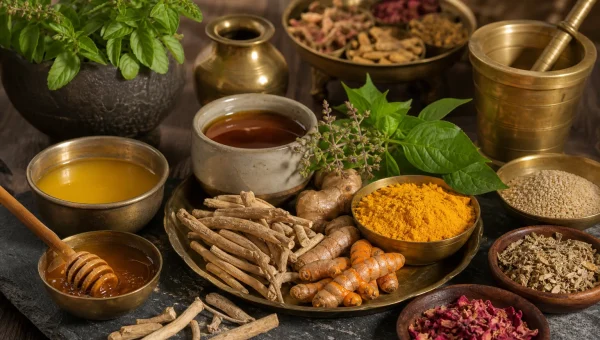
Agni is the first pillar because even the best rasayana herbs depend on digestion, assimilation, and tissue conversion. When digestion is cold, heavy, irregular, or sluggish, a practitioner may use deepana-pachana support such as Trikatu, the traditional combination of dry ginger, black pepper, and long pepper. This is best suited to cold, kapha-type sluggish digestion and is not ideal for people with gastritis, ulcers, burning acidity, active inflammation, or strong Pitta aggravation. Because black pepper contains piperine, which can affect the bioavailability of some substances, Trikatu should be used carefully with prescription medicines.
Pillar 2: Rasayana and Vajikarana Core
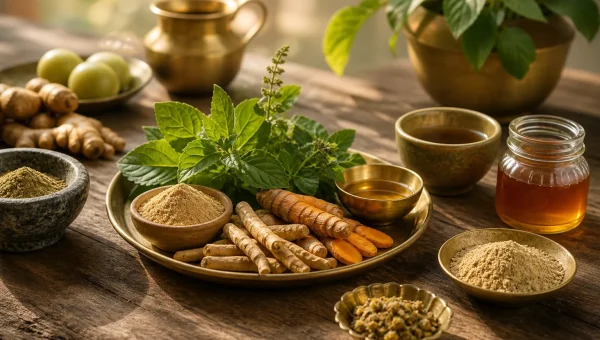
Ashwagandha is classically listed as rasayana, balya, and vajikarana, making it one of the central herbs for strength, resilience, and reproductive support. Modern controlled human data also support its role in stressed men and in selected thyroid-related contexts, but it should be used with care in thyroid disease, autoimmune conditions, pregnancy, sedative use, and when taking medication. Purified shilajit has human data for supporting testosterone-related markers, but only purified and contaminant-tested shilajit should be considered; raw or unknown-source material is not appropriate. Kapikacchu is traditionally used for reproductive support and has human fertility data involving semen quality and hormone-related markers, but its L-DOPA content makes practitioner supervision important, especially for people taking neurological, psychiatric, or dopaminergic medicines.
Pillar 3: Liver, Pitta, and Metabolic Clearance
The liver is central to modern hormone metabolism, and Ayurveda approaches this area through Agni, Pitta, Rakta, mala flow, and the condition of channels. Bitter herbs such as Kutki and Bhumyamalaki are traditionally used where Pitta and liver terrain need support. These are not casual daily tonics for everyone; they are strong, constitution-specific herbs and should be selected carefully in people with liver disease, gallbladder disease, pregnancy, low body weight, loose stools, or medication use.
Pillar 4: Thyroid, Stress, and Metabolic Support
Thyroid function, stress load, sleep quality, and metabolic rate all influence male vitality. Guggulu is a heating, scraping, metabolism-oriented resin classically used in kapha-meda conditions and is better viewed as a practitioner-selected metabolic support than as a simple testosterone booster. Preclinical work supports thyroid-related activity of guggulsterones, while ashwagandha has human data in subclinical hypothyroidism; both require caution in people with thyroid disease or thyroid medication use.
Pillar 5: Shukra Dhatu Rasayana
Shukra Dhatu support is where nourishing herbs and vajikarana choices become important. Gokshura is classically described as madhura, guru, snigdha, shita, mutrala, vrishya, brimhana, and vata-calming, making it more appropriate as urinary-reproductive and tissue-supportive medicine than as a guaranteed testosterone enhancer. Vidari Kanda is a nourishing tuber traditionally used in tonic and restorative contexts. These herbs are best chosen according to constitution: a depleted, dry, Vata-dominant person needs a different plan than a heavy, congested, Kapha-dominant person.
Practitioner-Supervised Men’s Vitality Stack
The table below is a structured template, not a self-prescription. A safe plan usually uses a small number of well-chosen herbs, reassesses digestion, sleep, energy, libido, mood, bowel habits, and laboratory markers, and avoids stacking multiple heating, thyroid-active, liver-active, or dopaminergic herbs without supervision.
| Herb / Formula | Typical Practitioner-Guided Use | Primary Ayurvedic Role | Key Caution |
|---|---|---|---|
| Ashwagandha | Root powder or standardized extract, selected by constitution and tolerance | Rasayana, balya, vajikarana, Vata support, stress resilience | Use caution with thyroid disease, autoimmune conditions, sedatives, pregnancy, surgery, and medication use |
| Purified Shilajit | Purified, tested material only; often used in small divided doses | Rasayana support for stamina, reproductive vitality, and strength | Avoid raw, unpurified, or untested material because contamination is a known concern |
| Kapikacchu | Seed powder or extract under supervision | Vajikarana and Shukra support, especially in selected fertility contexts | Requires caution with dopaminergic, neurological, psychiatric, and blood-pressure medications |
| Gokshura | Fruit powder, root decoction, or formula-based use | Mutrala, vrishya, brimhana, Vata-calming support for urinary and reproductive channels | Not a standalone testosterone guarantee; use caution in kidney, liver, or complex urological conditions |
| Kutki / Bhumyamalaki | Short-term, targeted use when liver-Pitta terrain fits | Bitter Pitta and liver-supportive herbs | Use with clinician guidance in liver disease, gallbladder disease, pregnancy, diarrhea, low body weight, or medication use |
| Guggulu | Purified resin or classical formula chosen by a practitioner | Kapha-meda support, metabolic fire, channel clearing | Avoid in pregnancy and lactation; use caution with thyroid disorders, thyroid medicines, anticoagulants, and inflammatory Pitta states |
| Trikatu | Small pre-meal dose when digestion is cold, heavy, and sluggish | Deepana-pachana, Agni support, Kapha reduction | Avoid in gastritis, ulcers, burning acidity, strong Pitta, and sensitive medication regimens |
Lifestyle Factors That Make the Herbs Work
No supplement stack can compensate for poor sleep, erratic meals, chronic stress, alcohol excess, inactivity, or unmanaged metabolic disease. Ayurvedic dinacharya emphasizes regular daily rhythm, appropriate food, clean conduct, and preservation of health. For male vitality, that means consistent sleep, regular meals, strength training appropriate to capacity, adequate recovery, and brahmacharya understood as wise regulation of sexual energy according to age, strength, season, and constitution.
Objective tracking matters. Men with symptoms of low testosterone should not guess from mood, libido, or social media checklists alone. A physician may assess morning testosterone properly, repeat testing when needed, and add free testosterone, SHBG, LH, FSH, thyroid markers, glucose, lipids, liver enzymes, prolactin, or other tests depending on the case. Ayurveda can support the terrain, but endocrine disease, infertility, erectile dysfunction, prostate symptoms, severe fatigue, depression, sleep apnea, and thyroid disease deserve qualified medical evaluation.
Nothing in this article diagnoses, treats, or replaces medical care. Consult a qualified Ayurvedic practitioner and a licensed healthcare provider before starting herbs, minerals, resins, detoxes, or hormonal protocols, especially if you are trying to conceive, taking medication, using thyroid treatment, or managing liver, kidney, prostate, autoimmune, psychiatric, cardiovascular, or endocrine conditions.
References
- Charaka Samhita — Shukra dhatu
- Charaka Samhita — Ojas
- Charaka Samhita — Agni
- Charaka Samhita — Sroto Vimana
- Concepts of Dhatu Siddhanta (theory of tissues formation and differentiation) and Rasayana; probable predecessor of stem cell therapy (2014), PubMed Central
- Ayurvedic Pharmacopoeia of India
- A Randomized, Double-Blind, Placebo-Controlled, Crossover Study Examining the Hormonal and Vitality Effects of Ashwagandha ( Withania somnifera) in Aging, Overweight Males (2019), PubMed Central
- Efficacy and Safety of Ashwagandha Root Extract in Subclinical Hypothyroid Patients: A Double-Blind, Randomized Placebo-Controlled Trial (2018), PubMed
- NCCIH
- Clinical evaluation of purified Shilajit on testosterone levels in healthy volunteers (2016), PubMed
- Shilajit: a natural phytocomplex with potential procognitive activity (2012), PubMed Central
- NCCIH
- Hazardous or Advantageous: Uncovering the Roles of Heavy Metals and Humic Substances in Shilajit (Phyto-mineral) with Emphasis on Heavy Metals Toxicity and Their Detoxification Mechanisms (2024), PubMed
- Mucuna pruriens improves male fertility by its action on the hypothalamus-pituitary-gonadal axis (2009), PubMed
- Fertstert (fertstert.org)
- Ayurvedic Pharmacopoeia of India
- Pharmacological and Clinical Efficacy of Picrorhiza kurroa and Its Secondary Metabolites: A Comprehensive Review (2022), PubMed Central
- Efficacy of Phyllanthus niruri on improving liver functions in patients with alcoholic hepatitis: A double-blind randomized controlled trial (2021), PubMed Central
- Pharmacognostic evaluation of leaves of certain Phyllanthus species used as a botanical source of Bhumyamalaki in Ayurveda (2011), PubMed Central
- Thyroid Stimulating Action of Z-Guggulsterone Obtained from Commiphora mukul (1984), PubMed
- NCBI
- A systematic review on the herbal extract Tribulus terrestris and the roots of its putative aphrodisiac and performance enhancing effect (2014), PubMed
- Pueraria tuberosa: A Review on Traditional Uses, Pharmacology, and Phytochemistry (2020), PubMed Central
- Ijrap (ijrap.net)
- Black pepper and its pungent principle-piperine: a review of diverse physiological effects (2007), PubMed
- Charaka Samhita — Dinacharya
- Endocrine (endocrine.org)
The hypothalamic-pituitary-gonadal axis framing alongside the Ayurvedic Shukra Dhatu concept is the integration that makes this protocol credible to men who want to understand the mechanism before they commit to any protocol.
This is the kind of content that makes Ayurveda accessible to beginners without dumbing it down
man i wish i found this article sooner. years of trial and error i didnt need
So glad this resonated with you! Consistency really is key, give it the full recommended duration and I think you’ll see meaningful changes.
Useful post on Men’s Hormonal Health in Ayurveda. I would still ask a practitioner before changing medicines.
Good reminder on Men’s Hormonal Health in Ayurveda. The examples make the advice less abstract.
I’ve been on shilajit for a year with modest results. After adding the dietary and sleep components described in this protocol my testosterone went from 480 to 630 ng/dl at the 4-month mark. The herbs were always secondary to the foundations.
I appreciate your thoughtful question. I’ll address this in more detail in an upcoming post, but in the meantime, the key is to listen to your body and adjust accordingly.
I was skeptical when my vaidya first suggested ashwagandha but six weeks in and I can tell something has shifted. Not placebo either, my blood work confirmed it.
sent this to friends who are curious about ayurveda. perfect starting point
Is there guidance on this protocol for men in their 50s with age-related testosterone decline versus men in their 30s with lifestyle-driven suppression? The root causes are different and I’d expect the optimal approach to differ as well.
My partner was skeptical but tried it after reading this. Now they’re a convert
the brain fog I’d normalized as just being tired is largely gone since I started this protocol.
Can you address how this changes for different age groups? I’m in my 50s and wondering if the protocol needs modification.
This matches my clinical experience. I’ve recommended ashwagandha to patients with similar presentations and the response rate is consistent with what the article describes.
Can this be combined with the protocol from your earlier article? Or would that be too much?
This is such encouraging feedback. Keep going with the protocol and feel free to share updates!
I respectfully disagree with the characterization of modern medicine as inferior here. Both systems have their place and ideally should complement each other
I’m a nurse and I’ve started incorporating some of these principles into my own self-care routine.
Wonderful to see someone from a medical background engaging with this content thoughtfully. The integration of traditional and modern approaches is so important.
How long before seeing measurable testosterone changes from this protocol? Hormone testing at three months is the standard minimum interval in integrative endocrinology but I want to know what the expected trajectory looks like.
Followed this advice for a month. Not only did it not help, my symptoms actually got slightly worse before I went back to my doctor.
ok this changed everything for me. was doing it totally wrong before
Do you have a recommended practitioner directory for people who want professional guidance?
I came for Men’s Hormonal Health in Ayurveda and this answered the main question. I appreciate that it does not oversell the result.
Appreciate you keeping us honest. We’ve noted your feedback about dosage specificity and will address it in a revised version of this article.
practical tips at the end 👍 theory is great but the actionable stuff is what I need
Is there a specific brand or source you recommend for the herbs mentioned? Quality varies so much.
few months following this site and the quality never drops. love it
sent this to 3 friends whove been asking about ayurveda. perfect intro
just sent this to three friends. perfect introduction to ayurveda
The Kapikacchu for dopamine and testosterone simultaneously is something I hadn’t seen discussed before. The dual mechanism makes it particularly useful for men dealing with low motivation alongside low testosterone since both pathways are addressed by one herb.
Can this protocol be used alongside prescribed testosterone replacement therapy as a complementary approach to maintain or improve the protocol outcomes, or does it work best as a standalone alternative for subclinical presentations?
Three months in on the full protocol and my morning energy is noticeably different. Lab results pending but subjective changes suggest something is working. The sleep improvement was the first change, within two weeks. Everything else followed from that.
What time of day works best for taking the Kutki and Bhumyamalaki together?
I’d flag the Shilajit section specifically. The heavy metal contamination risk in unverified Shilajit products is a documented safety concern that this article should address more directly alongside the clinical benefits.
I tried adding Trikatu before meals and noticed less bloating.
Wonder if the Shilajit dose really needs to be twice daily for noticeable change.
Tracking morning cortisol alongside testosterone gave a clearer picture of stress impact.
My sleep shifted to 10pm and I felt more energy during Pitta hours.
Tried your note about stress being the hidden factor for about 3 weeks now and genuinely impressed with the results.
I was looking for a plain explanation of Men’s Hormonal Health in Ayurveda. Good starting point for a cautious reader.
The advice around Men’s Hormonal Health in Ayurveda is specific enough to be useful. A few more examples would still help.
does your note about stress being the hidden factor interfere with iron supplements? asking for my mother.
The advice around Men’s Hormonal Health in Ayurveda is specific enough to be useful. Small daily changes are easier to follow than a perfect plan.
The advice around Men’s Hormonal Health in Ayurveda is specific enough to be useful. Would be useful to see a short checklist next.
does the kapikachhu timing you discussed interfere with iron supplements? asking for my mother.
the section on the mucuna pruriens dosage you mentioned was helpful. any follow-up posts planned on this?
Can someone clarify the mucuna pruriens dosage you mentioned? I have a digestive condition.
The advice around Men’s Hormonal Health in Ayurveda is specific enough to be useful. I appreciate that it does not oversell the result.
question about the mucuna pruriens dosage you mentioned , what if someone has high pitta? same dosage?
The advice around Men’s Hormonal Health in Ayurveda is specific enough to be useful. This would be easier to follow with a one-week sample plan.
I appreciate the write-up but the kapikachhu timing you discussed caused me stomach upset after 4 days.
tried the kapikachhu timing you discussed for about 3 weeks now and genuinely impressed with the results.
The advice around Men’s Hormonal Health in Ayurveda is specific enough to be useful. This feels more usable than a long list of herbs.
The advice around Men’s Hormonal Health in Ayurveda is specific enough to be useful. The examples make the advice less abstract.
regarding the mucuna pruriens dosage you mentioned, the amount you gave seems high for someone my size. thoughts?
Not related to this post but does anyone know a good Ayurvedic remedy for migraines?
where are the RCTs for the mucuna pruriens dosage you mentioned? traditional use isn’t the same as clinical evidence.
Reading about the dinacharya changes you listed for testosterone support here for the first time. need to research more.
I have kapha prakriti, does the kapikachhu timing you discussed still apply for me?
The Men’s Hormonal Health in Ayurveda angle is useful here. Would be useful to see a short checklist next.
Will try.
Sorry off topic but anyone tried Ayurveda for hair loss?
The Men’s Hormonal Health in Ayurveda angle is useful here. The article avoids making it sound like a quick fix.
I had the opposite result with the mucuna pruriens dosage you mentioned. might be constitution difference.
tried your note about stress being the hidden factor exactly as described, got no rezults after 6 weeks. maybe I have a different constitution.
The Men’s Hormonal Health in Ayurveda angle is useful here. This would be easier to follow with a one-week sample plan.
my mother tried the mucuna pruriens dosage you mentioned on my suggestion, she says her sleep has improved a lot.