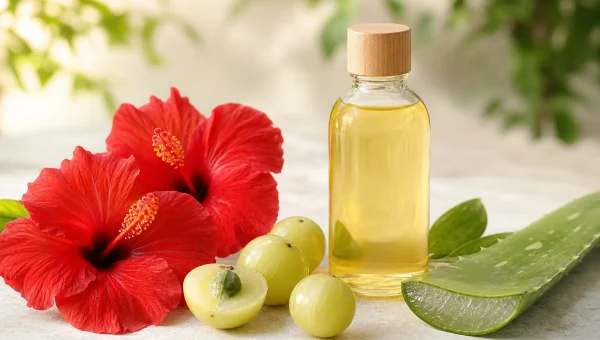
Ayurvedic Facial Oil Skin Type: The Matching Principle
Ayurvedic facial oil skin type matching is more nuanced than “dry skin needs more oil.” A useful match considers the present doshic quality of the skin, the season, age, constitution, and the intention: daily maintenance, barrier support, calming redness, softening roughness, or supporting an even-looking complexion. The practical aim is to choose an oil whose qualities balance the current state of the skin rather than simply coating it.
In classical language, oils provide snehana, the softening and unctuous support that counters dryness and roughness. Classical oils such as tila taila and narikela taila are understood through rasa, guna, virya, vipaka and karma; modern carrier oils such as jojoba, rosehip and tamanu can be used by applying the same quality-based reasoning to their texture, heaviness and lipid profile. Patch testing and restraint are still important, because an oil that suits one person’s vata dryness may feel heating, heavy or pore-clogging on another person’s pitta or kapha skin.
Vata Skin: Deep Nourishment Oils
Vata skin tends to show dryness, tightness after washing, fine lines, flaking in cold weather, dullness when depleted, and sensitivity to wind or low humidity. The balancing direction is warm, unctuous, stable and protective, especially in autumn, winter, travel, and periods of irregular sleep or stress.
First choice: Sesame oil. Cold-pressed, untoasted sesame oil is the strongest classical choice for vata-type facial dryness. In the Ayurvedic Pharmacopoeia of India, Tila is described with guru, snigdha, sukshma and ushna qualities, and with vataghna and snehana actions. This makes it especially useful when the face feels dry, tight, rough or cold. Use 2–4 drops on damp skin, preferably in the evening; reduce the amount in hot weather or if the skin becomes red or congested.
Second choice: Sweet almond oil. Sweet almond oil is a gentle modern carrier for dry or vata-pitta skin that does not tolerate sesame well. Its emollient character and its oleic- and linoleic-rich triglycerides make it useful when skin needs softness without the stronger warmth of sesame. Use 2–3 drops on damp skin, or blend one part almond with one part sesame for late autumn and winter.
Pitta Skin: Cooling and Calming Oils
Pitta skin tends to show warmth to the touch, flushing, redness after heat or sun, sensitivity to strong actives and fragrance, post-breakout pigmentation, and breakouts that become inflamed easily. The balancing direction is cooling, soothing, moderate and non-irritating.
First choice: Coconut oil. Coconut oil, understood through Narikela, is madhura, guru, snigdha and shita in the Ayurvedic Pharmacopoeia of India, with pitta-hara action and a kapha-increasing tendency. This makes it more appropriate for hot, red, dry pitta skin than for heavy, oily or clogged skin. Use 1–2 drops or a very thin layer on damp skin, and avoid it when cystic acne, repeated closed comedones or a clear pore-clogging response appears.
Second choice: Kumkumadi taila for complexion support. Kumkumadi Taila is a classical external formulation listed in the Ayurvedic Formulary of India under Yogaratnakara. The formulation includes saffron, sandalwood, lodhra, patanga, red sandalwood, agarwood, usira, manjistha, yashtimadhu, lotus, turmeric, daruharidra and other ingredients processed in cow’s milk and sesame oil. It is traditionally used externally for varna-vikara and vyanga, making it a suitable night oil when the goal is an even-looking complexion, post-blemish marks and facial radiance. Use 1–3 drops at night and reduce frequency if the sesame base feels too warming. For a dedicated routine, see the kumkumadi night routine.
Kapha Skin: Light, Minimal Oils
Kapha skin tends to show thicker texture, larger pores, natural oiliness, blackheads or whiteheads, puffiness, slow wrinkling, and dullness that comes from heaviness rather than dryness. The balancing direction is light, minimal, warming, cleansing and non-occlusive.
First choice: Jojoba oil. Jojoba fits the kapha strategy because it is a light liquid wax rather than a heavy triglyceride oil. Its wax-ester chemistry resembles parts of human sebum, so it can soften the surface with a lighter feel than many seed oils. Use only 1–2 drops on damp skin, or use it as the base into which a very small amount of a classical oil is blended.
Second choice: Diluted castor oil for short-contact cleansing. Eranda is described in the Ayurvedic Pharmacopoeia of India as snigdha, sukshma, tikshna and ushna, and castor oil is naturally rich in ricinoleic acid. Because it is dense and sticky, it is best for kapha-type facial care as a diluted oil-cleanse component rather than a leave-on facial oil: blend about one part castor oil with three to four parts jojoba or another light carrier, massage briefly, and remove thoroughly with a warm damp cloth. Avoid castor oil near the eyes, on broken skin, and during pregnancy unless guided by a qualified practitioner.
| Skin Presentation | Primary Oil | Amount / Timing | Matching Reason |
|---|---|---|---|
| Vata: dry, tight, fine lines | Sesame, sweet almond | 2–4 drops, mainly evening | Snehana, vataghna, emollient lipids |
| Pitta: warm, red, reactive | Coconut, kumkumadi | 1–2 drops coconut; kumkumadi at night | Shita narikela; complexion-supporting taila |
| Kapha: oily, large pores, dull | Jojoba, diluted castor | 1–2 drops jojoba; castor as cleanser only | Light wax esters; ricinoleic-rich cleansing oil |
| Vata-pitta: dry and reactive | Sweet almond + rosehip blend | 2–3 drops, evening | Gentle emollience with lighter unsaturated lipids |
| Dullness or uneven tone | Kumkumadi taila | 1–3 drops as night oil | Traditional use for varna-vikara and vyanga |
Specialty Oils for Specific Skin Goals
Specialty oils can be useful when the base dosha match is already clear. They should be used in small amounts, often blended into a simpler carrier oil, rather than replacing the main skin-type principle.
Rosehip seed oil for vata-pitta texture and tone: Rosehip seed oil is naturally rich in unsaturated fatty acids, especially linoleic and alpha-linolenic acids, and it has a lighter feel than sesame. For mature, uneven or post-blemish vata-pitta skin, use 2–3 drops in the evening alone or blended with sweet almond oil. Store it tightly closed and away from heat because highly unsaturated oils oxidize more easily.
Tamanu oil for small areas of rough or marked skin: Tamanu oil from Calophyllum inophyllum is valued for its thick texture and calophyllolide content. It is better used as a spot oil for small rough or post-blemish areas than as a full-face oil, especially on kapha or acne-prone skin. Use one diluted drop in a lighter carrier and patch test carefully, particularly if sensitive or nut-allergic.
Application Technique: Why It Changes Everything
Application technique determines whether a facial oil feels nourishing or heavy. Cleanse thoroughly, leave the skin slightly damp, warm the oil between the palms, and press it on rather than rubbing hard. Use fewer drops than a body oil application: most faces need only 1–4 drops. After pressing, use light upward strokes and gentle circles for about one minute, then blot any shine. In Ayurveda, the quantity and season matter: more oil may suit winter vata dryness, while summer pitta or oily kapha skin usually needs a lighter hand.
At night, facial oils can be used alone or over a light moisturizer. Stop or reduce an oil if redness, burning, itching, closed comedones, cystic acne or dermatitis appears. For non-oil complements to an Ayurvedic skincare routine, see the DIY Ayurvedic face masks guide.
Medical disclaimer: Facial oil recommendations here are general educational wellness guidance, not diagnosis or treatment. Patch test new oils for 24–48 hours before full facial use. People with acne vulgaris, rosacea, eczema, dermatitis, allergies, pregnancy-related skin changes, active infection, or medication-treated skin conditions should consult a qualified Ayurvedic practitioner, dermatologist or healthcare provider before changing a skincare protocol. Avoid oils near the eyes and mucous membranes.
References
- Ayurvedic Pharmacopoeia of India
- Ayurvedic Pharmacopoeia of India
- Sesame (Sesamum indicum L.): A Comprehensive Review of Nutritional Value, Phytochemical Composition, Health Benefits, Development of Food, and Industrial Applications (2022), PubMed Central
- Cir-safety (cir-safety.org)
- The uses and properties of almond oil (2010), PubMed
- Ayurvedic Pharmacopoeia of India
- Coconut oil: an overview of cardiometabolic effects and the public health burden of misinformation (2023), PubMed Central
- Anti-Inflammatory and Skin Barrier Repair Effects of Topical Application of Some Plant Oils (2017), PubMed Central
- Dravyaguna notes
- Jojoba Oil: An Updated Comprehensive Review on Chemistry, Pharmaceutical Uses, and Toxicity (2021), PubMed Central
- Acute Effects of Transdermal Administration of Jojoba Oil on Lipid Metabolism in Mice (2019), PubMed Central
- Castor Oil: Properties, Uses, and Optimization of Processing Parameters in Commercial Production (2016), PubMed Central
- Pro- and anti-inflammatory actions of ricinoleic acid: similarities and differences with capsaicin (2001), PubMed
- Sciencedirect (sciencedirect.com)
- Rosehip extract and wound healing: A review (2024), PubMed
- Anti-inflammatory and wound healing activities of calophyllolide isolated from Calophyllum inophyllum Linn (2017), PubMed Central
- Potential of Tamanu (Calophyllum inophyllum) Oil for Atopic Dermatitis Treatment (2021), PubMed Central
- NCCIH