
Yoni steam is safest when treated as a precise, occasional local-care procedure: gentle warm vapor around the vulva and perineum, not a daily hygiene habit. The protocol below is designed around timing, herb choice, temperature control, contraindications, and clear stopping rules so the practice remains mild, external, condition-specific, and easy to stop the moment it feels uncomfortable.
The most important principle is this: do not use yoni steam to “push through” symptoms. Pain, burning, foul odor, fever, sores, abnormal discharge, pelvic infection, pregnancy, unexplained bleeding, or recent childbirth-related injury all require qualified care before any home procedure.
The Ayurvedic Foundation of Yoni Steam Safety
In classical Ayurveda, the closest formal procedure is Yoni Dhoopana or Yoni Dhupana, a local fumigation procedure discussed in the context of Yoni Vyapad, the Ayurvedic category for disorders of the female reproductive tract. Classical references describe medicated fumigation, while the common home version today uses herbal water vapor; for safety, the modern adaptation should borrow the classical principles of local application, careful selection of substances, short duration, and appropriate indication.
In this guide, “yoni steam” means external exposure of the vulva and perineal area to gentle herbal vapor, with the water kept below the body and never boiling under the skin. It should not be introduced into the vagina, used as douching, performed over an open flame, or combined with essential oils.
What Yoni Steam May Be Used For
Within an Ayurvedic protocol, yoni steam may be considered as supportive local warmth for selected patterns: Vata-type coldness, pelvic tension, and spasmodic premenstrual cramping; Kapha-type heaviness or non-irritating dampness after infection has been ruled out; and supervised postpartum local care only after tissue healing and clinician clearance. It is not an emergency treatment, fertility treatment, infection treatment, uterine-cleansing treatment, or substitute for gynecological diagnosis.
The practical aim is gentle warmth and aromatic local care. The steam should touch only the external genital and perineal region, and the experience should feel comfortably warm rather than hot, sharp, burning, or irritating.
Absolute Contraindications: When to Never Steam
Skip yoni steam completely in any situation where heat, moisture, herbs, or delayed diagnosis could worsen the condition. When in doubt, choose medical evaluation over a home procedure.
- Pregnancy or possible pregnancy: Do not steam during pregnancy. Herbal exposures and pelvic heat should be avoided unless specifically cleared by a qualified prenatal clinician.
- Active menstruation or fresh bleeding: Do not steam during bleeding days, fresh spotting, or unusually heavy flow.
- Unexplained vaginal bleeding: Any bleeding outside the expected pattern needs diagnosis before home therapies.
- Active pelvic infection, STI, fever, or foul-smelling discharge: These require medical evaluation. Do not add heat, moisture, herbs, or delay proper care.
- Pelvic inflammatory disease history with current symptoms: Pelvic pain, fever, abnormal discharge, or pain with intercourse should be assessed first.
- Open skin, cuts, sores, blisters, active herpes lesions, severe vulvar eczema, or lichen sclerosus flare: Heat and herbs can irritate already vulnerable tissue.
- Recent childbirth, perineal tear, episiotomy, vaginal surgery, miscarriage procedure, abortion procedure, or pelvic procedure: Wait until tissue healing is complete and a qualified clinician confirms it is safe.
- Reduced sensation or inability to judge heat: Neuropathy, numbness, sedation, alcohol use, or strong sleep medication increases burn risk.
- Inability to stand immediately: Never steam from a setup that traps the body over hot water or makes quick exit difficult.
- IUD use, fertility treatment, or active attempt to conceive: Use only after individualized guidance from a gynecologist and qualified Ayurvedic practitioner.
Cycle Timing Protocol
A safe timing protocol keeps yoni steam away from bleeding days, pregnancy-risk windows, infection symptoms, and unexplained pelvic symptoms. Use the practice only when the cycle is understood and the indication is clear.
- Bleeding days: No steaming.
- Fresh spotting: No steaming.
- After bleeding has fully stopped: One mild session may be used for Kapha-type heaviness or non-irritating dampness only if there is no odor, itching, pain, fever, or infection concern.
- Three to seven days before the expected period: One mild session may be used for Vata-type coldness, pelvic tension, or spasmodic cramping if the usual period is not heavy and there is no abnormal bleeding.
- Mid-cycle: Use only when not trying to conceive and only if the body is comfortable with warmth.
- Irregular cycles: Do not guess the timing. Track the cycle first and consult a practitioner if bleeding is unpredictable.
- Postpartum: Do not self-steam in the early healing phase. Consider it only after complete tissue healing, absence of infection signs, and professional clearance.
A simple cycle map helps prevent timing errors: mark bleeding days in red, post-bleeding days in green, the premenstrual window in yellow, and ovulation or conception-risk days in blue. Yoni steam belongs only on appropriate non-bleeding days and only when no contraindication is present.
Ayurvedic Herb Selection by Dosha and Pattern
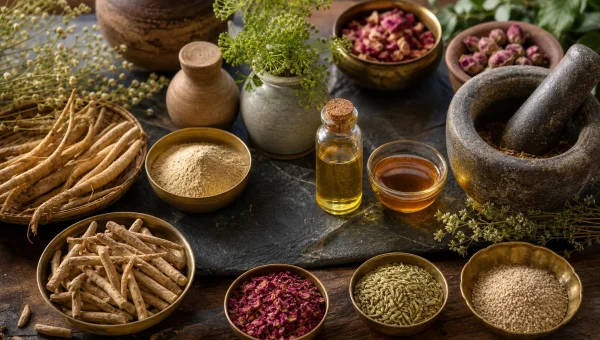
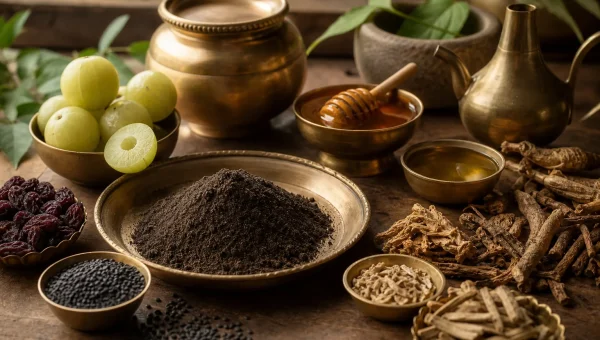
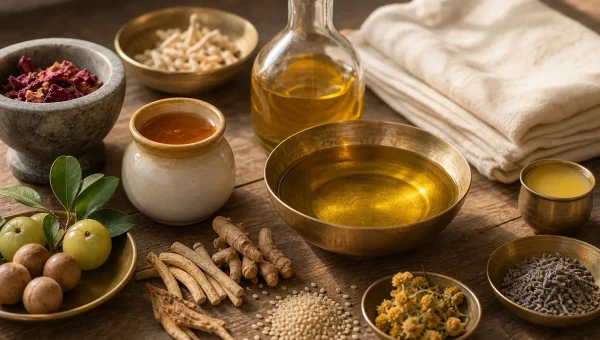
Herbs should be selected by constitution, symptom pattern, season, tissue sensitivity, and contraindications. Use authenticated dried herbs from a reliable source, keep the formula simple, and do not combine many heating herbs in one session. The table below gives conservative examples for practitioner-guided selection, not a universal prescription.
| Pattern | Possible Herbs | Latin Names | Ayurvedic Rationale | Maximum Duration |
|---|---|---|---|---|
| Vata pattern: cold pelvic tension, spasmodic premenstrual cramping, dryness without sores or lesions | Ashwagandha, Guduchi | Withania somnifera, Tinospora cordifolia | Ashwagandha is classically warming, strengthening, and Vata-Kapha pacifying; Guduchi is classically used as a balancing, rasayana herb | 10 minutes |
| Pitta pattern: heat sensitivity, tenderness, tendency toward burning, or heavy heat in the pelvis | Shatavari, Guduchi, or plain warm water only | Asparagus racemosus, Tinospora cordifolia | Shatavari is classically cooling and Pitta-pacifying; in active burning, inflammation, rash, or infection, steaming should be skipped | 5 minutes |
| Kapha pattern: heaviness, dull congestion, non-foul dampness after infection is ruled out | Vidanga, Nirgundi | Embelia ribes, Vitex negundo | Vidanga is classically sharp, drying, heating, and associated with Krimi conditions; Nirgundi is classically light, dry, and used in painful or congestive conditions | 10 minutes |
| Postpartum after complete healing and clinician clearance | Practitioner-selected mild local herbs only | Formula individualized | Postpartum care is a sensitive Vata-recovery period; local procedures should be supervised and never used over unhealed tissue | 5-10 minutes |
Avoid strong essential oils, concentrated aromatic oils, chili-like heating substances, unknown online blends, moldy herbs, perfumed herbs, and powders that contain synthetic fragrance. If the herb irritates the nose, eyes, or skin, it is too strong for this use.
Safe Yoni Steam Procedure: Step-by-Step
A safe procedure depends more on temperature and exit control than on the number of herbs used. The setup must allow you to stand immediately, and the steam must feel gentle on the inner forearm before it is allowed near the vulva.
- Prepare the space: Choose a stable seat, clean floor, good ventilation, and enough room to stand quickly. Do not steam over a stove, flame, unstable bucket, or narrow vessel.
- Use a small amount of herb: For home use, choose one to two appropriate dried herbs and use a modest quantity in 2 liters of water. Stronger is not safer.
- Make the infusion: Bring water to a boil, turn off the heat, add the herbs, cover, and steep for about 10 minutes.
- Cool before sitting: Remove the lid and allow the steam to soften. Never sit over boiling water.
- Test the steam: Hold the inner forearm about 30 cm above the vessel for 30 seconds. The sensation should be comfortably warm, not hot, sharp, prickly, or burning.
- Set the distance: Keep the body at least 30-45 cm above the water surface. The vulva should never touch the vessel or water.
- Drape loosely: Use a towel or blanket around the waist only if it does not trap excessive heat. Leave enough space for air to circulate.
- Start short: Begin with 3-5 minutes for the first session. Increase only if there is no irritation, heat sensitivity, dizziness, or discomfort.
- Stop immediately if needed: Stand up at once if there is burning, stinging, itching, dizziness, nausea, pelvic pain, palpitations, or emotional distress.
- Rest afterward: Dry the external area gently, wear loose cotton clothing, drink warm water, and rest for 20-30 minutes. Avoid cold exposure immediately afterward.
Do not add essential oils to yoni steam. Do not steam while sleepy, intoxicated, fasting, feverish, overheated, or alone if you are prone to fainting. Do not repeat the session the same day if the steam cooled too quickly; frequent reheating increases the chance of overheating and accidental burns.
Frequency Guidelines
Yoni steam should be occasional, not daily. A conservative rhythm is one session per cycle for Vata-type premenstrual coldness or one post-bleeding session for Kapha-type heaviness, provided no contraindications are present.
- First-time user: 3-5 minutes once, then observe for 24 hours.
- Vata pattern: Up to 10 minutes, once in the premenstrual window, if periods are not heavy.
- Pitta pattern: Avoid during heat, burning, rash, tenderness, or inflammation; if used at all, keep it very mild and brief.
- Kapha pattern: Up to 10 minutes after bleeding has fully stopped, only when infection signs are absent.
- Postpartum: Practitioner-supervised only after healing clearance.
Menstrual Cup Hygiene: The Ayurvedic Approach
Menstrual cup care should remain clean, simple, and non-irritating. From an Ayurvedic perspective, menstrual care is connected with Raja, Rakta Dhatu, and Apana Vata; from a practical hygiene perspective, any retained menstrual product must be handled with clean hands, regular emptying, and proper sterilization.
Wash hands before insertion and removal. Empty the cup according to the manufacturer’s time limit and your flow, commonly within a 4-12 hour window. Rinse or wash the cup as directed by the manufacturer during the cycle, and boil it in clean water for the manufacturer-recommended time, commonly 5-10 minutes, between cycles.
Do not use yoni-steam herbs, essential oils, tea tree oil, apple cider vinegar, perfume, harsh soap residue, or herbal powders on a menstrual cup. Herbal residue may irritate the vaginal mucosa, and oils or acidic soaks may affect cup material depending on the product. Herbal washes are not a replacement for standard menstrual cup cleaning and sterilization.
When to Stop and Seek Care
Stop the session immediately and seek appropriate care if symptoms appear during or after steaming. Burns and infections around the vulva or vagina need prompt attention, not repeated steaming.
- Burning pain, blistering, peeling, or raw skin
- Increasing redness, swelling, heat, or pus
- Fever, chills, pelvic pain, or abdominal pain
- Foul-smelling discharge or new abnormal discharge
- Unexpected bleeding or heavier bleeding than usual
- New itching, rash, hives, or allergic reaction
- Dizziness, faintness, nausea, or weakness during the session
Connection to Broader Menstrual Health
Yoni steam is only one small part of menstrual care. Ayurveda gives equal importance to digestion, sleep, stress regulation, bowel regularity, seasonal routine, appropriate exercise, and individualized herbal support. For a fuller menstrual-health plan, related topics such as Shatavari, PCOS care, postpartum recovery, Vata regulation, and Rakta-Pitta balance should be assessed with the whole person in mind.
The safest next step before any yoni steam is to map the cycle, identify the pattern, check the contraindications, choose only mild authenticated herbs, and keep the first session short. If the reason for steaming is pain, infertility, infection, heavy bleeding, recurrent discharge, postpartum healing, or a diagnosed gynecological condition, consult a qualified Ayurvedic practitioner and healthcare provider before starting.
This guide is educational and does not constitute medical advice. Gynecological concerns require evaluation by a qualified healthcare provider. Burns, infections, abnormal bleeding, pelvic pain, pregnancy-related concerns, or reactions following yoni steam require prompt medical attention.
Nothing in this article diagnoses or treats a medical condition. Consult a qualified Ayurvedic practitioner or physician before starting herbs, supplements, detoxes, or therapeutic protocols, especially if pregnant, postpartum, managing a condition, using an IUD, trying to conceive, or taking medication.
References
- Ayushdhara (ayushdhara.in)
- Sushruta Samhita — Uttara Tantra 38.27
- Easyayurveda (easyayurveda.com)
- Second-Degree Burn Sustained After Vaginal Steaming (2019), PubMed
- Medicalnewstoday (medicalnewstoday.com)
- Health (health.clevelandclinic.org)
- ACOG
- CDC
- OASH Women’s Health
- Uihc (uihc.org)
- Americanpregnancy (americanpregnancy.org)
- Healthline (healthline.com)
- Steamychick (steamychick.institute)
- Ayurvedic Pharmacopoeia of India
- Ayurvedic Pharmacopoeia of India
- Ayurvedic Pharmacopoeia of India
- Toxic shock syndrome associated with menstrual cup use (2021), PubMed Central
- Menstrual Cup-Associated Toxic Shock Syndrome (2020), PubMed Central
- In Vitro Study to Assess Effective Cleaning Techniques for Removing Staphylococcus aureus from Menstrual Cups (2022), PubMed Central
- Health (health.com)
Been using menstrual for about 3 months now and the difference in how I feel is real. My practitioner said the same things this article covers so good to have it spelled out.
I am a pelvic floor physiotherapist and I have seen two patients with vulvar burns from DIY yoni steams. Both learned the technique from online videos. The temperature guidance and contraindication list in this article is the minimum anyone should know before attempting this.
The Yoni Steam (Yoni Dhupana) and Menstrual Cup section feels grounded enough to try carefully. I would still ask a practitioner before changing medicines.
What is the evidence base for the menstrual cup care recommendations here? I use a menstrual cup and would like to know whether the herbal cleaning solutions recommended are safe for silicone and whether they affect cup integrity over time.
The contraindication list for yoni steaming includes things that should be displayed prominently on every wellness product and tutorial that discusses this practice. PID history, active infection, pregnancy. Most YouTube tutorials mention none of these.
I tried yoni steaming from a kit I bought online and the temperature was manageable but the aromatic herbs caused significant irritation that lasted 3 days. I had no way of knowing those herbs were contraindicated for my constitution. Better labeling requirements are needed.
The Karkidaka month traditional practice described here is something my grandmother’s community observed for generations as normal women’s health maintenance. The way modern wellness has extracted the practice from its context and sold it as a trend has introduced exactly the safety problems described here.
As a gynecologist I want to affirm the contraindications listed here are medically appropriate. What I would add is that patients should also inform their gynecologist before starting this practice so it can be noted in their medical history in case of any complication.
The case study about the perineum burn really highlights why timing matters.
The menstrual cup compatibility section is the most underserved topic in women’s Ayurvedic health content I have seen. Modern menstrual products need to be addressed in traditional practice contexts. This is the first article I have found that tries to bridge that gap.
The temperature guidance of 30-35cm distance from the steam source is specific and useful. Most descriptions I have seen say ‘comfortable distance’ which means nothing when you cannot accurately gauge temperature from sensation alone.
I appreciated the clear table matching doshas to herbs and durations.
After reading about absolute contraindications, I checked my cycle before trying steam.
It seems wise to test steam temperature on the inner forearm before sitting.
One question: are neem rinses safe for silicone cups if cooled completely?
Many wellness influencers overlook the warning about steaming during menstruation.
Based on the guide, I’ll limit steam to once a month and only on yellow days.
The distinction between Yoni Dhupana and modern steam trends feels important for safety.
I wonder if the herbal steam could help with postpartum lochia after six weeks.
Practitioners should always have a blanket ready to create a proper steam tent.
Just found this searching for alternatives to long-term medication. How does one find a qualified Ayurvedic practitioner to supervise this?
I notice the article doesn’t address interactions with thyroid medication. Is there a concern there?
what brand of ashwagandha do you recommend? KSM-66 or Sensoril or just regular churna?
Good reminder on Yoni Steam (Yoni Dhupana) and Menstrual Cup. The article avoids making it sound like a quick fix.
been doing Yoni steam twice monthly for 3 cycles now. my menstrual cramping has reduced and I feel much less tension the week before 🙌 ठीक है
The scientific citations are helpful. Are there any RCTs specifically for the combination therapy mentioned?
shared this with my mom, she has been struggling with this for years and finally has a proper plan ✨
Good reminder on Yoni Steam (Yoni Dhupana) and Menstrual Cup. The safety notes could be expanded a little.
Good reminder on Yoni Steam (Yoni Dhupana) and Menstrual Cup. The main idea is clear even if someone is new to Ayurveda.
The evidence base for Yoni steam benefits is almost entirely anecdotal. The article should be clearer about this distinction between traditional use and clinical evidence.
what’s the recommended dose for someone with a Pitta constitution? the article mentions general ranges but i want to confirm 🌿
Good reminder on Yoni Steam (Yoni Dhupana) and Menstrual Cup. This feels more usable than a long list of herbs.
My Ayurvedic practitioner recommended the same protocol. Good to see it written out clearly with timings.
tried this last month, honestly surprised how well it worked for me
the dose ranges seem very broad, like 1 to 3 grams is quite a big difference. would be more helpful with narrower guidance
the digestive angle makes sense to me but i’m curious about the topical applications mentioned briefly at the end ❤️
the herbs recommended for the steam change based on dosha type. what about post-menopausal women where dosha dynamics shift significantly?
honestly i’ve been doing this for 2 months and the results are underwhelming. might just be my body type
I’m skeptical of the causal claims here. Symptom improvement after starting a protocol can easily be a placebo response or regression to the mean.
finding the herbs in my city is nearly impossible, the ones available are often low quality
does anyone know if this works the same way for Kapha types? feels like the article is more Vata focused
The article would benefit from more rigorous sourcing. The studies referenced are mostly observational, not randomized controlled.
The article needs to more clearly define which menstrual cup materials are compatible with the steam process. Silicone degrades differently from other materials.
some of the herb names in english vs sanskrit are confusing, i ended up buying the wrong thing
finally something that explains the dosage properly instead of just saying ‘take as needed’
this is the kind of detail u cant find anywhere else, other sites just give vague advice
combining the cooling herbs for my Pitta-type steam has made it much more comfortable than the standard recipe I tried previously
same issue here, doc said try ayurveda. will try this n update
where do u buy quality herbs in India? the market stuff seems adulterated
I came for Yoni Steam (Yoni Dhupana) and Menstrual Cup and this answered the main question. Good starting point for a cautious reader.