
Knee pain rarely arrives politely. It may begin as a small hesitation on stairs, a pinch during squats, stiffness after sitting, or a cracking sensation that makes you avoid movement altogether. The two common extremes—complete rest and pushing through sharp pain—both miss the middle path. A safer approach is to reduce irritating load while keeping the knee supported with steady, pain-free movement.
In Ayurveda, chronic knee pain with stiffness, crepitus, difficulty bending or straightening, and pain during movement is commonly understood through the lens of Sandhigata Vata; when the knee joint is involved, it is often discussed as Janu Sandhigata Vata. This does not mean every knee problem is the same. Trauma, ligament injury, meniscus damage, infection, inflammatory arthritis, and advanced osteoarthritis need proper evaluation. For non-emergency, gradually developing knee discomfort, the practical Ayurvedic approach is to combine warm external oil therapy, gentle strengthening, mobility work, and practitioner-guided internal support.
Ayurvedic View: Why Oil and Movement Belong Together
Vata-related joint discomfort is traditionally associated with dryness, roughness, stiffness, variable pain, cracking, and reduced ease of movement. Warm oiling counters dryness and coldness at the surface level, while controlled exercise strengthens the muscles that protect the knee. The goal is not to force the joint into painful ranges, but to restore confidence, circulation, warmth, and support around the knee.
The Oil Protocol: What to Apply Before Movement
External oil application is the easiest home-level Ayurvedic support for the knee. Classical medicated oils are not generic massage oils; they are prepared with herbal decoctions, pastes, liquids, and oil bases according to specific formulations. Choose one oil according to the dominant presentation and use it consistently rather than mixing several oils at once.
| Oil | Best For | Classical Ingredients and Notes |
|---|---|---|
| Mahānārāyaṇa Taila | Dry stiffness, chronic Vata-type musculoskeletal discomfort, weakness around the joint | A sesame-oil-based classical formulation containing herbs such as Bilva, Ashwagandha, Bala, Atibala, Gokshura, Shatavari, Rasna, Devadaru, Kustha, and many supporting herbs. It is listed for external use such as Abhyanga. |
| Dhānvantara Taila | Vata-type pain with weakness, depletion, post-strain stiffness, or need for gentle strengthening support | A classical Bala-based formulation prepared with Bala root decoction, milk, Yava, Kola, Kulattha, Dashamula herbs, sesame oil, and additional herbs. It is listed for external use such as Abhyanga and Dhara. |
| Kottamchukkadi Taila | Stiffness with heaviness, Vata-Kapha presentation, or an Āma-like feeling of sluggish painful movement | A classical formulation containing Kottam/Kustha, dry ginger, Vacha, Shigru, Lashuna, Devadaru, mustard, Rasna, sesame oil, curd, and tamarind leaf juice. It is listed for external Abhyanga in Vata-related conditions, Āmavata, and stiffness. |
Application method:
- Warm a small quantity of oil by placing the bottle or a small bowl of oil in hot water. The oil should feel comfortably warm, never hot.
- Apply a thin layer around the whole knee: front, back, inner side, outer side, and 2 to 3 inches above and below the joint.
- Massage gently for 5 to 10 minutes using circular strokes around the kneecap and long strokes along the quadriceps, hamstrings, calf, and tendon areas.
- After massage, keep the knee warm with a cotton cloth for 15 to 20 minutes. Avoid heat over an acutely swollen, red, infected, or freshly injured knee.
- Use the oil before the exercise session. If the skin tolerates it well and there is no irritation, a second light application in the evening may be used.
For a simple home routine, apply oil daily during the first phase and reassess each week. Continue only if the skin remains comfortable and the knee feels better with warmth. Stop the oil and seek guidance if there is itching, rash, burning, unusual swelling, or worsening pain.
Exercise 1: Supported Wall Sit or Half Squat Hold
This exercise builds quadriceps, gluteal, and hamstring support without forcing the knee through a deep painful range. It is especially useful when full squats irritate the joint.
- Stand with your back against a wall, or hold a countertop for support.
- Place the feet hip-width apart and keep the knees pointing in the same direction as the toes.
- Slide down only to a comfortable partial squat, usually around 30 to 45 degrees of knee bend.
- Keep the weight slightly toward the heels and avoid letting the knees collapse inward.
- Hold for 5 to 20 seconds, then return to standing. Repeat 5 to 10 times.
Progress gradually by increasing the hold time before increasing the depth. A deeper wall sit is not necessary unless it remains pain-free and the knee feels stable afterward.
Exercise 2: Seated Knee Extension
Seated knee extension strengthens the front thigh muscles in a controlled way. Strong quadriceps reduce unnecessary strain on the knee during walking, stair climbing, and standing from a chair.
- Sit upright on a chair with both feet flat on the floor.
- Slowly straighten one knee until the leg is nearly level with the floor.
- Tighten the thigh muscle and hold for 3 to 5 seconds.
- Lower the foot slowly. Do not swing the leg or let it drop.
- Perform 8 to 12 repetitions per leg for 1 to 3 sets.
Begin with body weight only. A light resistance band or ankle weight can be added later if the movement is comfortable and does not increase pain or swelling after the session.
Exercise 3: Virabhadrasana II Modified
Virabhadrasana II, performed gently, trains knee alignment, hip stability, and leg endurance. The therapeutic value comes from precision, not from forcing a deep posture.
- Stand with the feet wide apart and turn the front foot outward.
- Bend the front knee only as far as comfortable.
- Keep the front knee tracking over the second toe rather than falling inward.
- Keep the back leg active and the pelvis steady.
- Hold for 10 to 30 seconds, then switch sides. Repeat 2 to 3 times per side.
Use a wall, chair, or shorter stance if balance is difficult. If the front knee feels sharp pain, reduce the bend or skip this posture for now.
Exercise 4: Supported Malasana Preparation
A deep squat is not appropriate for every painful knee, but a supported squat preparation can improve hip and ankle mobility while teaching the knees to bend with better control.
- Stand facing a sturdy countertop, railing, or doorframe.
- Hold the support with both hands and place the feet slightly wider than hip-width.
- Lower only to a comfortable depth, using the arms to reduce load through the knees.
- Keep the heels grounded if possible and let the knees track in line with the toes.
- Hold for 10 to 30 seconds, then use the arms to help return to standing.
Do not chase a full deep squat while the knee is painful. The first goal is a calm, controlled bend without sharp pain, catching, or next-day swelling.
Exercise 5: Straight Leg Raise with Gentle Janu Marma Awareness
Straight leg raises strengthen the quadriceps while keeping the knee mostly straight, which makes them suitable when bending the knee is uncomfortable. Ayurveda describes Janu Marma at the knee-joint region, so this exercise can be paired with gentle awareness and soft contact around the knee rather than aggressive pressure.
Before the exercise: After oiling, place the hands gently around the knee joint for a few slow breaths. Use light circular contact around the sides of the knee. Do not press deeply into the back of the knee, do not press on swollen areas, and do not use marma pressure to override pain.
The exercise:
- Lie on your back. Bend one knee with the foot flat on the floor and keep the other leg straight.
- Tighten the thigh of the straight leg and pull the toes gently toward you.
- Raise the straight leg about 8 to 12 inches from the floor.
- Hold for 3 to 5 seconds.
- Lower slowly and repeat 8 to 12 times per leg for 1 to 3 sets.
If the lower back arches or the hip strains, reduce the height of the lift. The movement should feel like thigh work, not knee irritation.
Exercise 6: Padahastasana with Knee Micro-Bend
Tight hamstrings and calves can increase strain around the back of the knee and change how the leg moves during walking. A modified forward fold keeps the stretch gentle and protects the joint from being locked backward.
- Stand with the feet hip-width apart.
- Keep a small bend in both knees; do not lock them.
- Hinge forward from the hips and let the hands rest on the thighs, shins, blocks, or a chair.
- Stop where you feel a mild stretch in the back of the thighs, not pain behind the knee.
- Hold for 20 to 45 seconds and repeat 2 to 3 times.
If standing forward folding aggravates the knee or back, perform a lying hamstring stretch with a strap instead. The Ayurvedic principle remains the same: gentle lengthening after warmth, not forceful stretching into pain.
Internal Herbal Support for Joint Recovery
Internal herbs should be selected according to constitution, digestion, medications, and diagnosis. They are supportive, not a replacement for assessment when the knee has structural injury or inflammatory disease. Use purified, quality-tested products and consult a qualified Ayurvedic practitioner or healthcare provider before combining herbs with medicines.
| Herb or Formulation Type | Traditional Use in This Context | Important Guidance |
|---|---|---|
| Ashwagandha (Withania somnifera) | Used in Ayurveda as a strengthening and nourishing herb, especially where weakness, fatigue, and Vata aggravation are present. | Best used under guidance in people with thyroid disease, autoimmune conditions, pregnancy, liver concerns, sedative use, or multiple medications. |
| Guggulu preparations | Classical Guggulu preparations are widely used in Vata-Kapha joint conditions, stiffness, and metabolic sluggishness. | Use only purified Guggulu from a reputable source. Avoid unsupervised use with thyroid medication, anticoagulants, antiplatelet drugs, pregnancy, or planned surgery. |
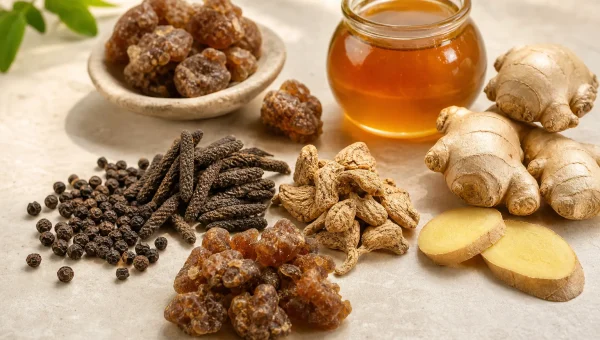
| Shallaki / Kunduru (Boswellia serrata) | Used as a joint-support herb in Vata-related discomfort and stiffness. Ayurvedic pharmacopoeial sources identify Kunduru as the exudate of Boswellia serrata. | Powder and extract strengths differ. Dose and duration should be individualized, especially with digestive sensitivity or concurrent medicines. |
| Rasna | A common Vata-pacifying joint herb and a frequent ingredient in classical external oil formulations. | Rasna is usually used in combinations rather than as a stand-alone home experiment. Botanical source and regional usage should be checked by the practitioner. |
Avoid stacking many joint formulas at once. A cleaner approach is to choose one practitioner-guided internal formula, pair it with daily oiling, and follow a progressive exercise routine for several weeks while tracking pain, swelling, walking tolerance, and stair comfort.
The Combined Protocol
A balanced routine should be steady enough to build strength, but gentle enough that the knee is calmer after practice rather than more irritated.
- Morning: Apply warm oil, wait 10 to 20 minutes, then perform the wall sit or half squat, seated knee extension, and modified Virabhadrasana II.
- Evening: Use light oiling or warmth if helpful, then perform supported Malasana preparation, straight leg raises, and the modified forward fold.
- Frequency: Strengthening can be practiced 4 to 5 days per week if tolerated. Gentle mobility may be practiced daily within a pain-free range.
- Progression: Increase repetitions, hold time, or resistance slowly. Do not increase all three in the same week.
Use a simple pain rule: mild muscular effort is acceptable, but sharp pain, catching, giving way, increased swelling, or pain that remains worse the next day means the load is too high. Reduce depth, reduce repetitions, or pause that exercise and seek professional guidance.
Realistic Timeline
In the first 1 to 2 weeks, the main goal is to reduce irritability and make the knee feel safe with movement. Warm oiling, partial-range strengthening, and gentle stretching may reduce stiffness and improve confidence. This is not the stage for aggressive squats, running, or long downhill walking.
From weeks 3 to 6, the focus shifts toward better endurance in the quadriceps, hips, calves, and hamstrings. Stairs and chair rises may begin to feel easier if the exercises are performed consistently and the knee does not flare after practice.
After 6 to 12 weeks, many people notice that the knee feels more supported during daily activity. Continued progress depends on maintaining strength, managing body weight if needed, avoiding repeated overload, and addressing the underlying diagnosis rather than treating every knee pain as the same condition.
The knee is a weight-bearing joint, so recovery is usually gradual. Ayurveda’s contribution is not only herbs or oils; it is the discipline of applying warmth, lubrication, moderation, and daily consistency while respecting the body’s warning signs.
Disclaimer: This content is for informational purposes only and is not a substitute for professional medical advice, diagnosis, or treatment. Seek medical care promptly for severe pain, sudden swelling, redness and heat with fever, inability to bear weight, locking, deformity, repeated giving way, numbness, calf swelling, or pain after significant injury. Consult a qualified healthcare provider, physiotherapist, or Ayurvedic practitioner before starting this protocol, especially if you have arthritis, diabetes, pregnancy, skin disease, allergies, autoimmune disease, liver disease, bleeding risk, upcoming surgery, or if you take thyroid medication, anticoagulants, antiplatelet drugs, sedatives, or other regular medicines.
Related Reading
These related guides continue the same theme of practical Ayurvedic self-care with appropriate safety awareness.
- Coconut Oil Hair Treatments: 5 Ayurvedic Recipes Beyond Basic Oiling
- Ayurvedic Migraine Protocol: 5 Herbs That Outperform Painkillers
- Ayurvedic Lower Back Pain Protocol: Kati Basti and Supporting Therapies
References
- Clinical study on Sandhigata Vata w.s.r. to Osteoarthritis and its management by Panchatikta Ghrita Guggulu (2010), PubMed Central
- Jaims (jaims.in)
- 2019 American College of Rheumatology/Arthritis Foundation Guideline for the Management of Osteoarthritis of the Hand, Hip, and Knee (2020), PubMed Central
- Nice (nice.org.uk)
- Orthoinfo (orthoinfo.aaos.org)
- Orthoinfo (orthoinfo.aaos.org)
- Orthoinfo (orthoinfo.aaos.org)
- Nhsinform (nhsinform.scot)
- Nhsinform (nhsinform.scot)
- Dravyaguna notes
- Easyayurveda (easyayurveda.com)
- Natural Ingredient Resource Center
- Ayurvedic Pharmacopoeia of India
- NHS
- Mayoclinic (mayoclinic.org)
The description of knee pain appearing without announcement is exactly how it happened for me. Age 44, fine one day, wincing on stairs the next. The Janu Sandhi vata explanation actually motivates the consistent preventive practice.
This is the kind of content that makes Ayurveda accessible to beginners without dumbing it down.
just ordered the herbs mentioned here. Excited to start this protocol.
I teach the exercises in this article to my senior yoga students with knee issues. The Pavanamuktasana progression in particular is gentler than standard physiotherapy exercises and produces better compliance.
sent this to 3 friends whove been asking about ayurveda. perfect intro
The section on timing is something I’ve never seen addressed elsewhere. So important.
The before and after difference in how I feel is remarkable. Three weeks in and counting.
After my diagnosis last year, I turned to Ayurveda as a complement to my treatment. This article validates my choice
The oil treatment combined with exercise rather than instead of exercise is the clinically sound approach. Rest only makes knee instability worse. This gets it right where a lot of traditional advice gets it wrong.
Great to hear this is working for you. Your grandmother’s wisdom was ahead of its time!
The dosage guidance here is more specific and helpful than what I got from my last consultation.
Followed this advice for a month. Not only did it not help, my symptoms actually got slightly worse before I went back to my doctor.
This is such encouraging feedback. Keep going with the protocol and feel free to share updates!
Can this be combined with the protocol from your earlier article? Or would that be too much?
The advice around Knee Pain Relief is specific enough to be useful. Would be useful to see a short checklist next.
Which oil is better for Pitta-pattern knee inflammation with visible swelling vs Vata-type dry stiffness? The article recommends Mahanarayan generally but the two presentations seem like they’d need different thermal approaches.
Appreciate you keeping us honest. We’ve noted your feedback about dosage specificity and will address it in a revised version of this article.
I liked the practical side of Knee Pain Relief. Good starting point for a cautious reader.
The oil application steps seem straightforward, especially warming the oil in hot water.
As an ortho physio I find the exercise selection here reasonable for mild to moderate knee pain. The caution about not doing these for acute injury or post-surgical knees without clearance is important and the article should be more explicit about it.
I had been resting my knee for four months before finding this. The gentle movement approach with oil combined is exactly what my physio eventually recommended too. The rest-only phase delayed my recovery.
I tried the wall sit with a towel behind my back and felt less strain.
how long to do the exercises before expecting improvement? and does the routine change as the knee gets better or is it the same maintenance routine throughout?
Question about the marma point stimulation: how firm should the thumb pressure be?
The kneecap tracking problem that causes pain in younger people is not addressed here. The exercises seem designed for osteoarthritic knees in older adults. Worth distinguishing the presentations.
Using a resistance band for leg extensions makes the eccentric phase noticeable.
The suggestion to wrap the knee in a warm cotton cloth after oiling sounds cozy.
I wonder if the sesame base oils might feel too heavy for summer days.
Practicing Warrior II with a block under the hand helped me keep the knee aligned.
The timeline mentions reduced crepitus after a month, which matches what I’ve read elsewhere.
For the deep squat, holding onto a doorframe let me go lower without sharp pain.
Is the Kottamchukkadi oil recommended only for swelling or also for general stiffness?
Taking Ashwagandha and Guggulu together seems like a solid internal support plan.
not sure about that. I’d verify the diet changes alongside the exercises with an ayurveda doctor first.
The part about Knee Pain Relief feels realistic. The examples make the advice less abstract.
This makes sense for Knee Pain Relief. The article avoids making it sound like a quick fix.
The studies behind the diet changes alongside the exercises are small sample sizes. hard to draw conclusions.
This makes sense for Knee Pain Relief. The examples make the advice less abstract.
I would like more detail on Knee Pain Relief. The practical details matter more than people think.
I would like more detail on Knee Pain Relief. This is the kind of detail readers can test slowly.
does the mahanarayan oil application technique work differently for men vs women? curious about this.
been thinking about the mahanarayan oil application technique for a while. this post clarified some doubts.
Useful post on Knee Pain Relief. A few more examples would still help.
tried the mahanarayan oil application technique for 2 months and saw no improvement. not everyone responds the same.
Useful post on Knee Pain Relief. This would be easier to follow with a one-week sample plan.
disagree slightly on the diet changes alongside the exercises. my experience after 8 weeks was mixed at best.
regarding your note about avoiding squats for vata knee pain, the amount you gave seems high for someone my size. thoughts?
disagree slightly on the mahanarayan oil application technique. my experience after 8 weeks was mixed at best.
where are the RCTs for your note about avoiding squats for vata knee pain? traditional use isn’t the same as clinical evidence.
Will try this.
Starting your note about avoiding squats for vata knee pain next week. will update if I remember to.
exercise 3 , the leg raise variant , the quality of supplements varies so much in India. hard to replicate results.
Three months in with the mahanarayan oil application technique, bloodwork showed improvement in my last checkup.
Reading this later and the Knee Pain Relief advice still feels relevant. Good starting point for a cautious reader.