
The Conversation No One Wants to Start
I am going to be direct about this because the topic demands it. Erectile dysfunction (ED) is common: population data often cited in urology education estimate that about 40% of men are affected at age 40, and the proportion rises with age. By age 70, many men experience some degree of erectile difficulty. Despite this, most men would rather discuss almost anything else. The silence serves no one.
What makes this topic worth writing about from an Ayurvedic perspective is that Ayurveda does not treat male sexual dysfunction as a single problem with a single cause. The classical term klaibya covers male sexual debility, and Charaka describes distinct patterns that arise through different pathways. Modern medicine also separates vascular, hormonal, neurological, medication-related, psychological, and relationship factors. PDE5 inhibitors such as sildenafil and tadalafil can be very useful when appropriate, but they do not replace proper evaluation of the underlying cause.
The Ayurvedic discipline of sexual vitality is called Vajikarana. In the classical framework of Ashtanga Ayurveda, it belongs among the eight major branches of Ayurveda and is treated as a serious medical subject, not as a fringe topic. Charaka’s Vajikarana chapters discuss virility, reproductive tissue, diet, conduct, mental factors, and formulations used to support fertility, strength, and sexual function.
Klaibya: Ayurvedic Classification of Erectile Dysfunction
Charaka Samhita, Chikitsa Sthana 30, gives four main types of klaibya: Bijopaghataja, Dhvajabhangaja, Jaraja, and Shukra-kshayaja. The practical value of this classification is that the same symptom—difficulty with erection or sexual performance—may come from depletion, age-related decline, local genitourinary disease, psychological strain, overexertion, or broader systemic illness.
| Klaibya Type | Classical Ayurvedic Emphasis | Useful Modern Lens | Typical Clues | Treatment Emphasis |
|---|---|---|---|---|
| Bijopaghataja | Injury or impairment of reproductive seed/tissue, associated with depletion of rasa and other dhatus, improper diet, excessive sexual activity, fear, grief, anxiety, fasting, or improper cleansing | Reproductive tissue depletion, chronic illness, undernutrition, hormonal impairment, exhaustion after illness or overexertion | Weakness, low vitality, low libido, poor stamina, pallor, loss of confidence, reduced sexual excitement | Dhatu restoration, nourishment, rest, rasayana, vajikarana, and correction of diet, digestion, and strength |
| Dhvajabhangaja | Local disorder or injury affecting the penis/genitourinary tract, including pain, swelling, discharge, lesions, trauma, or unwholesome habits | Urological injury, penile pain, Peyronie-type concerns, infection, inflammation, pelvic or genital trauma | Pain, swelling, discharge, local lesions, injury history, genital discomfort, or persistent local symptoms | Medical and urological evaluation, local pathology treatment, avoidance of self-medication, and practitioner-guided Ayurvedic care |
| Jaraja | Age-related decline of dhatus, strength, energy, and semen quality | Age-related vascular, hormonal, metabolic, neurological, and medication-related contributors | Gradual onset, slower arousal, reduced rigidity, shorter duration, reduced stamina, associated metabolic or cardiovascular risk | Rasayana, vata-shamana, cardiometabolic assessment, exercise, sleep correction, and cautious vajikarana support |
| Shukra-kshayaja | Depletion of shukra dhatu through excessive sexual activity, worry, grief, anger, fear, anxiety, intoxication, dry foods, fasting, and unwholesome diet | Stress-related depletion, overtraining, poor recovery, undernutrition, chronic sleep loss, exhaustion | Previously normal function declines after stress, fasting, overwork, excessive sex, or illness; fatigue and irritability are common | Brimhana nourishment, rest, milk/ghee/grain-based support when suitable, stress reduction, and gradual rebuilding of strength |
A practical note: situational performance anxiety is real and clinically important, but it should not be casually mislabeled as Dhvajabhangaja. When nocturnal or early morning erections remain normal but erection fails in a specific partnered situation, counseling, nervous-system regulation, relationship communication, and careful medical review may be more relevant than simply adding stronger aphrodisiac herbs.
The Shukra Dhatu Concept: Why It Matters
Shukra dhatu is the seventh and final tissue in the classical seven-dhatu model. The traditional sequence is rasa, rakta, mamsa, medas, asthi, majja, and shukra. In practical Ayurvedic reasoning, reproductive vitality depends on the nourishment and integrity of all the tissues before it. If digestion, nutrition, blood quality, muscle mass, metabolic health, nervous-system stability, or sleep are poor, shukra is unlikely to remain strong.
Charaka describes healthy semen as unctuous, dense, slimy, sweet in taste, non-irritating, and clear or white in appearance. This classical description is not merely about fertility; it points to a broader picture of tissue nourishment, vitality, and reproductive capacity. In this sense, Vajikarana therapy begins with restoring the whole person rather than forcing a short-term response.
This is why an Ayurvedic approach to ED should not begin with a bottle of herbs alone. A man with erectile dysfunction, anemia, diabetes, thyroid imbalance, untreated hypertension, chronic insomnia, heavy alcohol use, or severe psychological stress needs those factors addressed. Herbs can support recovery, but they cannot substitute for correcting the condition that is weakening the body.
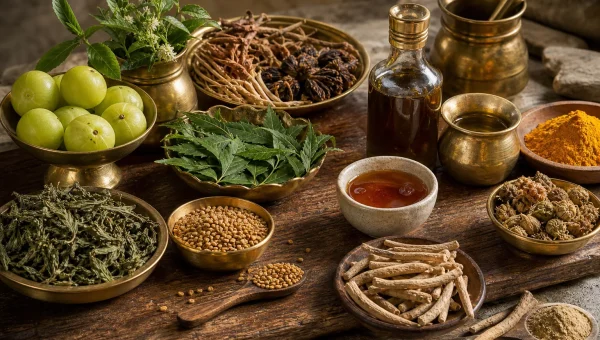
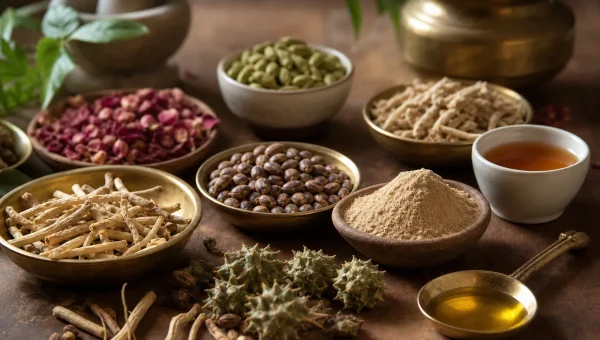
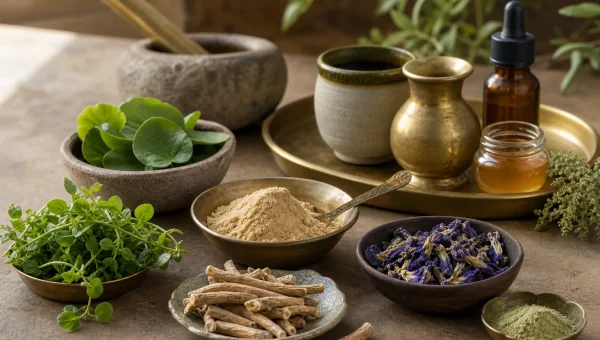
Core Vajikarana Herbs: Classical Use, Human Data, and Practical Cautions
The following herbs are commonly discussed in Vajikarana practice, but they are not interchangeable. Their suitability depends on constitution, digestion, age, strength, medications, blood pressure, endocrine status, prostate history, mental health, and the type of klaibya involved.
Ashwagandha (Withania somnifera): Strength, Recovery, and Depletion
Ashwagandha root is listed in the Ayurvedic Pharmacopoeia of India with tikta and kashaya rasa, laghu guna, ushna virya, and madhura vipaka. Its classical actions include rasayana, balya, vajikarana, and vata-kapha-hara, and klaibya is included among its therapeutic uses.
In a 90-day randomized, placebo-controlled human trial in men with oligospermia, a high-concentration ashwagandha root extract at 675 mg per day improved sperm count and sperm motility compared with baseline. This supports its traditional role in reproductive-tissue and fertility support. It should still be understood as a rebuilding herb, not an instant erection drug.
The classical powder dose listed for ashwagandha root in the Ayurvedic Pharmacopoeia of India is 3–6 grams. Extract doses vary by product and standardization, so they should not be treated as equivalent to crude powder. Ashwagandha needs caution in people with thyroid disorders, autoimmune conditions, liver concerns, hormone-sensitive prostate cancer, sedative use, or complex medication regimens.
Kapikacchu (Mucuna pruriens): Desire, Dopamine, and Shukra Support
Kapikacchu, also called Atmagupta in the Ayurvedic Pharmacopoeia of India, is identified with Mucuna pruriens. Its seeds naturally contain levodopa, a dopamine precursor, which explains why it is often discussed in relation to libido, motivation, and male fertility.
In a human male-infertility study, Mucuna pruriens seed powder given with milk for three months was associated with improved testosterone, luteinizing hormone, dopamine, adrenaline, noradrenaline, and semen parameters in infertile men. This makes Kapikacchu most relevant when low desire, stress-related reproductive decline, or low vitality are part of the picture.
Kapikacchu is not a casual supplement. Because it contains levodopa, men using Parkinson’s medications, dopaminergic drugs, psychiatric medicines, or treatment for significant mental-health conditions should not use it without prescriber approval. It also requires caution in liver, kidney, pregnancy, and breastfeeding contexts.
Safed Musli (Chlorophytum borivilianum): Nutritive Vajikarana
Safed Musli is widely valued in modern Ayurvedic practice as a nourishing vajikarana herb, especially when sexual weakness appears with depletion, low body weight, poor stamina, dryness, or post-illness fatigue. It fits the brimhana logic of rebuilding rather than stimulating.
Animal work on Chlorophytum borivilianum root has reported aphrodisiac and spermatogenic effects, including effects on sexual behavior and sperm count in male rats. A later pharmacological review also records its traditional use in India for male sexual weakness. Human clinical use should remain practitioner-guided, especially when the patient has diabetes, obesity, digestive weakness, or is already taking multiple supplements.
Gokshura (Tribulus terrestris): Urinary, Vata, and Vascular Support
Gokshura root is listed in the Ayurvedic Pharmacopoeia of India as Tribulus terrestris. Its classical profile includes madhura rasa, guru and snigdha guna, shita virya, madhura vipaka, and actions such as mutrala, vrishya, vatanut, and brimhana. This makes it relevant when urinary function, vata imbalance, tissue nourishment, and sexual vitality overlap.
For ED, Gokshura is best framed as supportive rather than as a guaranteed testosterone booster. A 12-week placebo-controlled trial using Tribulus terrestris extract in men with mild to moderate ED reported improvement in International Index of Erectile Function scores, while other human work has not shown the same degree of benefit. This is why it belongs in individualized protocols rather than one-size-fits-all marketing.
Gokshura may affect blood pressure, blood sugar, diuretic response, platelet-related medication effects, and prostate-sensitive conditions. Men taking antihypertensive drugs, diabetes medication, diuretics, clopidogrel, or prostate cancer treatment should use it only with medical guidance.
Type-Specific Treatment Approach
The safest way to use the classical classification is as a clinical map, not as a rigid self-diagnosis chart. The goal is to identify the dominant cause and build treatment around that cause while screening for medical conditions that require modern evaluation.
| Pattern | Primary Ayurvedic Direction | Clinical Priorities | Supportive Measures |
|---|---|---|---|
| Bijopaghataja | Rebuild depleted tissues and restore strength | Assess nutrition, chronic illness, testosterone, anemia, digestion, overwork, and recovery capacity | Ashwagandha, Safed Musli, Shatavari, milk/ghee-based nourishment where suitable, adequate protein, sleep, and strength rebuilding |
| Dhvajabhangaja | Treat local pathology before using aphrodisiac stimulation | Evaluate pain, swelling, discharge, trauma, curvature, infection, pelvic symptoms, and urinary complaints | Urology review, local care, avoidance of irritants, abstinence during acute inflammation, and practitioner-guided Ayurvedic measures |
| Jaraja | Support aging tissues, reduce vata aggravation, and protect circulation | Assess cardiovascular risk, diabetes, blood pressure, lipids, testosterone, medication effects, sleep, and exercise capacity | Regular aerobic activity, moderate strength training, sleep restoration, weight management, rasayana support, and individualized Vajikarana herbs |
| Shukra-kshayaja | Restore reproductive tissue after depletion | Assess fasting, dry diet, excessive sexual activity, anxiety, grief, alcohol, overtraining, and chronic insomnia | Rest, warm nourishing meals, milk/ghee/grains where appropriate, reduction of excess exertion, stress regulation, and gradual Vajikarana support |
Lifestyle Factors That Most Men Ignore
Herbs are often overemphasized because they are easy to buy. The foundations are less glamorous but more decisive: sleep, movement, alcohol moderation, metabolic health, and psychological safety. Ayurveda would describe these as part of restoring agni, dhatu nourishment, and balanced vata.
Sleep
Testosterone production is closely tied to sleep. In healthy young men, restricting sleep to about five hours per night for one week lowered daytime testosterone by 10–15%. If a man is sleeping poorly and has ED, restoring sleep is not optional background advice; it is part of the treatment.
Exercise
Erection is a neurovascular event, and nitric oxide–mediated smooth muscle relaxation is central to the process. Regular aerobic exercise improves vascular function and is especially relevant when ED is linked with obesity, hypertension, diabetes, low fitness, or metabolic syndrome. Moderate strength training also supports insulin sensitivity, body composition, confidence, and healthy aging. The useful zone is regular, recoverable training—not daily exhaustion.
Alcohol
Heavy or binge alcohol use is consistently unfavorable for erectile function. It can impair erection quality acutely and, over time, contribute to hormonal disruption, neuropathy, poor sleep, liver stress, and relationship strain. Ayurveda also treats alcohol as a substance that can disturb doshas and judgment when used improperly. For many men, reducing alcohol is a direct sexual-health intervention.
When to Combine with Conventional Medicine
Ayurvedic treatment for ED is not a replacement for medical evaluation. Erectile dysfunction can be an early sign of cardiovascular disease because the penile arteries are smaller than the coronary arteries and may show vascular impairment earlier. ED can also point toward diabetes, hypertension, low testosterone, thyroid disease, medication effects, depression, pelvic injury, or neurological disease.
Every man with new, persistent, or worsening ED should consider a proper medical workup. A basic evaluation commonly includes blood pressure, fasting glucose or HbA1c, lipid profile, early-morning total testosterone, and further hormone testing when testosterone is low or borderline. Thyroid, kidney, liver, prolactin, SHBG, LH, FSH, and prostate-related testing may be appropriate depending on age, symptoms, and clinician judgment.
PDE5 inhibitors may be used by some men while deeper causes are being addressed, but they must be prescribed safely. They are not suitable with nitrate medications and require caution in significant cardiovascular disease, blood-pressure instability, and complex medication regimens. Ayurvedic herbs should also be disclosed to the prescribing clinician.
Traditional Vajikarana Formulations
Classical Vajikarana does not rely only on single herbs. Charaka’s Vajikarana chapter includes preparations such as Brimhani Gutika, Vajikarana Ghrita, Vrishya Ksheera, Vrishya Ghrita, and Shatavari Ghrita, along with repeated emphasis on milk, ghee, grains, nourishing foods, strength, mental steadiness, and appropriate conduct.
- Milk and ghee-based preparations: Traditionally used when depletion, dryness, vata aggravation, and low tissue strength dominate. They are not suitable for everyone, especially those with poor digestion, high triglycerides, obesity, or uncontrolled diabetes.
- Rasayana support: Rejuvenative therapy may be used when ED appears with aging, fatigue, low vitality, or post-illness weakness. The formulation must match digestion, constitution, and medical history.
- Herbo-mineral preparations: These should never be self-prescribed. Any formulation containing metals or minerals requires a properly trained practitioner, verified manufacturing quality, and careful safety oversight.
Realistic Expectations
Vajikarana therapy is not instant. PDE5 inhibitors may act within a short window, but dhatu restoration, stress recovery, sleep repair, vascular improvement, and endocrine balance usually require weeks to months. The timeline depends on age, cause, severity, medication burden, sleep, cardiometabolic health, and consistency.
- Weeks 1–4: Better sleep, calmer mood, improved appetite, and more energy may appear before erectile function changes.
- Weeks 4–8: Libido, morning erections, and confidence may begin to improve when sleep, stress, and nourishment are corrected.
- Weeks 8–16: Erectile function may improve more noticeably when vascular, metabolic, and hormonal factors are being addressed together.
- Months 4–6: Depletion-type and age-related patterns often require reassessment, adjustment, and long-term maintenance rather than a short supplement cycle.
For related Ayurvedic self-understanding, a Dosha Body Type Assessment can be a starting point, but ED should still be evaluated medically and individually.
Medical Disclaimer: This article is for educational purposes only and does not constitute medical advice. Erectile dysfunction can be a symptom of cardiovascular disease, diabetes, hypertension, neurological disease, endocrine disorders, medication effects, pelvic injury, or psychological distress. Consult a qualified physician and a qualified Ayurvedic practitioner before starting herbs, supplements, detoxes, herbo-mineral preparations, or therapeutic protocols. Do not combine PDE5 inhibitors with nitrate medicines. Use Kapikacchu cautiously because of its levodopa content. Use Ashwagandha cautiously with thyroid disorders, autoimmune conditions, sedatives, liver concerns, prostate cancer, or complex medications. Use Gokshura cautiously with blood-pressure medication, diabetes medication, diuretics, clopidogrel, kidney/liver concerns, or prostate-sensitive conditions. All doses and formulations require individual assessment.
References
- NCBI
- Hopkinsmedicine (hopkinsmedicine.org)
- NCBI
- Charaka Samhita — Vajikarana Adhyaya
- Easyayurveda (easyayurveda.com)
- Concepts of Dhatu Siddhanta (theory of tissues formation and differentiation) and Rasayana; probable predecessor of stem cell therapy (2014), PubMed Central
- Ayurvedic Pharmacopoeia of India
- Clinical Evaluation of the Spermatogenic Activity of the Root Extract of Ashwagandha (Withania somnifera) in Oligospermic Males: A Pilot Study (2013), PubMed
- NCCIH
- Mskcc (mskcc.org)
- Ayurvedic Pharmacopoeia of India
- RIVM (Netherlands)
- Mucuna pruriens improves male fertility by its action on the hypothalamus-pituitary-gonadal axis (2009), PubMed
- Mdpi (mdpi.com)
- Safed musli (Chlorophytum borivilianum): a review of its botany, ethnopharmacology and phytochemistry (2013), PubMed
- Effects of Chlorophytum borivilianum on sexual behaviour and sperm count in male rats (2008), PubMed
- Standardised extract of safed musli (Chlorophytum borivilianum) increases aphrodisiac potential besides being safe in male Wistar rats (2016), PubMed
- Evaluation of the efficacy and safety of Tribulus terrestris in male sexual dysfunction-A prospective, randomized, double-blind, placebo-controlled clinical trial (2017), PubMed
- Hero (hero.epa.gov)
- Mdpi (mdpi.com)
- Mskcc (mskcc.org)
- Uchicagomedicine (uchicagomedicine.org)
- Academic (academic.oup.com)
- Academic (academic.oup.com)
- [Alcoholic effect on male sexual function] (1997), PubMed
- Mayoclinic (mayoclinic.org)
- Cks (cks.nice.org.uk)
- Uroweb (uroweb.org)
Helpful.
the Mamsagni concept for sexual vitality does this translate to overall metabolic health or specifically reproductive tissue nourishment?
is Shilajit safe to combine with PDE5 inhibitors? I currently use Tadalafil and want to add Ayurvedic support.
the clinical evidence for Kapikacchu in ED specifically is limited to a few small trials. the article presents it with more certainty than the data supports.
Fair point on the evidence base. That said, the Manasika classification the article lays out does match what conventional psychology would call psychogenic ED — and for that type, the Ashwagandha and stress-reduction side of the protocol seems better supported than the Kapikacchu. Worth distinguishing the two arms of the treatment when evaluating the evidence.
ashwagandha + Kapikacchu combination as described in the Vajikarana section, 3 months in, significant improvement in both libido and confidence.
at what age does this protocol typically see the best results? im 55 and wonderinh if the response differs from a 35-year-old.
ED posts online are usually too salesy. this one should keep the medical warning clear
Appreciate the directness in this article — this topic gets so much evasion. The Klaibya classification system is new to me and I find it more useful than the generic ‘ED’ label because it actually points at different causes. Is there a way to get a reasonably accurate self-assessment between the types without seeing a vaidya in person?
the psychological framing alongside herbal protocol is what makes this article different. most Ayurveda ED content ignores the mind component.
Interesting. 🙌
is Shilajit safe to combine with PDE5 inhibitors? I currently use Tadalafik and want to add Ayurvedic support. धन्यवाद
at what age does this protocol typically see the best results? I’m 55 and wondering if the response differs from a 35-year-old.
klaibya assessment makes sense, but sleep and alcohol details need more space
vajikarana sounds helpful only after basics are fixed. stress is probably half the issue for many men
@Pooja the Mamsagni concept for sexual vitality does this translate to overall metabolic health or specifically reproductive tissue nourishment?
@Deepak at what age does this protocol typically see the best results? I’m 55 and wondering if the response differs from a 35-year-old.
good that shilajit is not the whole answer. vascular causes and anxiety causes should be separated
ED often has vascular and neurological components that require medical evaluation before starting any protocol. the article should be more explicit about when to see a urologist.
Makes sense.
@Priya the psychological framing alongside herbal protocol is what makes this article different. most Ayurveda ED content ignores the mind component.
the Mamsagni concept for sexual vitality does this translare to overall metabolic health or specifically reproductive tissue nourishment? 💯
@Anand the Mamsagni concept for sexual vitality does this translate to overall metabolic healtj or specifically reproductive tissue nourishment?
the Mamsagni concept for sexual vitality does this translate to oversll metabolic health or specifically reproductive tissue nourishment? tbh
Interesting.
Good one.
is Shilajit safe to combine with PDE5 imhibitors? I currently use Tadalafil and want to add Ayurvedic support.
i would add when to check diabetes or blood pressure. ED can be first sign sometimes
The breakdown of klaibya into four types based on dosha vitiation really clarifies why a one size fits all pill often fails.
The 40% at 40 statistic at the start hit harder than I expected. The article’s breakdown of vascular versus psychological versus hormonal pathways through the Klaibya types is actually more nuanced than most mainstream health content I’ve read on this. The Vajikarana diet section in particular is something I want to discuss with my doctor.
Doing this.
at what age does this protocol typically see the best results? im 55 and wondering if the response differs from a 35-year-okd. tbh
I appreciated the emphasis on checking sleep quality before adding herbs; it’s a practical first step many overlook.
Appreciate that the post addresses this so plainly. I had no idea the Vajikarana category even existed in Ayurveda until now. Does the Klaibya assessment consider age-related Vata increase as a primary factor, or is Pitta imbalance treated as equally likely at 40-plus?
The point about silence serving no one really landed. My father-in-law went years without mentioning symptoms to anyone, including his doctor. Had he come across something like this Vajikarana framework earlier it might have opened a conversation. Does the protocol differ for men whose ED is clearly stress-driven versus those with a more physical presentation?
the Mamaagni concept for sexual vitality does this translate to overall metabolic health or specifically reproductive tissue nourishment?
The caution about kapikacchu interacting with L DOPA medications is important; I’ll discuss it with my doctor before trying mucuna.