
The goal is not to avoid stress. Stress is the stimulus; adaptation is the outcome. What separates steady performance from burnout is not the absence of pressure but the capacity of the nervous system, mind, sleep, digestion, and recovery systems to absorb a manageable challenge and return to balance. Ayurveda approaches this through sattva bala, bala, rasayana, regulated ahara-vihara, pranayama, and measured discipline rather than through reckless hardship.
Stress Inoculation: The Concept
Modern stress inoculation training uses graduated exposure to manageable stress together with coping skills, rehearsal, and recovery. The Ayurvedic parallel is not “more stress is better”; it is “the right challenge, at the right dose, for the right person.” Charaka describes mental strength as sattva bala, with stronger sattva remaining steady under difficulty, while vyadhikshamatva describes the capacity to oppose disease strength and prevent disease from arising. Ayurveda also recognises acquired strength, yuktikrita bala, built through suitable food, daily conduct, exercise, rest, and rasayana.
The Physiological Targets
Intelligent stress training targets three systems: the HPA axis, autonomic flexibility, and top-down regulation of threat response. The HPA axis coordinates cortisol and other stress mediators; the goal is not to suppress it, but to restore appropriate response and recovery. Autonomic flexibility is reflected partly through heart rate variability, which changes with stress and recovery. The prefrontal cortex and amygdala form a major circuit for emotional regulation, threat appraisal, and restraint under pressure. In Ayurvedic language, this is the practical territory of steadier manas, stronger sattva, protected agni, sufficient sleep, and preserved bala.
The Ayurvedic Methods of Stress Inoculation
Ayurvedic stress inoculation is gradual, individualised, and recoverable. A useful challenge should leave you clearer after recovery, not depleted, sleepless, irritable, inflamed, or compulsive. The correct dose depends on prakriti, vikriti, age, season, health status, work load, sleep debt, digestion, and emotional reserve.
Tapas: Disciplined Physical and Mental Challenge
Tapas is disciplined effort, not self-punishment. It can include a short cool-water finish after a warm shower, a deliberately difficult but safe workout, a period of silence, screen restraint, or a lightening food day when appropriate. Classical Ayurveda also describes langhana, including upavasa and vyayama, but these should be matched to constitution and condition: a kapha-dominant, heavy, sluggish state may tolerate lightening better than a dry, anxious, vata-aggravated state.
Pranayama: Direct Autonomic Training
Pranayama is the most practical daily method for training the shift between activation and recovery. Bhramari uses slow exhalation and humming to promote a downshift after pressure. Nadi Shodhana or Anulom Vilom trains steadiness through alternate-nostril breathing and rhythm. Kumbhaka should be introduced only gently after the breath is smooth; forced breath retention can aggravate anxiety, dizziness, or pressure in susceptible people.
The Adaptogen Protocol for Stress Inoculation
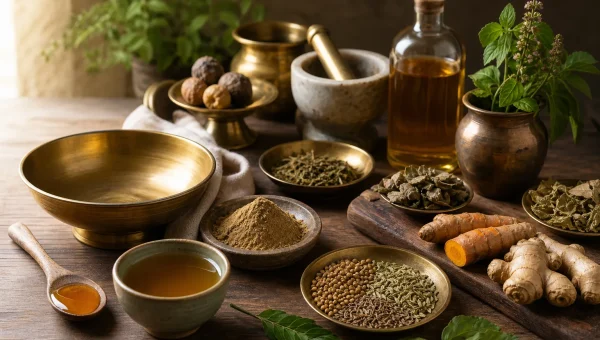
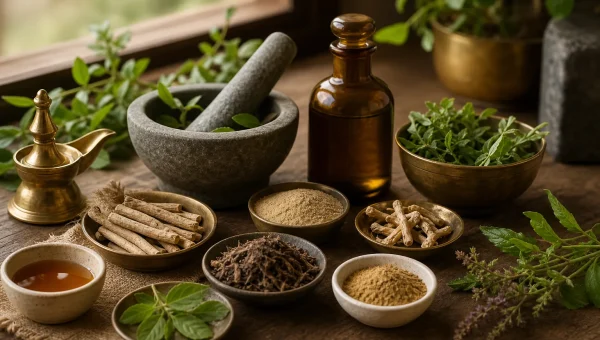
Herbs are support tools, not substitutes for sleep, food, breathing practice, and wise pacing. Classical Ayurvedic use depends on diagnosis, anupana, dose form, strength of digestion, and contraindications. Standardised extracts do not equal raw powder doses, so the safest protocol is practitioner-guided.
Gradual Stress Inoculation: A 12-Week Program
This program keeps the original stress-inoculation principle while lowering the risk of overtraining. Each phase should feel challenging but repeatable. If sleep worsens, digestion weakens, anxiety rises, or resting fatigue increases, reduce the stressor before adding anything new.
| Phase | Physical Stressor | Mental/Breathing Practice | Herbal Support |
|---|---|---|---|
| Weeks 1-4 | 15-30 sec cool shower finish, 4-6 days weekly | Bhramari 6-10 rounds; Nadi Shodhana 5 min | Ashwagandha or Brahmi only if suitable and advised |
| Weeks 5-8 | 45-90 sec cool/cold finish; one weekly lighter dinner or early dinner | Nadi Shodhana 8-10 min; gentle breath pauses only if comfortable | Add Guduchi only when digestion, constitution, and medicines allow |
| Weeks 9-12 | One planned weekly challenge: harder workout, silence block, digital restraint, or longer cool exposure | Bhramari after stress; meditation 10-20 min; no forced retention | Review response; keep, reduce, rotate, or stop herbs as appropriate |
The Sattva Bala Outcome
The desired outcome is not invulnerability. It is faster recovery after pressure, less reactivity during conflict, clearer decision-making under load, steadier sleep, better digestion, and the ability to choose the right response instead of being driven by the stressor. Classical Ayurveda would describe this as strengthening sattva bala and protecting bala. Modern physiology would describe it as better regulation across stress-response, autonomic, and emotion-regulation systems. The method is the same: small voluntary challenge, clean recovery, daily breath regulation, appropriate nourishment, and consistency.
Nothing in this article diagnoses, treats, or prevents a medical condition. Consult a qualified Ayurvedic practitioner or healthcare provider before starting herbs, supplements, cold exposure, fasting, breath retention, or therapeutic protocols, especially if pregnant, trying to conceive, managing heart disease, high blood pressure, asthma, thyroid disease, autoimmune disease, liver disease, psychiatric illness, sleep disorder, or taking medication.
References
- Ovid (ovid.com)
- Seeding Stress Resilience through Inoculation (2016), PubMed Central
- Charaka Samhita — Manovaha srotas
- Charaka Samhita — Sattva
- Granthaalayahpublication (granthaalayahpublication.org)
- Ijhsr (ijhsr.org)
- Regulation of the Hypothalamic-Pituitary-Adrenocortical Stress Response (2016), PubMed Central
- Sjweh (sjweh.fi)
- Stress and Heart Rate Variability: A Meta-Analysis and Review of the Literature (2018), PubMed Central
- Heart Rate Variability as an Index of Resilience (2020), PubMed
- The brain on stress: vulnerability and plasticity of the prefrontal cortex over the life course (2013), PubMed Central
- Stress and the adolescent brain: Amygdala-prefrontal cortex circuitry and ventral striatum as developmental targets (2016), PubMed Central
- Yogasutrastudy (yogasutrastudy.info)
- Charaka Samhita — Langhana
- The untapped potential of cold water therapy as part of a lifestyle intervention for promoting healthy aging (2025), PubMed Central
- Heart (heart.org)
- Investigating components of pranayama for effects on heart rate variability (2021), PubMed Central
- Heart Rate Variability Changes During and after the Practice of Bhramari Pranayama (2017), PubMed Central
- Effects of Nadishodhana and Bhramari Pranayama on heart rate variability, auditory reaction time, and blood pressure: A randomized clinical trial in hypertensive patients (2023), PubMed Central
- Ayurvedic Pharmacopoeia of India
- An investigation into the stress-relieving and pharmacological actions of an ashwagandha (Withania somnifera) extract: A randomized, double-blind, placebo-controlled study (2019), PubMed Central
- Adaptogenic and Anxiolytic Effects of Ashwagandha Root Extract in Healthy Adults: A Double-blind, Randomized, Placebo-controlled Clinical Study (2019), PubMed Central
- NIH Office of Dietary Supplements
- Ayurvedic Pharmacopoeia of India
- The cognitive-enhancing effects of Bacopa monnieri: a systematic review of randomized, controlled human clinical trials (2012), PubMed
- Ssgcbams (ssgcbams.co.in)

The distinction between stress avoidance and stress inoculation is what changes how you design a wellness practice. I’ve spent years reducing stress as a goal. This article reframes the goal as building capacity to handle stress, which is achievable and actually more useful.
The military stress inoculation parallel is interesting. The overlap between Ayurvedic adaptogen training and the progressive stress exposure protocols used in elite military prep is genuinely notable. Different traditions arriving at similar conclusions about how nervous systems are trained.
Started the stress protocol my Ayurvedic doctor recommended last summer and my energy has been noticeably more consistent. This explains the mechanism.
I’m a therapist and the integration of Ayurvedic mental preparation practice with modern stress physiology is something I find genuinely useful for explaining to clients why structured stress exposure has benefits. Having both traditional and neurobiological explanations available improves compliance.
The adaptation versus dysregulation distinction is the key practical insight. Not all stress produces adaptation. Stress that overwhelms without recovery produces dysregulation. The specific protocols for calibrating the dose are what this article needs to explain more clearly.
Does the stress protocol change for different prakritis? My assessment came back as Vata-Pitta and I’m not sure if the standard approach applies.
Is there a recommended sequence for the inoculation protocol? Starting with cold exposure or fasting or something else? The article describes the principle but the specific progression from lower to higher stress stimuli would be practical.
The burnout cases that result from maximum stress without the inoculation foundation is the pattern I see constantly in the corporate executives I work with. They’re doing the stress without the preparation. The Ayurvedic framework provides a structured preparation protocol that modern performance culture completely lacks.
Can someone with existing burnout do stress inoculation training or do they need to recover first? I would assume restoration precedes inoculation but I want to understand the sequence.
The section on tapas caught my attention because cold showers are something I already try.
The adaptogen pharmacology explanation of how herbs specifically buffer the allostatic response rather than suppressing it is important. Ashwagandha doesn’t prevent the stress response, it prevents the response from becoming disproportionate. That’s the mechanism that makes these herbs compatible with stress inoculation rather than contradicting it.
Actually the explanation of HRV as a predictor of resilience made me curious about tracking it.
Is the extended fasting realistic for someone with a busy schedule?
It seems the adaptogen stack is detailed but I would like to see more on possible interactions.
Maybe the prefrontal cortex amygdala circuit part could use a simple diagram for readers.
After reading about Bhramari breathing I tried a few cycles and felt a calm shift.
useful info but hard to find a practitioner who does this type of treatment outside major cities ठीक है
not sure if its the herbs or the diet changes that made the difference
नमस्ते, this is exactly what I was looking for 🙏
A practical takeaway is to begin with short cold exposure and build up gradually.
following this from UK, hard to find some of these herbs here
stress inoculation concept is solid but the article doesn’t mention that you can overtrain the nervous system too
🙌 the vagal tone concept applied to ayurveda is something I hadn’t seen before. makes the pranayama recommendations more grounded
The Vata aggravation model for burnout resonates strongly. I had always framed my stress response as purely psychological but the physical symptoms, the ungroundedness, the hypersensitivity to sound, point to something more systemic. Starting to see why nervous system training rather than just stress reduction is the right framing.
@Ravi good information but the references section would make this much more credible
not sure about some of the claims here. would like to see proper citations for the traditional references
does anyone know if these herbs are safe while on blood thinners? would really appreciate a response
my vaidya says the same thing about agni being central to everything
been doing this for 6 months, amazing difference in energy levels
sharing with my mom
will try and report back. fingers crossed
the post-workout vata thing explains why I feel wired and tired after intense exercise
the translation of Sanskrit terms throughout helps a lot for those of us learning this system
would love a follow-up article on the same topic but for elderly patients
tried 3 of the suggestions here. 2 worked well, 1 made no difference. good enough ratio for me
I liked the practical side of Stress Inoculation the Ayurvedic Way. The article avoids making it sound like a quick fix.
🙌 been following this blog for 6 months and this is one of the more grounded posts
💯 I wish more doctors knew about this approach
🙏 this is the most detailed breakdown of the topic I’ve found. saving for reference
Vidar churna for stress is hard to find. any reliable online sources or substitutes for those outside India
started this protocol 2 weeks ago. nothing notable yet but will report back in a month
the basic concepts here match what I learned in my yoga teacher training
Thanks!
Good read
The Stress Inoculation the Ayurvedic Way section feels grounded enough to try carefully. The safety notes could be expanded a little.
धन्यवाद for the detailed protocol
My nutritionist sent me this link 🌿 🙌
does the approach differ for someone with multiple doshas elevated at once?
which of these approaches works best for Kapha constitution? the article mixes all three doshas
late to this but wanted to ask if anyone has combined these approaches with conventional treatment
useful
reading this in 2027, has anything changed about the dosage recommendations since this was published? 🌿
Will try
the quality of herbs varies so much between brands. really hard to replicate these results
the seasonal rotation idea is something I had never considered before