
There is a particular frustration that comes with doing everything right for your skin, drinking water, wearing SPF, using gentle skincare, and still seeing dullness, uneven tone, post-acne marks, or recurring heat-driven breakouts. Ayurveda’s response is characteristically deeper than the surface: when skin repeatedly shows redness, irritation, pigmentation, or slow clearing, the condition of rakta dhatu and the movement of heat through the body must be considered. For that blood-skin pattern, one of Ayurveda’s most valued herbs is Manjistha.
What Is Manjistha?
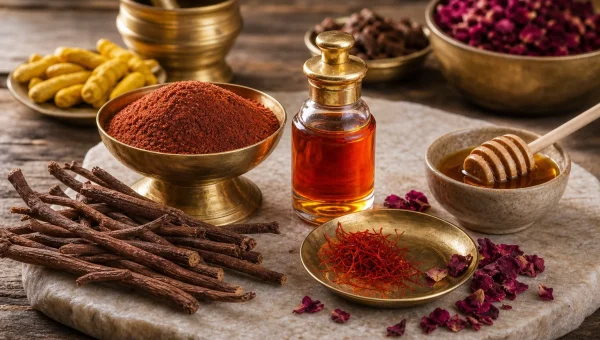
Manjistha (Rubia cordifolia Linn.), also known as Indian madder, is a classical Ayurvedic herb associated with complexion, inflammatory skin patterns, blood-related disorders, and tissue cleansing. The Ayurvedic Pharmacopoeia of India describes Manjistha as the dried stem of Rubia cordifolia, a prickly perennial creeper or climber found throughout India and ascending to high Himalayan regions. Its reddish-pink powder and long use as a natural dye reflect the same pigment-rich nature that made the plant famous in traditional textiles.
In Ayurvedic pharmacology, Manjistha is described with madhura, tikta, and kashaya rasa (sweet, bitter, and astringent tastes), guru guna (heavy quality), ushna virya (heating potency), and katu vipaka (pungent post-digestive effect). Its listed actions include varnya (supporting complexion), kaphapittashamaka (pacifying Kapha and Pitta), shothaghna (reducing swelling), kushthaghna (useful in skin disorders), shonitasthapana (supporting normal blood function), rasayana (rejuvenative), and artavajanana (promoting menstrual flow).
Modern phytochemical literature identifies madder-type quinones and anthraquinones in Rubia cordifolia, including purpurin, alizarin, munjistin, rubiadin, and xanthopurpurin. These compounds help explain the plant’s red-orange colour and support its traditional identity as a pigment-rich, complexion-oriented herb. Rubiadin has antioxidant activity in laboratory models, and purpurin has tyrosinase-inhibiting potential in experimental settings, which aligns with Manjistha’s classical varnya role without making it a quick bleaching agent.
The Ayurvedic Blood-Skin Connection
Ayurveda does not treat recurring skin imbalance as a purely external cosmetic issue. The skin is read together with rasa and rakta dhatu, heat, digestion, elimination, and the clarity of the body’s channels. When Pitta acts strongly in the blood, or when Kapha and metabolic heaviness obstruct the skin’s natural clearing process, the result may appear as redness, itching, acne-like eruptions, rashes, dullness, uneven tone, or lingering marks after inflammation.
Manjistha fits this pattern because its classical actions are not limited to one symptom. It is varnya for complexion, kushthaghna for skin disorders, shothaghna for swelling, kaphapittashamaka for Kapha-Pitta skin patterns, and shonitasthapana for blood-related support. This is why it is traditionally used when the concern is not just “a spot on the face,” but a repeating pattern of heat, congestion, pigmentation, or slow skin recovery.
Post-acne marks and slow clearing
Redness, heat, swelling, or irritation
Recurring Kapha-Pitta breakouts
Kapha-Pitta congestion in skin channels
Inflammation leaving residual colour change
Slow movement of rasa and rakta through tissues
Kushthaghna: traditionally used in skin disorders
Shothaghna: supports reduction of swelling
Shonitasthapana: supports blood-related balance
How to Use Manjistha for Skin
Manjistha may be used internally or externally, but Ayurveda gives the internal route special importance when the same skin concern keeps returning. The aim is not simply to dry out a pimple or lighten a mark from the outside; it is to correct the deeper Kapha-Pitta and rakta pattern that allows heat, congestion, and discoloration to repeat.
Internal Use: The Primary Route
The Ayurvedic Pharmacopoeia of India lists the adult dose of Manjistha as 2-4 g of the drug. In practice, Manjistha may be used as powder, decoction, tablet, capsule, or as part of a classical compound formula. The right form, dose, timing, and duration should be chosen by a qualified Ayurvedic practitioner, especially when the concern involves acne, eczema, melasma, menstrual irregularity, pregnancy, lactation, chronic illness, or medication use.
Classical formulations associated with Manjistha include Brihanmanjisthadi Kvatha, Manjishthadi Taila, and Khadiradi Gutika, which are listed as important formulations in the Ayurvedic Pharmacopoeia of India. These formulas should not be treated as interchangeable beauty supplements; each has its own composition, strength, and indication, and should be used with professional guidance.
Topical Use: Face Mask and Complexion Ritual
Topical Manjistha is best used gently and consistently. A simple mask can be made by mixing 1 teaspoon Manjistha powder with enough honey, aloe gel, or rose water to form a soft paste. Apply a thin layer to clean skin for 10-15 minutes, then rinse with cool water. Use once or twice weekly at first. Because Manjistha is naturally red and dye-rich, it may temporarily tint wash water, towels, or very fair skin; patch-test first and avoid applying it to broken, infected, or actively weeping skin.
Manjistha for Specific Skin Concerns
Manjistha is most appropriate when the skin concern has a heat, redness, inflammation, dullness, congestion, or post-inflammatory marking pattern. It is not a substitute for sunscreen, acne treatment, medical care, or dermatological diagnosis, but it can be a valuable Ayurvedic support when selected for the right constitution and presentation.
Acne and Post-Acne Marks
Acne that is red, inflamed, slow to settle, or leaves brown marks after healing fits well with the Ayurvedic logic of Pitta in rakta and obstruction in the skin channels. Manjistha is traditionally used here because it is kaphapittashamaka, shothaghna, kushthaghna, and varnya. For post-acne hyperpigmentation, patience is essential: dark marks often fade slowly, and daily sun protection is still necessary to prevent further darkening.
Melasma and Sun-Related Pigmentation
Melasma is strongly influenced by sun exposure and hormonal shifts such as pregnancy or the use of hormone-containing contraceptives. In an Ayurvedic plan, Manjistha may be chosen when the presentation is read as a rakta-Pitta pattern with uneven pigmentation, heat, or sensitivity. It should be paired with strict photoprotection, gentle skincare, and medical guidance when pigmentation is new, spreading, or associated with pregnancy or medication changes.
Redness, Itching, and Eczema-Prone Skin
Manjistha is classically listed for kushtha and visarpa and has shothaghna action, making it relevant to skin patterns involving swelling, heat, and irritation. For eczema-prone or reactive skin, internal use should be supervised, and topical use should be conservative. Avoid scrubbing, strong masks, lemon juice, harsh exfoliation, and any application over cracked or oozing skin.
Dullness and Uneven Tone
Dullness in Ayurveda is often viewed through weak tissue nourishment, poor circulation of rasa, and rakta quality rather than surface colour alone. Manjistha’s varnya and rasayana actions make it a traditional choice for improving the look of clarity and tone over time. It works best when paired with adequate sleep, regular meals, good digestion, hydration, and a skincare routine that does not inflame the skin barrier.
| Skin Concern | Ayurvedic Reading | Manjistha Use | Important Note |
|---|---|---|---|
| Dullness, uneven tone | Low clarity of rasa and rakta; sluggish tissue nourishment | Internal Manjistha under guidance; gentle topical mask if tolerated | Keep the routine barrier-friendly and avoid over-exfoliation |
| Inflamed acne and post-acne marks | Pitta in rakta with Kapha obstruction | Practitioner-guided internal use; occasional topical paste on intact skin | Do not stop prescribed acne care without medical advice |
| Melasma and pigmentation | Rakta-Pitta pattern with uneven pigment expression | Supportive internal herb within a broader plan | Daily sunscreen and trigger control are essential |
| Redness, swelling, itching | Pitta heat with skin-channel irritation | Use only with proper assessment, especially for eczema-like conditions | Avoid topical use on broken, infected, or oozing skin |
Safety, Cautions, and What to Expect
Manjistha should be used with respect, not as a casual daily beauty powder for everyone. Because the Ayurvedic Pharmacopoeia lists artavajanana among its actions, internal self-use during pregnancy should be avoided unless specifically prescribed by a qualified practitioner. People who are lactating, trying to conceive, taking anticoagulants, using diabetes medication, managing chronic disease, or using other herbs should consult a qualified practitioner or healthcare provider before internal use.
Quality also matters. Choose Manjistha and Manjistha-containing formulations from reputable manufacturers that test for identity, purity, and contaminants. Some Ayurvedic products have been associated with unsafe levels of heavy metals, especially when quality control is poor or products are purchased from unreliable sources.
Realistic expectations matter. Manjistha is not a quick-fix serum. Its traditional strength is gradual correction of the deeper pattern that supports clearer skin. New inflamed breakouts may reduce over weeks when the formula is appropriate, while post-inflammatory hyperpigmentation and melasma commonly require sustained care over months. For all pigment concerns, sunscreen, reduced irritation, and consistent treatment are as important as the herb itself.
Nothing in this article diagnoses, treats, or cures a medical condition. Use it as educational information and consult a qualified Ayurvedic practitioner or healthcare provider before starting herbs, supplements, detoxes, or therapeutic protocols, especially if pregnant, lactating, managing a health condition, or taking medication.
References
- Ayurvedic Pharmacopoeia of India
- A comprehensive review of Rubia cordifolia L.: Traditional uses, phytochemistry, pharmacological activities, and clinical applications (2022), PubMed Central
- Mdpi (mdpi.com)
- Rubiadin, a new antioxidant from Rubia cordifolia (1997), PubMed
- Hepatoprotective effects of rubiadin, a major constituent of Rubia cordifolia Linn (2006), PubMed
- Hero (hero.epa.gov)
- Aad (aad.org)
- Skinsight (skinsight.com)
- Aad (aad.org)
- NCCIH
I have been using Manjistha capsules for 4 months for melasma and the hyperpigmentation has lightened more than it did in 2 years of topical vitamin C and niacinamide. My dermatologist cannot explain it but has not objected to my continuing.
The Rakta Dhatu purification concept explains why topical treatment alone is insufficient for persistent dullness and breakouts. If the blood tissue is congested, the skin will continue producing symptoms regardless of what you apply externally.
What is the difference between Rubia cordifolia (Indian Manjistha) and Rubia tinctorum (Common Madder) in terms of therapeutic properties? Some products I have seen use the common madder as a cheaper substitute. Is the substitution clinically equivalent?
I took Manjistha for 3 months alongside dietary changes for skin dullness. The color shift in my complexion was the most obvious change. My skin looked less tired overall, not just less pigmented. Something systemic shifted.
The Manjistha for Skin section feels grounded enough to try carefully. The practical details matter more than people think.
The anthraquinone content of Manjistha and its liver metabolism notes are important for pregnant women and those on medications. I did not see a clear contraindication section at the top of the article. This should be more prominent for safety.
I use Manjistha topically in my homemade face mask and internally. The topical application gave minor skin reddening initially that settled after 3 days. Whether this is normal detox response or the herb being too stimulating for my skin type I could not determine.
The Manjistha for Skin section feels grounded enough to try carefully. I would still ask a practitioner before changing medicines.
The Manjistha for Skin section feels grounded enough to try carefully. This is the kind of detail readers can test slowly.
Curious about manjistha after reading how it supports liver detox and skin clarity.
The diet changes listed here are harder to follow than the herbs but more impactful. My practitioner is monitoring.
Been researching this for my father. The practical tips are what he can actually follow. Started with half the dose initially.
Is there a topical Manjistha oil preparation for hyperpigmentation alongside the internal use?
I appreciate that the article mentions when to see a doctor rather than only promoting herbs. The diet changes helped too.
I have been using Manjistha for PCOS-related hormonal acne. The article does not address hormonal acne specifically but the blood purification and lymphatic pathway for hormonal waste makes the application logical. Four months in and the chin and jaw acne is significantly improved.
Late to this post but it answered a question I’ve had for months. Consistency seems to be the key.
The herb quality issue is real I’ve noticed significant variation across brands. The timing of doses matters more than I expected.
My vaidya prescribed something nearly identical. Good to see the classical basis. Digestive improvement came before other benefits.
Is Rubia cordifolia (Indian Manjistha) equivalent to Rubia tinctorum (madder) for clinical use?
The contraindication list should be read first before starting anything here. More research needed but encouraging.
Been researching this for my father. The practical tips are what he can actually follow. Combining with dietary changes.
Anyone else tried combining this with Neem? Combined with yoga practice for better results.
Bookmarking this. Need to discuss it with my doctor first. My sleep improved first, then energy.
Late to this post but it answered a question I’ve had for months. Took 3 weeks before I noticed anything.
The diet changes listed here are harder to follow than the herbs but more impactful. Results are slow but steady.
Does anyone know if this applies for a Vata-Pitta dual prakriti? Results are slow but steady.
Anyone else tried combining this with Brahmi? Finding a good source was the challenge.
Three months in and the improvement is steady if slow. More research needed but encouraging.
The contraindication list should be read first before starting anything here. The diet changes helped too.
The bloodshot eye application of Manjistha classical ophthalmological use alongside the skin applications.
Shared this with my mother who has been dealing with this for 5 years. Consistency seems to be the key.
The safety profile section is the most important part and it’s well done. More research needed but encouraging.
The safety profile section is the most important part and it’s well done. Digestive improvement came before other benefits.
Three months in and the improvement is steady if slow. Took 3 weeks before I noticed anything.
Would appreciate a follow-up article specifically on the dosage for elderly patients. More research needed but encouraging.
The mechanism explanation is clearer than the PubMed abstract I read. The diet changes helped too.
The classical Sanskrit terms with explanations are helpful for beginners. Combining with dietary changes.
I liked the practical side of Manjistha for Skin. The timing advice is the part I would start with.
The classical Sanskrit terms with explanations are helpful for beginners. Started with half the dose initially.
The diet changes listed here are harder to follow than the herbs but more impactful. Will update in a few months.
Bookmarking this. Need to discuss it with my doctor first. Finding a good source was the challenge.
The diet changes listed here are harder to follow than the herbs but more impactful. The diet changes helped too.
Been researching this for my father. The practical tips are what he can actually follow. The quality of the herb matters a lot.
Been researching this for my father. The practical tips are what he can actually follow. More research needed but encouraging.
The safety profile section is the most important part and it’s well done. My sleep improved first, then energy.
Shared this with my mother who has been dealing with this for 5 years. Will update in a few months.
Any recommended books for deeper reading on this topic? Finding a good source was the challenge.
The safest part of the Manjistha for Skin advice is keeping it simple. Small daily changes are easier to follow than a perfect plan.
Shared this with my mother who has been dealing with this for 5 years. More research needed but encouraging.
Been researching this for my father. The practical tips are what he can actually follow. Finding a good source was the challenge.
The classical Sanskrit terms with explanations are helpful for beginners. Finding a good source was the challenge.
I started taking Manjistha about six weeks ago for persistent dullness that no serum was touching, and honestly the tone is already visibly more even. Curious whether the blood-purifying effect is cumulative over months or whether there is a plateau point.
Does Manjistha help for melasma specifically or only post-inflammatory hyperpigmentation?
Bookmarking this. Need to discuss it with my doctor first. Combined with yoga practice for better results.
Any recommended books for deeper reading on this topic? Started with half the dose initially.
I’ve tried multiple approaches before landing on what the article recommends. Finding a good source was the challenge.
Been researching this for my father. The practical tips are what he can actually follow. Combined with yoga practice for better results.
My vaidya prescribed something nearly identical. Good to see the classical basis. My sleep improved first, then energy.
Shared this with my mother who has been dealing with this for 5 years. My practitioner is monitoring.
My integrative doctor agrees with this approach, which surprised me. My practitioner is monitoring.
The recovery experience described in the comments here matches mine closely. Took 3 weeks before I noticed anything.
Started this last July and will report back after 3 months. My sleep improved first, then energy.
The safety profile section is the most important part and it’s well done. Results are slow but steady.
Been following this for 4 weeks and noticed less fatigue. The timing of doses matters more than I expected.
Does the reddish tint in wash water from the honey mask ever stain the skin?
The diet changes listed here are harder to follow than the herbs but more impactful. Digestive improvement came before other benefits.
The dosage section here is more specific than most sources I’ve seen. Took 3 weeks before I noticed anything.
My vaidya prescribed something nearly identical. Good to see the classical basis. The timing of doses matters more than I expected.
My vaidya prescribed something nearly identical. Good to see the classical basis. The quality of the herb matters a lot.
I’ve tried multiple approaches before landing on what the article recommends. Consistency seems to be the key.
The integration with modern physiology is what makes this article stand out. More research needed but encouraging.
Manjistha churna in warm water vs standardized extract capsule bioavailability difference?
Anyone else tried combining this with Shankhpushpi? More research needed but encouraging.
The contraindication list should be read first before starting anything here. The quality of the herb matters a lot.
Combining manjistha with neem seems logical for tackling hormonal acne given their antiinflammatory properties.
The herb quality issue is real I’ve noticed significant variation across brands. Still a work in progress.
Been researching this for my father. The practical tips are what he can actually follow. Results are slow but steady.
My practitioner suggested something similar last year. The results were gradual but real. Digestive improvement came before other benefits.
My practitioner suggested something similar last year. The results were gradual but real. Still a work in progress.
My integrative doctor agrees with this approach, which surprised me. Started with half the dose initially.
The Manjistha for Skin section feels grounded enough to try carefully. Would be useful to see a short checklist next.
I tried the manjistha-honey mask twice a week and noticed my complexion looking less dull.
Finding a quality herb source is harder than following the protocol itself. Started with half the dose initially.
The seasonal variation advice is the part most Ayurveda articles skip. Combining with dietary changes.
Been researching this for my father. The practical tips are what he can actually follow. Took 3 weeks before I noticed anything.
Would love to see a version of this article aimed at practitioners. Will update in a few months.
Is this safe with antacids? Combining with dietary changes.
Been researching this for my father. The practical tips are what he can actually follow. The diet changes helped too.
Shared this with my mother who has been dealing with this for 5 years. Started with half the dose initially.
The mechanism explanation is clearer than the PubMed abstract I read. Took 3 weeks before I noticed anything.
Topical vs internal for Manjistha the article correctly says internal is primary.
The integration with modern physiology is what makes this article stand out. My sleep improved first, then energy.
I’ve tried multiple approaches before landing on what the article recommends. Combined with yoga practice for better results.
The classical Sanskrit terms with explanations are helpful for beginners. The quality of the herb matters a lot.
Manjistha 500mg daily for 3 months for post-inflammatory hyperpigmentation. Tone-evening effect slow but visible.
The lymphagogue action described makes sense when I think about seasonal sluggishness and skin flare-ups.
Finding a quality herb source is harder than following the protocol itself. The diet changes helped too.
The seasonal variation advice is the part most Ayurveda articles skip. Digestive improvement came before other benefits.
Tried the recipe/formula mentioned and the results after 6 weeks were encouraging. The quality of the herb matters a lot.
I’ve tried multiple approaches before landing on what the article recommends. The diet changes helped too.
For melasma, pairing manjistha with kumkumadi taila nightly feels like a reasonable long term approach.
The integration with modern physiology is what makes this article stand out. Finding a good source was the challenge.
The avoidance of cold foods during treatment is something my body confirmed independently. Consistency seems to be the key.
Any recommended books for deeper reading on this topic? Combined with yoga practice for better results.
The diet changes listed here are harder to follow than the herbs but more impactful. Combining with dietary changes.
The contraindication list should be read first before starting anything here. Results are slow but steady.
My vaidya prescribed something nearly identical. Good to see the classical basis. Still a work in progress.
The skin benefits appearing after internal treatment this confirms the gut-lymph-skin axis model.
The herb quality issue is real, I’ve noticed significant variation across brands. My sleep improved first, then energy.
Would love to see a version of this article aimed at practitioners. Combined with yoga practice for better results.
Would love to see a version of this article aimed at practitioners. My practitioner is monitoring.
The Lymphavaha Srotas angle explains why Manjistha works when purely topical treatments fail.
The integration with modern physiology is what makes this article stand out. The timing of doses matters more than I expected.
Anyone else tried combining this with Shankhpushpi? Will update in a few months.
The contraindication list should be read first before starting anything here. Started with half the dose initially.
I’ve tried multiple approaches before landing on what the article recommends. More research needed but encouraging.
Bookmarking this. Need to discuss it with my doctor first. Consistency seems to be the key.
Tried the recipe/formula mentioned and the results after 6 weeks were encouraging. My practitioner is monitoring.
My practitioner suggested something similar last year. The results were gradual but real. Consistency seems to be the key.
The herb quality issue is real, I’ve noticed significant variation across brands. The diet changes helped too.
Just discovered this on 2026-09-07. Is the herb protocol still considered current?
Any recommended books for deeper reading on this topic? Will update in a few months.
The seasonal variation advice is the part most Ayurveda articles skip. Results are slow but steady.